Where Walls Wander


Project idea
The project proposes a small learning environment that blends classroom life with play, memory, landscape, and community use. The idea is inspired by quiet childhood memories: drawing on walls, playing hide and seek, tracing marks of growth, and learning through informal contact with nature. Instead of designing the school as a rigid institutional block, the project creates a softer educational setting where children can move between classrooms, shaded corridors, gardens, courtyards, and open play areas.
The design responds to the need for a school that is both protective and open. It uses local brick, breathable wall patterns, shaded roof structures and planted outdoor spaces to create a calm, low-cost, and climate-responsive learning environment. Learning is understood not only as classroom teaching, but also as social exchange, sensory experience, play, food cultivation, and intergenerational contact.
Project description
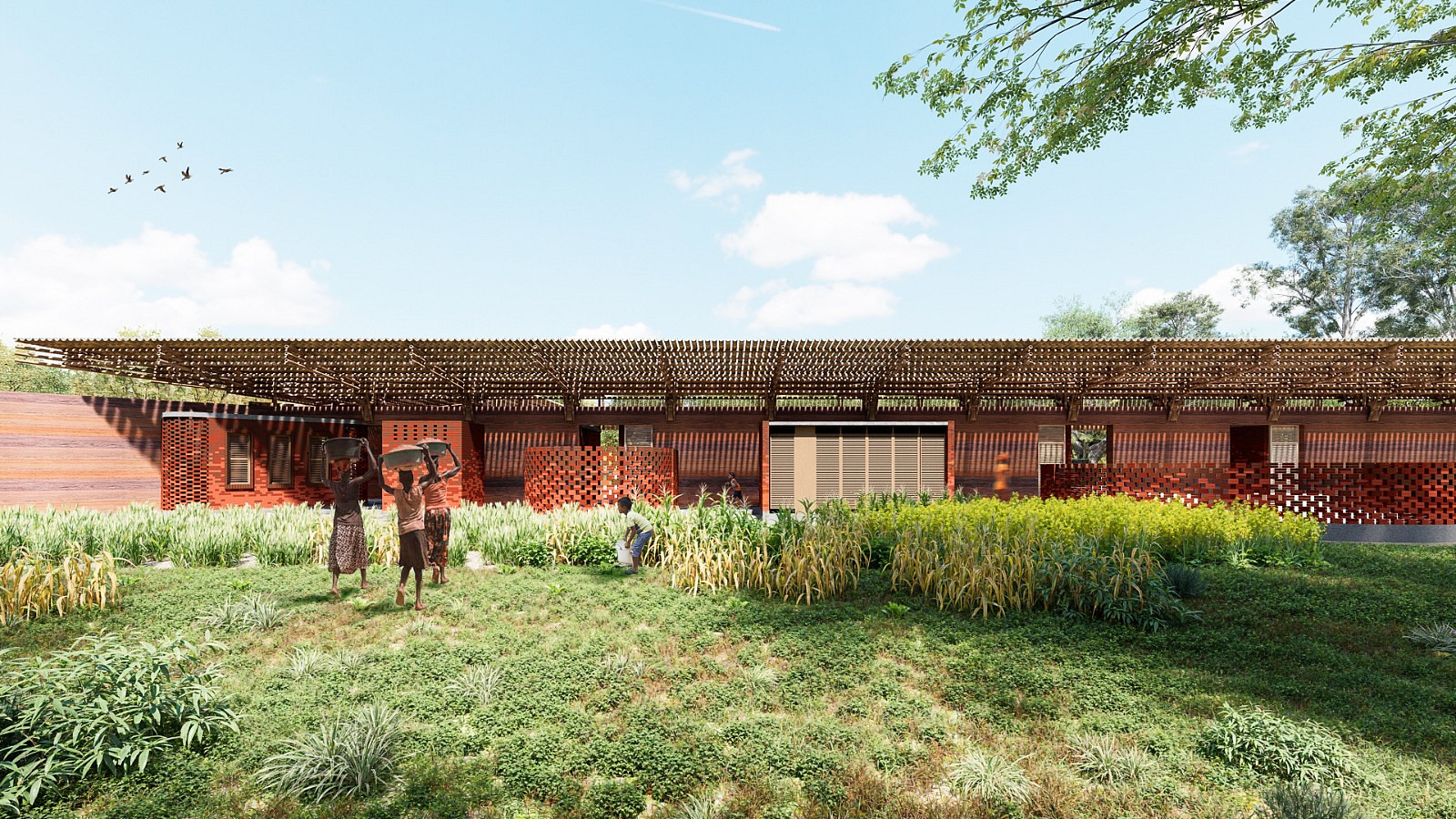
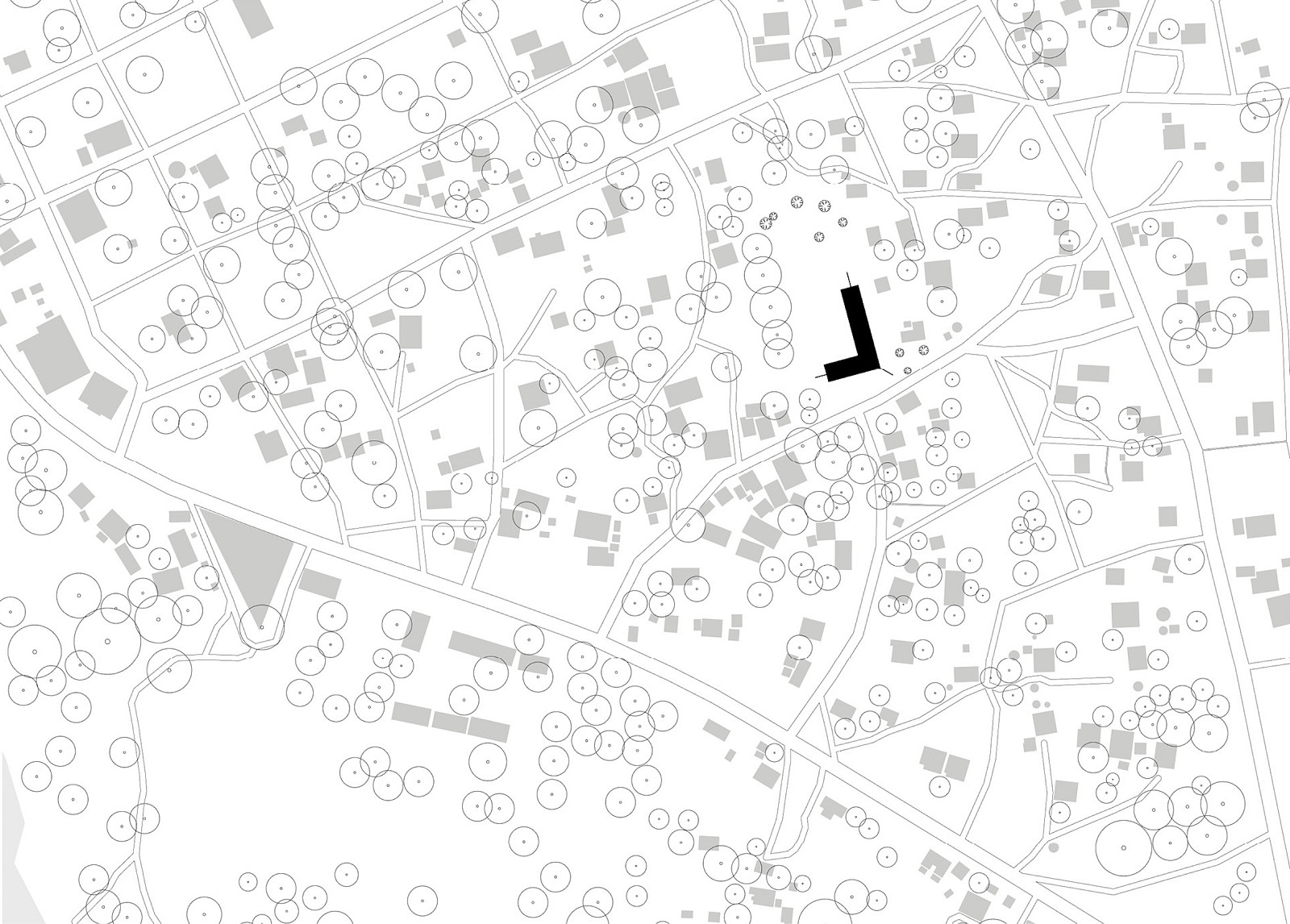
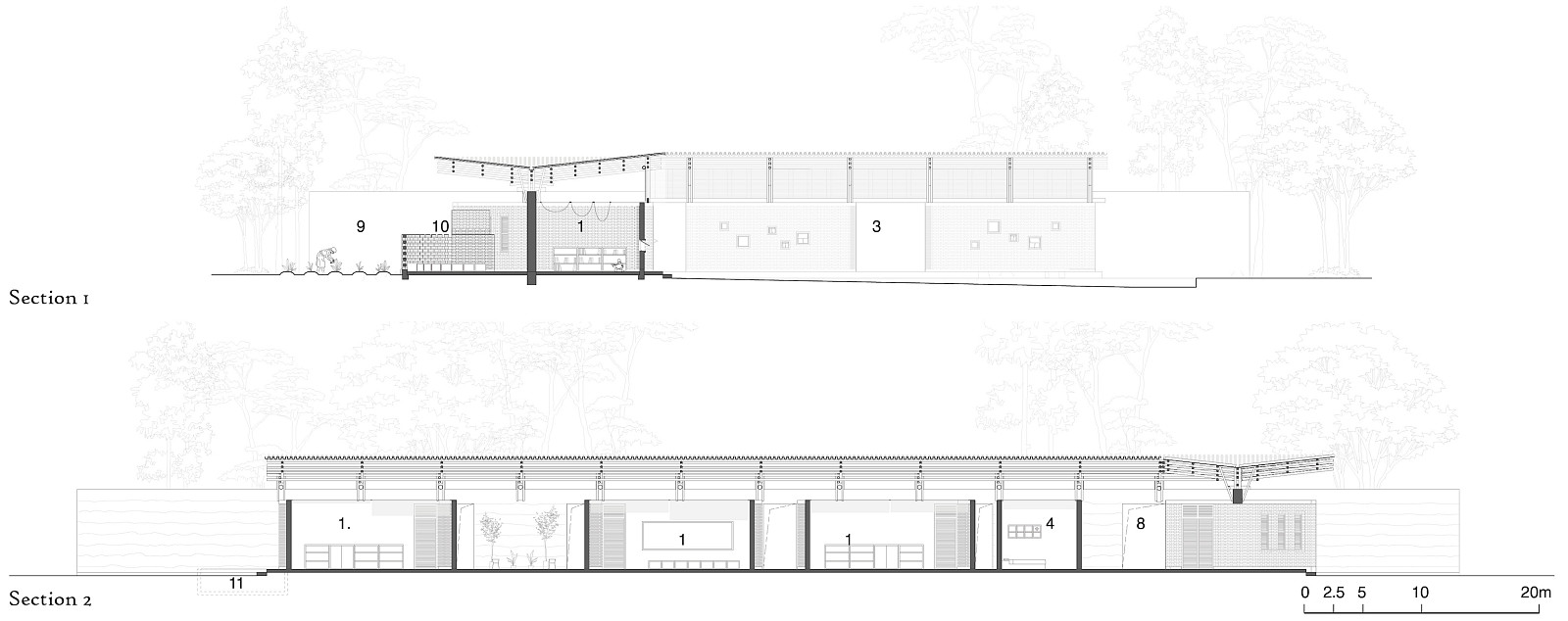
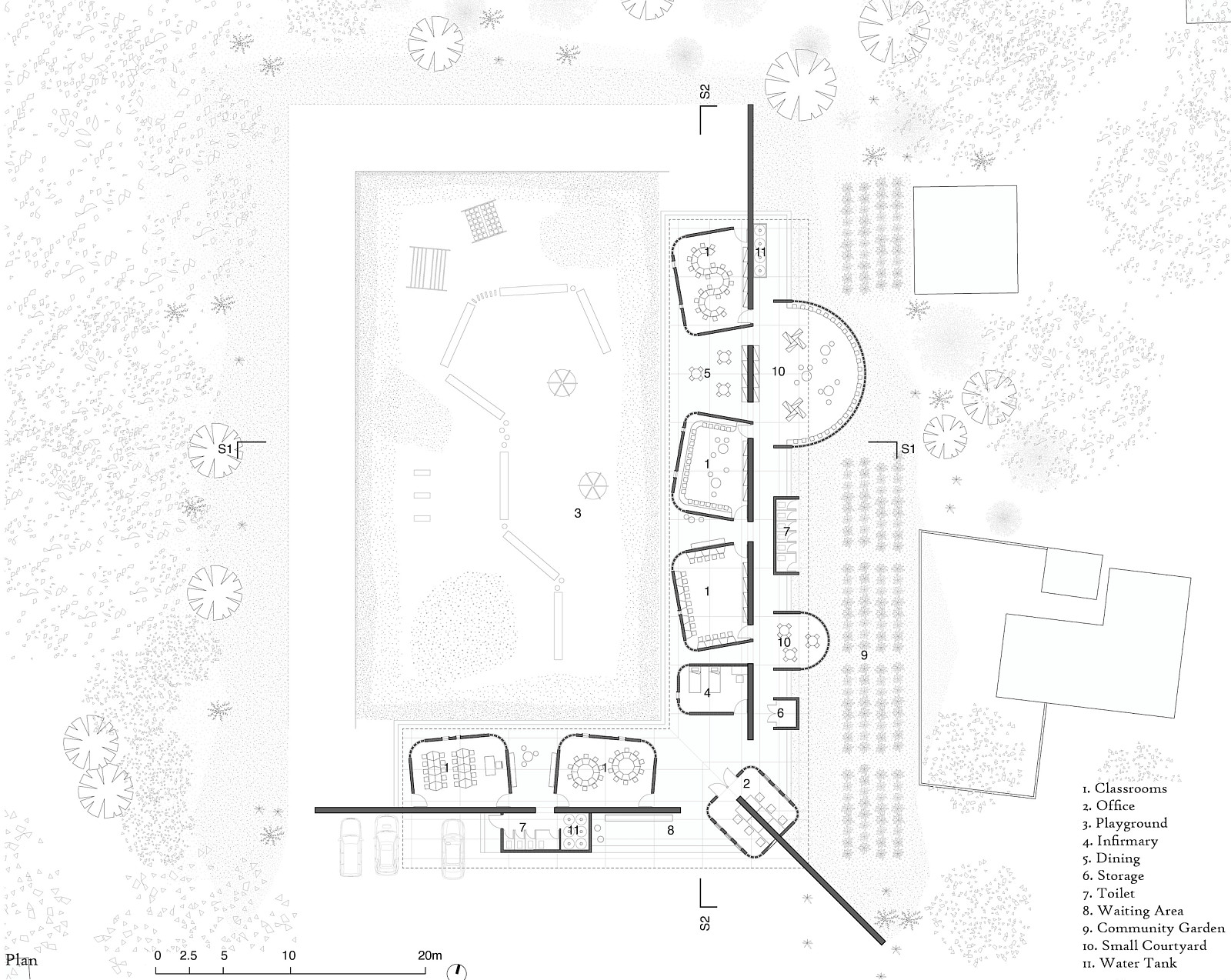
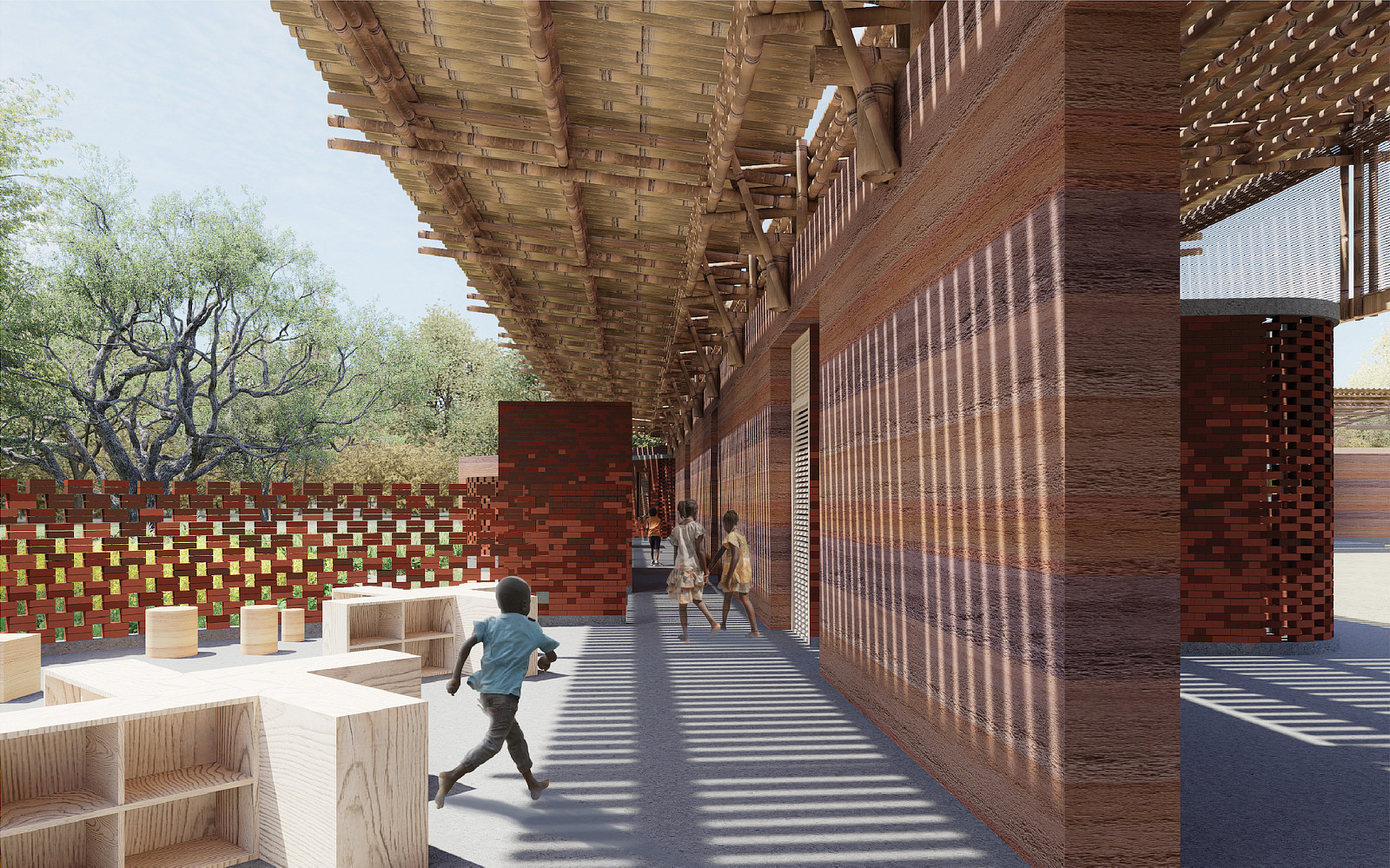
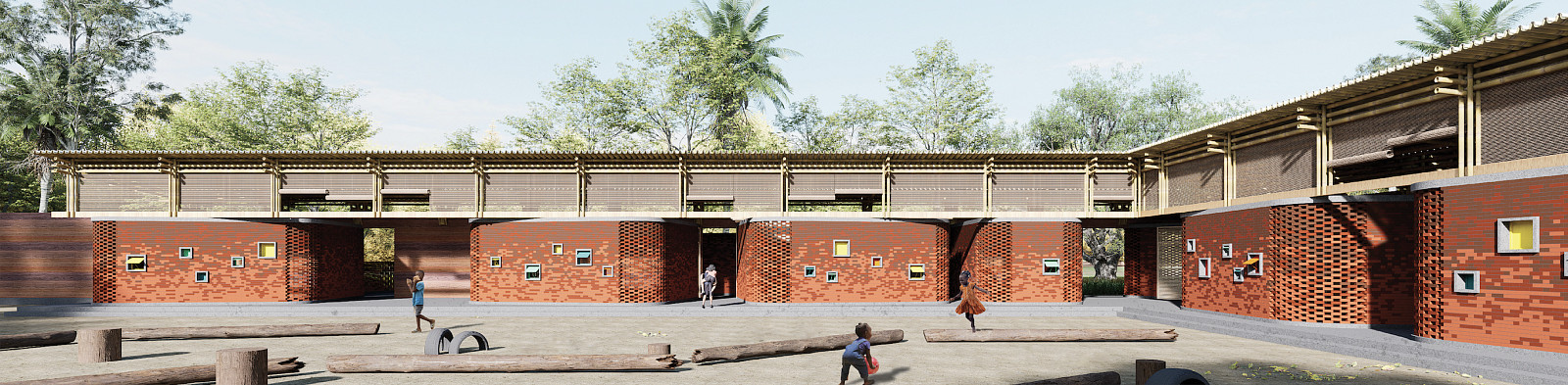
The project consists of a single-storey school arranged around a series of classrooms, shared learning spaces, courtyards, gardens and shaded circulation routes. The layout creates a continuous relationship between indoor rooms and outdoor activities, allowing children to learn, play and gather across different spatial conditions.
The main programme includes classrooms, a playground, an infirmary, dining space, storage, toilets, a waiting area, a small courtyard, a community garden and a water tank. These spaces are organised along a sheltered circulation spine, which links the different rooms while creating informal zones for play, rest and social interaction. The classrooms open towards outdoor areas, allowing teaching to extend beyond the enclosed room and into the garden, courtyard and shaded verandas.
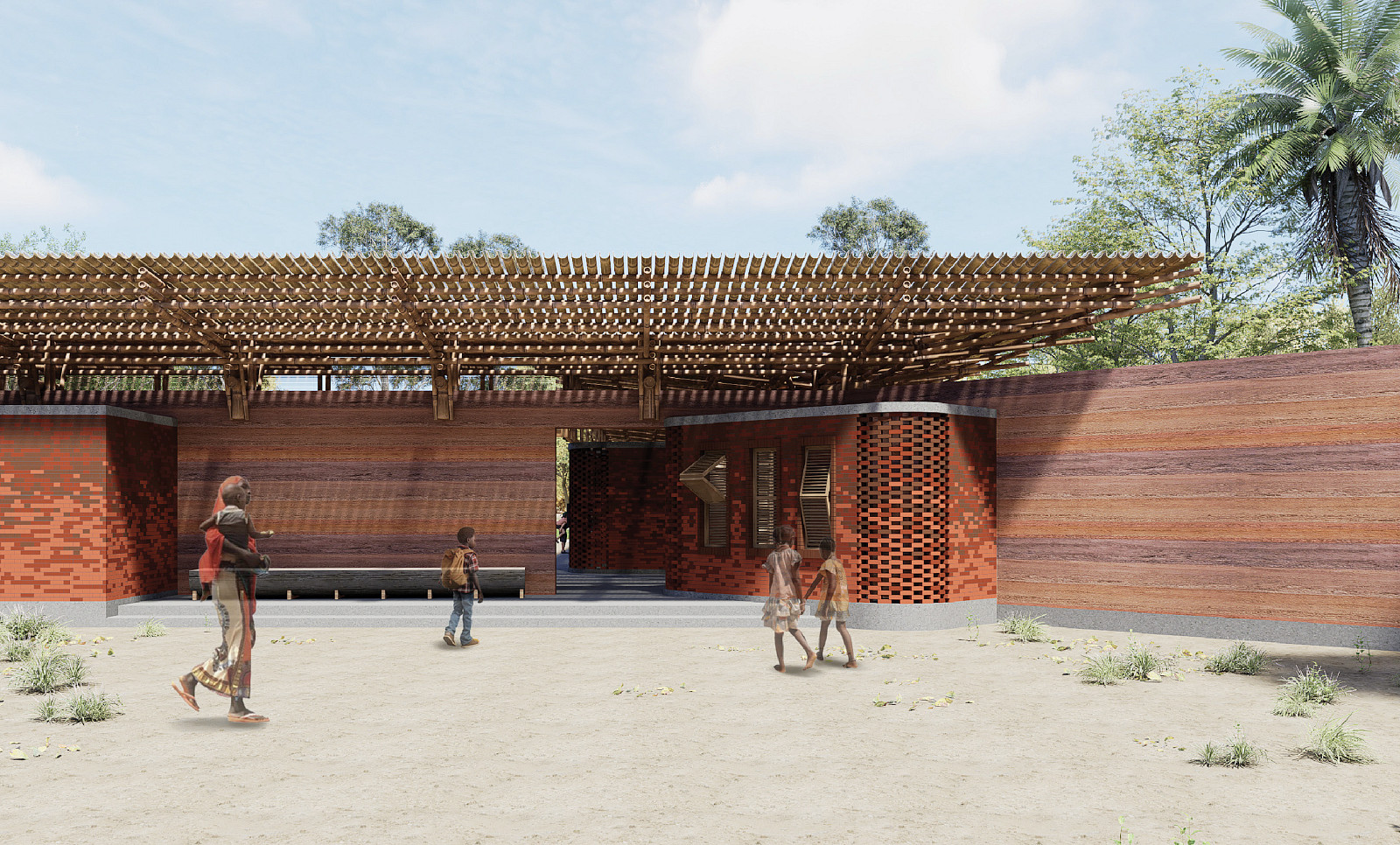
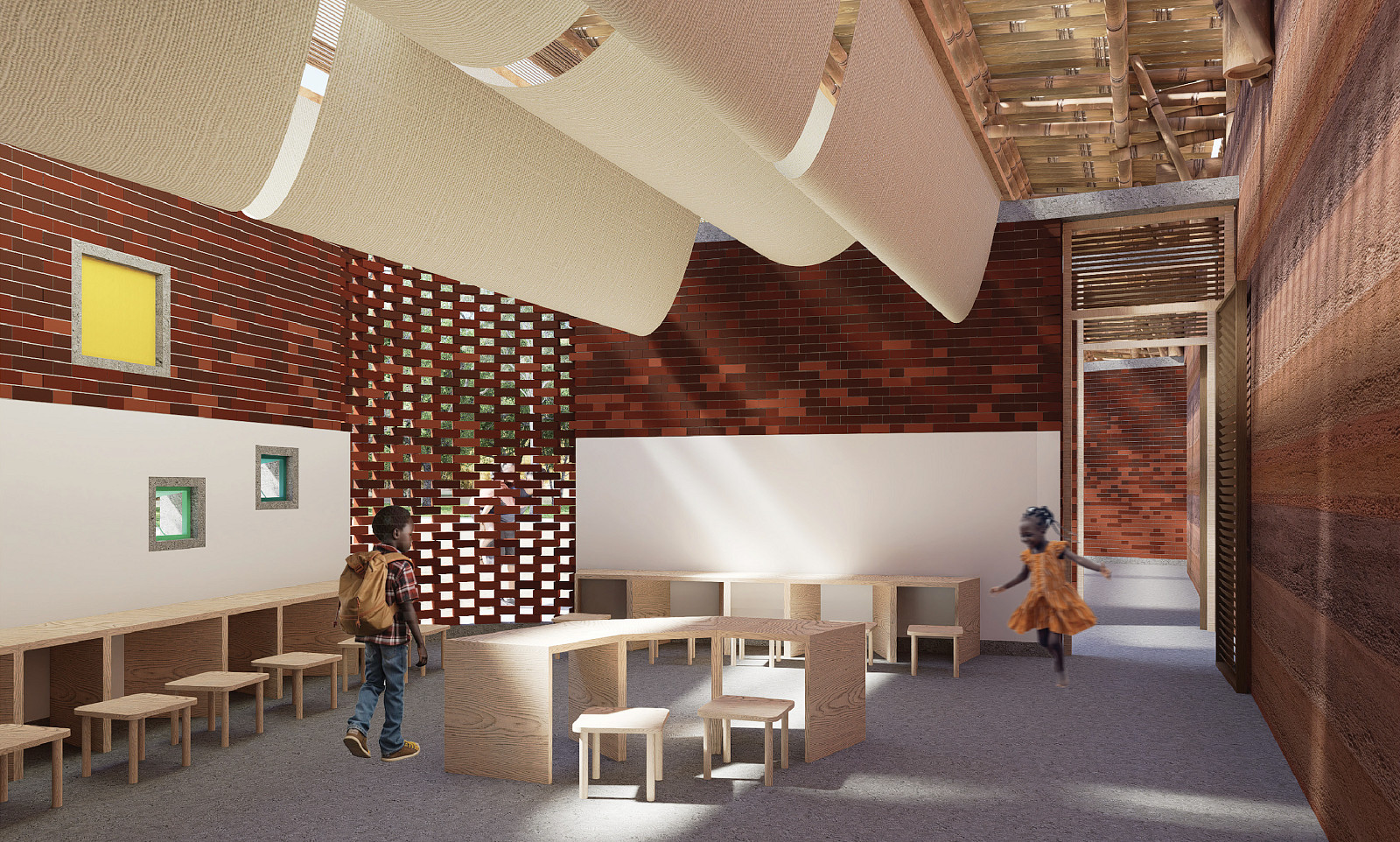
The proposal uses brick walls not only as an enclosure, but also as a playful and climactic device. Some walls are formed with perforated or patterned brickwork, allowing light, air and visual connection to pass through. The roof is treated as a large protective canopy, filtering sunlight and creating shade over the classrooms and circulation areas. This roof becomes the main environmental element of the project, reducing heat gain while giving the building a calm and recognisable identity.
Landscape is treated as part of the learning environment. The community garden, outdoor play areas and courtyard spaces allow children to engage with plants, food cultivation, seasonal change and shared care. Together, the building and landscape create a holistic learning environment where education, play, memory and community life are connected.
Technical information
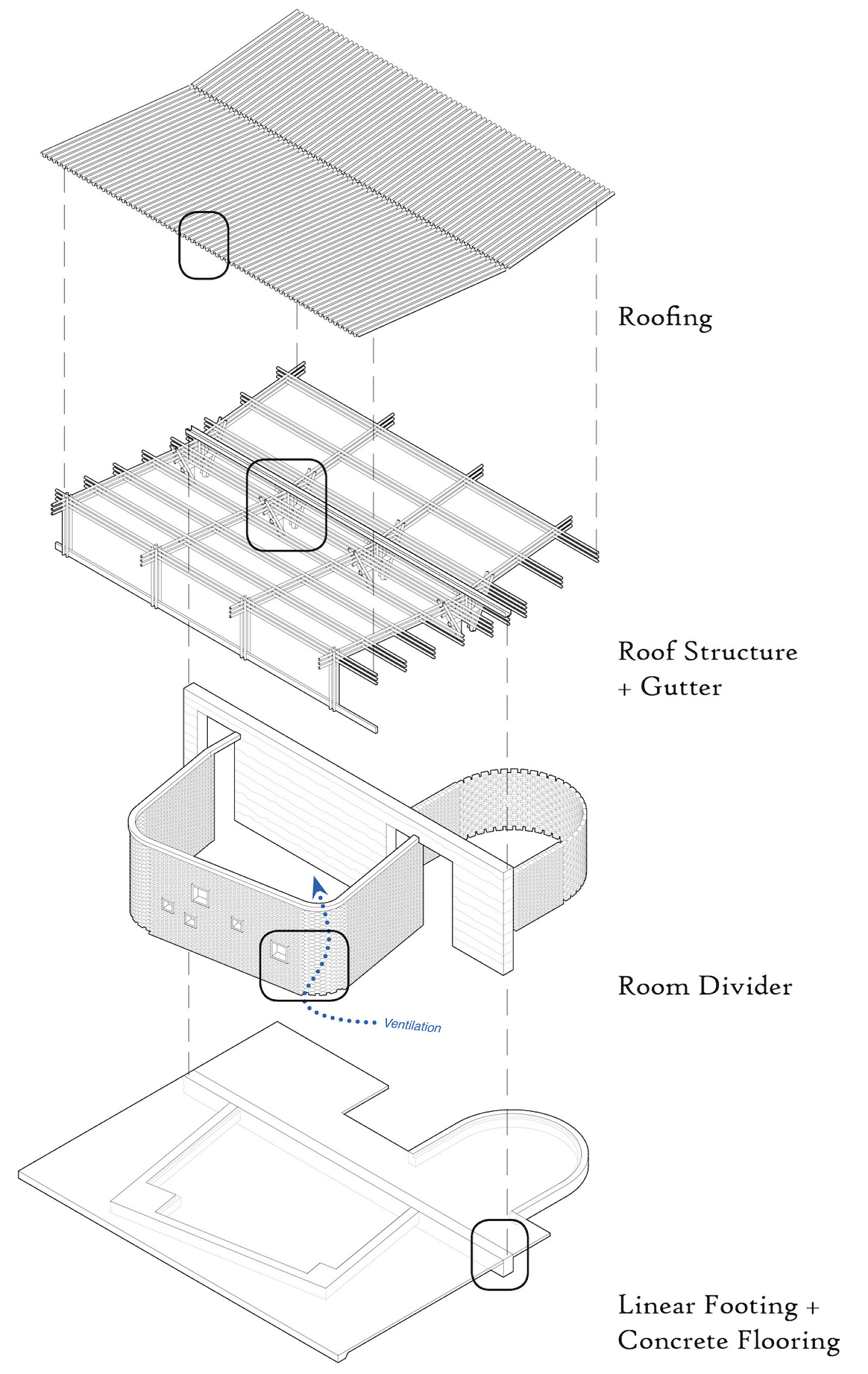
The construction strategy is based on simple, low-cost, and locally understandable building systems. The main walls are formed with brick construction, including conventional brick walls and perforated brick screens for ventilation, filtered daylight, and visual softness. The brickwork creates durable enclosure while allowing the building to respond to the warm climate through passive cooling and shaded airflow. Very useful, because apparently, children learn better when not slowly roasting.
The roof structure is designed as a lightweight shading canopy above the classroom volumes. It uses a repeated structural frame with bamboo or timber roof members, supporting a translucent tiled roof layer made from recycled plastic bottles. This roof system allows daylight to filter into the classrooms while reducing direct solar gain. Roof gutters and drainage elements are integrated to collect rainwater, which can be directed towards a water tank and landscape irrigation.
The floor is built on a linear footing and concrete flooring system, providing a simple and robust base for the classrooms and circulation areas. Internal room dividers allow the school to remain flexible, while the open corridor and courtyard arrangement support natural ventilation. Construction details include bamboo roofing, concealed guttering, reinforced brick wall elements, perforated brick screens, concrete walls, steel reinforcement bars, and linear footings.
Overall, the project combines durable brick construction, shaded roof systems, passive ventilation, rainwater collection, and planted outdoor spaces to create a resilient, low-tech, and community-focused school environment.
Created in:



Copyright © 2026 INSPIRELI | All rights reserved. Use of this website signifies your agreement to the Terms of Use, Privacy Policy, and use of cookies.