Idigna Renewal Islands


 Hisham
Project idea
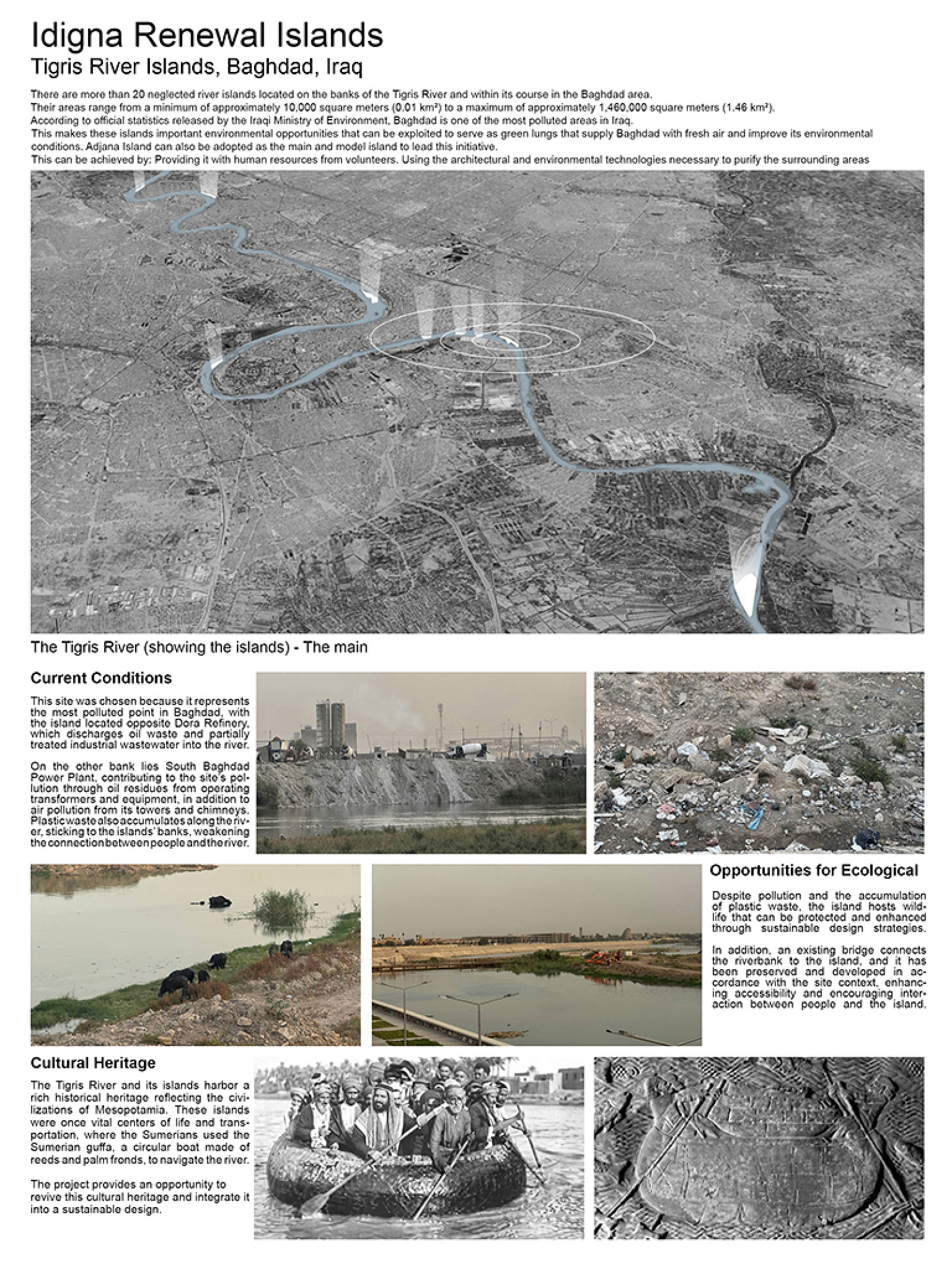
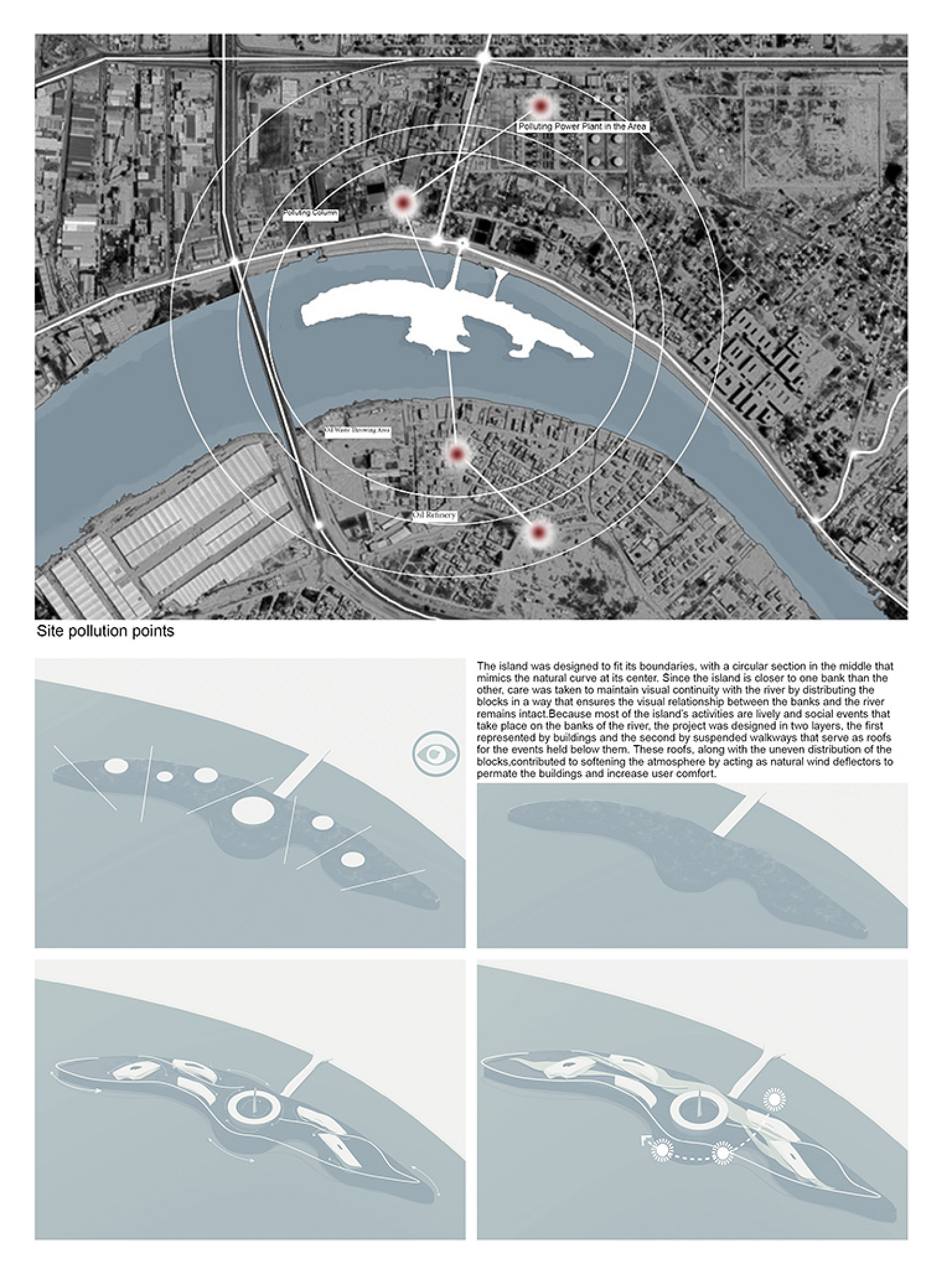
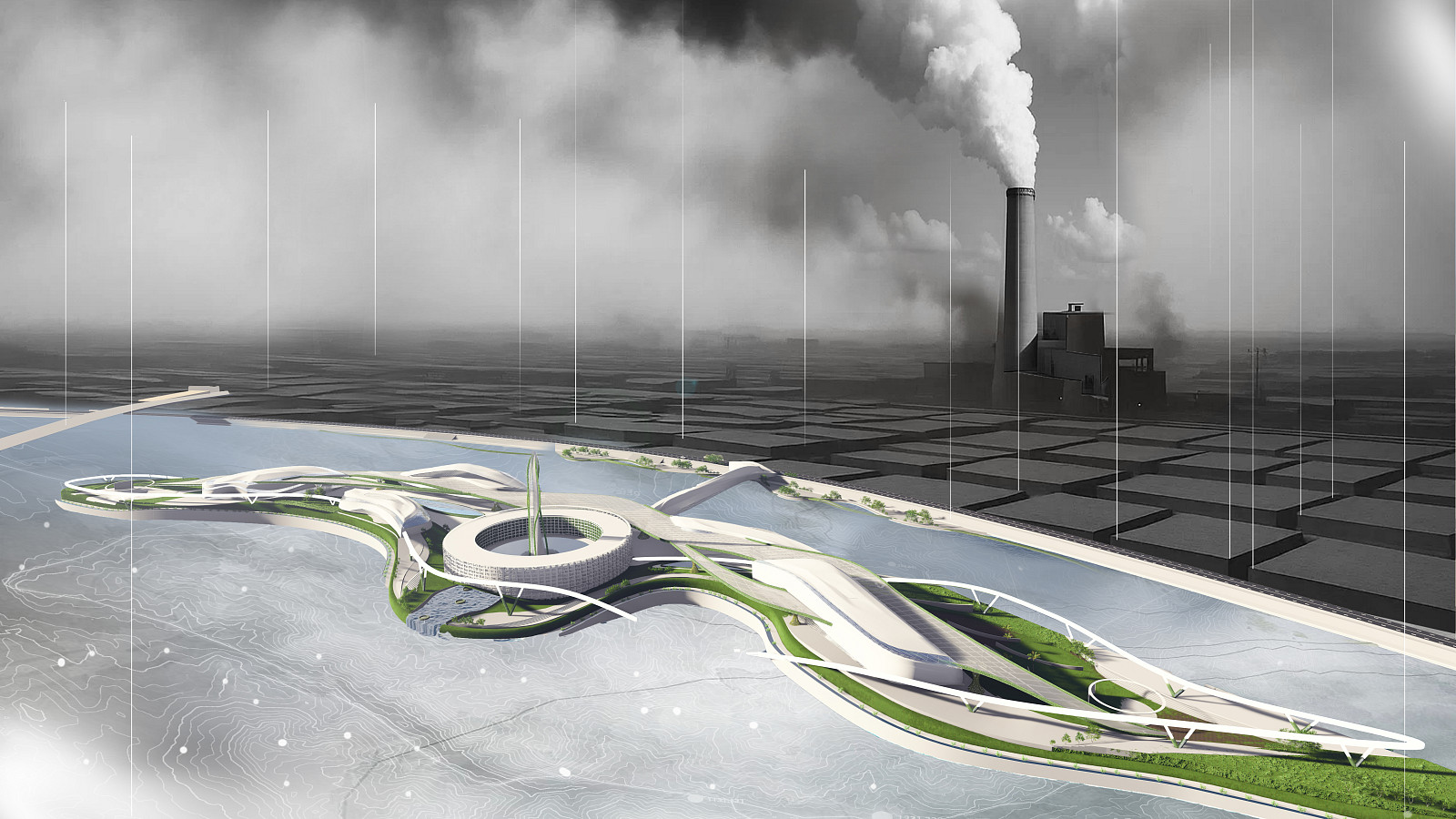
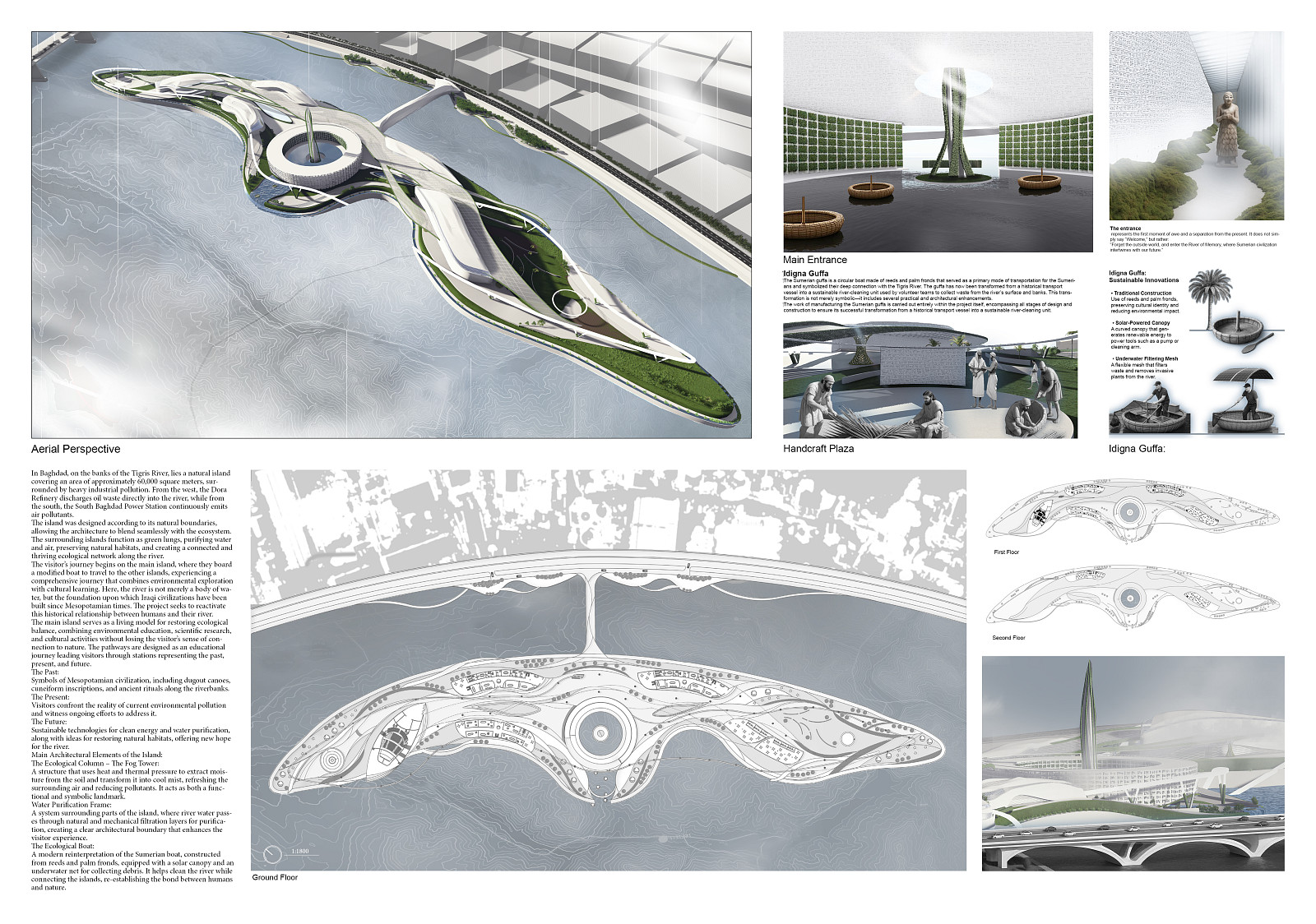
A natural island is located in the city of Baghdad, on the banks of the Tigris river. with a surface area of some 60,000 m², In an area of high industrial pollution. This includes the Dora
The one that dumps oil effluents into river water is called as Refinery and it is situated in the South.The oil-spitting refinery on the river is located in the South.
Air pollutants are emitted from Baghdad Power Station.
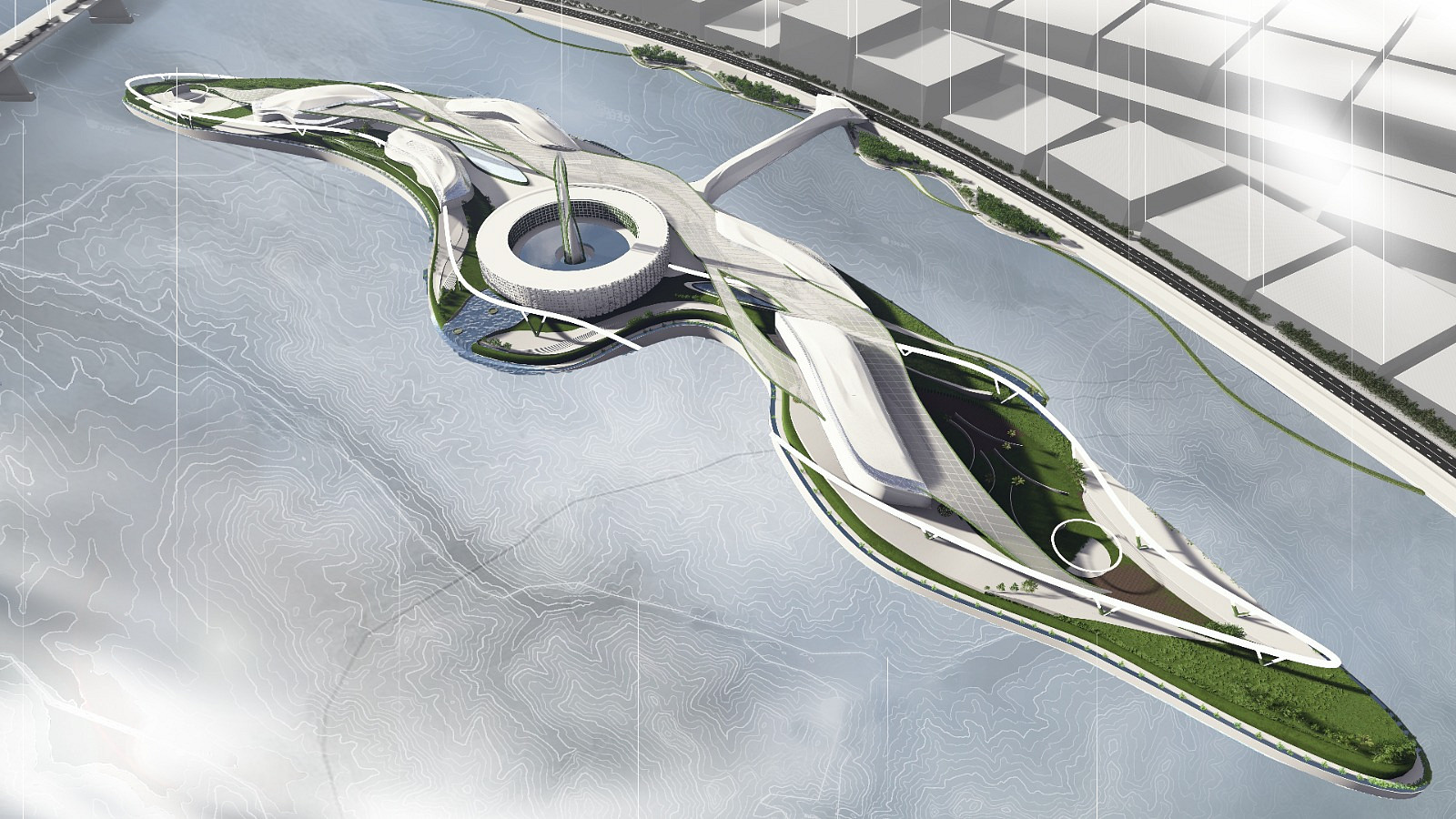
The layout of the island will follow much of the natural design and boundaries of the island with integration into the existing system. The surrounding islands, big and small, are ecological hotspots – green lungs, purifiers of water and air, guardians of habitats and creators of a unified natural network.
Visitors began their trip from the main island on a converted Kufa will visit the rest of the islands, exploring and learning about environmental education. Cultural learning – exploration.
The river is not just water, it's the bedrock of Iraqi The project brings this back to life since Mesopotamian civilizations have existed since that time. human-river connection. The primary island is a mix of the environment education, research, and cultural activities.
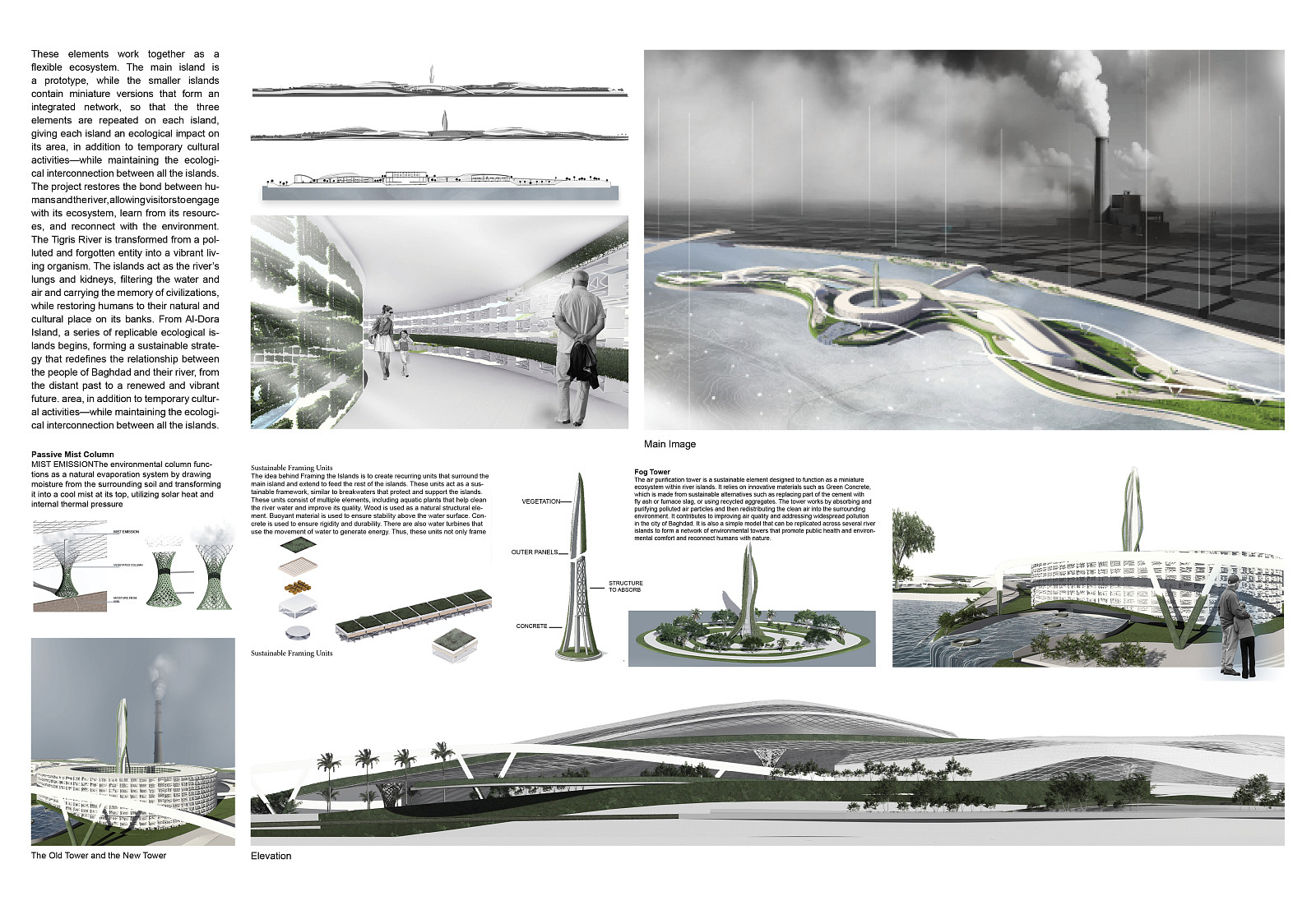
A trip through Mesopotamia's symbols into the past, Give a message about pollution awareness, in the present, and the future through. sustainable solutions. These include the Fog Tower, Water Purification Frame and Eco-Bowl Boat, which combine to form a sustainable ecosystem. Smaller islands are repeats of these elements to preserve the ecology. Connect with and offer temporary cultural activities.
the project is making a re-connection with the human and river. Revitalizing the Tigris as a living river, along with the islands, breathing the memory of civilizations and redefining the relationship between the people of Baghdad and their river, from a distant past to a new future.
Project description
This project is not just an environmental project, but a cultural and civilizational challenge. The Tigris River is a historic watercourse and the birthplace of the city of Baghdad, the embodiment of civilizations in Mesopotamia. But today, the river is under great danger due to pollution, environmental disregard and the disappearance of its social and ecological function.
The project rethinks the river, not just as watercourse but as a living organism that needs to be re-energized, to return to its role as the backbone of environmental, cultural and social activities. The proposal involves rehabilitation of the natural island and its linkage with the neighbouring islands to establish an integrated ecological network to enhance water quality, air quality, natural habitats and biodiversity along the Tigris River.
Meanwhile, the project re-activates the historical and social value of the river and brings environmental education, cultural events, research activities and eco-tourism experiences. The people visit the islands with the old traditional boats that have been modified to be more environmentally friendly, learning about the local culture while enjoying a unique experience in the river.
The innovative environmental and architectural aspects of the project, namely the Fog Tower, Water Purification Frame and the Eco-Bowl Boat, represent the vision of the project. These elements should be reproduced along the river to develop a scalable model that can help revitalize abandoned river banks and islands, both practically and symbolically.
Comparable to this proposal is the idea that it is not a one-shot but a process of transformation with the potential to be rolled out along the entire Tigris River. The project aims to restore cultural memory, ecological systems and engage the community to reconceptualize the human-river connection and establish a sustainable environmental and cultural future.
Technical information
The hybrid system has been applied in the project, combining lightness architectural interventions with site-specific construction methods to fit the natural characteristics of the Tigris river islands.
Major pieces of construction are created by a mix of reinforced concrete for stability at the base and ground level; and lightweight modular systems to create flexible and elevated structures. The hybrid design provides structural robustness in a riverine context and flexibility and minimal impact on the landscape.
The architectural elements of the project (such as the Fog Tower, Water Purification Frame, and the Eco-Bowl Boat infrastructure) are conceived as modular and replicable systems. Each element is a self-contained environmental unit which can be repeated along the river and form a continuous ecological network.
The Fog Tower is designed as a vertical environmental device that will work on principles of controlled water mist diffusion, which will help in the control of the microclimate, purification of the air and lowering the temperature in the environment. It applies the light structure system to support the environmental equipment with less intervention of materials.
The Water Purification Frame combines passive filter and active filter technology, while the water treatment process of the river is completed by natural sedimentation, biological treatment and mechanical filtering layer. It's designed for use both as an infrastructural component and as an educational environmental installation.
The Eco-Bowl Boat is a light, low-power river boat for low impact mobility on the Tigris. It is built from sustainable materials and optimized hull geometry to minimise water resistance and energy consumption, and it is fit for transportation and ecological observation activities.
The spatial system of the project is based on a landscape-based concept, with built components delicately placed into the natural morphology that already exists on the islands. Very little alteration of the site is undertaken to maintain the integrity of the area and biodiversity.
Sustainability is integral to the design, where water is recycled, passive environmental systems are incorporated, and replicative ecological units enable the project to be expanded incrementally along the Tigris River and become an environmental and cultural river corridor.

Copyright © 2026 INSPIRELI | All rights reserved. Use of this website signifies your agreement to the Terms of Use, Privacy Policy, and use of cookies.