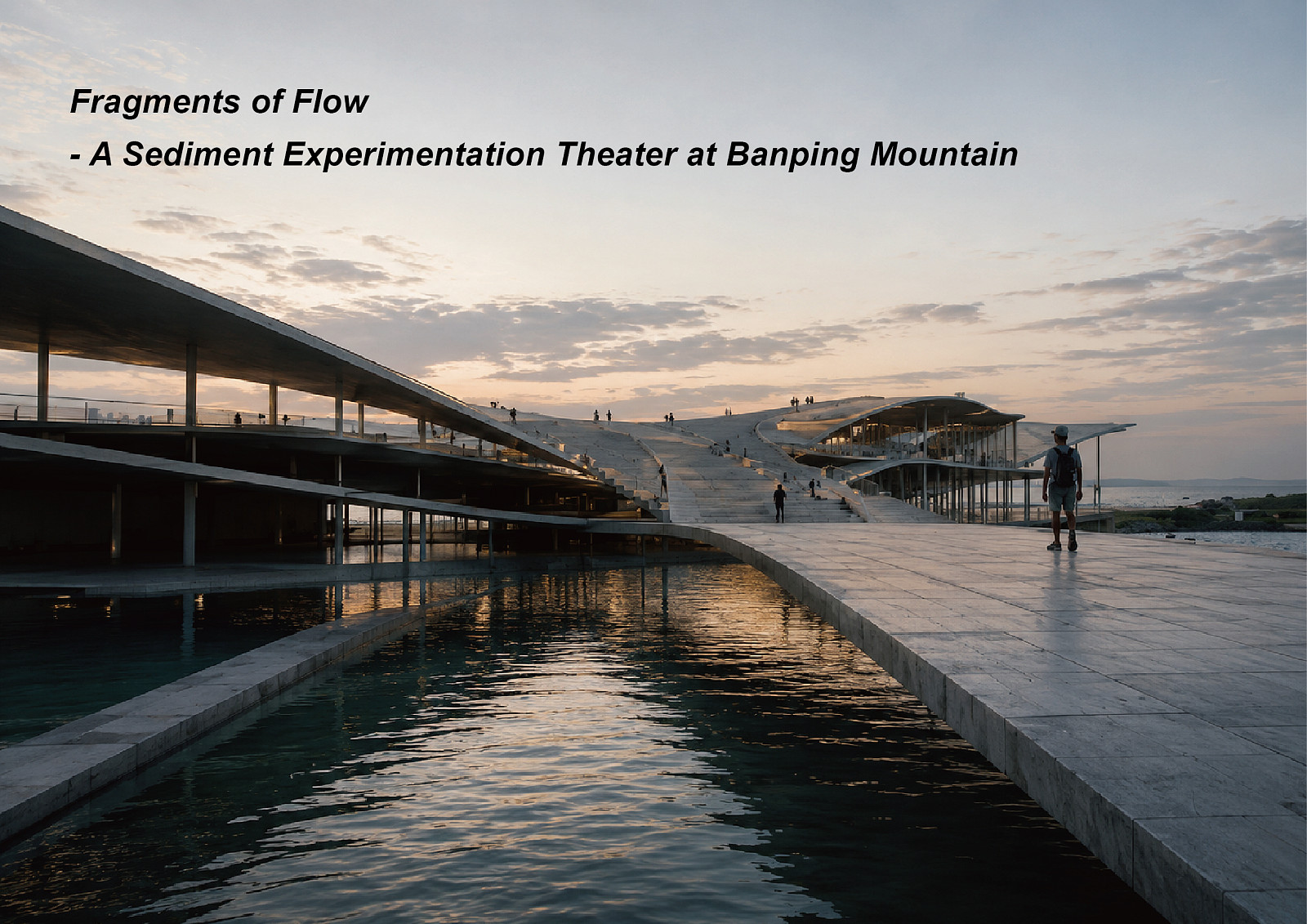
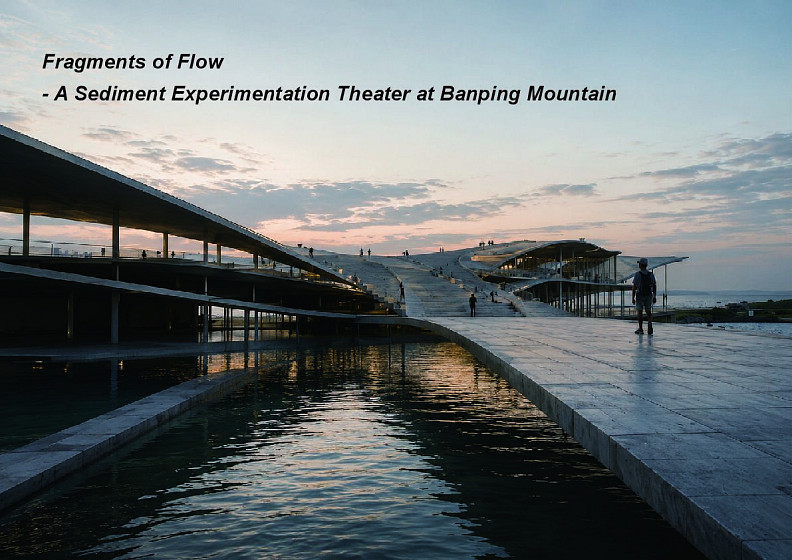
Fragments of Flow - A Sediment Experimentation Theater at Banping Mountain


Project idea
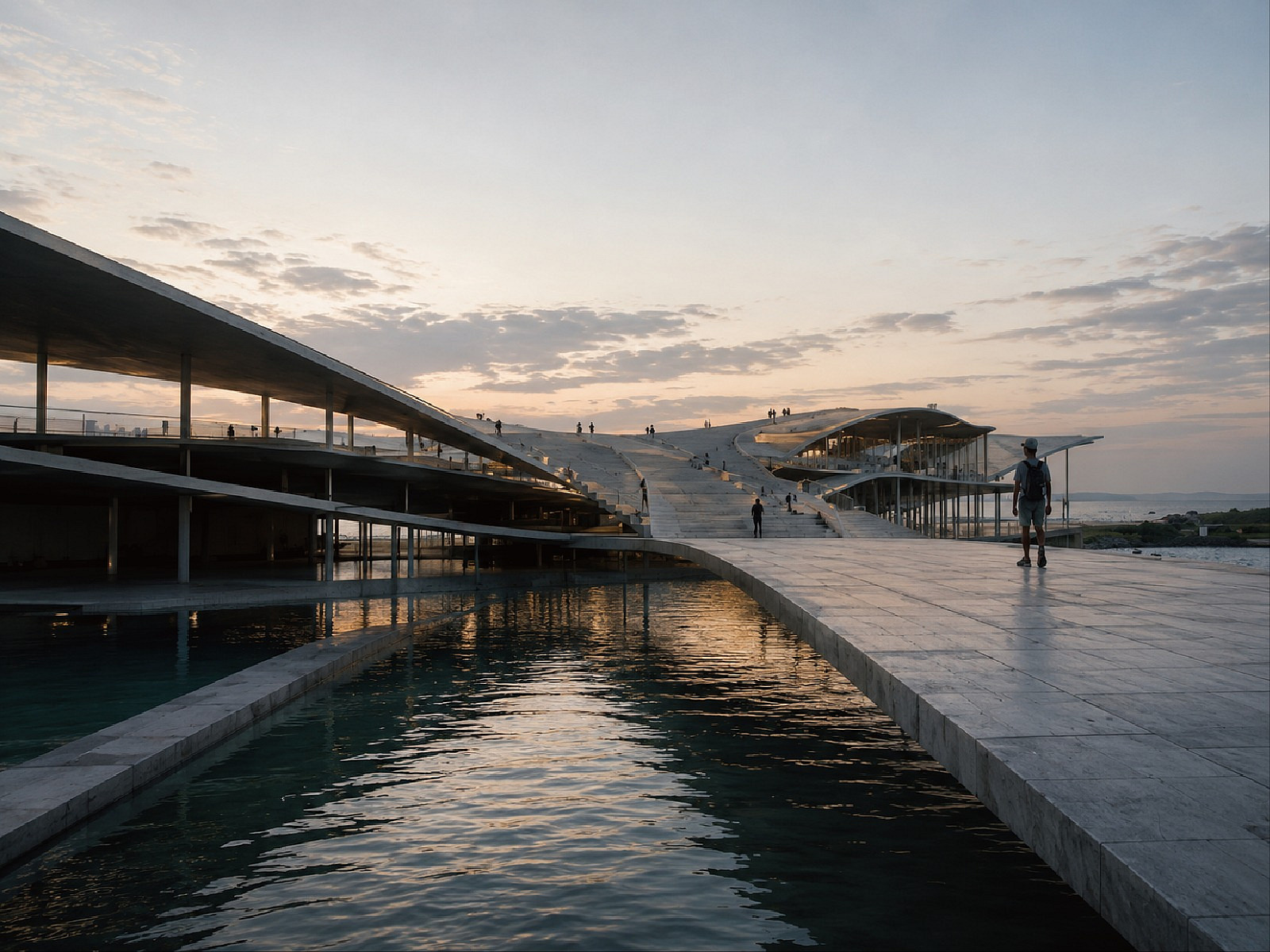
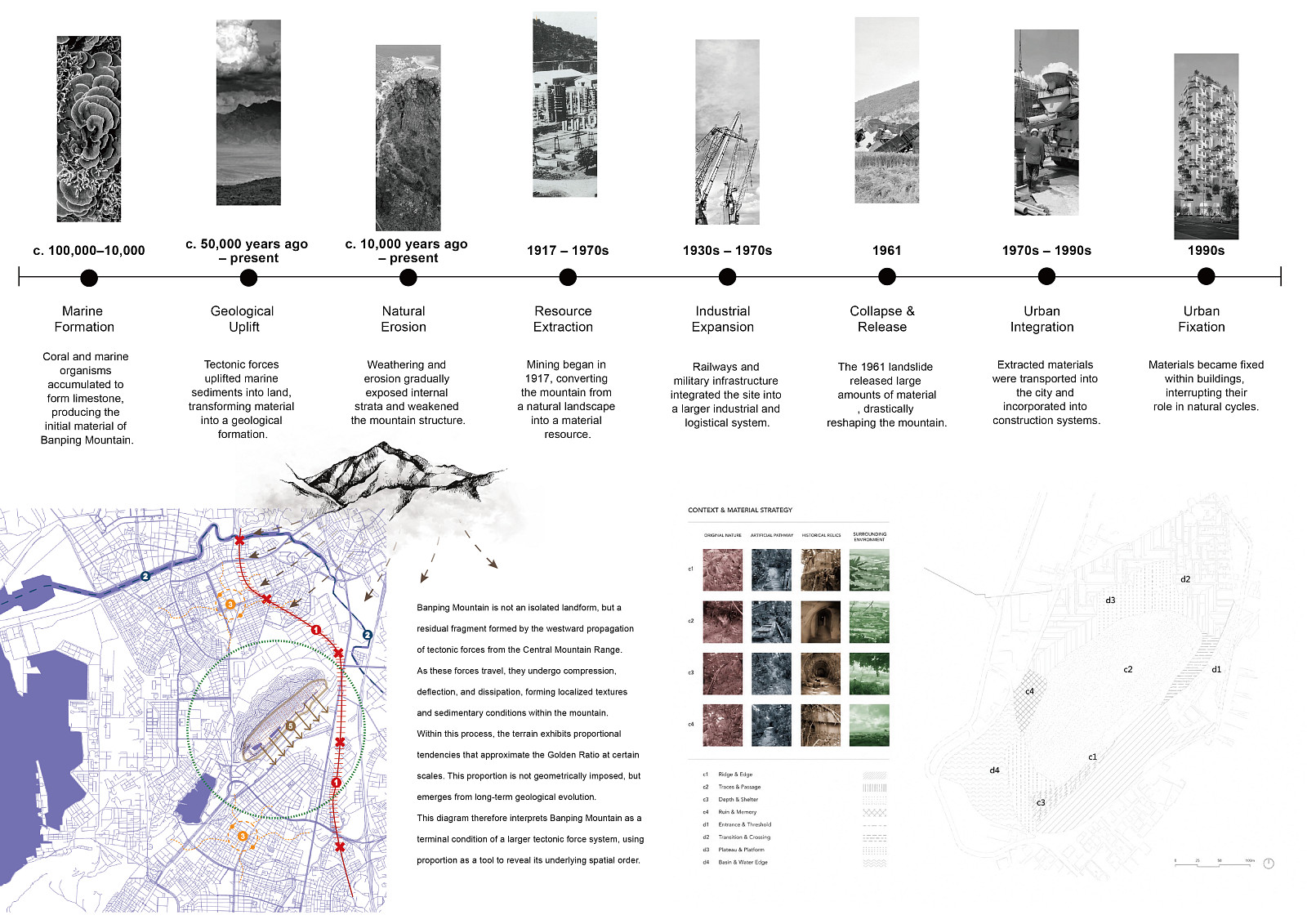
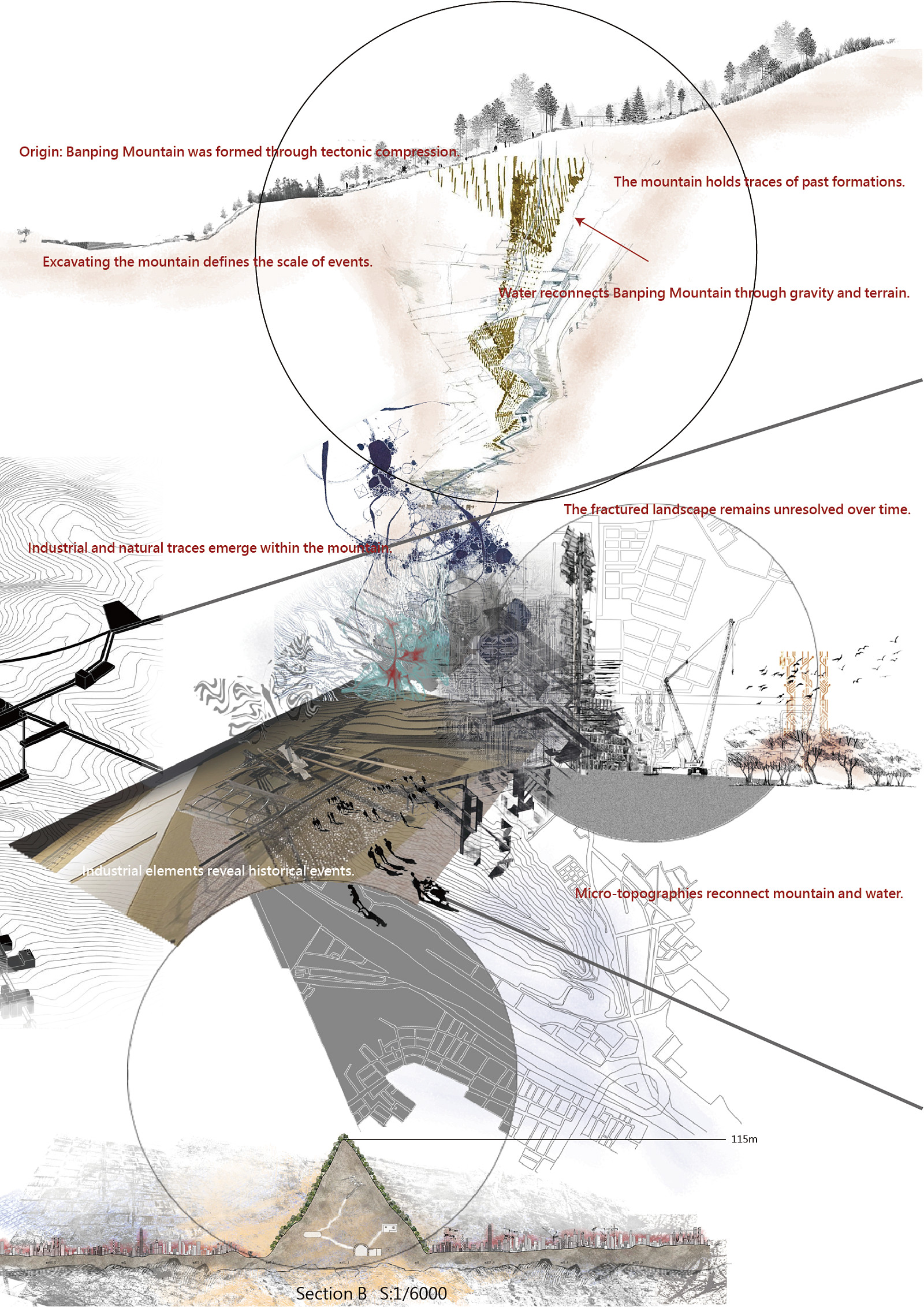
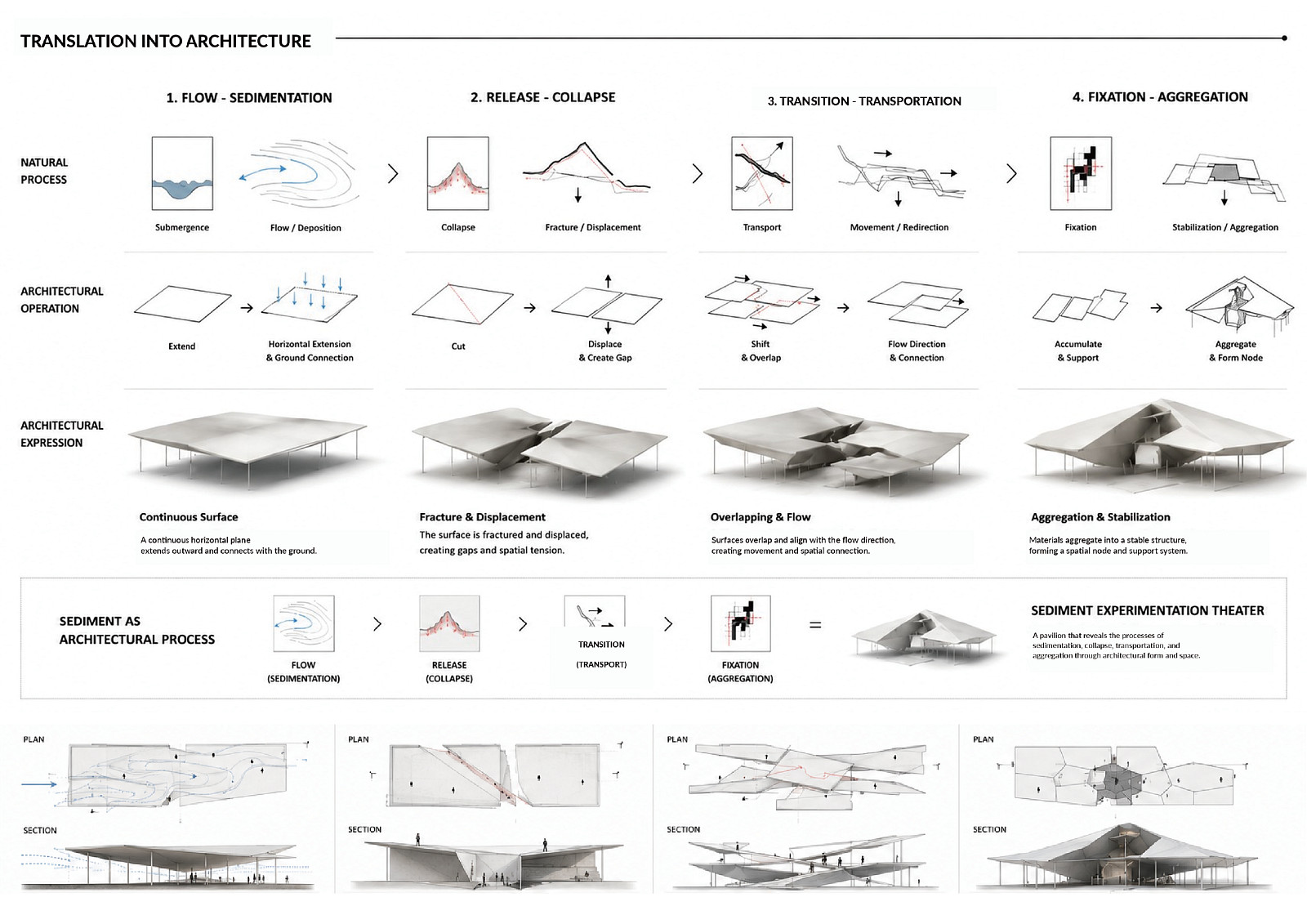
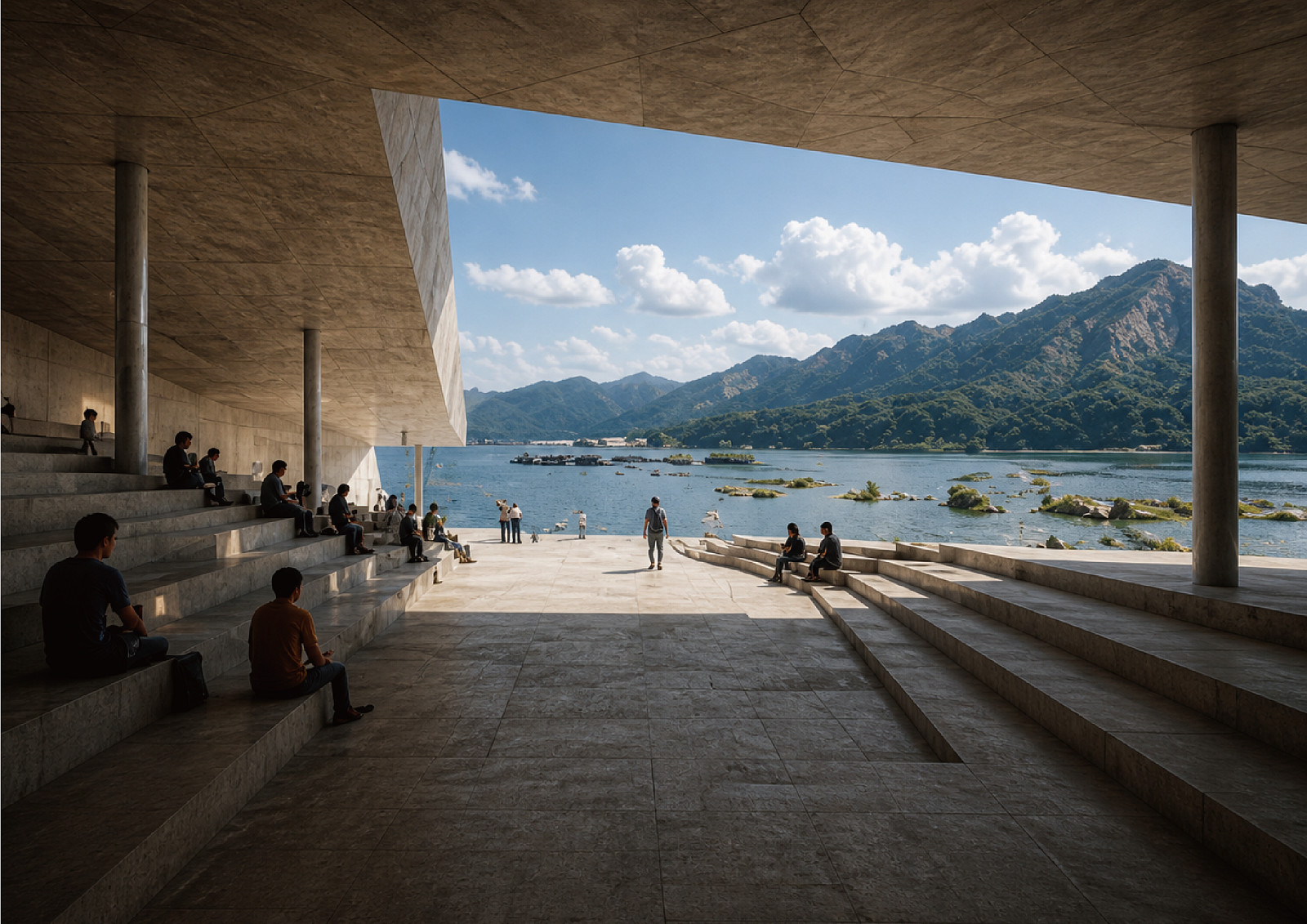
This project is located at Banping Mountain and responds to its complex landscape shaped by marine sedimentation, geological uplift, mining excavation, collapse, and urbanization. Banping Mountain is not only a landform, but also a geological memory formed through both natural processes and human extraction. The project takes “sedimentation” as the central spatial concept, translating processes of flow, release, transportation, and aggregation into architectural operations. Through this approach, the fragmented mountain, water system, and human activities are reconnected. The architecture becomes a sediment experimentation theater, allowing visitors to experience the history, geological transformation, and natural cycles of Banping Mountain through movement, viewing, gathering, and interaction with water.
Project description
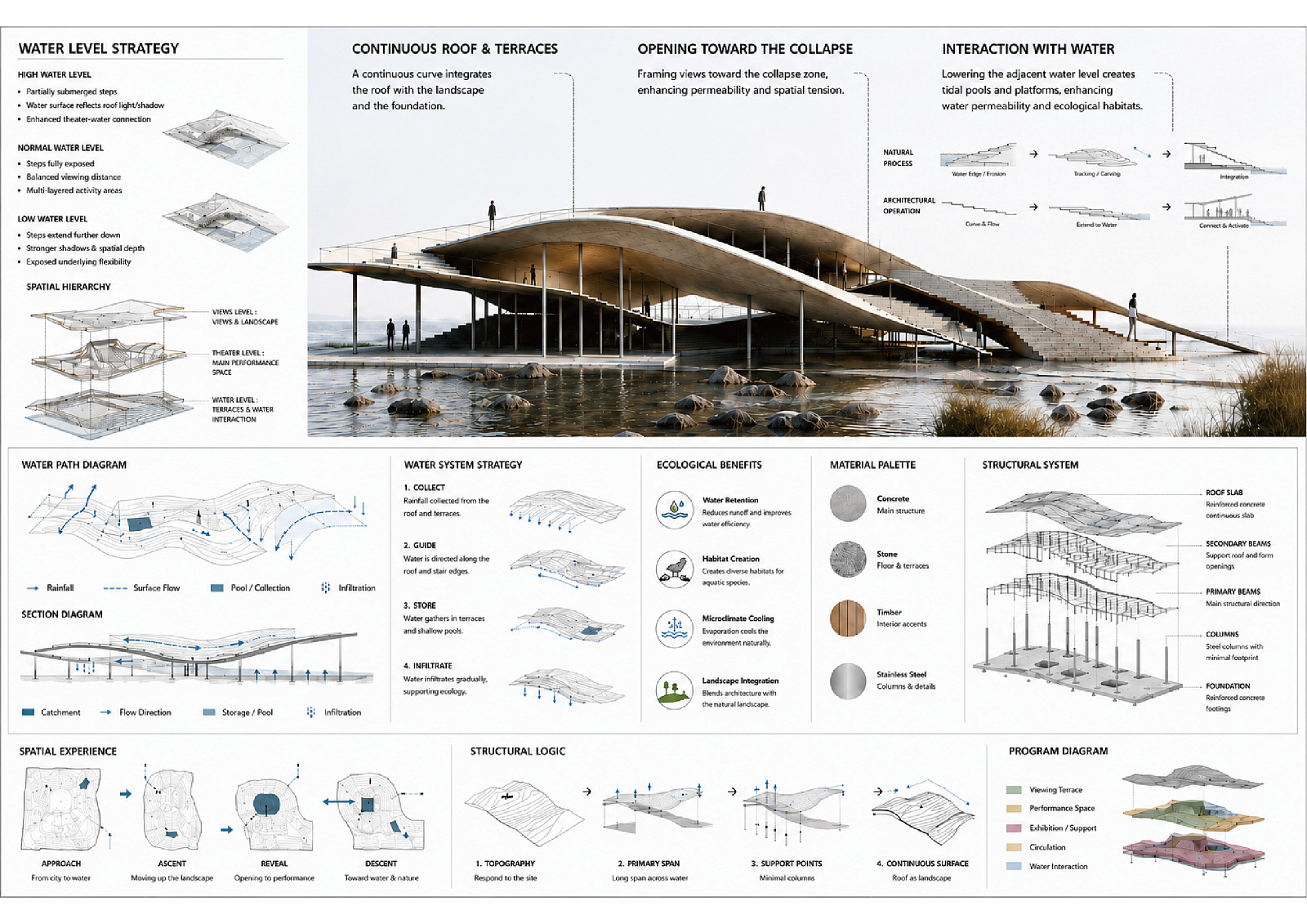
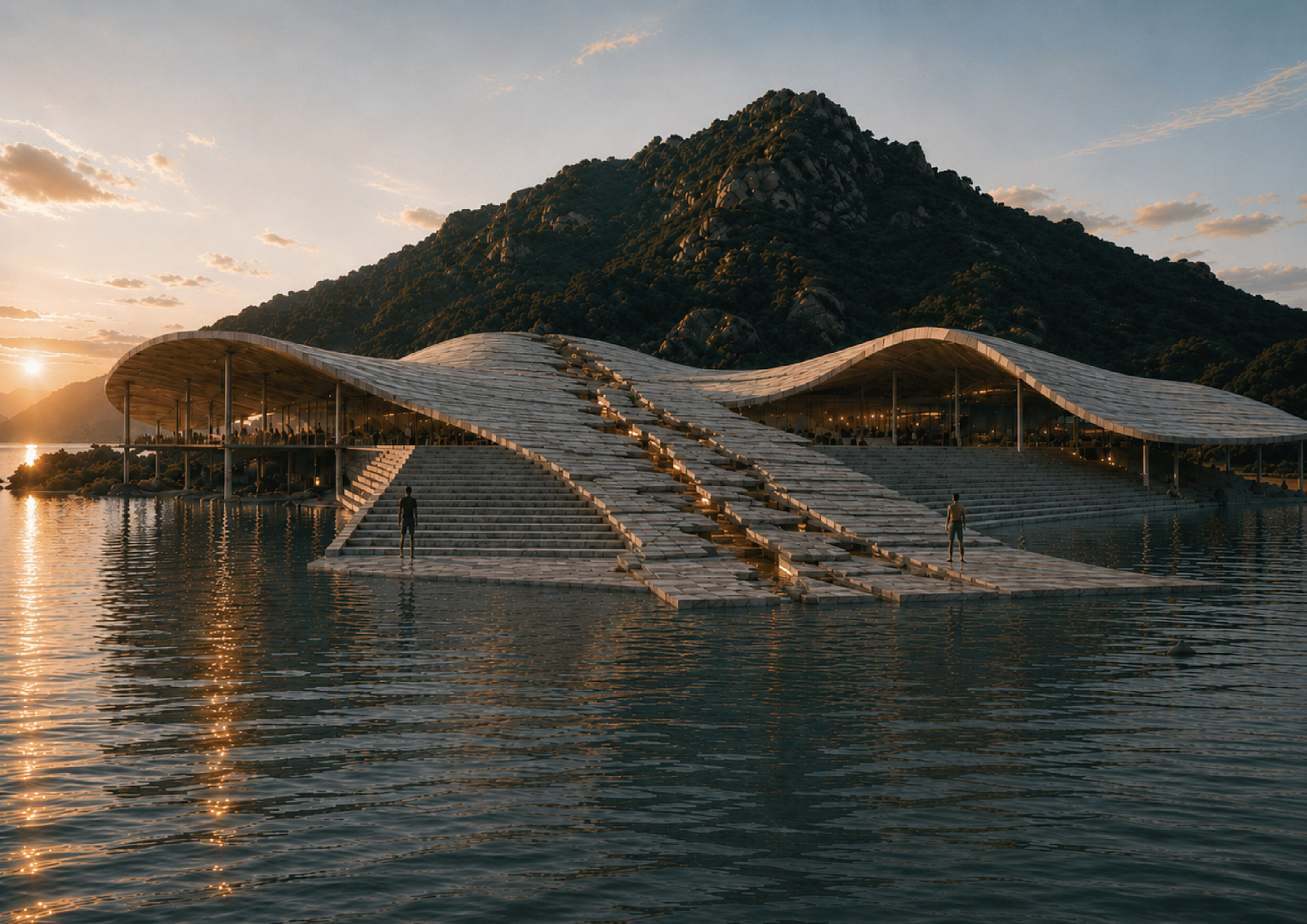
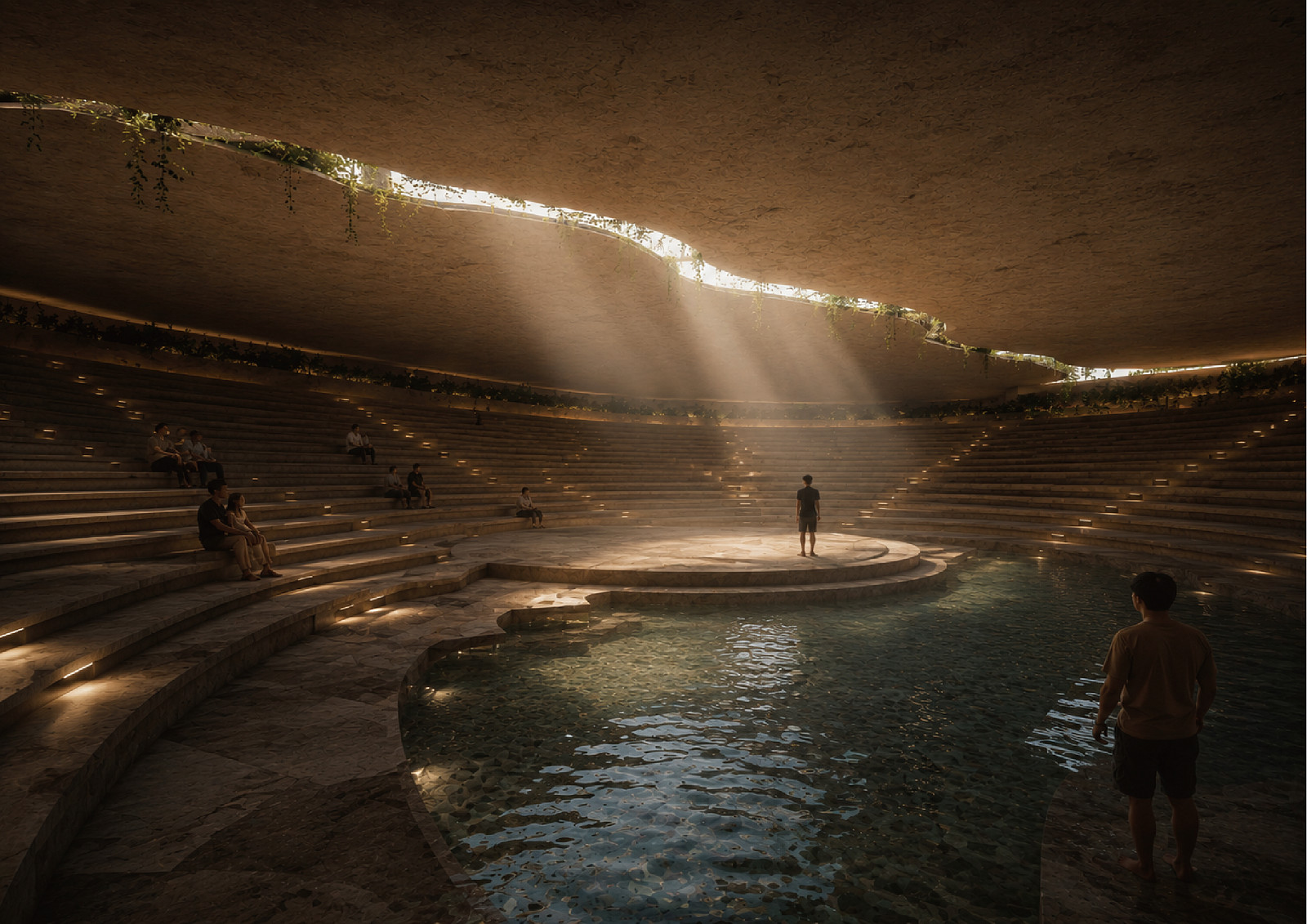
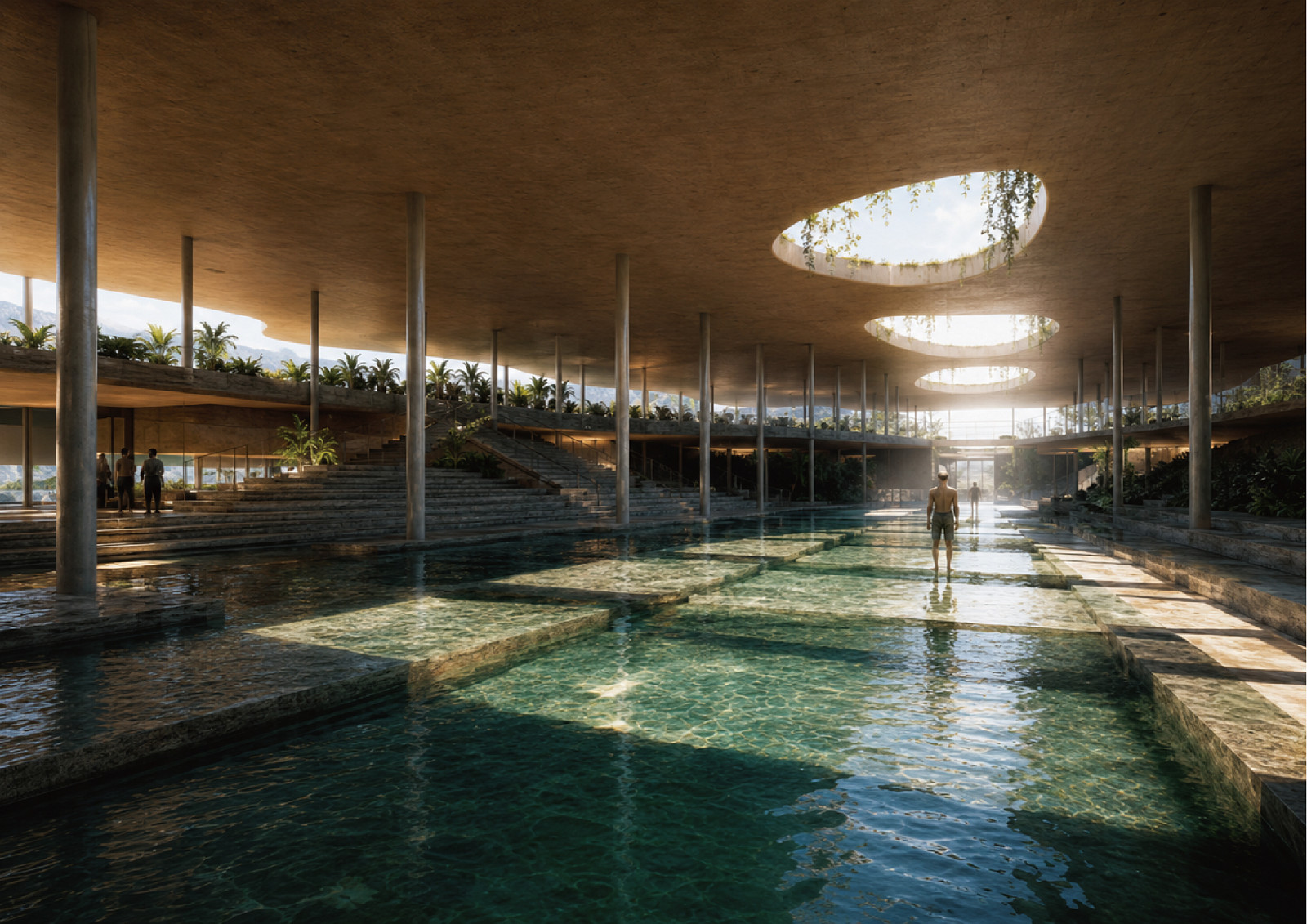
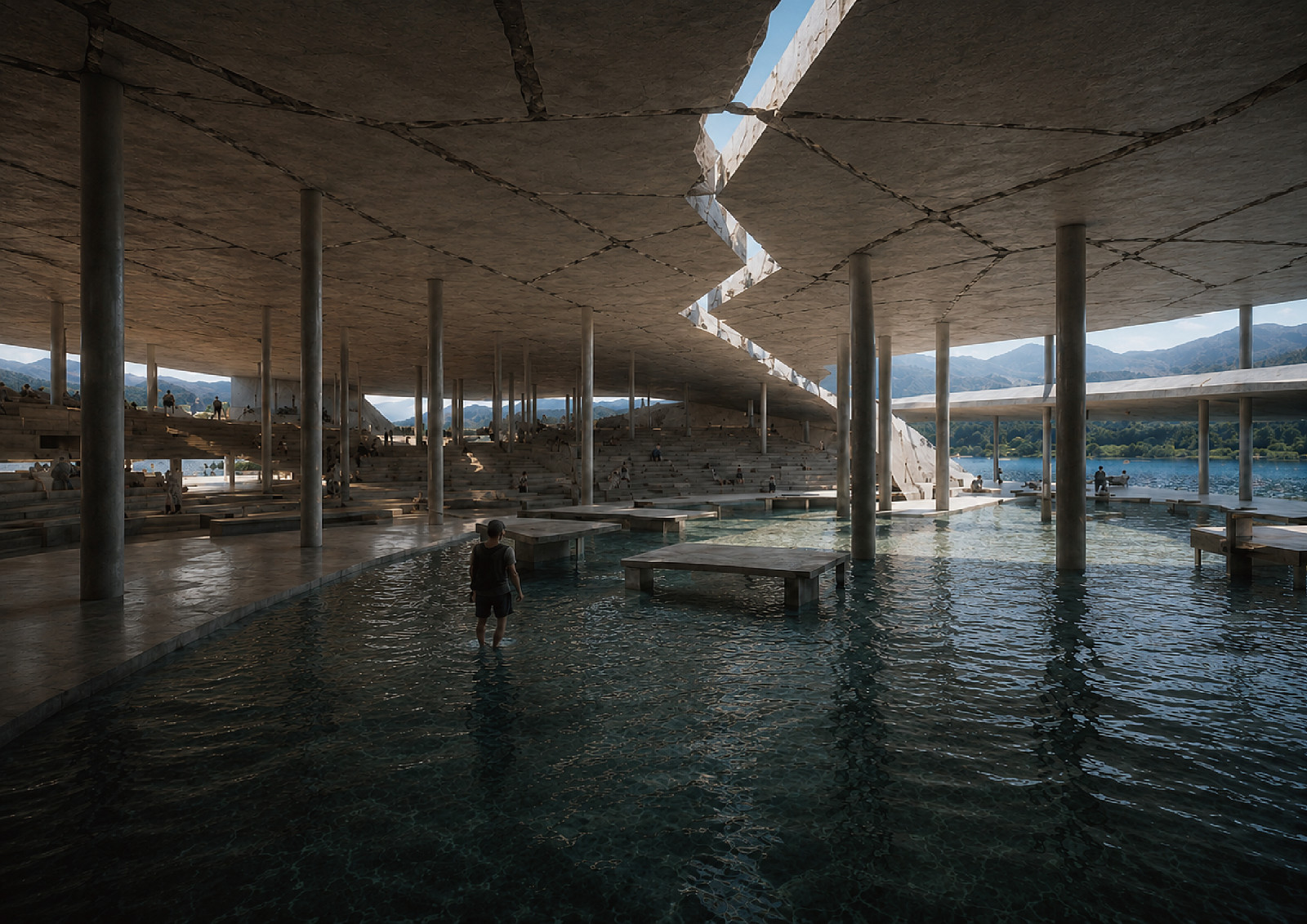
The project consists of a continuous roof, stepped terraces, theater spaces, viewing platforms, waterfront activity areas, and ecological water pools. The architecture uses a large continuous surface to respond to the topography of Banping Mountain, while cracks, openings, and displaced platforms create visual, spatial, and circulatory permeability. The main theater space is located at the core of the building, facing the collapse zone and the water landscape, forming a public place for performance, exhibition, leisure, and environmental education. The water system collects rainfall, guides surface runoff, retains water within terraces, and allows gradual infiltration. Through these strategies, the building becomes a landscape interface that responds to changing water levels. The project is not only a place for public activities, but also a medium for reinterpreting the geological history and ecological restoration of Banping Mountain.
Technical information
The main structural system consists of a reinforced concrete continuous roof, primary beams, secondary beams, columns, and foundation elements. The roof functions as a landscape platform that integrates viewing, shading, water guidance, and public activity. The stepped terraces use stone or concrete paving to create public interfaces for seating, viewing, and interacting with water. Structurally, the project uses a minimal column system to support the long-span roof while maintaining openness and visual permeability at the ground level. The water system includes roof rainwater collection, surface runoff guidance, terrace storage, water retention pools, and infiltration zones. These strategies reduce runoff, improve the microclimate, and create habitats for aquatic species. The material palette mainly includes concrete, stone, timber interior elements, and stainless-steel details, responding to the texture of Banping Mountain’s strata, its sedimentary memory, and the need for long-term durability.
Documentation

Copyright © 2026 INSPIRELI | All rights reserved. Use of this website signifies your agreement to the Terms of Use, Privacy Policy, and use of cookies.