COR MEDITERRANEUM - RESEARCH CENTER FOR ALBANIA’S COASTAL HERITAGE, PORTO PALERMO

Project idea
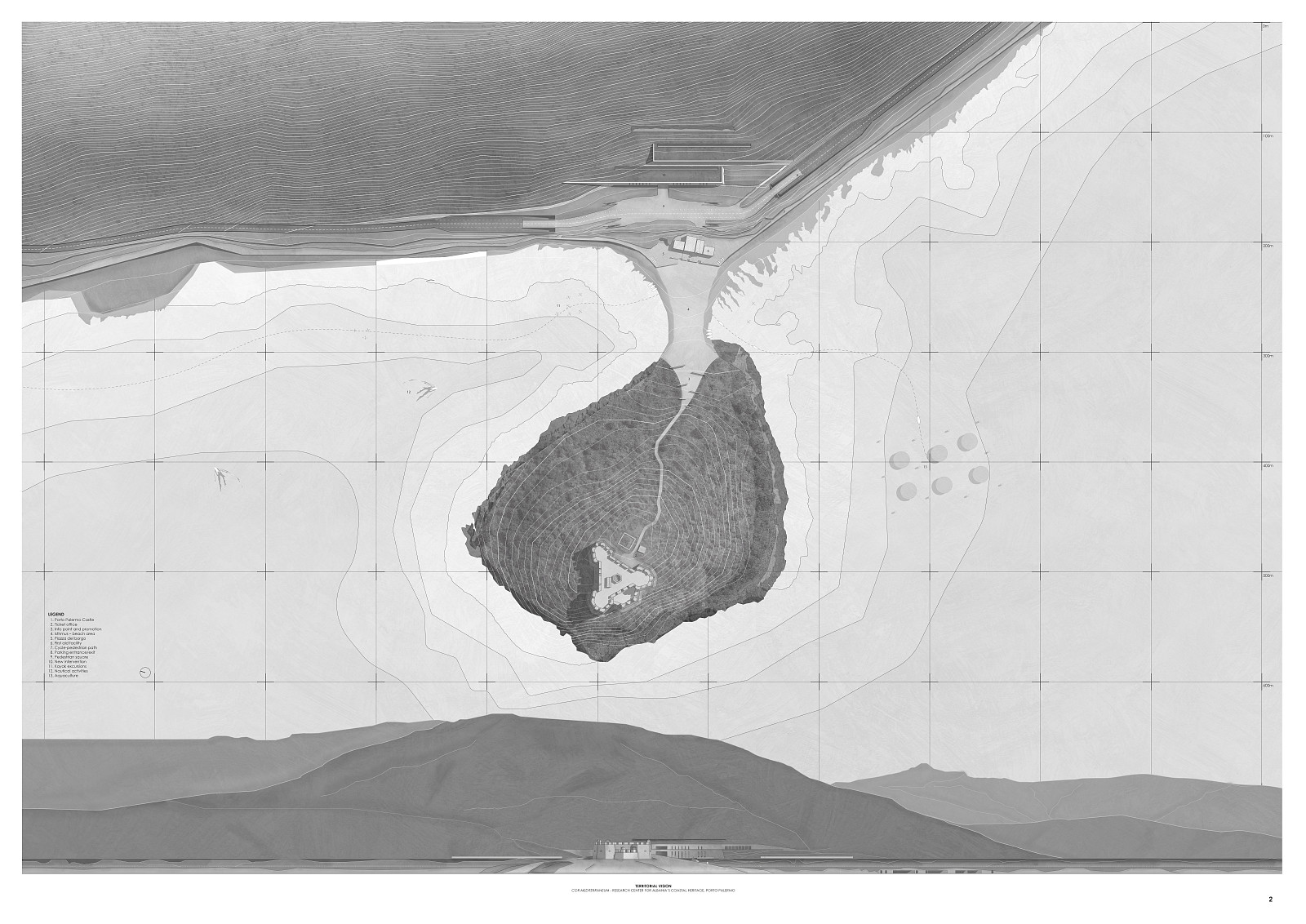
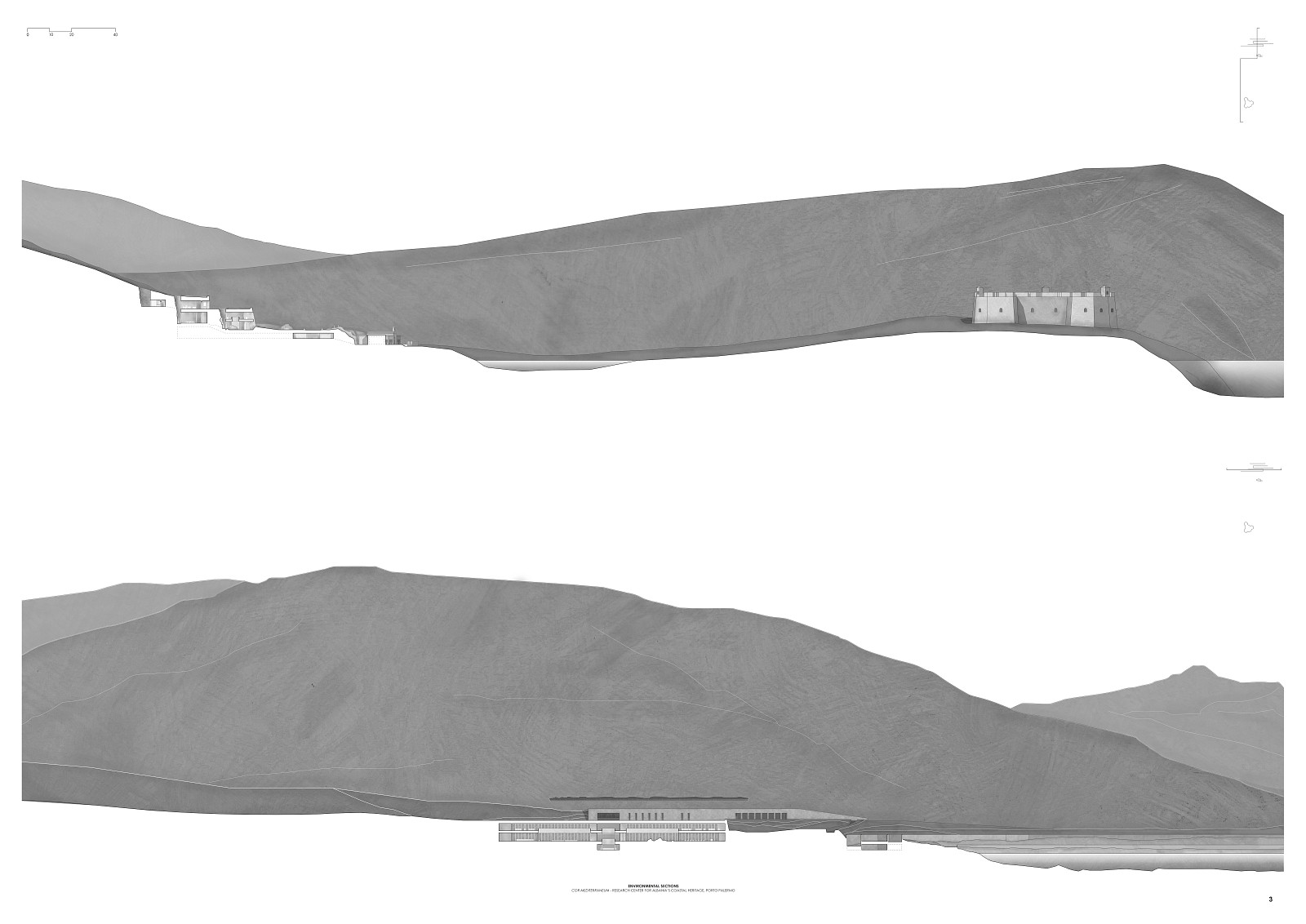
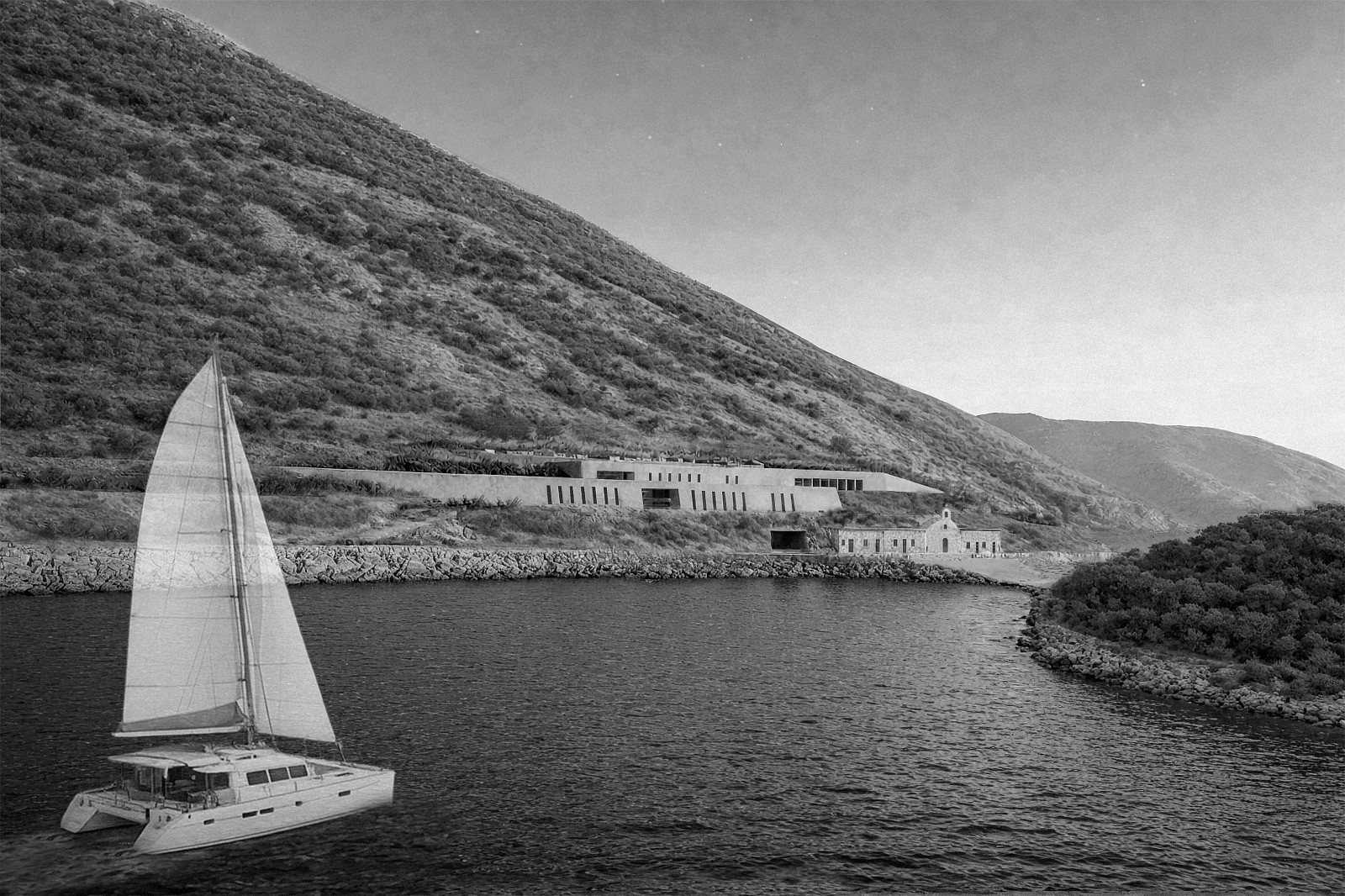
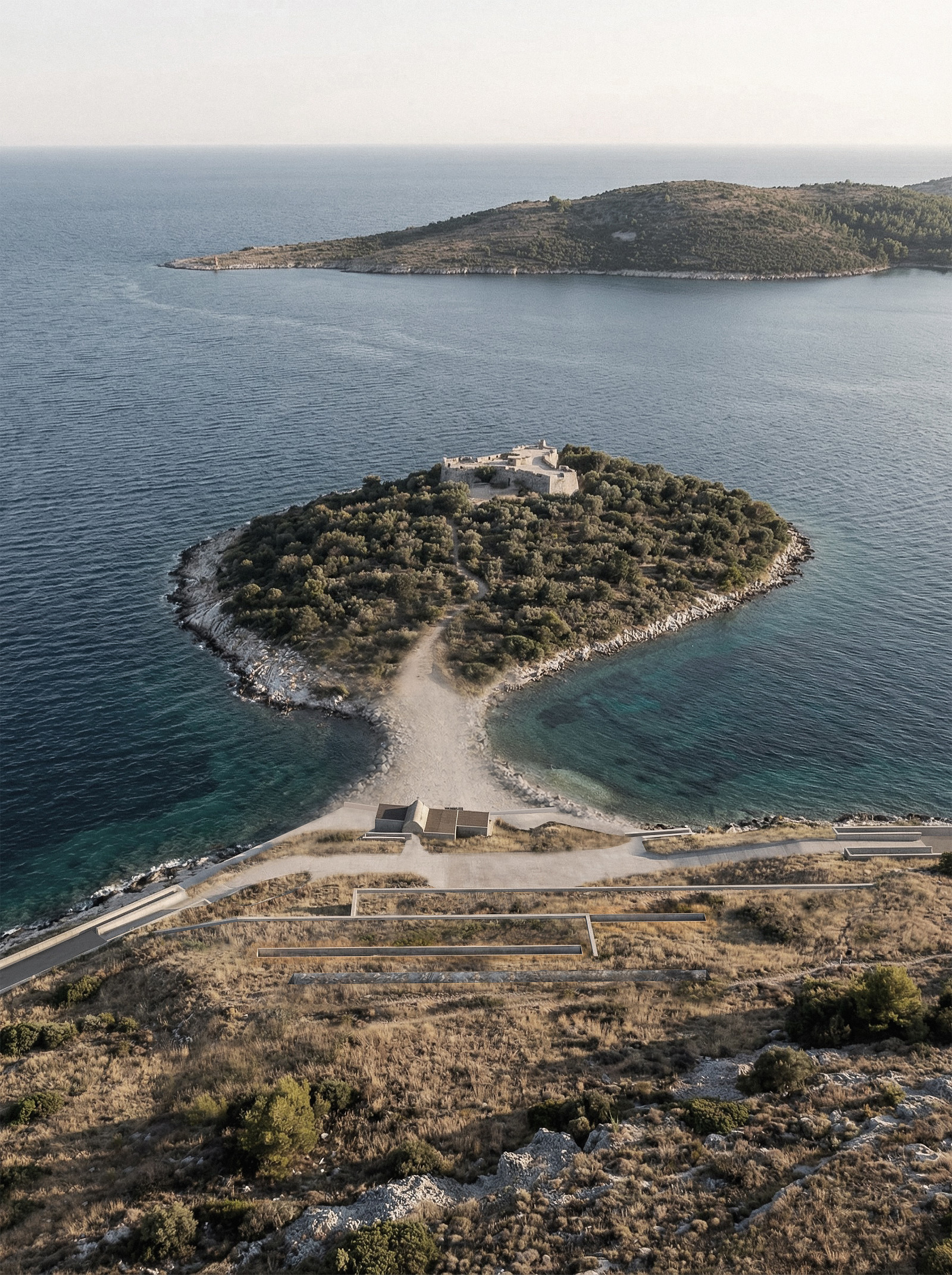
The project grows from Porto Palermo, a coastal landscape where nature, military remains, and historical layers coexist in a fragmented and underused condition. Instead of adding a new object, the intention is to work with what is already there, making existing relationships visible again. A natural axis connecting the castle, the isthmus, the village, and the mainland becomes the main structure of the project. This axis is not treated as a line, but as a spatial condition that shapes both landscape and architecture. The building is understood as a threshold that connects land and sea, turning a territorial relationship into an architectural experience.
Project description
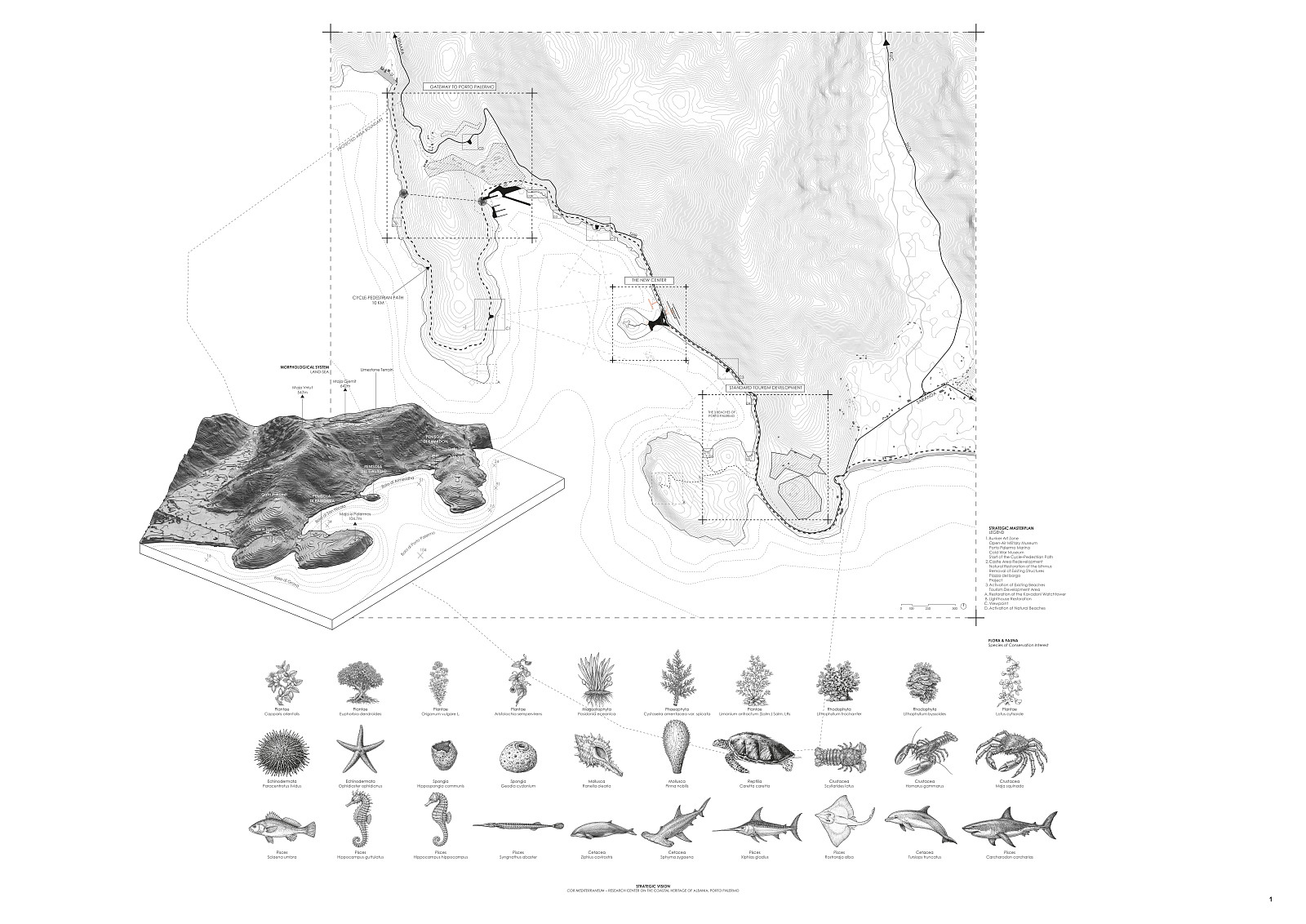
The project works on two scales: territorial and architectural. At the territorial scale, it proposes a masterplan based on a slow mobility system running along the coast, connecting Porto Palermo with nearby settlements. This path organizes a continuous sequence of landscape experiences, linking natural bays, military traces, and key points of the site into a readable system.
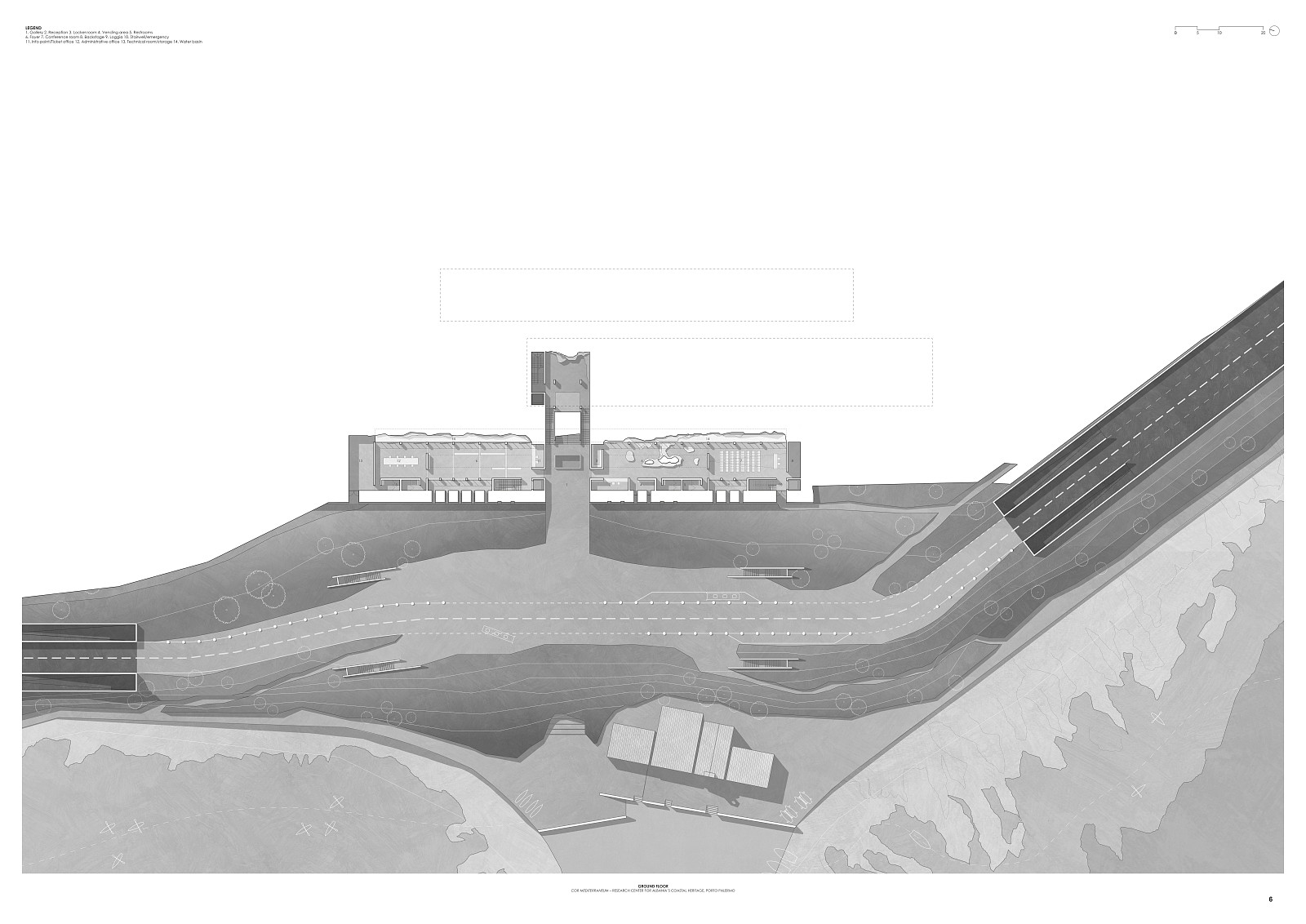
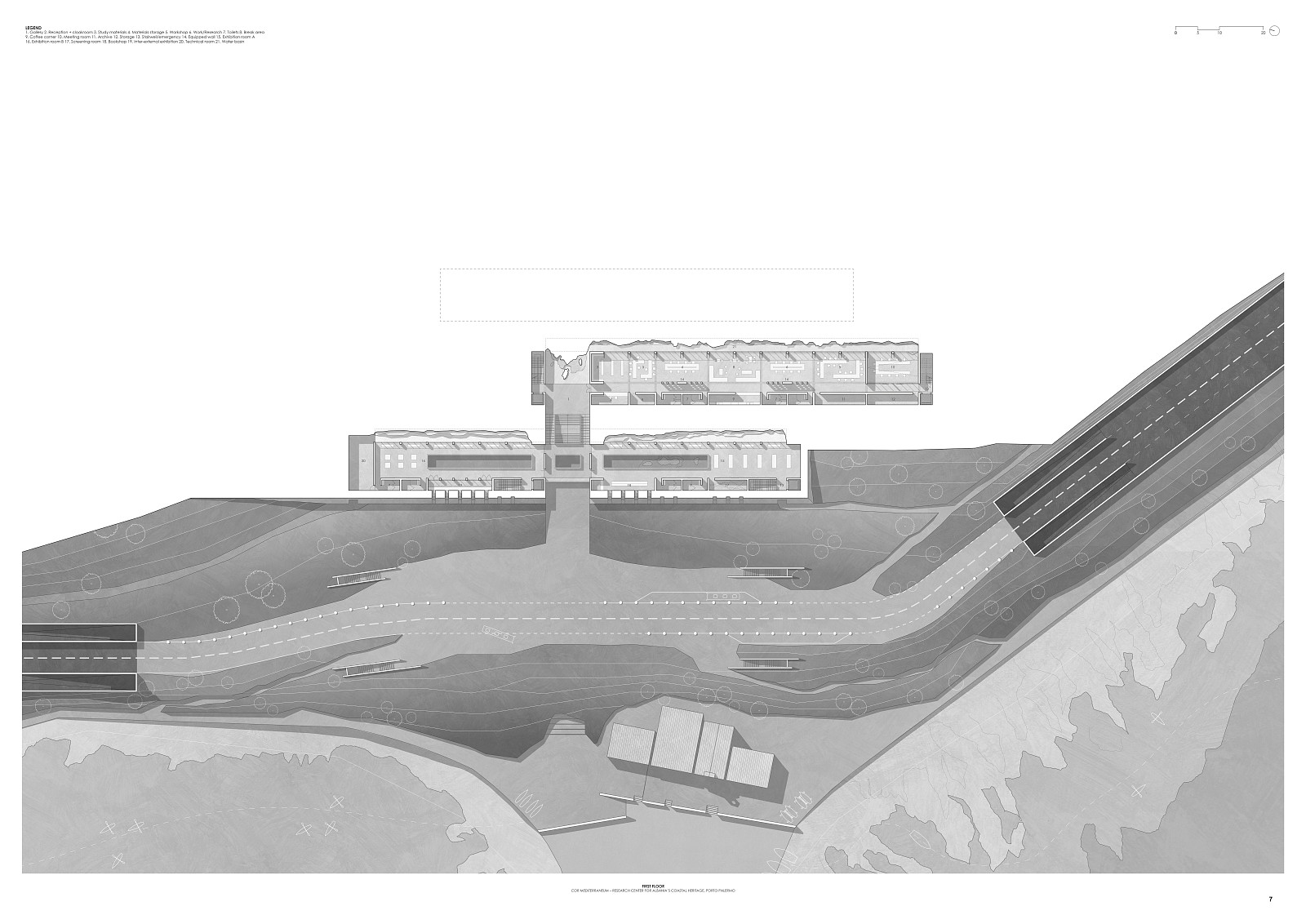
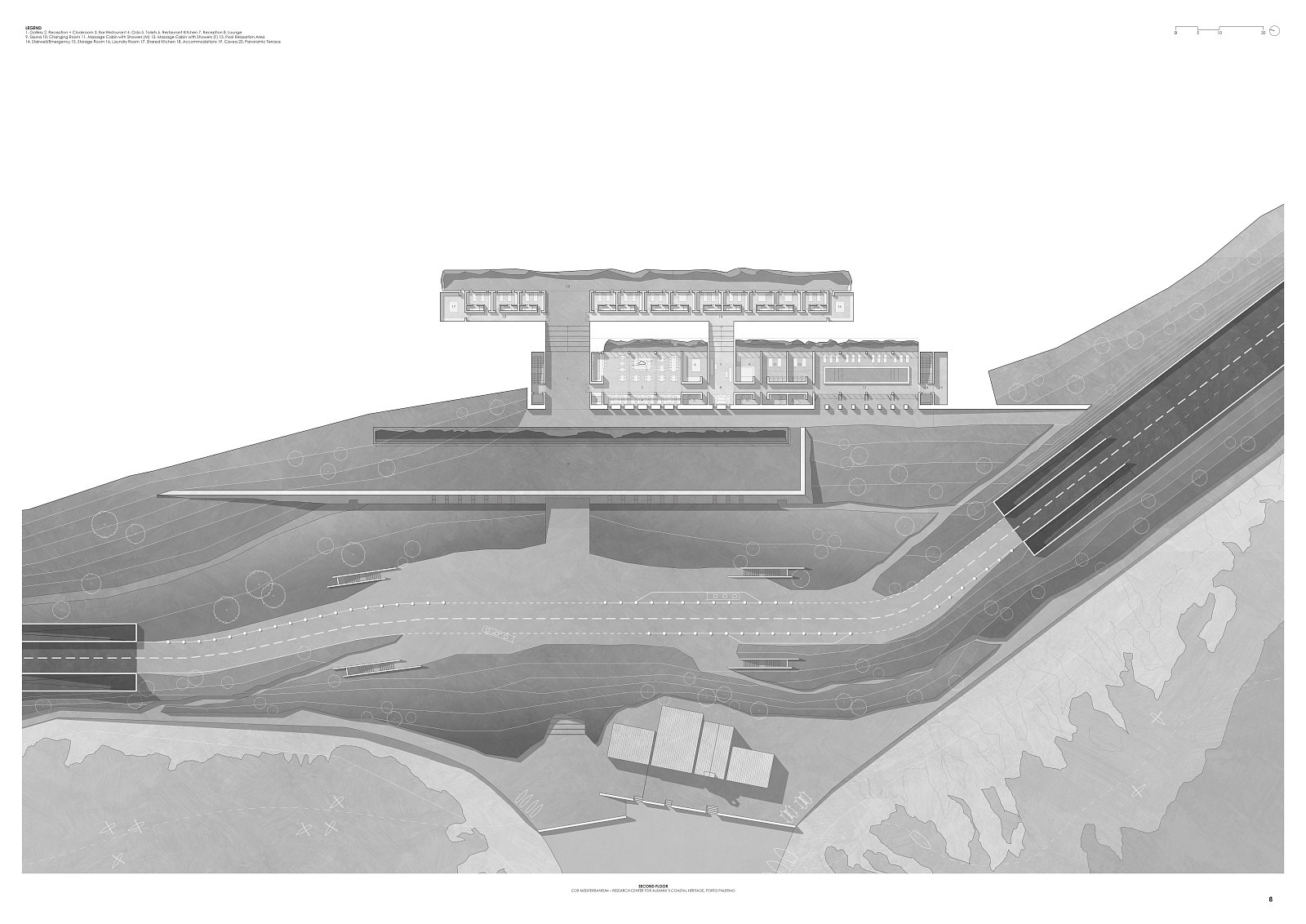
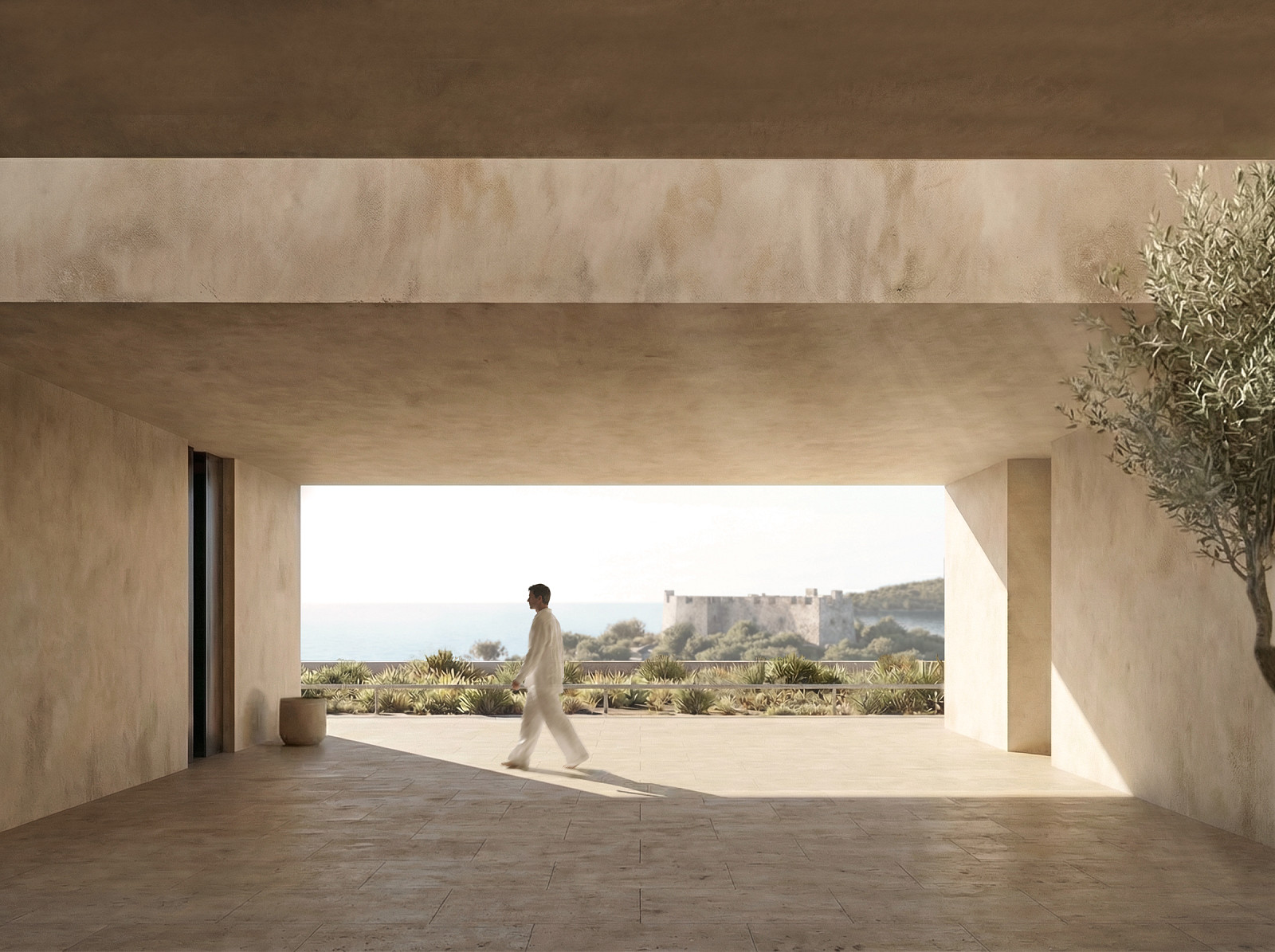
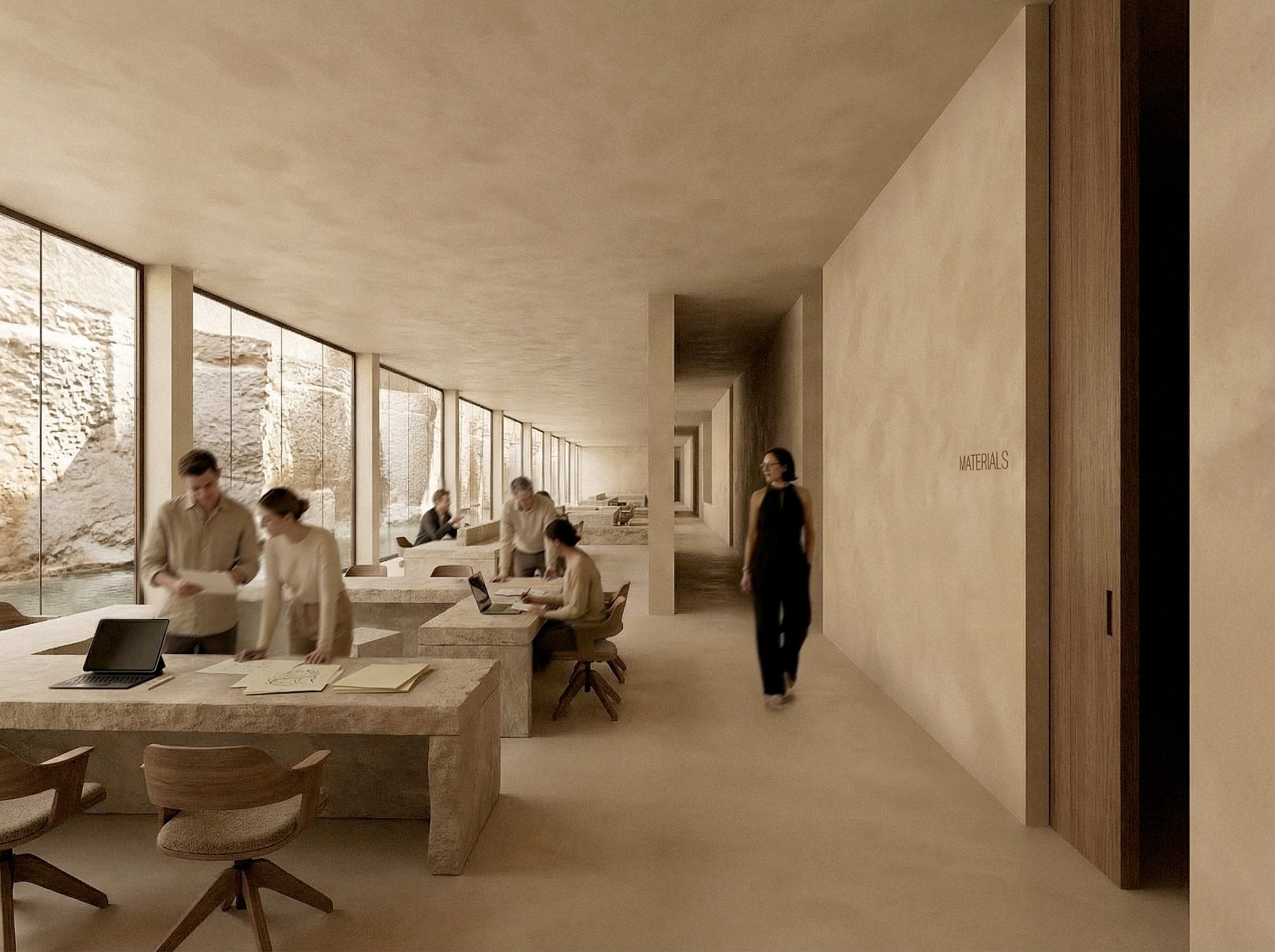
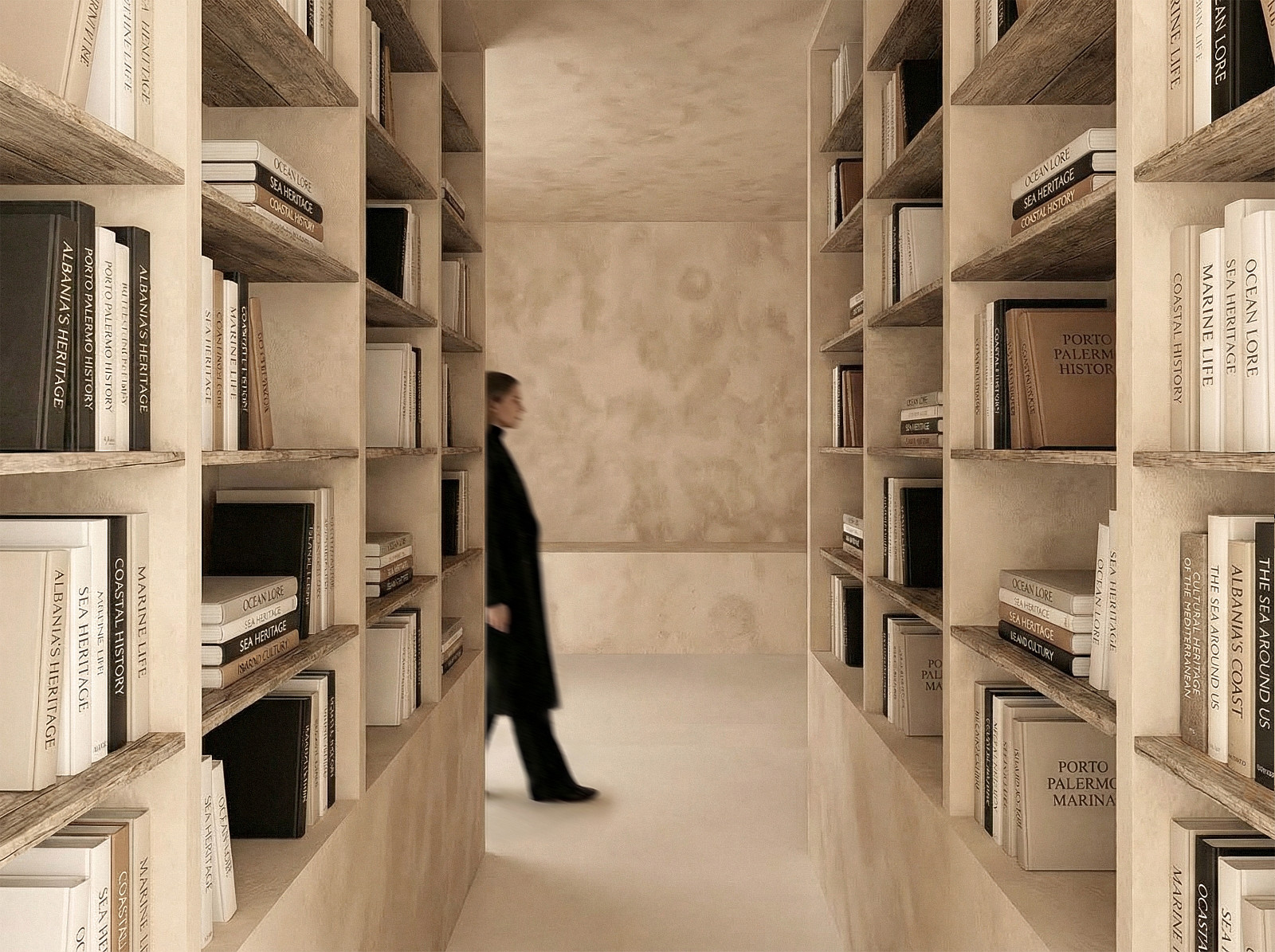
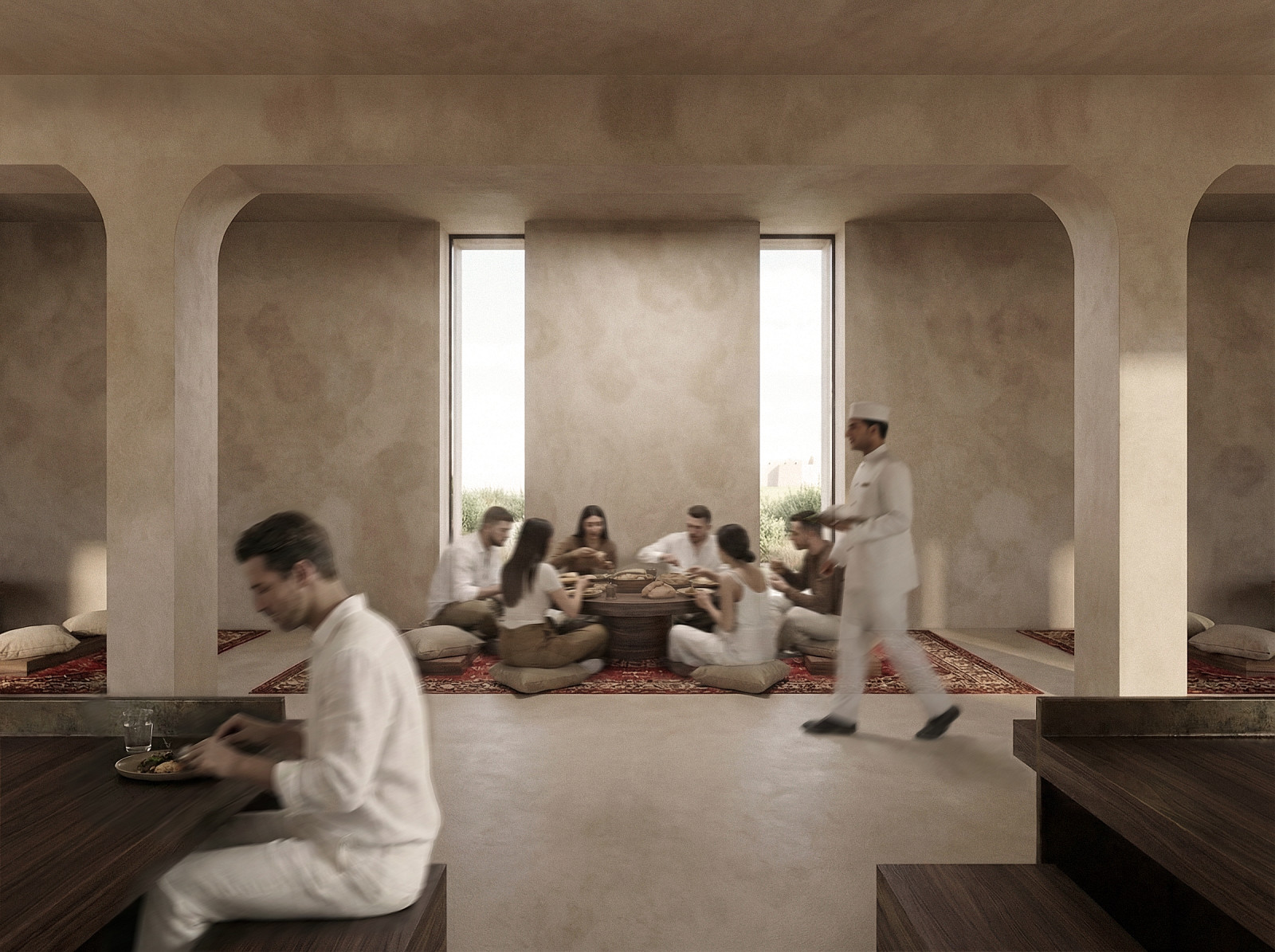
At the architectural scale, the Research Center for Albania’s Coastal Heritage is placed along the main axis of the site and embedded into the landscape. A central gallery runs through the building and becomes the main spatial device, extending the logic of the site into the interior. Movement, views, and program are constantly connected, creating a continuous relationship between inside and outside. The building supports research, public use, and the interpretation of the coastal landscape as one unified system.
Technical information
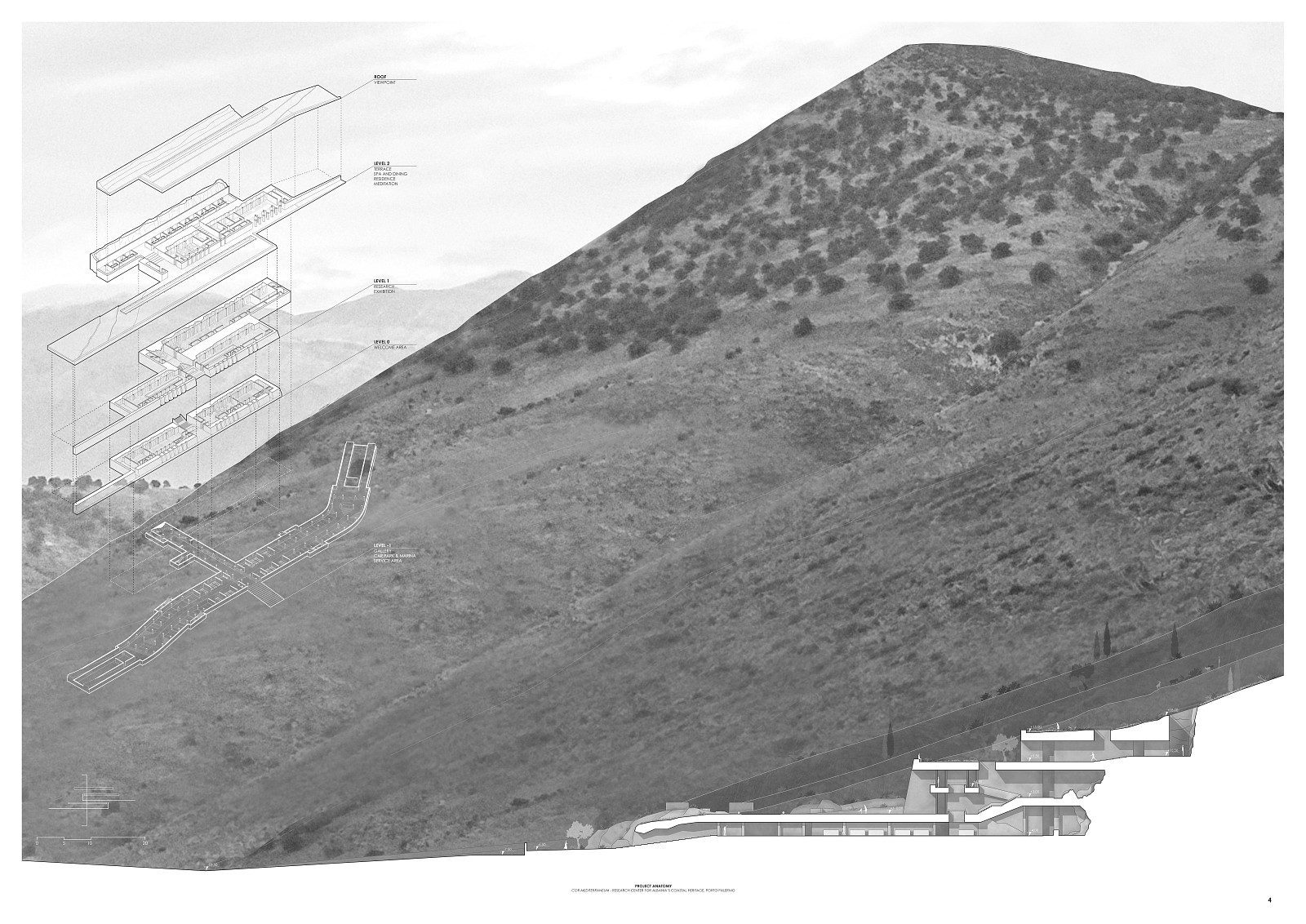
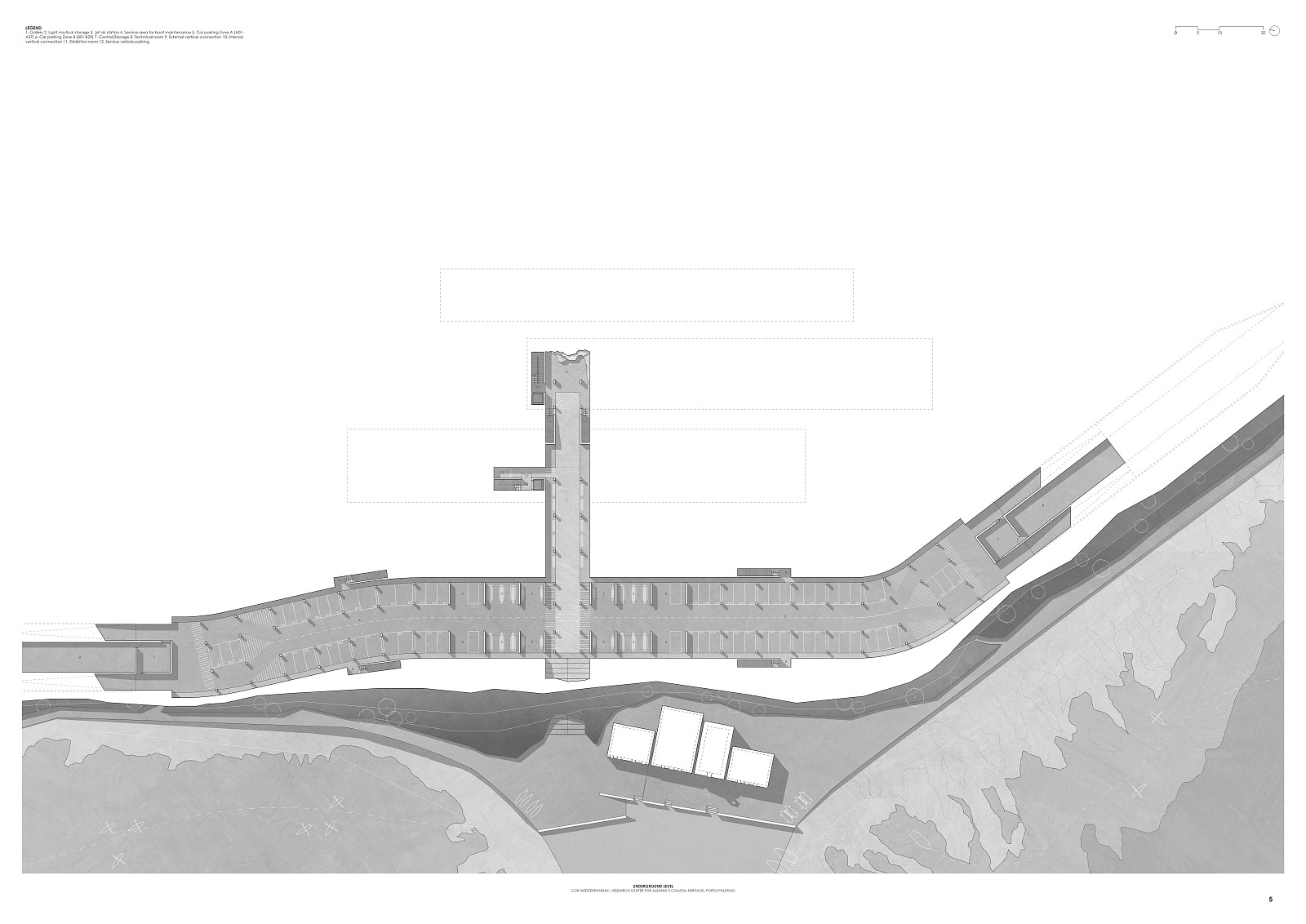
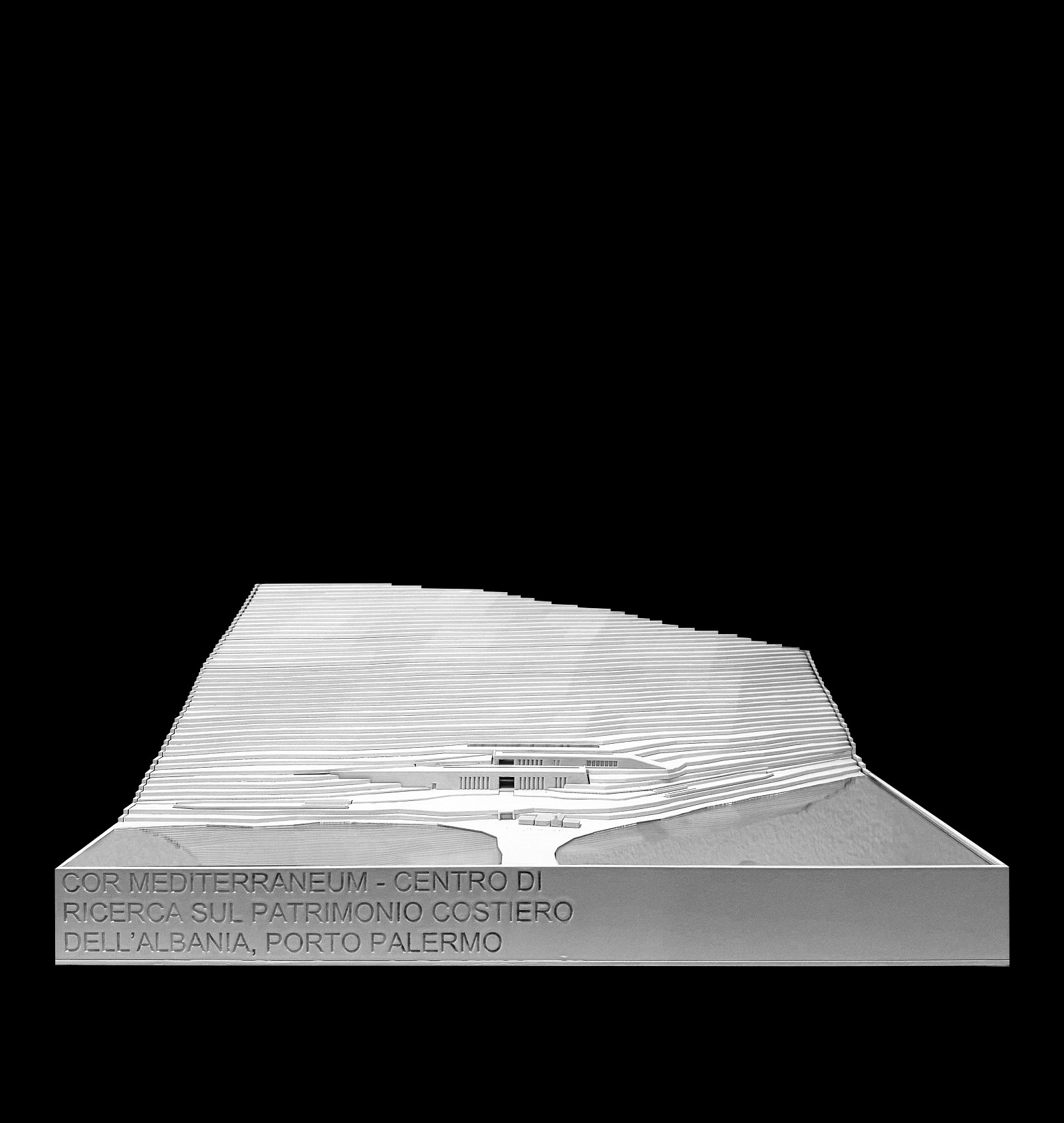
The project is formed by two staggered volumes set into the natural slope of the terrain, following the contour lines to reduce impact and strengthen the connection with the landscape. It is organized on different levels: an underground floor with parking and marina services, a public ground floor, intermediate levels for research and exhibition spaces, and upper levels for living, wellness, and quiet contemplation.
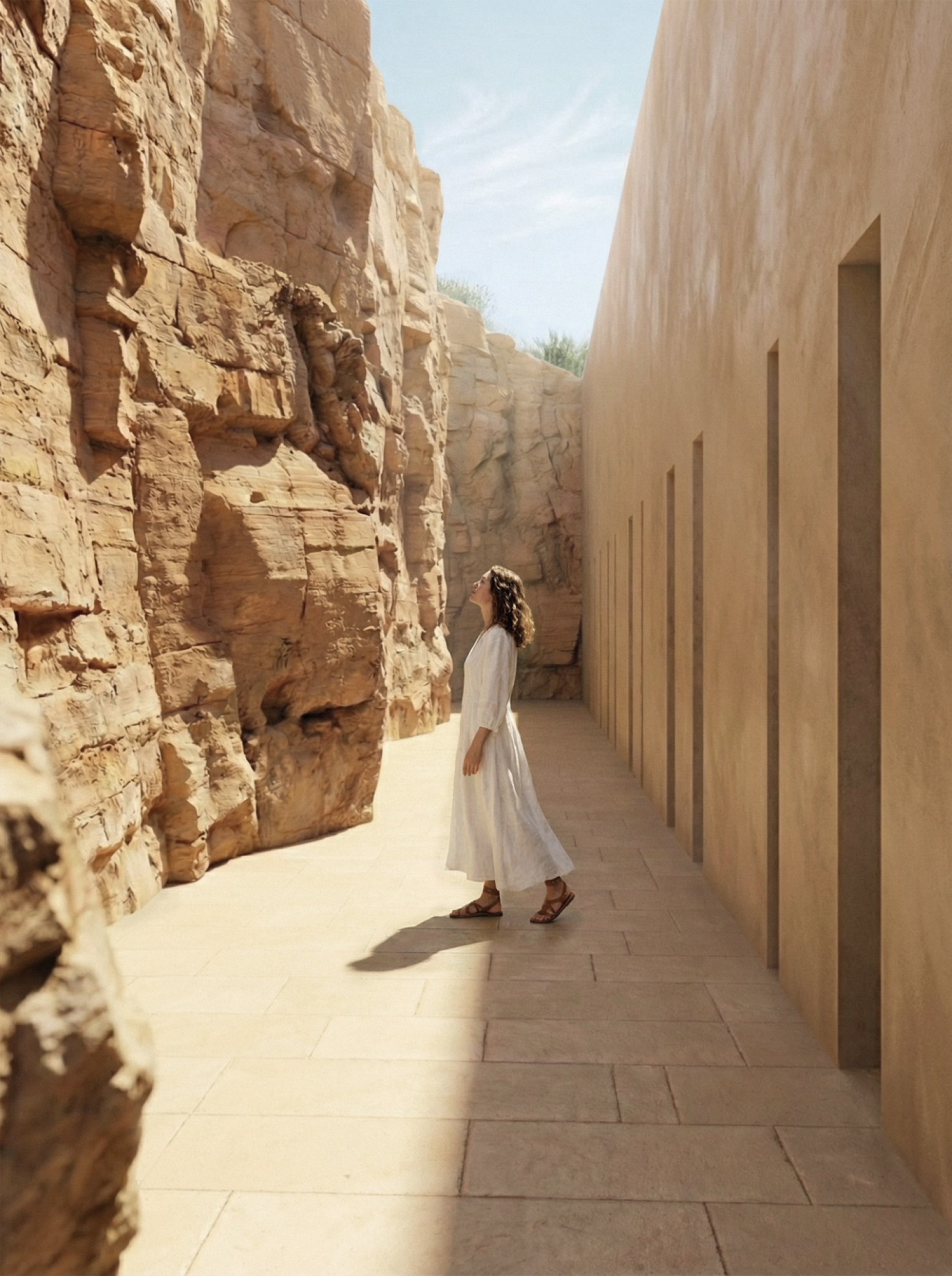
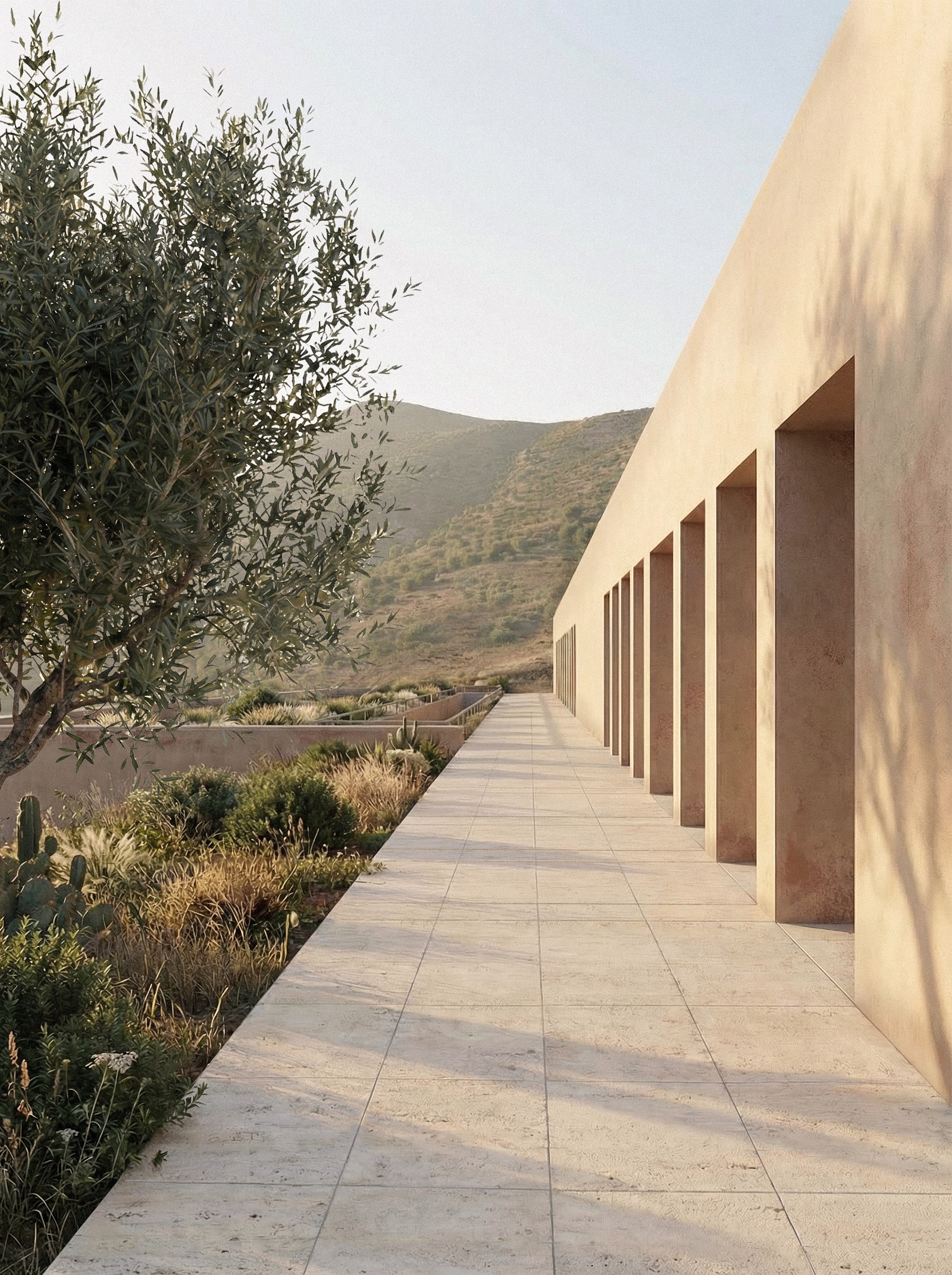
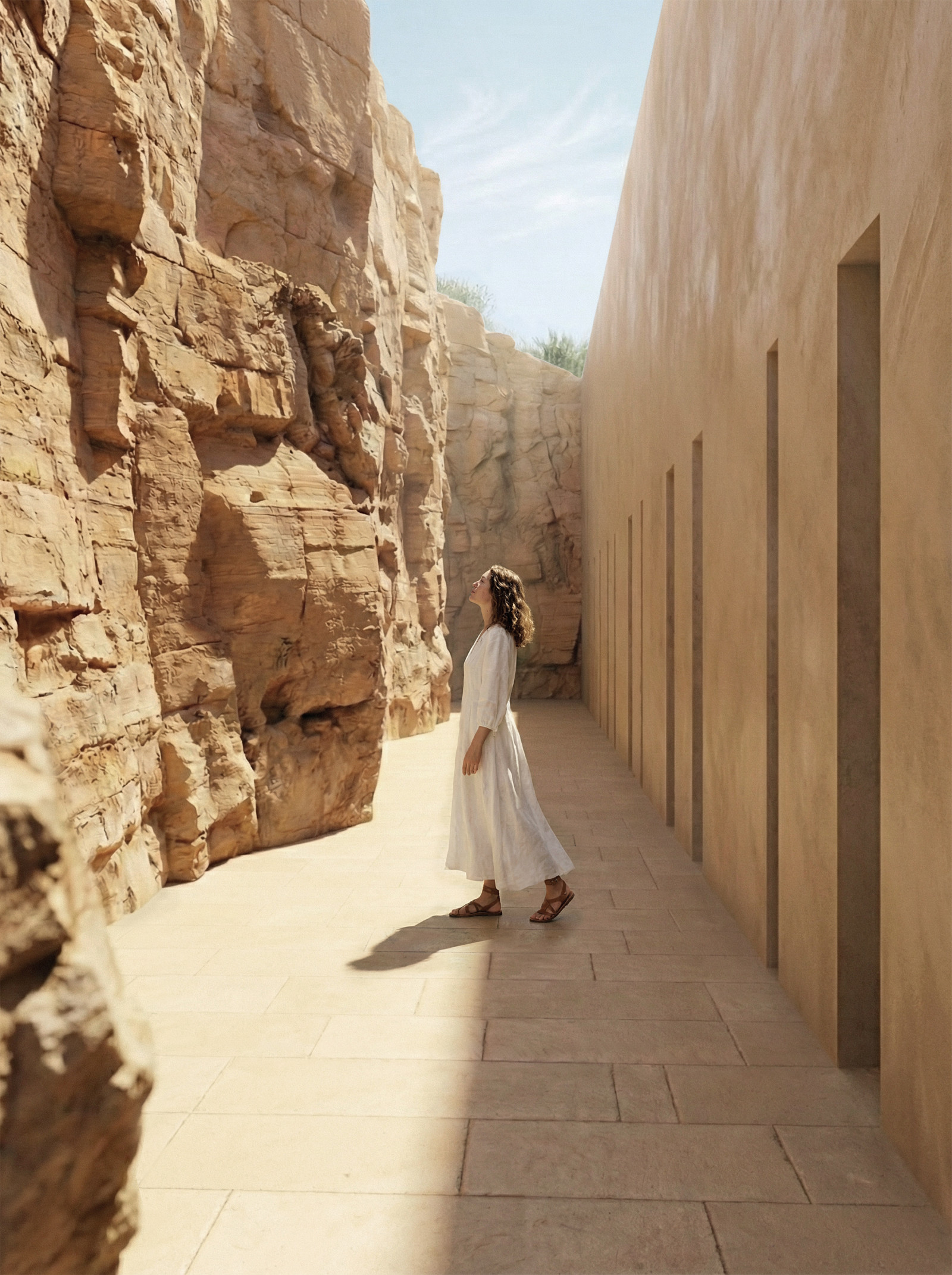
A continuous gallery structures the whole building, acting both as circulation and as a spatial experience linking interior and exterior spaces. Green roofs extend the natural hill, while parts of the building are carved into the rock, creating more intimate and enclosed spaces that end in a cavea cut into the terrain. The material approach is kept simple and grounded, using exposed rock, concrete, and natural finishes to keep the architecture closely tied to its site.

Copyright © 2026 INSPIRELI | All rights reserved. Use of this website signifies your agreement to the Terms of Use, Privacy Policy, and use of cookies.