Flows of Memory: Arsenal of Tucumán


Project idea
The Arsenal of Las Talitas in Tucumán, Argentina, carries a double weight: it is both a wound in the urban fabric — an abandoned, underserved and disconnected territory — and a wound in collective memory, as a former clandestine detention center where 14 people were tortured and buried in a mass grave that remains on site today.
Flows of Memory takes that double condition as its starting point. The project does not treat the historical trauma as a layer to be added on top of an urban proposal — it treats it as the generative force of everything: the layout of paths, the selection of trees, the movement of water, the placement of buildings.
The concept is built around six flows that operate simultaneously: the flow of history impregnating the project; the flow of time resignifying a space once marked by pain; the flow of water through a transformed landscape; the flow of people reclaiming a territory that belonged to them; the circular flow of materials in a zero-waste construction strategy; and above all, the flow of memory — to never repeat past mistakes.
Project description
The proposal develops across two interconnected phases at different scales.
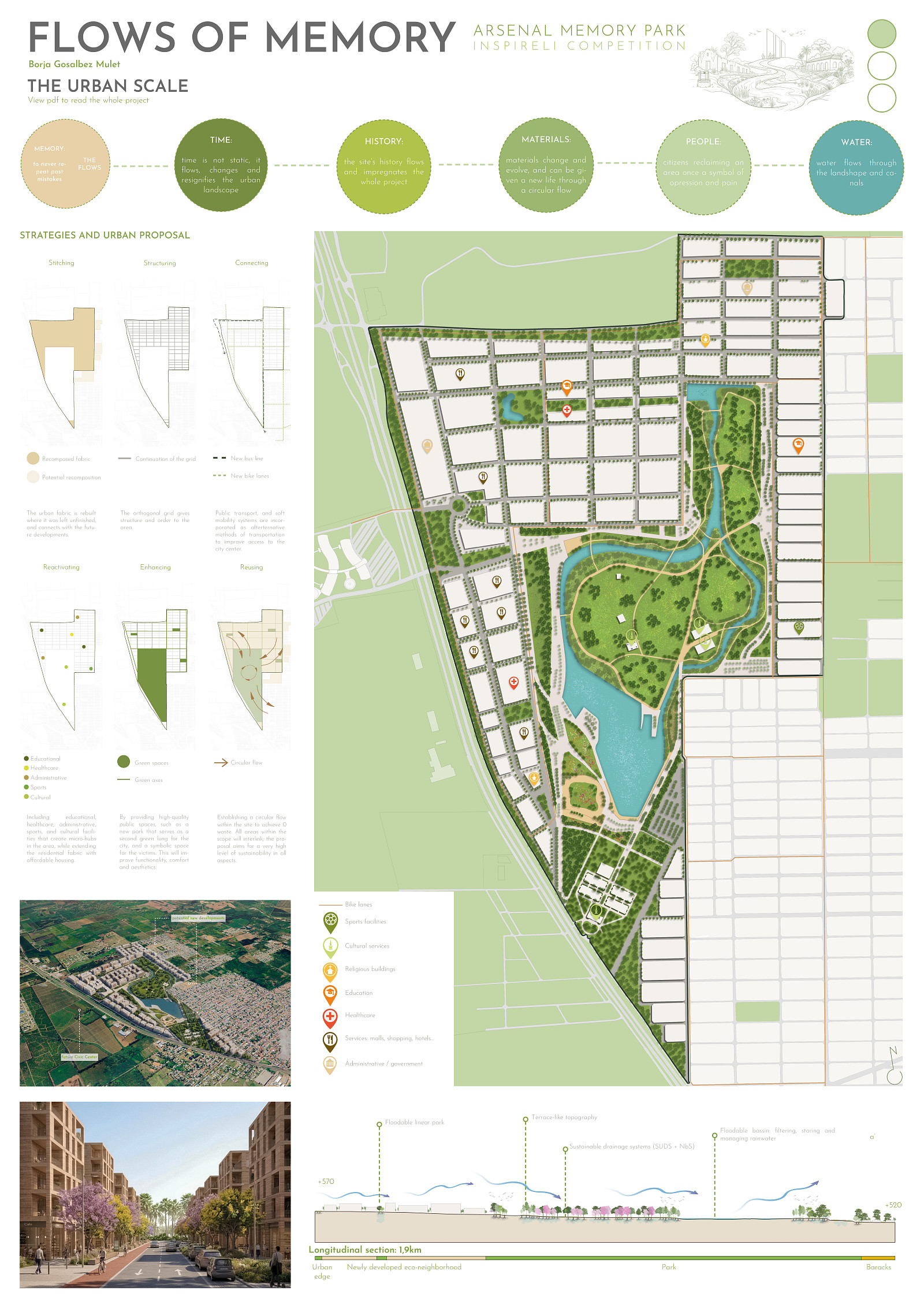
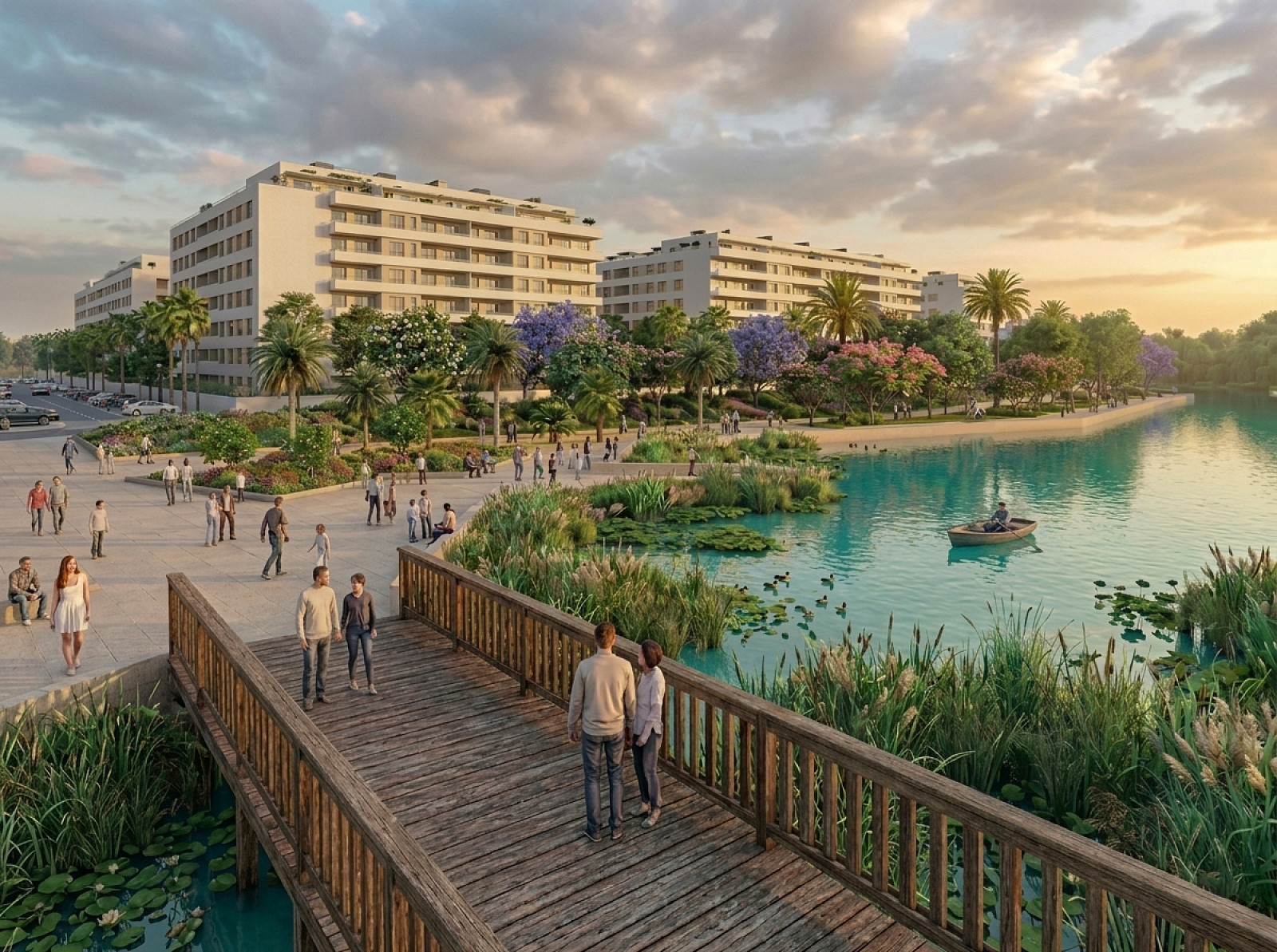
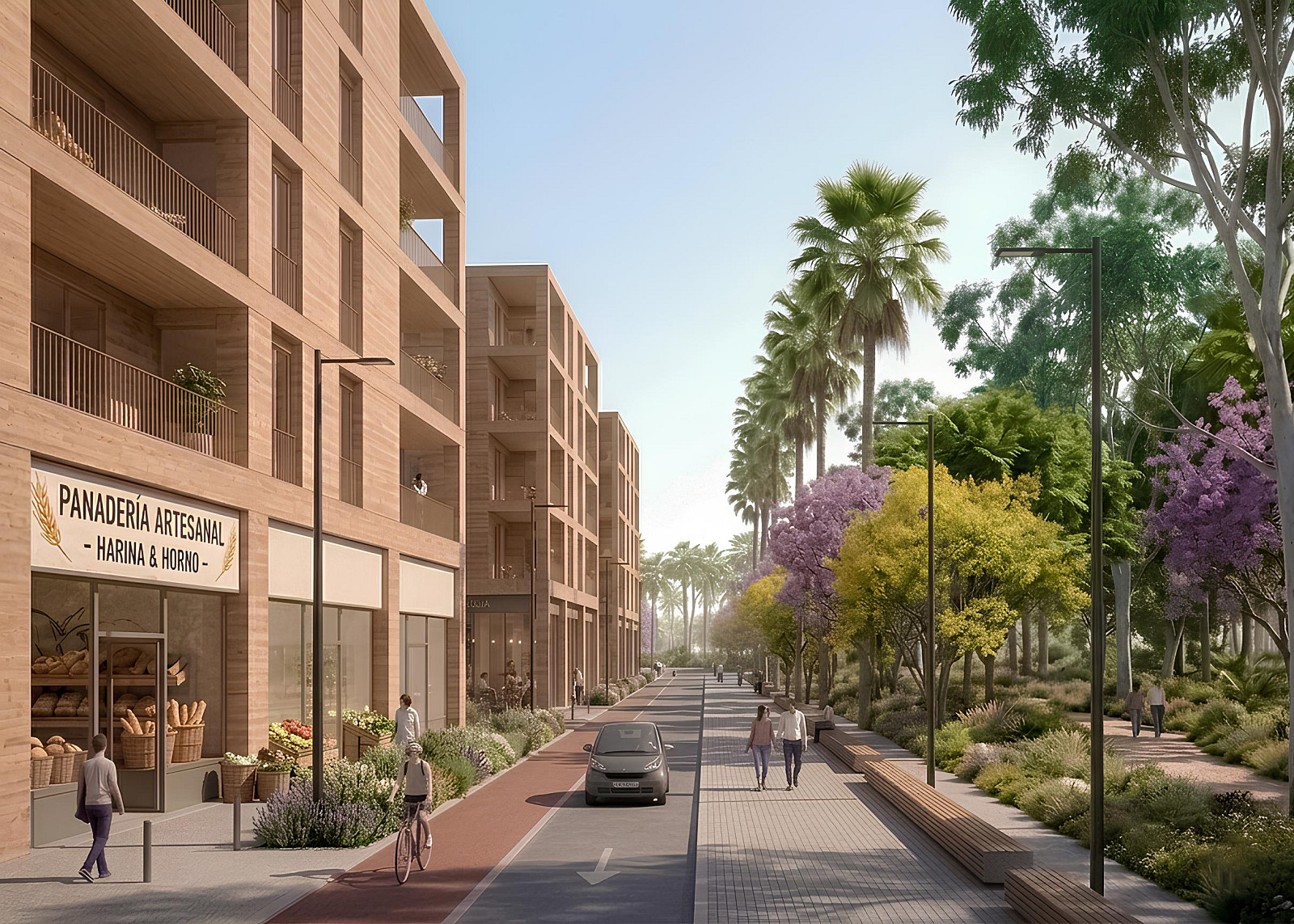
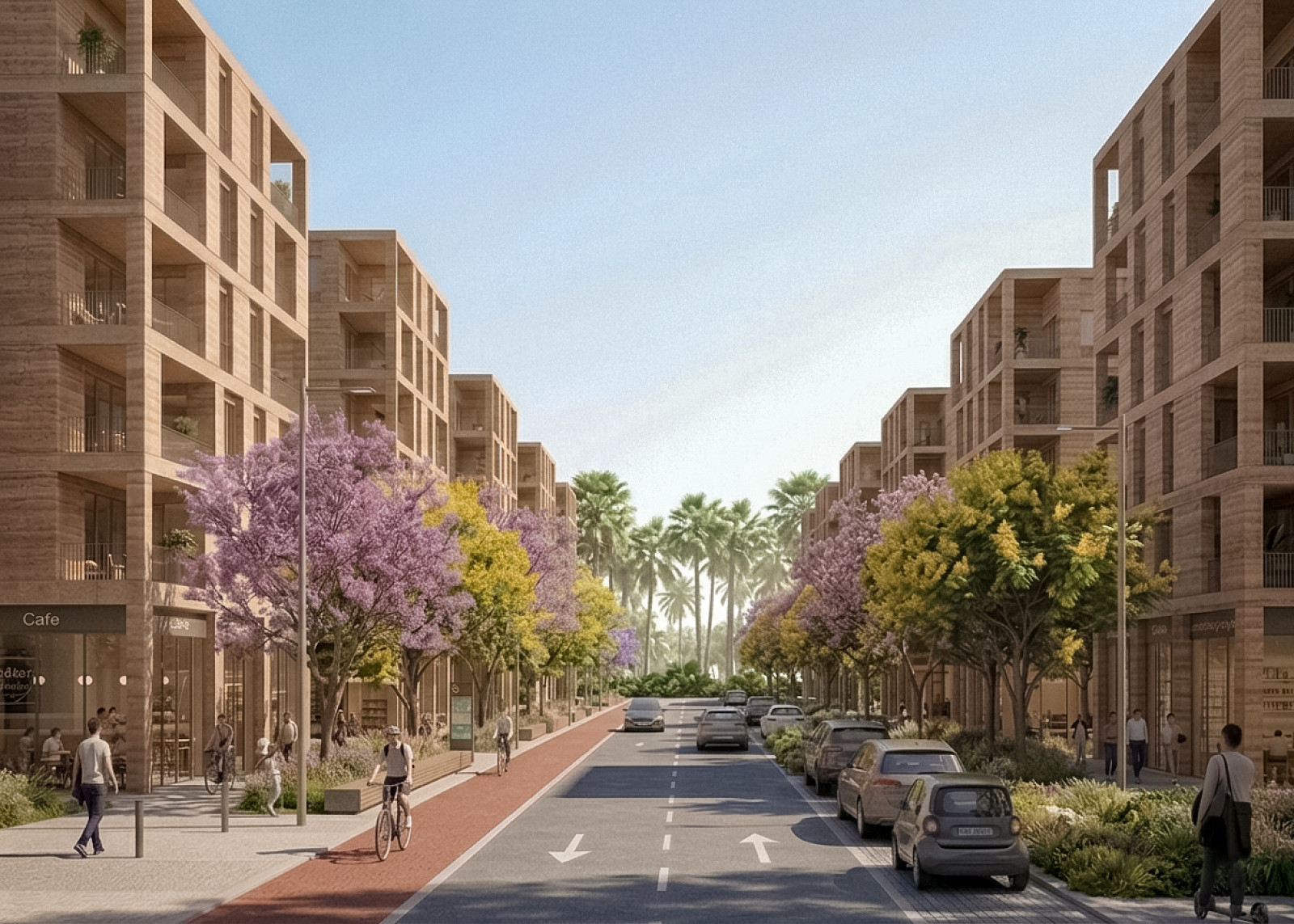
URBAN SCALE: the project repairs a severely fragmented neighborhood in the northern metropolitan crown of Tucumán. The intervention establishes a coherent orthogonal grid consistent with the city's existing logic, places the park at the structural center of the new sector, and distributes public facilities — educational, healthcare, cultural, administrative — to create a genuine urban centrality aligned with the 15-minute city model. A new bus line and an extensive network of green corridors with integrated bike lanes connect the sector to the city center. The residential fabric is extended through a sustainable eco-neighborhood typology built with rammed earth and renewable energy systems, while existing informal settlements are consolidated and dignified.
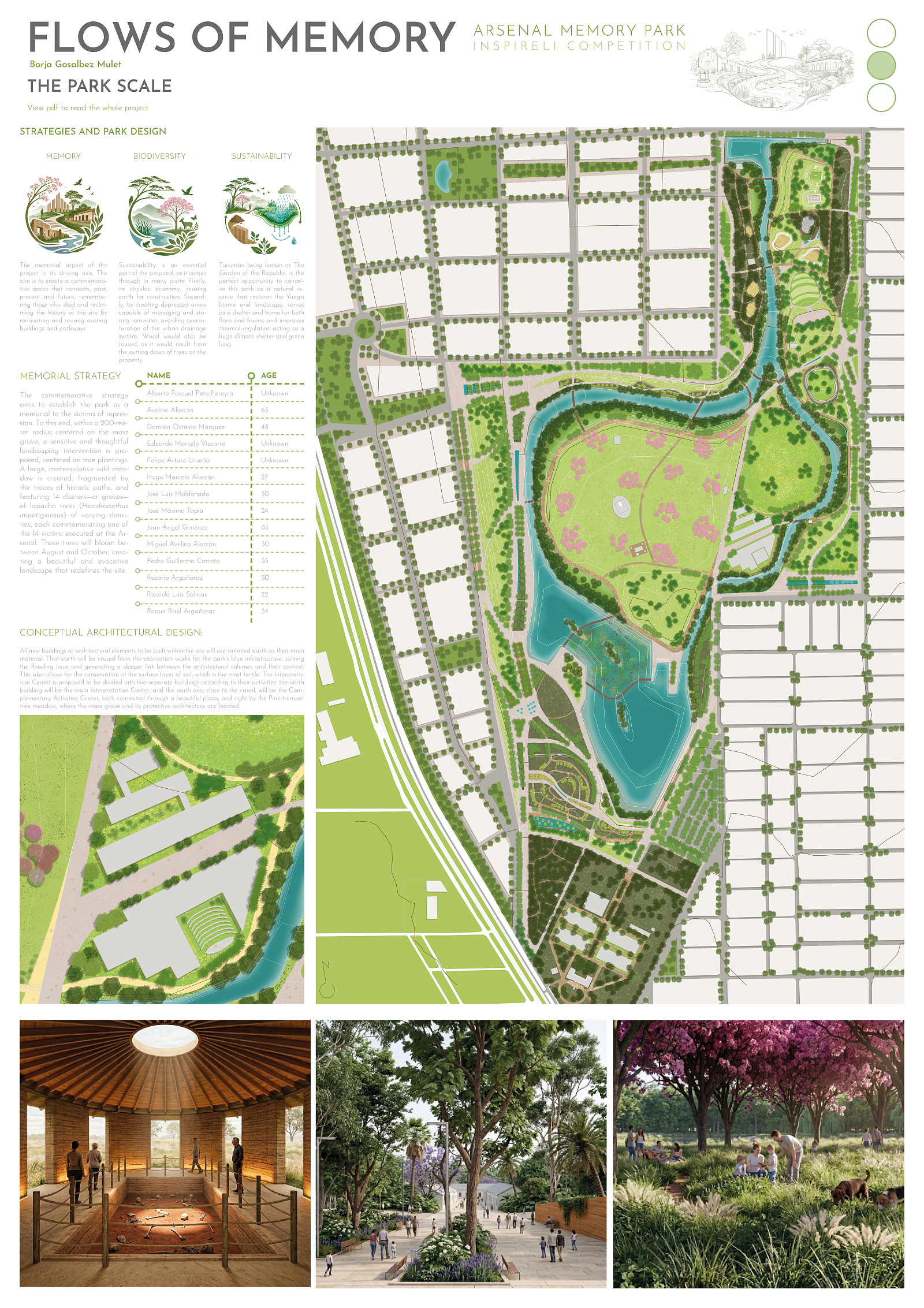
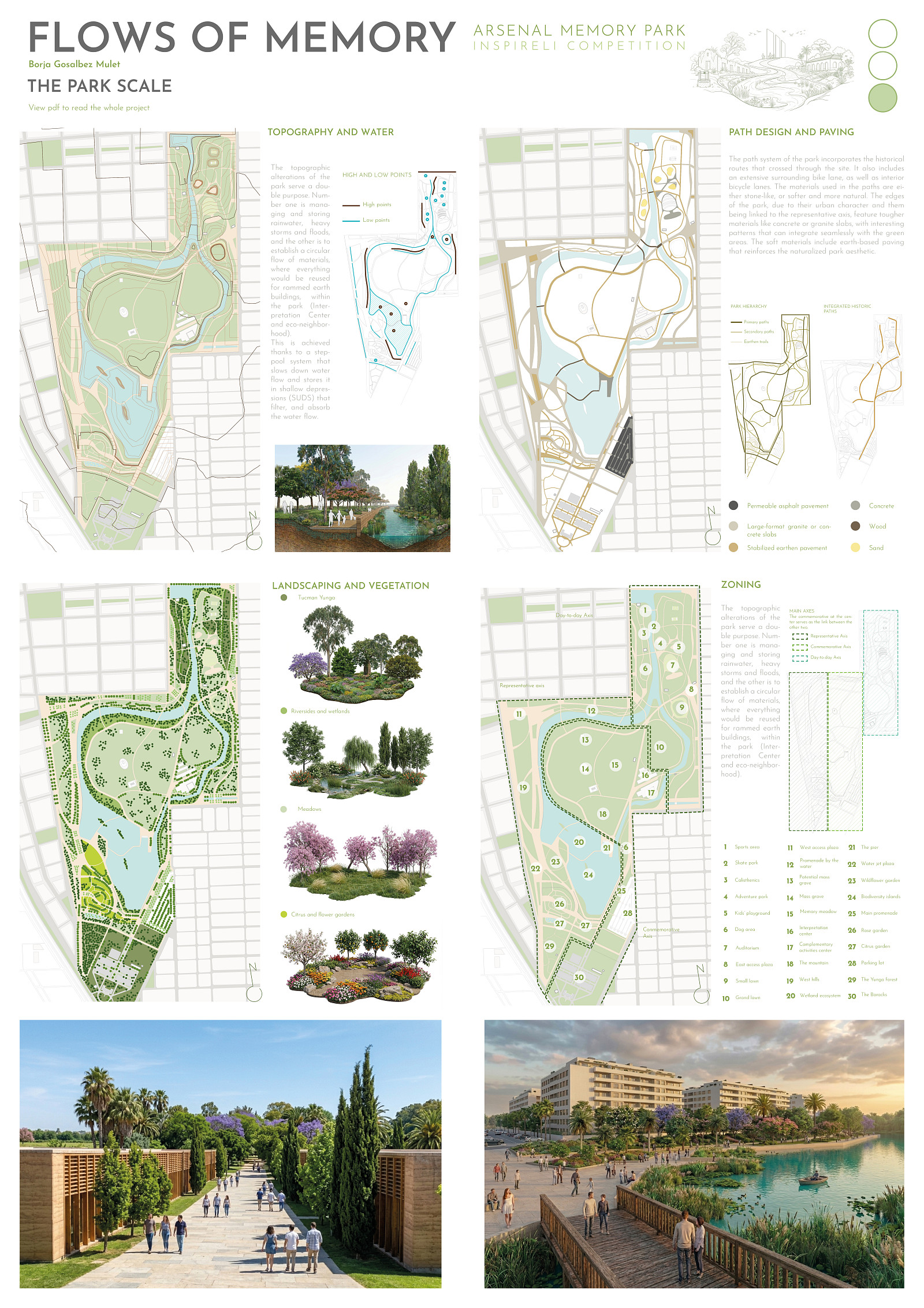
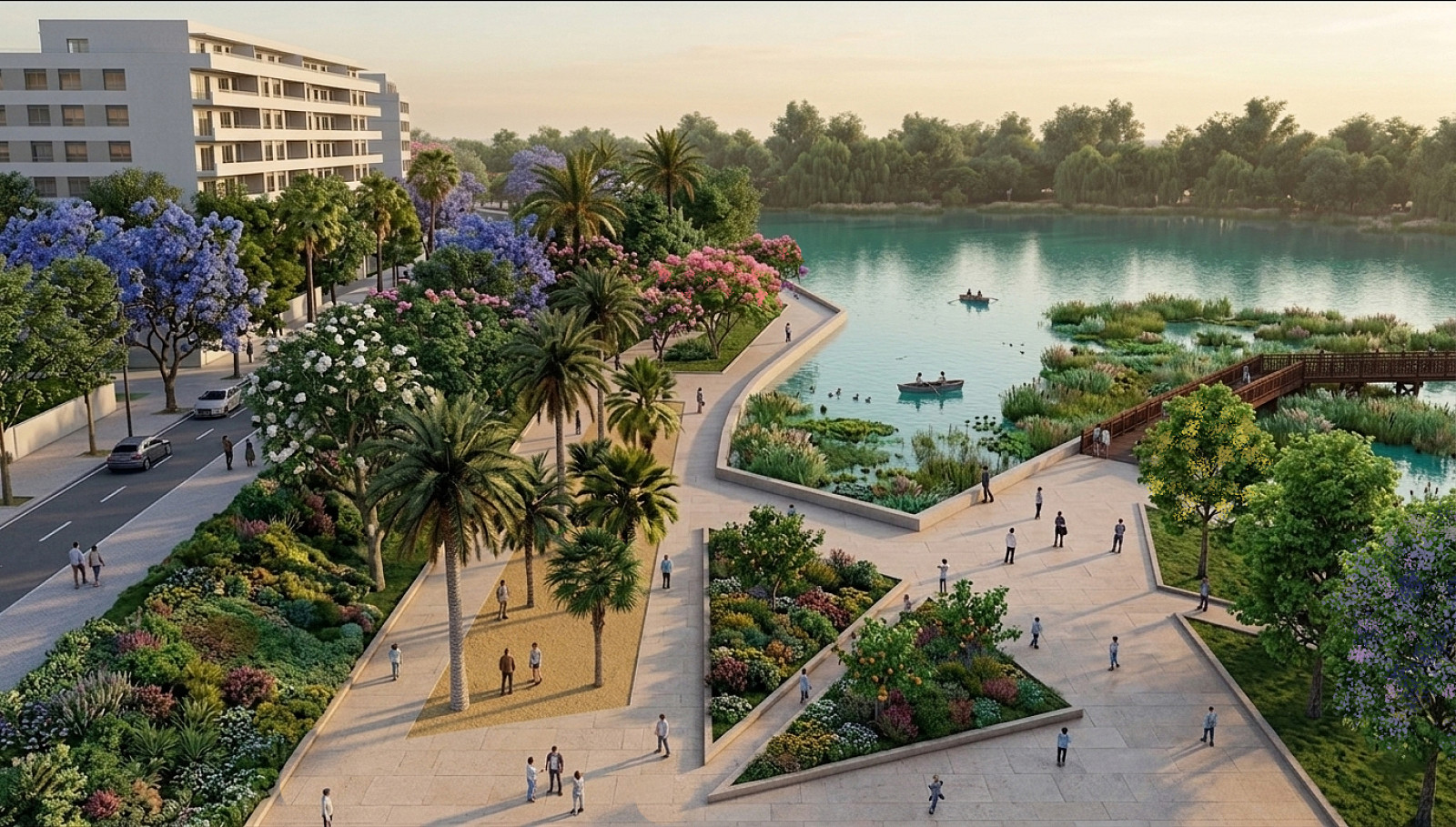
PARK SCALE: the design operates simultaneously as a hydraulic infrastructure, a biodiversity landscape, and a memorial space. The topography is reworked through a terrace-pool system that slows water flow and stores rainwater in shallow depressions, activating the entire park basin as a flood retention system during heavy rainfall events. All excavated earth is reused on site for rammed earth construction, closing a circular material economy within the project itself, this also applies to wooden elements, using the wood from cut trees.
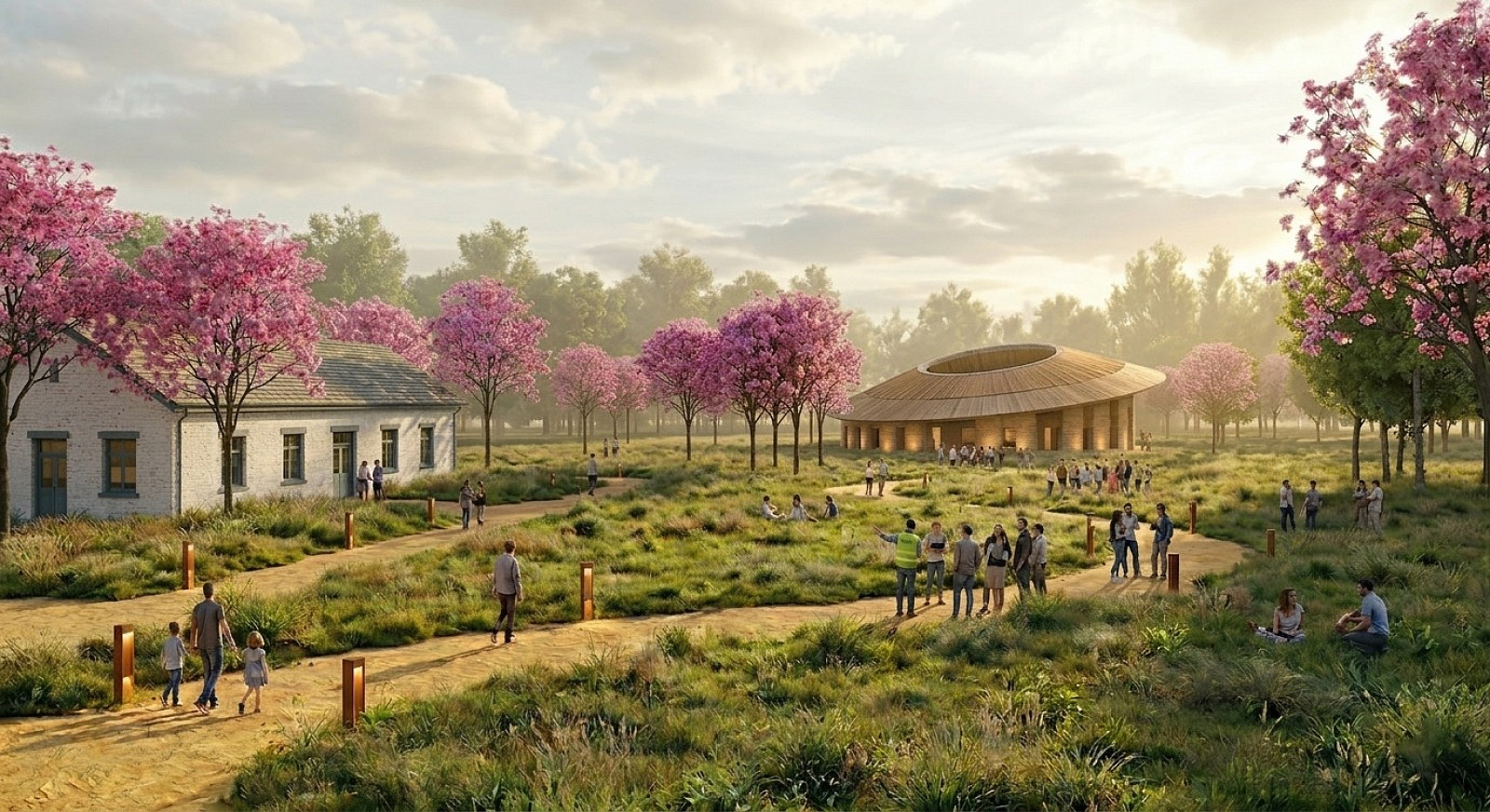
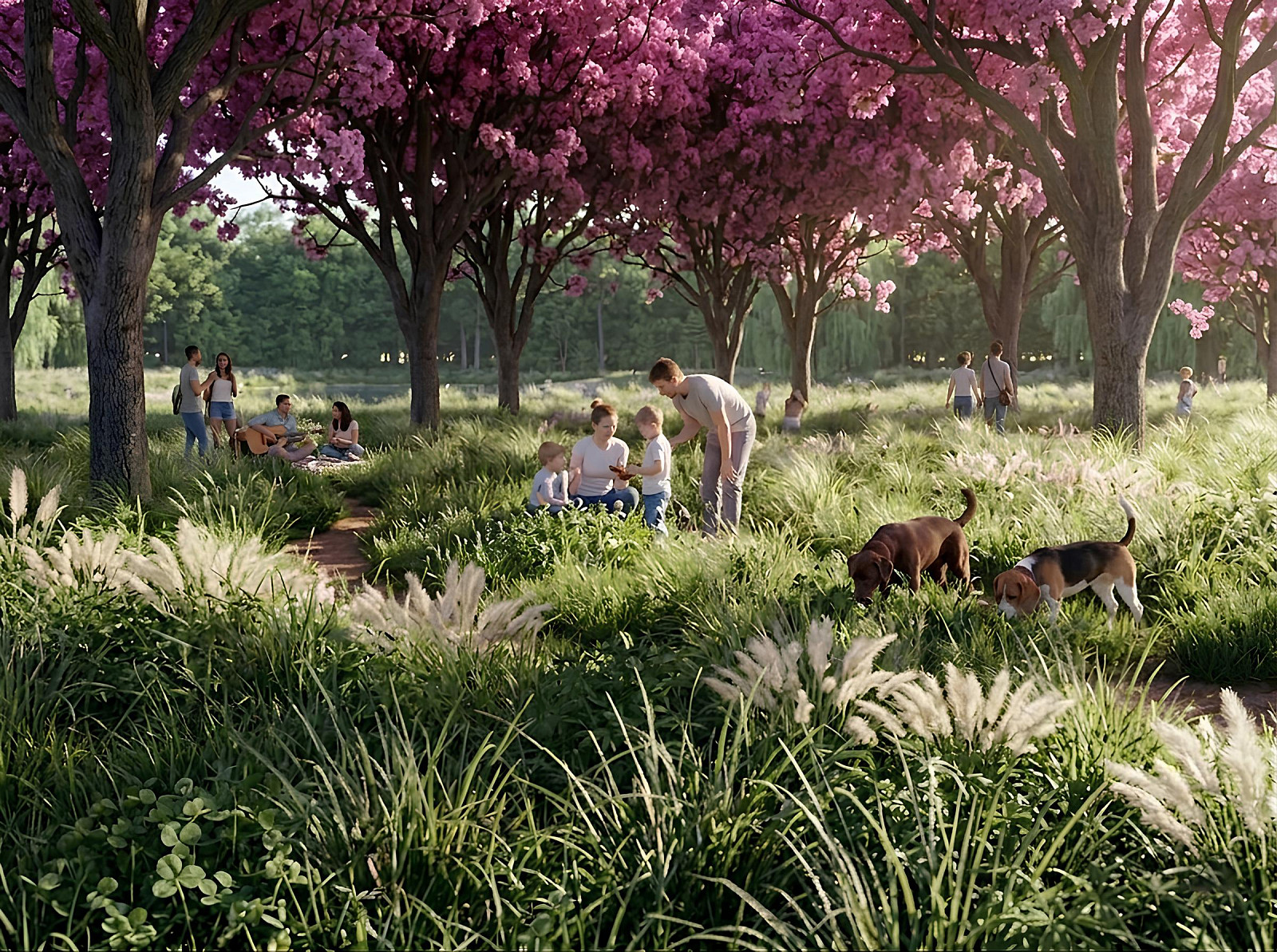
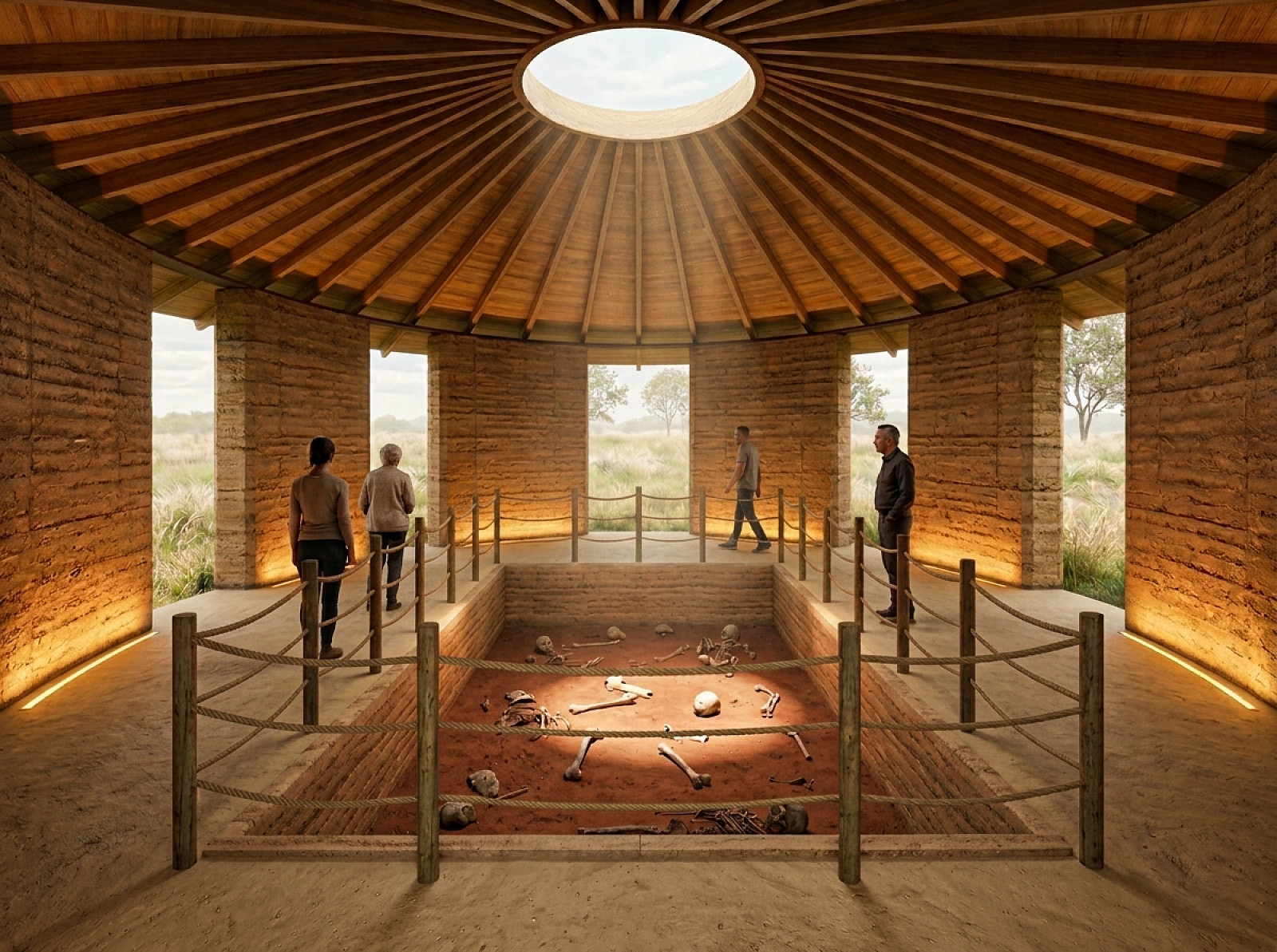
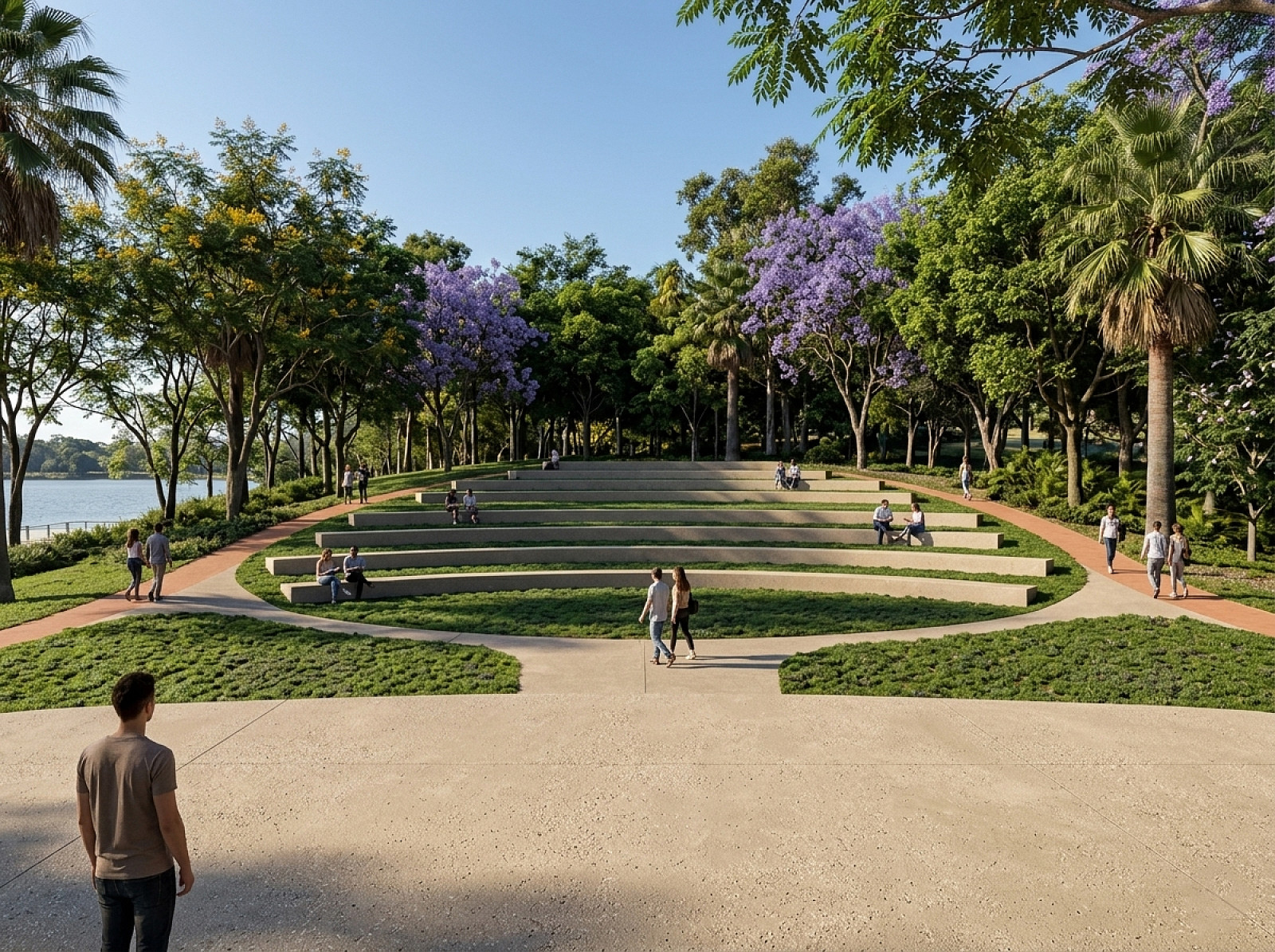
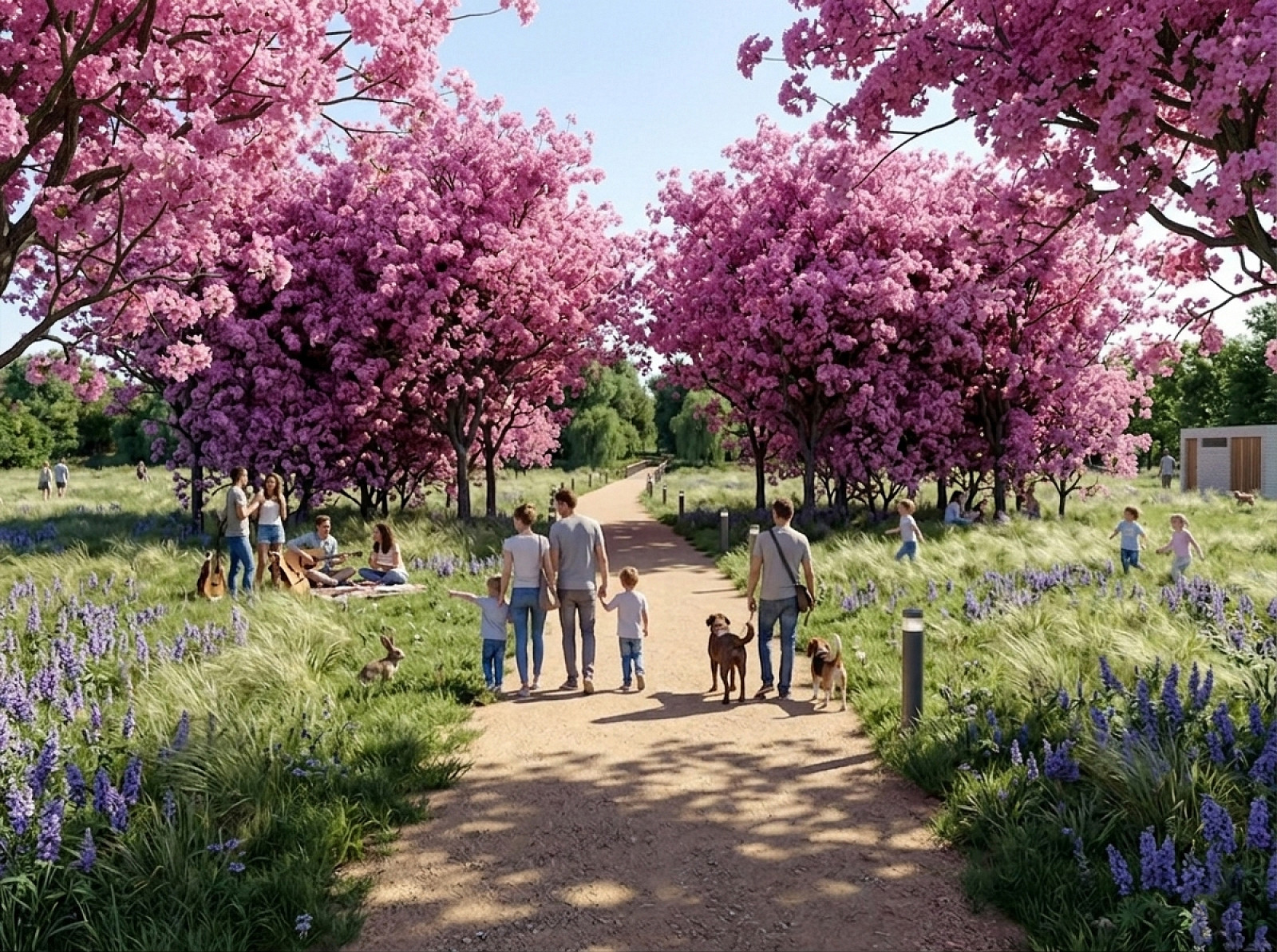
The memorial strategy centers on a 200-metre radius around the mass grave, where a contemplative wild meadow of Pink Trumpet trees — the provincial tree of Tucumán — creates a landscape of exceptional symbolic and sensory density. The trees bloom between August and October, transforming the space each year. The mass grave is protected by a circular rammed earth pavilion with a conical timber roof open at its apex, allowing zenithal light to fall directly onto the excavated site, generating a solemn, and respectful atmosphere. Nearby, a new Interpretation Center built with the same excavated earth preserves the original barracks and holds the memory of the site for future generations, while its parking sits a bit further so that visitors are always required to cross through the park and experience it.
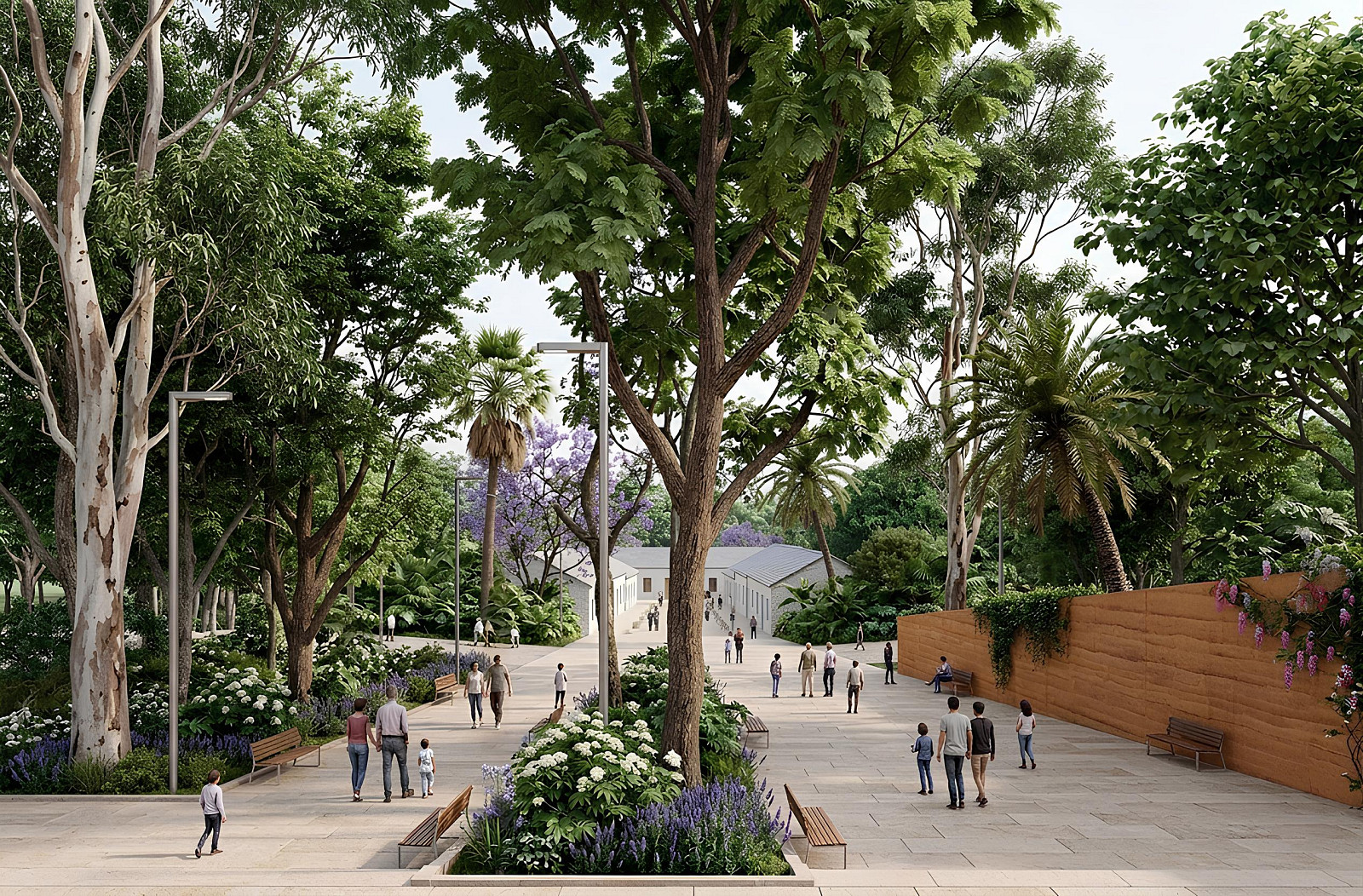
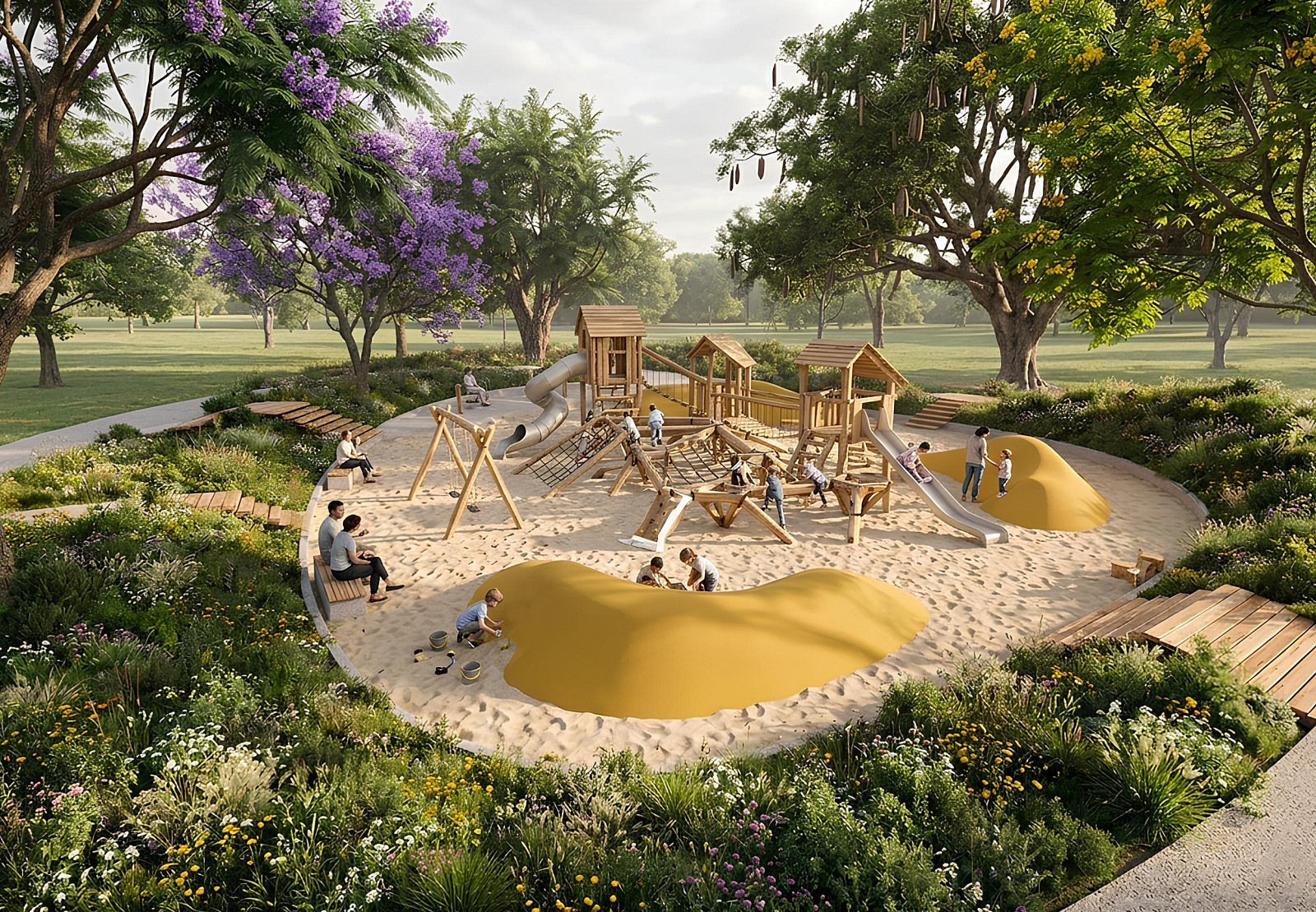
The landscape unfolds across four distinct biomes — Tucumán's native Yunga forest, riverside and wetland vegetation, open meadows, and citrus and flower gardens — using 27 tree species and multiple shrub and ground cover layers, all adapted to the subtropical humid climate of the region.
Technical information
Site area: approximately 320 hectares (full urban intervention scope)
Park area: approximately 115 hectares
Location: Las Talitas, San Miguel de Tucumán, Argentina
Climate: Subtropical humid, with hot wet summers and dry mild winters. Occasional frost events in winter months.
Water management: The park operates as a Nature-based Solution (NbS) and Sustainable Urban Drainage System (SUDS) infrastructure. A stepped topographic system of terraces and depressions stores and filters rainwater, reducing pressure on the city's drainage network. The lake functions as a primary retention basin with a capacity designed to absorb heavy storm events. The mass grave area is permanently protected from flooding through careful hydrological design.
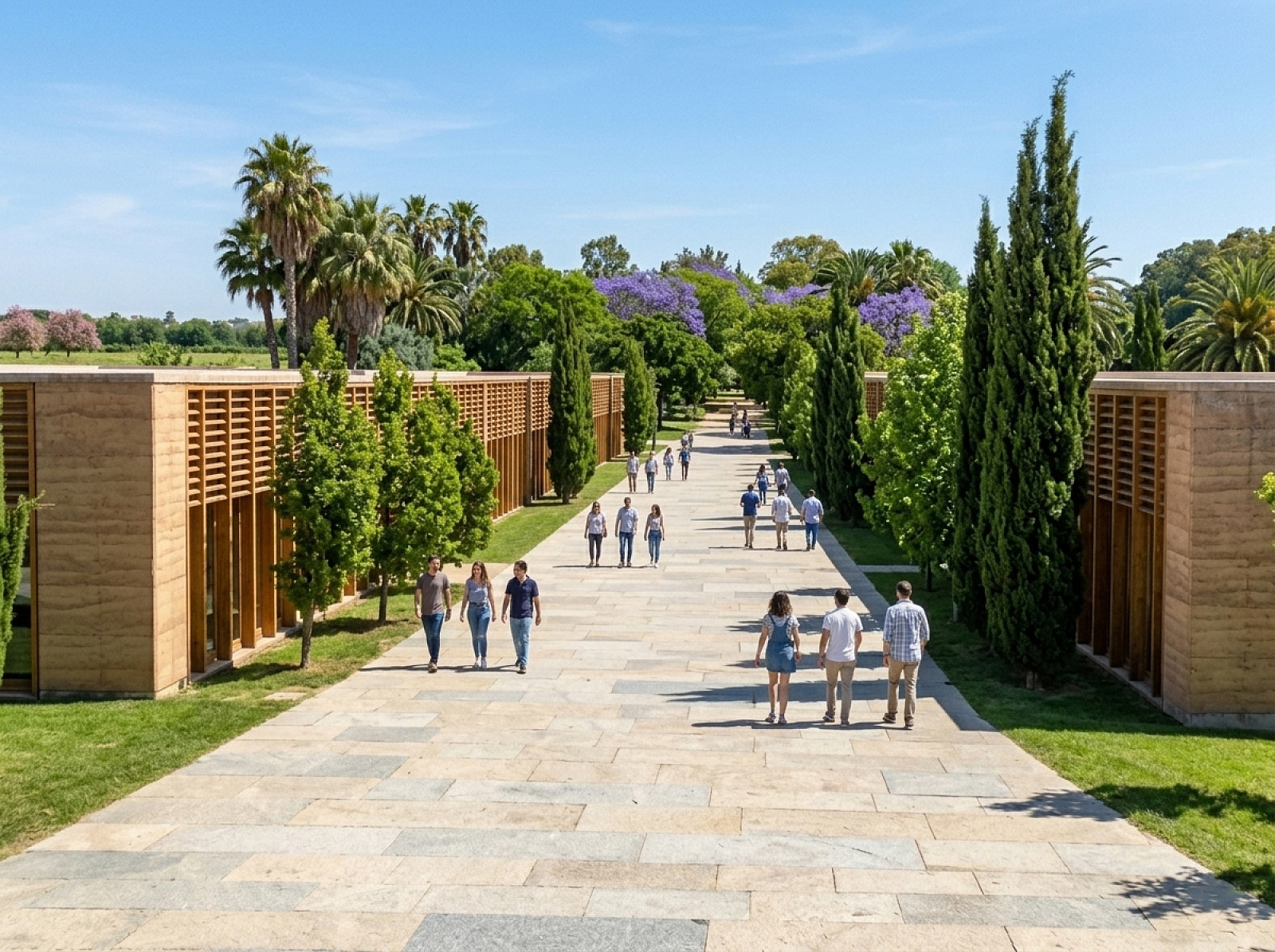
Circular economy: All earth excavated from topographic alterations — estimated at 241,848 m³ — is reused on site for rammed earth construction elements including retaining walls, benches, architectural volumes and building fabric. This eliminates spoil transport and reduces embodied carbon significantly.
Construction materials: Rammed earth (tapial) as the primary architectural material for all new buildings and park elements, stabilized earthen pavement for interior paths, large-format granite or concrete slabs for primary axes, permeable asphalt for bike lanes, and wood for secondary furniture and the pavilion roof structure.
Vegetation strategy: 27 tree species selected for climate adaptability and biodiversity value, organized across six ground cover biomes including Tucumán's native Yunga landscape, wetland vegetation, wild meadow, and ornamental gardens. Planting prioritizes transplanting and preserving existing on-site trees, ensuring their longevity, and adaptability.
Mobility: New bus line connecting the sector to the city center, 8km of integrated bike lanes, pedestrian green corridors of 20m width with rain gardens and multi-layered vegetation.
Lighting: Five fixture typologies — high streetlights (10m), park lampposts (6m), outdoor beacons (1m), reed-style ground fixtures, and hidden LED strip lighting — powered partially by integrated solar collectors.
Typologies: Standard eco-neighborhood residential block, services axis commercial block, residential regeneration block for informal settlement consolidation, and northern buffer park.
Documentation

Copyright © 2026 INSPIRELI | All rights reserved. Use of this website signifies your agreement to the Terms of Use, Privacy Policy, and use of cookies.