
THE TRANSLUCENT VEIL


Project idea
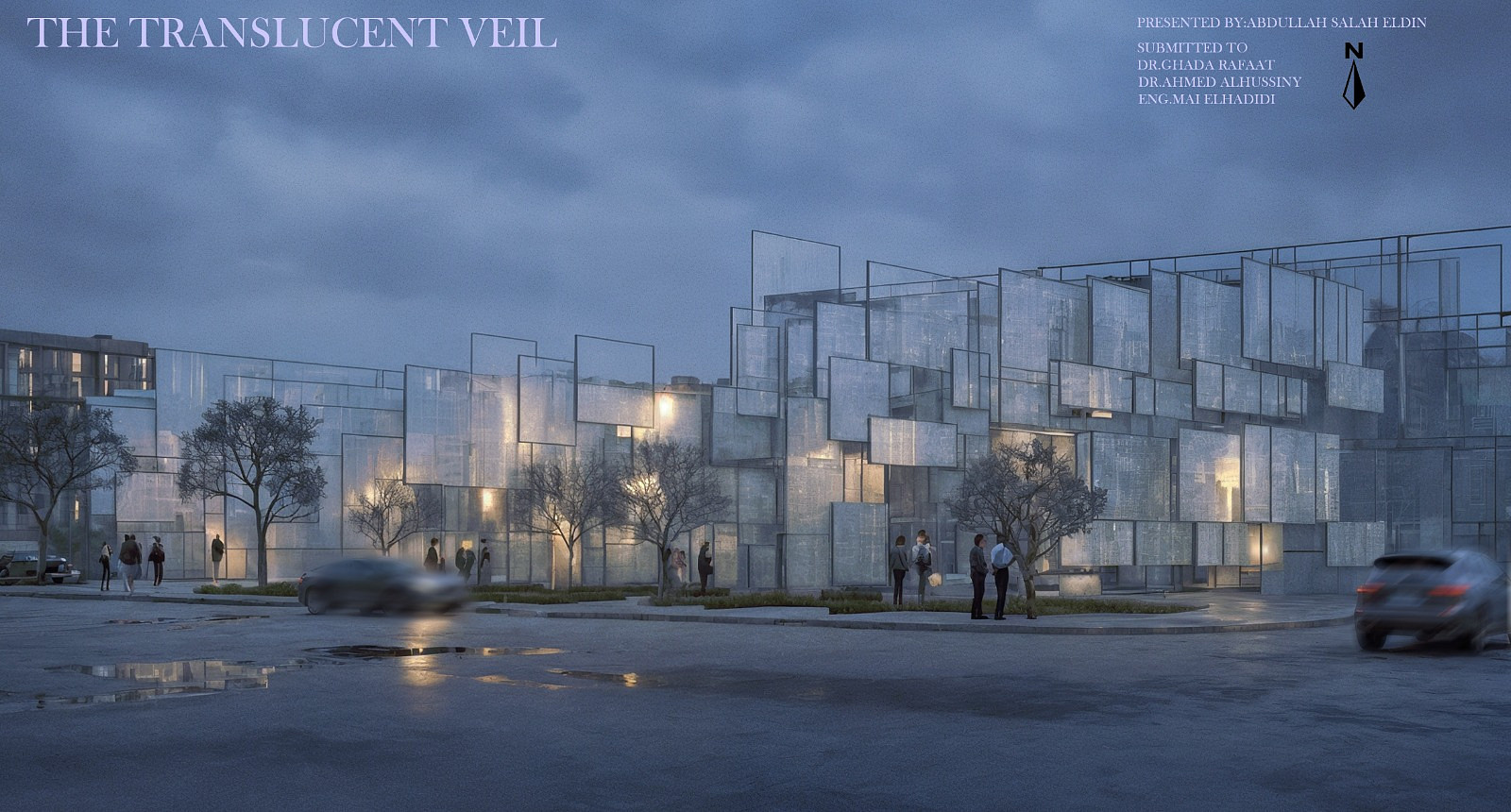
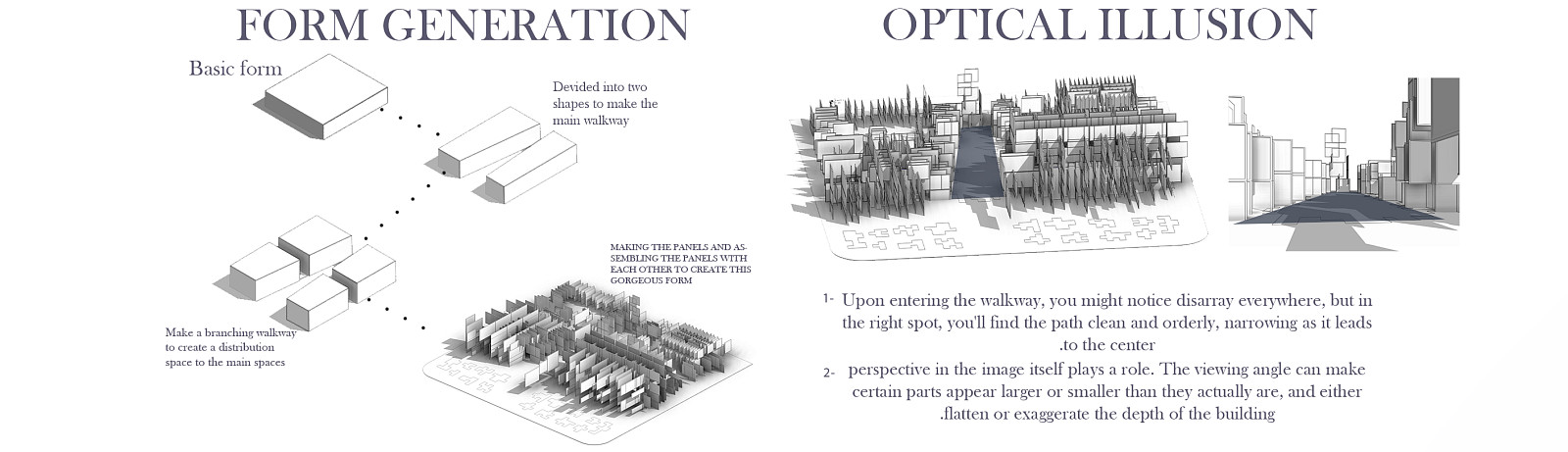
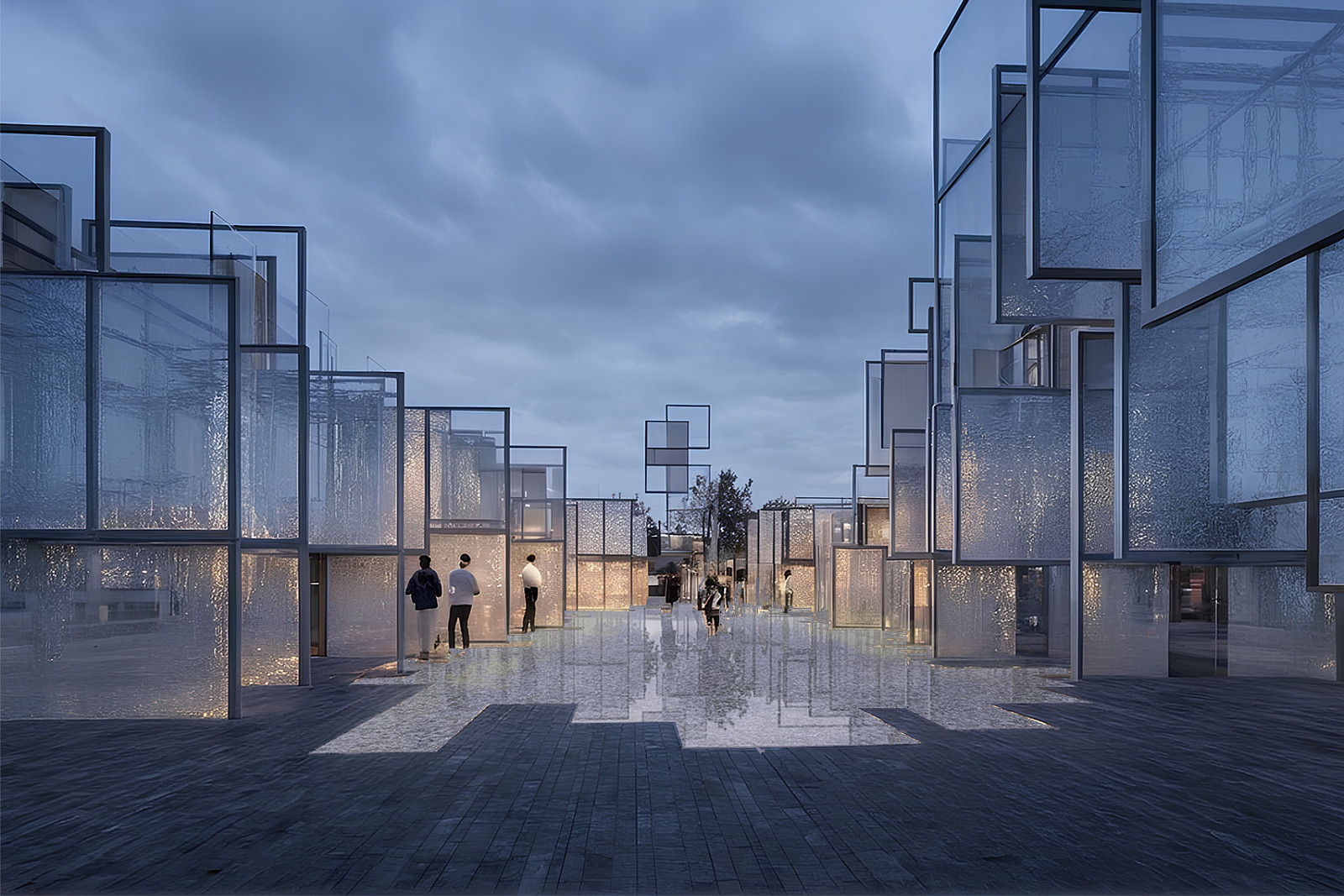
The Translucent Veil is an architectural installation that explores the boundary between presence and absence, visibility and concealment. The project is rooted in the concept of optical illusion a building that appears as controlled chaos from the outside, yet reveals a clear, ordered spatial logic from within. By layering overlapping translucent glass panels within a modular steel frame system, the design creates a shimmering, ever-changing facade that responds to light, movement, and the viewer's perspective. The central goal is to challenge the conventional reading of architectural form: what seems disarrayed from a distance becomes a clean, navigable pathway as one enters, narrowing toward a central spine that organizes the entire composition.
Project description
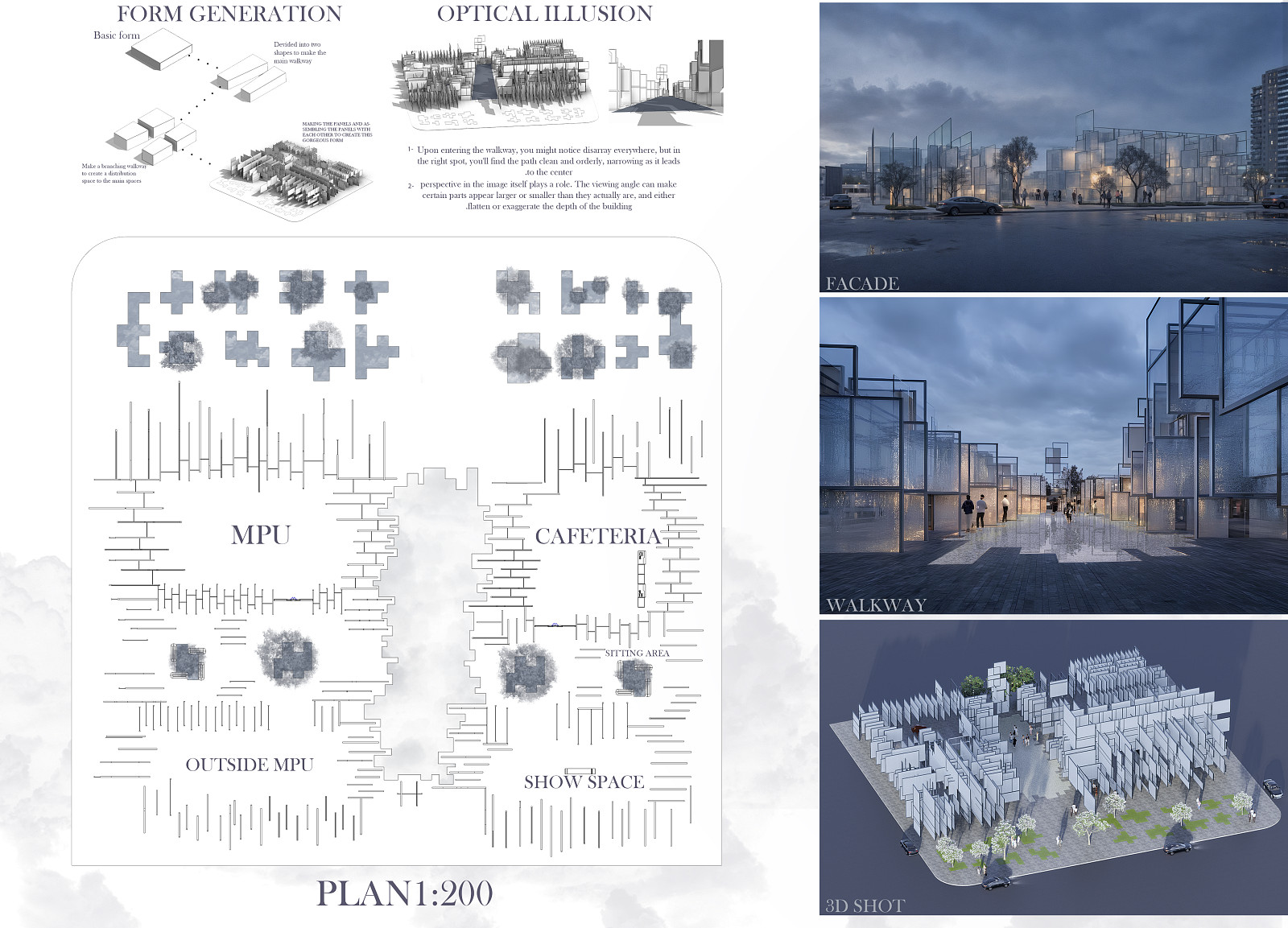
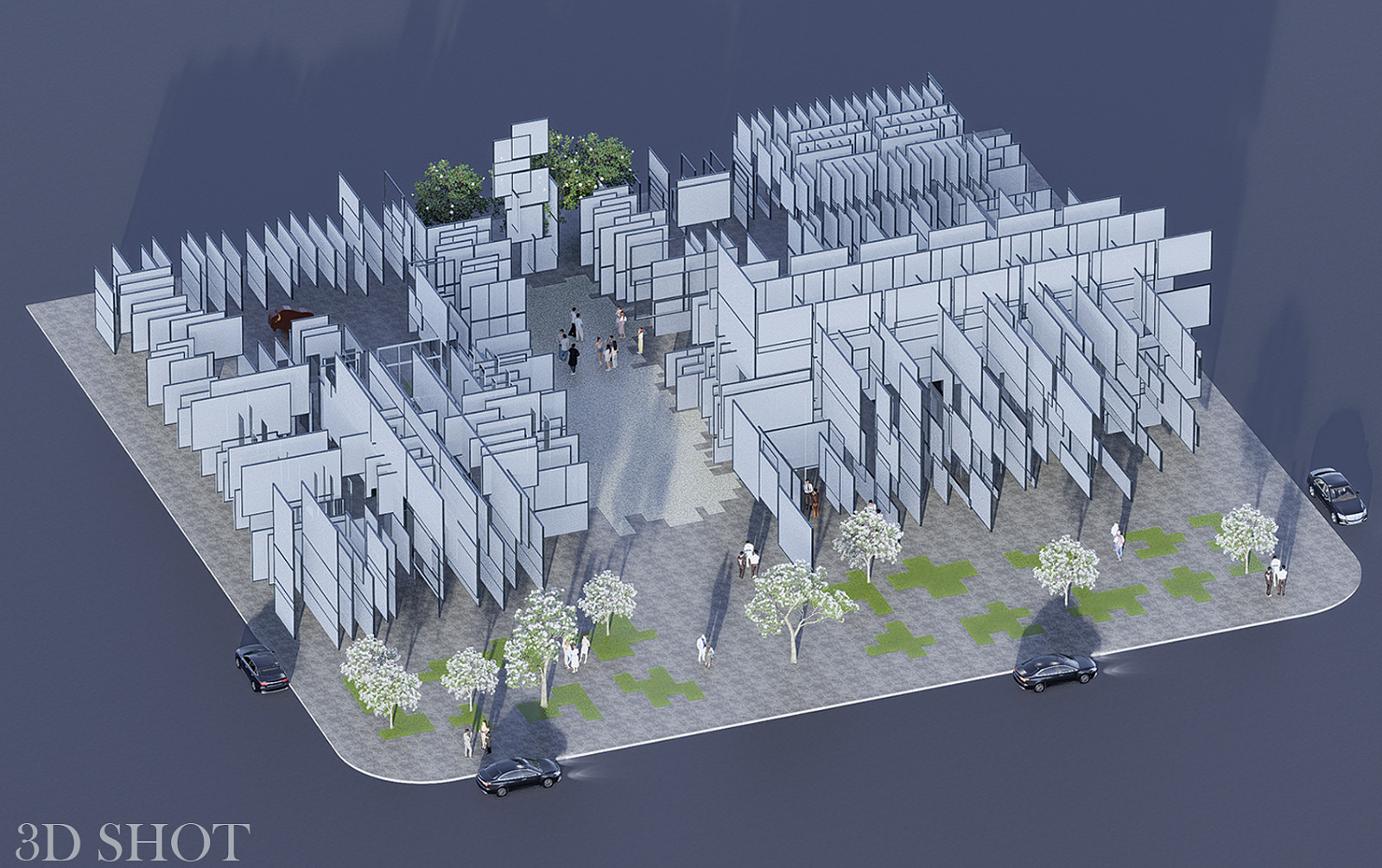
The project occupies a flat urban plot and is organized around a branching walkway system that distributes visitors toward four primary programmatic zones:
MPU (Multi-Purpose Unit): the main functional anchor on the west side
Cafeteria: a social gathering space to the east
Outside MPU: transitional exterior activity zones
Show Space + Sitting Area — exhibition and rest areas at the perimeter
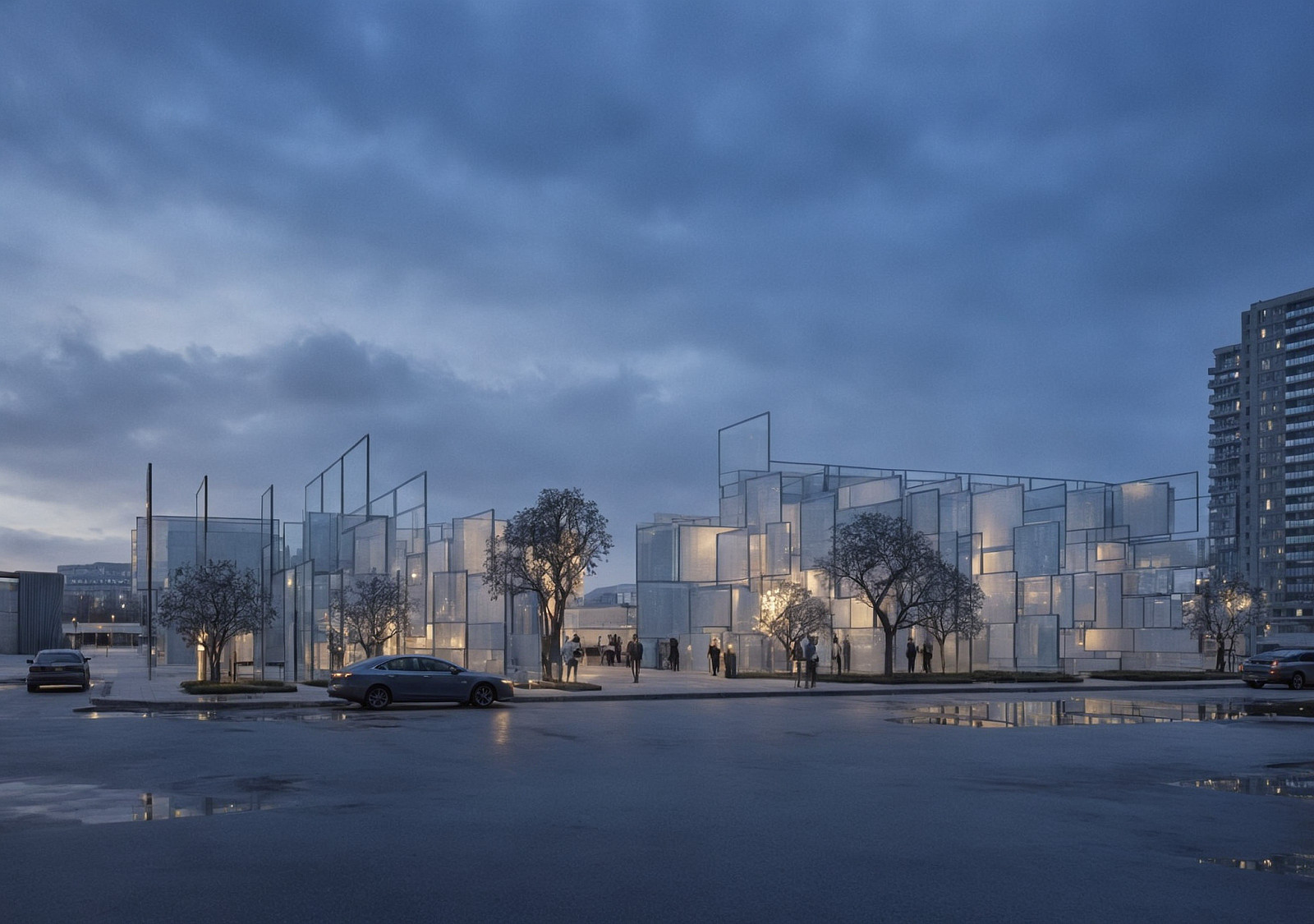
The facade is composed of hundreds of rectangular translucent glass panels of varying sizes, set within thin metal frames and stacked/overlapped at different depths. This creates a dense, pixelated wall-like appearance from the exterior (the "veil"), while the interior remains open, light-filled, and spatially fluid. Trees are integrated within the composition both inside and along the perimeter reinforcing the contrast between organic and geometric systems.
Technical information
Structural System : Modular thin-gauge steel frames supporting individual glass panels
Facade Material : Textured/hammered translucent glass panels in varied rectangular modules
Optical Principle : Perspective compression: panels appear disordered frontally but align when viewed from the correct vantage point along the central axis

Copyright © 2026 INSPIRELI | All rights reserved. Use of this website signifies your agreement to the Terms of Use, Privacy Policy, and use of cookies.
