Ice offices
Project idea
ICE Offices is a contemporary administrative building developed to address the evolving needs of modern work environments. The project is situated within an urban context that demands flexibility, connectivity, and sustainable development, creating a workplace that extends beyond the traditional office model. The design concept is based on the idea of interconnected workspaces, where architecture promotes collaboration, innovation, and user well-being. Through the strategic shifting and stacking of building volumes, the project creates a series of terraces, social spaces, and green platforms that enhance interaction between users while strengthening the relationship between the built environment and nature. The building aims to provide a flexible and efficient working environment supported by abundant natural daylight, visual transparency, and adaptable floor layouts. Public functions at the lower levels contribute to the urban experience by activating the ground floor and encouraging community engagement, while upper levels accommodate office spaces designed to support a variety of working styles. The primary objective of the project is to create a sustainable workplace ecosystem that balances functionality, environmental performance, and architectural identity. By integrating green spaces, maximizing natural lighting, and encouraging social interaction, ICE Offices seeks to enhance productivity, improve user comfort, and establish a landmark destination that responds to the demands of contemporary professional life.
Project description
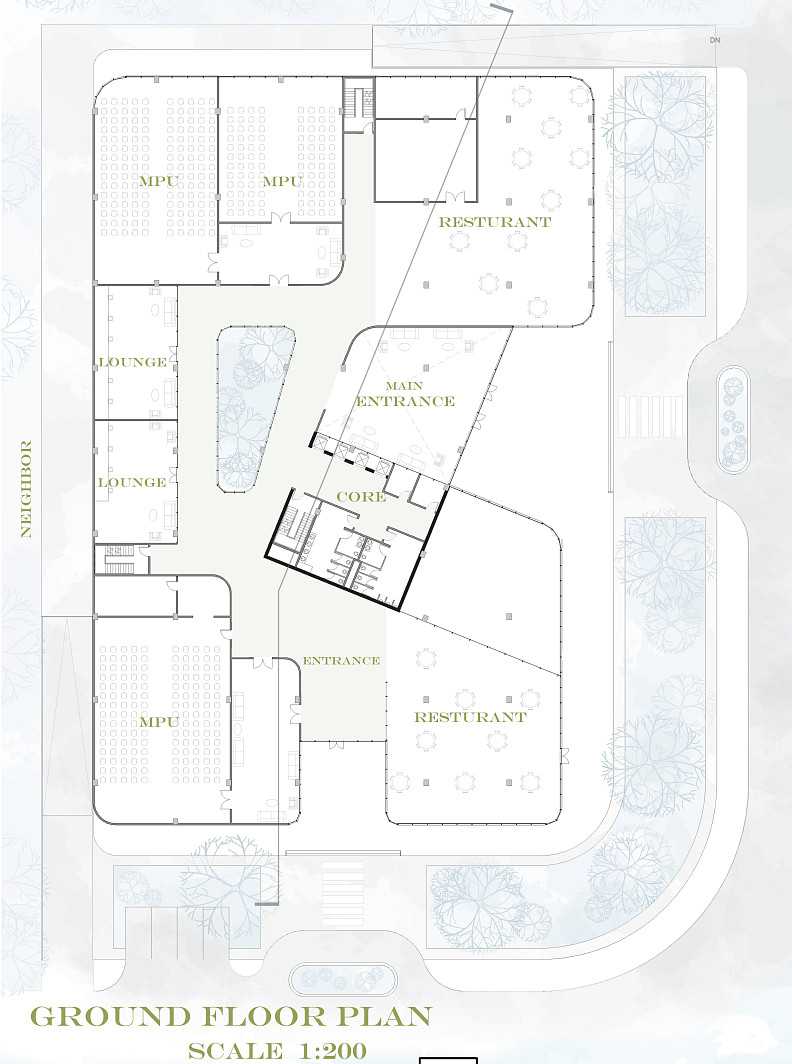
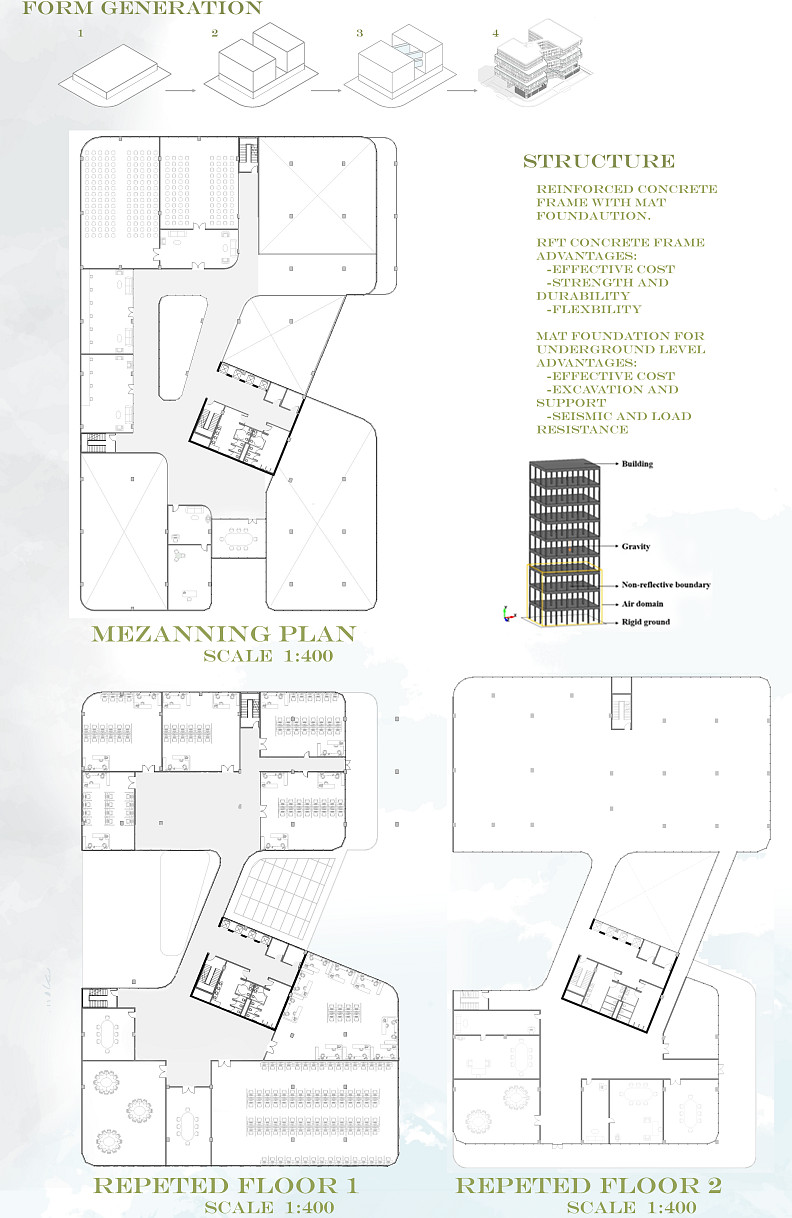
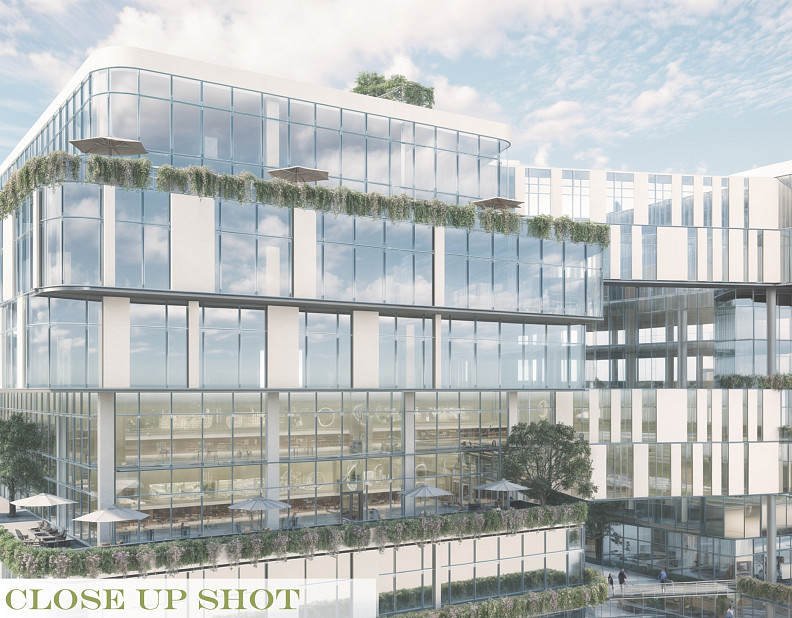
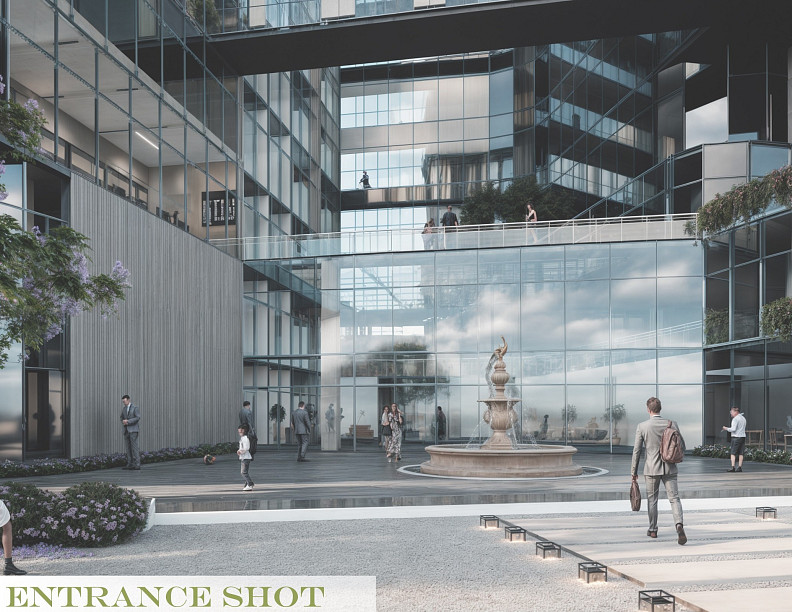
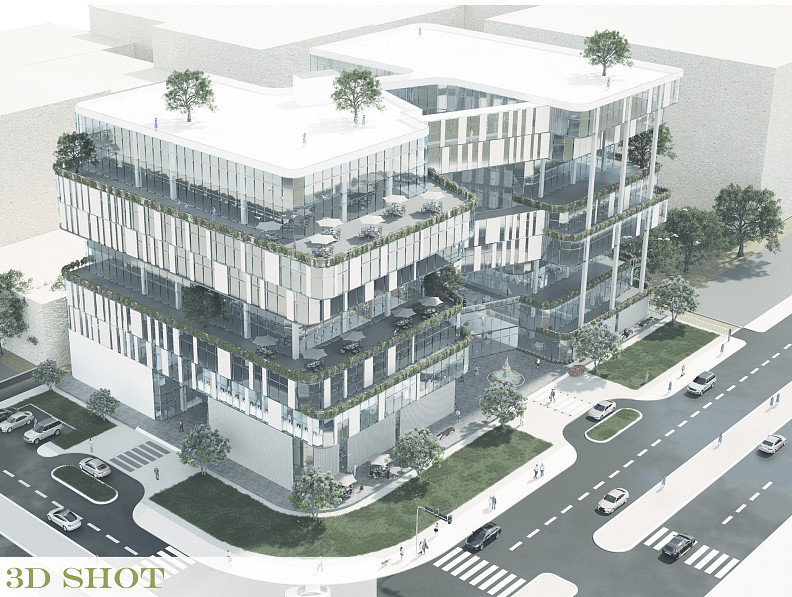
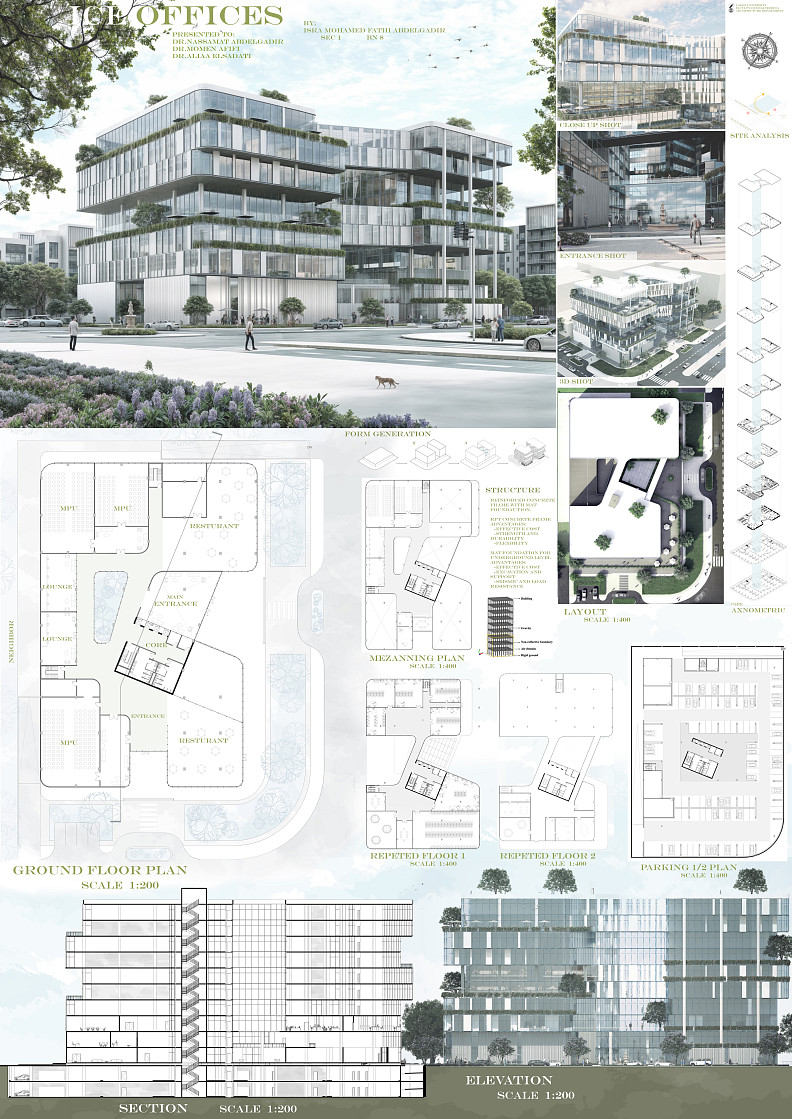
ICE Offices is a contemporary mixed-use administrative building designed to create an innovative and productive work environment while strengthening the connection between users, nature, and the surrounding urban context. The project explores the concept of openness and flexibility through a composition of shifted volumes that generate terraces, outdoor workspaces, and visual connections across the building. The massing strategy is based on stacking and displacing floor plates to reduce the visual heaviness of the structure and create a dynamic architectural identity. These horizontal offsets form landscaped terraces that enhance the quality of the workplace, provide shaded outdoor areas, and contribute to the building's environmental performance. At the ground level, public functions including restaurants, lounges, and gathering spaces activate the site and establish a welcoming relationship with pedestrians. The upper floors accommodate flexible office spaces, meeting rooms, and collaborative work areas organized around a central circulation core, ensuring efficient movement and adaptable planning. The façade is characterized by extensive glazing that maximizes natural daylight and reinforces transparency within the workplace. Integrated green terraces and planted edges introduce biophilic design principles, improving user comfort and creating a healthier indoor environment. The combination of glass, vegetation, and clean geometric forms reflects the project's vision of a modern, sustainable workplace. Structurally, the building utilizes a reinforced concrete frame system that supports large-span office spaces and the cantilevered volumes that define the architectural expression of the project. The result is a landmark office building that balances functionality, sustainability, and aesthetics while offering a flexible and inspiring environment for work, interaction, and innovation.
Technical information
Project Type: Administrative and Commercial Office Building Building Function: The project is designed as a multi-story office building providing administrative workspaces, meeting facilities, collaborative areas, restaurants, lounges, and supporting services. Structural System: The building utilizes a reinforced concrete frame structure consisting of columns, beams, slabs, and a central circulation core. The structural system is designed to provide flexible floor layouts and support the cantilevered building volumes. Building Height: The building consists of a ground floor, mezzanine level, and multiple repeated office floors above, in addition to parking facilities. Circulation: Vertical circulation is provided through elevators, staircases, and a centrally located core that ensures efficient movement between all floors. Horizontal circulation is organized around open office spaces and common areas. Facade System: The façade consists primarily of curtain wall glazing combined with aluminum framing systems. The transparent envelope maximizes natural daylight penetration while maintaining visual connectivity between interior spaces and the surrounding environment. Environmental Features: * Green terraces integrated within the building mass. * Extensive use of natural daylight. * Outdoor social and working spaces. * Landscape elements contributing to thermal comfort and visual quality. * Building form designed to improve shading and reduce solar heat gain. Space Program: * Office spaces. * Meeting and conference rooms. * Lounges and collaborative work areas. * Restaurants and food service areas. * Reception and administrative facilities. * Service and utility spaces. * Parking levels. Materials: * Reinforced concrete structural frame. * Glass curtain wall façade. * Aluminum cladding and framing elements. * Landscape and planter systems integrated into terraces. * Stone or concrete paving for external areas. Design Objectives: To provide a flexible, sustainable, and efficient workplace environment that enhances user comfort, supports collaboration, and responds to contemporary office requirements.

Copyright © 2026 INSPIRELI | All rights reserved. Use of this website signifies your agreement to the Terms of Use, Privacy Policy, and use of cookies.