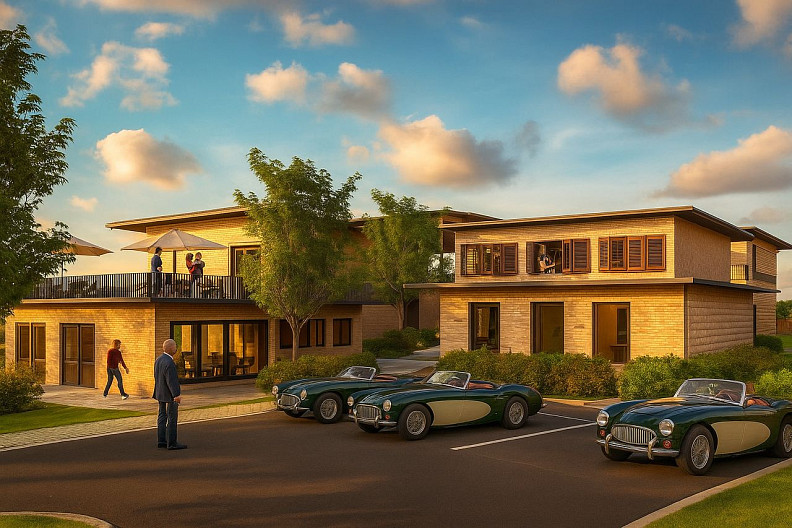
Alumni centre
Project idea
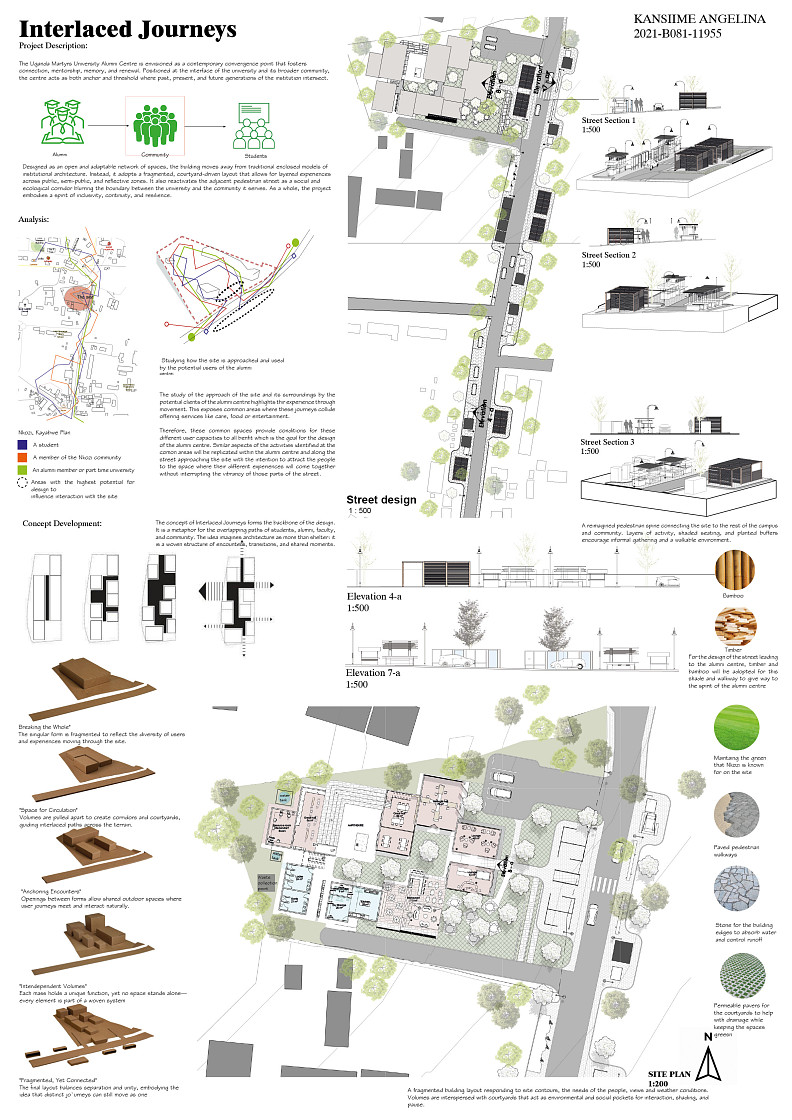
The study of the approach of the site in a small town in Uganda and its surroundings by the potential clients of the alumni centre highlights thir experience through movement. This exposes common areas where these journeys collide offering services like care, food or entertainment. Therefore, these common spaces provide conditions for these different user capacities to all benfit which is the goal for the design of the alumni centre. Similar aspects of the activities identified at the comon areas will be replicated within the alumni centre and along the street approaching the site with the intention to attract the people to the space where their different experiences will come together without interrupting the vibrancy of those parts of the street.
Project description
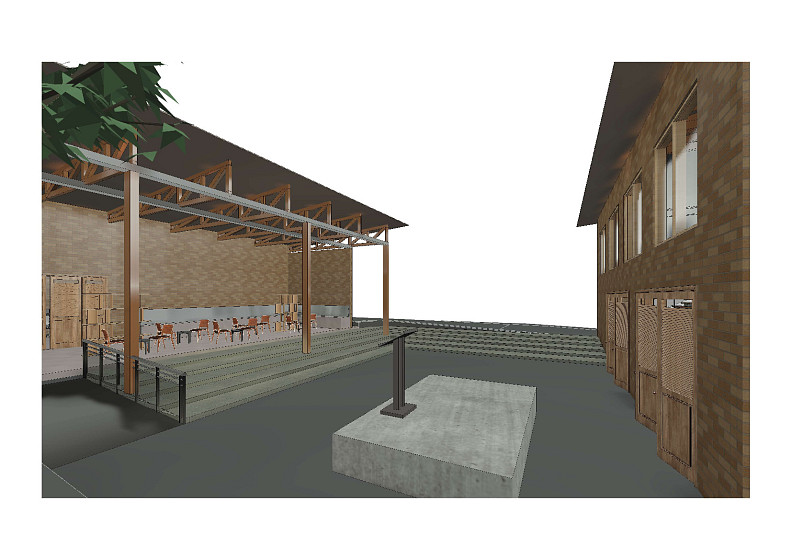
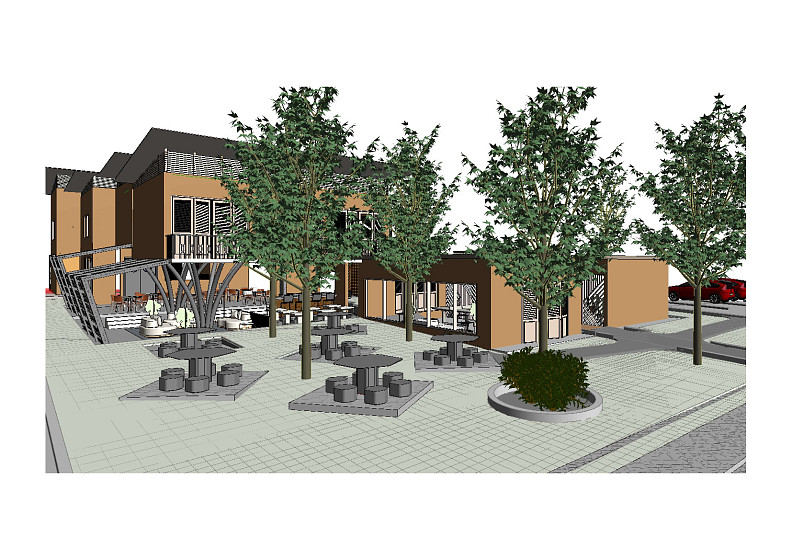
The Uganda Martyrs University Alumni Centre is envisioned as a contemporary convergence point that fosters connection, mentorship, memory, and renewal. Positioned at the interface of the university and its broader community, the centre acts as both anchor and threshold where past, present, and future generations of the institution intersect. Designed as an open and adaptable network of spaces; lounge, restarant, ampitheatre, hall, library the building moves away from traditional enclosed models of institutional architecture. Instead, it adopts a fragmented, courtyard-driven layout that allows for layered experiences across public, semi-public, and reflective zones. It also reactivates the adjacent pedestrian street as a social and ecological corridor blurring the boundary between the university and the community it serves. As a whole, the project embodies a spirit of inclusivity, continuity, and resilience. The concept of Interlaced Journeys forms the backbone of the design. It is a metaphor for the overlapping paths of students, alumni, faculty, and community. The idea imagines architecture as more than shelter: it is a woven structure of encounters, transitions, and shared moments.
Technical information
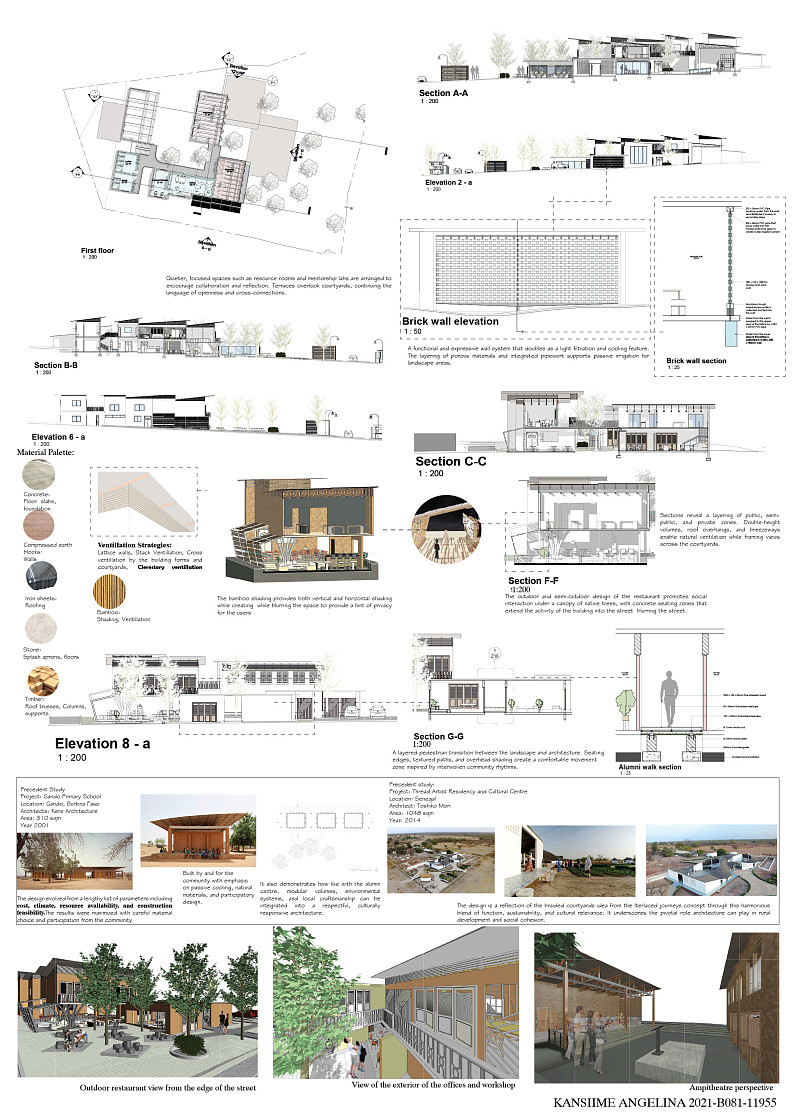
The sections reveal how the architecture negotiates climate, movement, and memory. Volumes are staggered and interlaced with courtyards, allowing for cross-ventilation, filtered light, and framed views. Split roofs enhance stack ventilation while guiding rainwater into bioswales below. Thick rammed earth walls anchor the structure thermally and symbolically, while lighter bamboo screens modulate openness. Vertical layering of space from grounded social zones to elevated reflective areas reinforces the idea of a continuous journey, unfolding through thresholds of air, light, and interaction. Material transitions express layered meaning. Thick earthen walls convey permanence and memory, while woven bamboo screens and clay pot walls filter light, air, and view representing openness without exposure. Shaded verandas and adjustable elements respond to climate and time of day, enhancing user control and comfort. Each detail reinforces the spatial identity of the centre as a place of generosity, dialogue, and regeneration

Copyright © 2026 INSPIRELI | All rights reserved. Use of this website signifies your agreement to the Terms of Use, Privacy Policy, and use of cookies.