Projet d'une unité de production du tissu raphia à Nkok au Gabon
Project idea
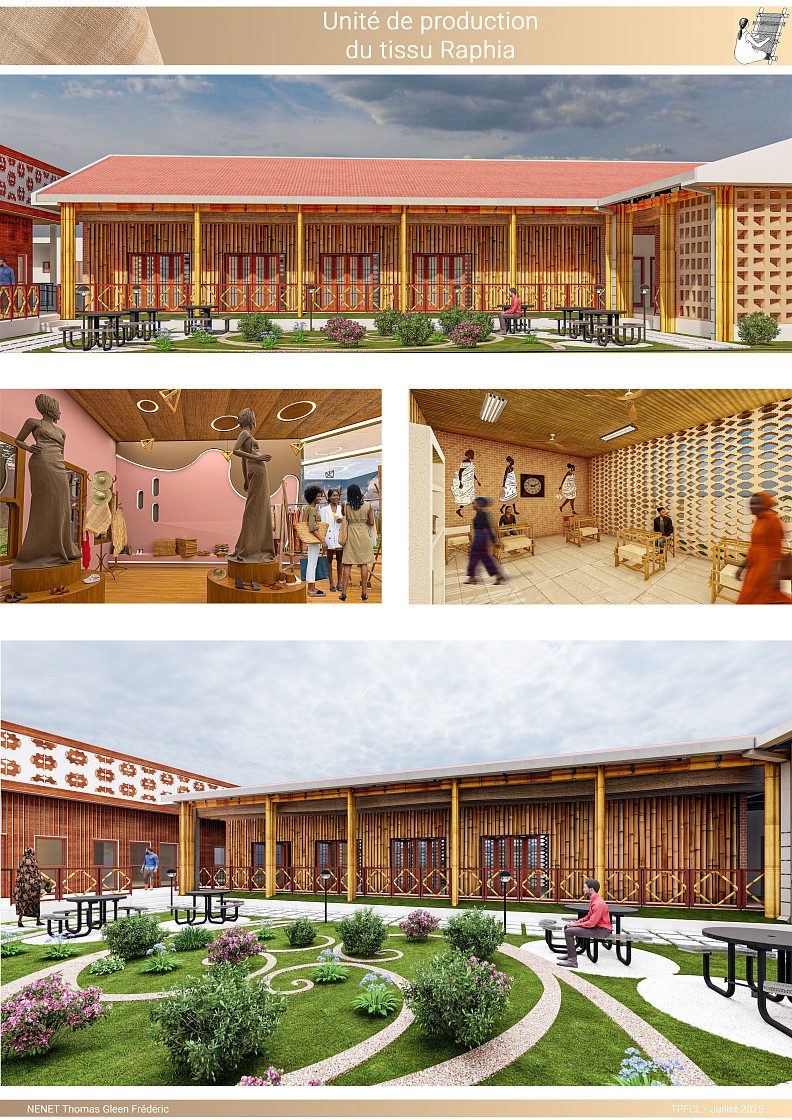
Poetry The Architect: Hello, production unit. I am here to take care of you. Years pass, technologies advance. Production Unit: How will you take care of me? I who am open to nature, I who am made of local and lightweight materials, I who do not always offer comfort nor good ambiance, but who respond to a need and carry an artisanal identity. If you take care of me, what will you do for my friend, the artisan? Will you place her in a work prison, surrounded by blind walls, cold factory panels? Will you deprive her of a view to the outside, of contact with nature? Will you prevent her from receiving daylight, from breathing the free air that I can offer? Mr. Architect, what will you do with my resilience, my role, and my impact on the local community? Architect: No, you will remain open, in dialogue with nature. Green spaces will bring life forth, claustras will rhythm the shadows, large bay windows and glass will invite the day. We will choose biosourced materials: wood, bamboo, raphia, earth for bricks and tiles. Your artisanal identity will not be mere decor: it will be born from frescoes, patterns on the claustras, from hands that shape, from gestures that speak. Building: And functionality? Comfort? Architect: Production will remain at the heart, but visual, mental, and physical comfort will guide the form. Warm ambiances, amber light, carefully worked silence, equipment open and centered on a living garden. This garden will not be ornamental; it will ventilate, soothe, offer a daily spectacle: the song of birds, the conversation of plants, the moving shadow. The form of the buildings will follow the wind's breath, their orientation the sun's course, the placement of rooms will listen to these forces. Building: And the community? My resilience? Architect: Your resilience will be thought through: durable, repairable materials, passive solutions, reasoned energy autonomy. Your impact on the community will remain positive: local employment, preserved know-how, shared spaces. Your friend the artisan will work in light, with a view and ventilation, not in a cell. We will design for life, for transmission, so that your identity breathes and the city recognizes you. Building: Do you see? I want to remain alive, open, useful. I want to be cared for without being erased. What will you do, architect, to keep your promise? Architect: I will build around you, with you, and for you. I will make your work a visible profession, your breath an urban gesture, and your resilience a shared pride.
Project description
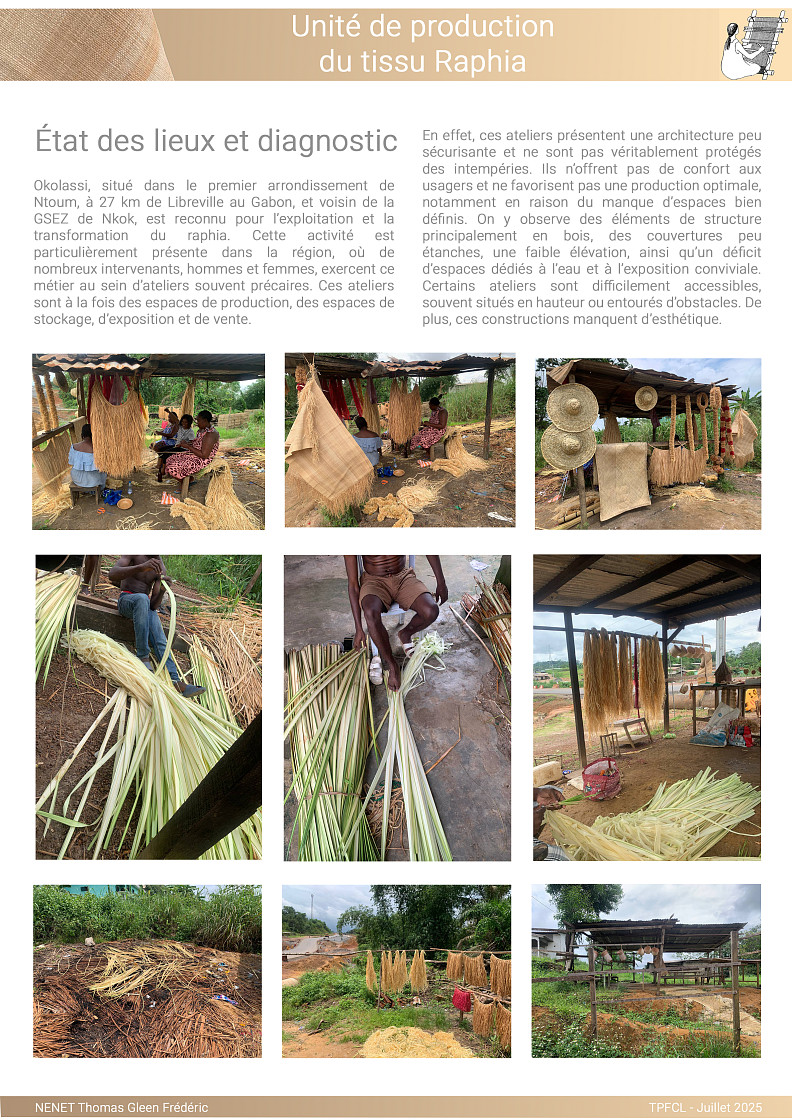
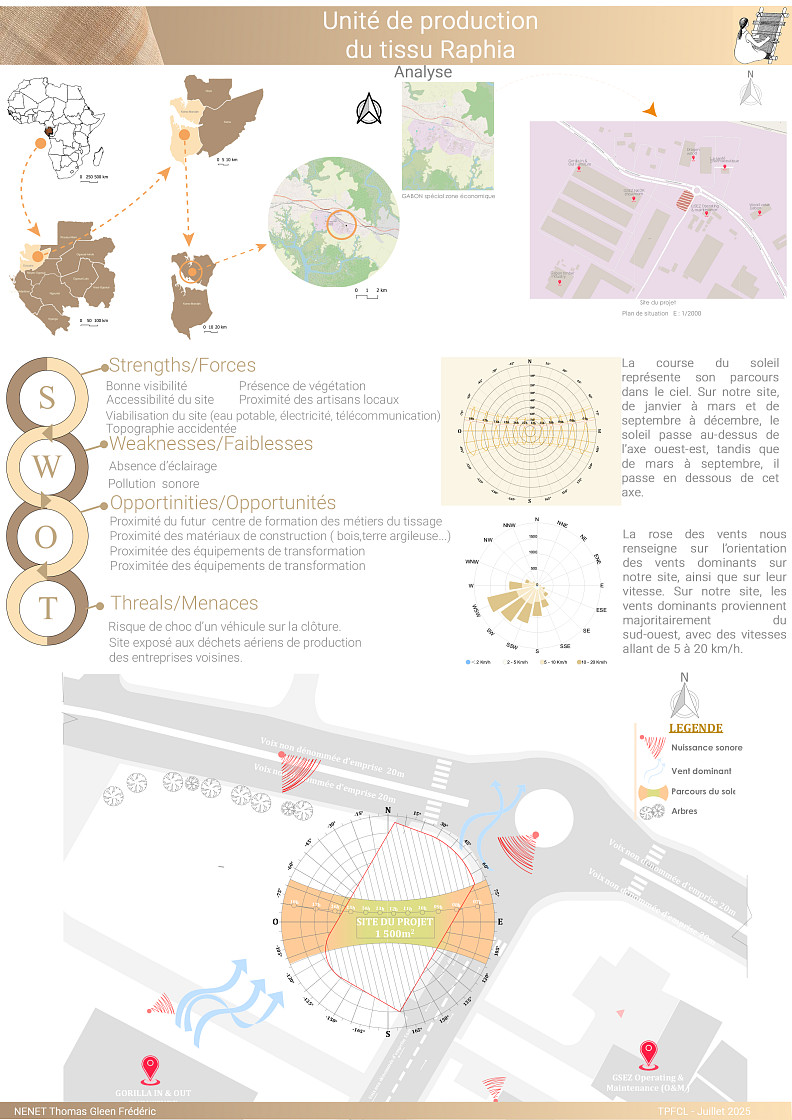
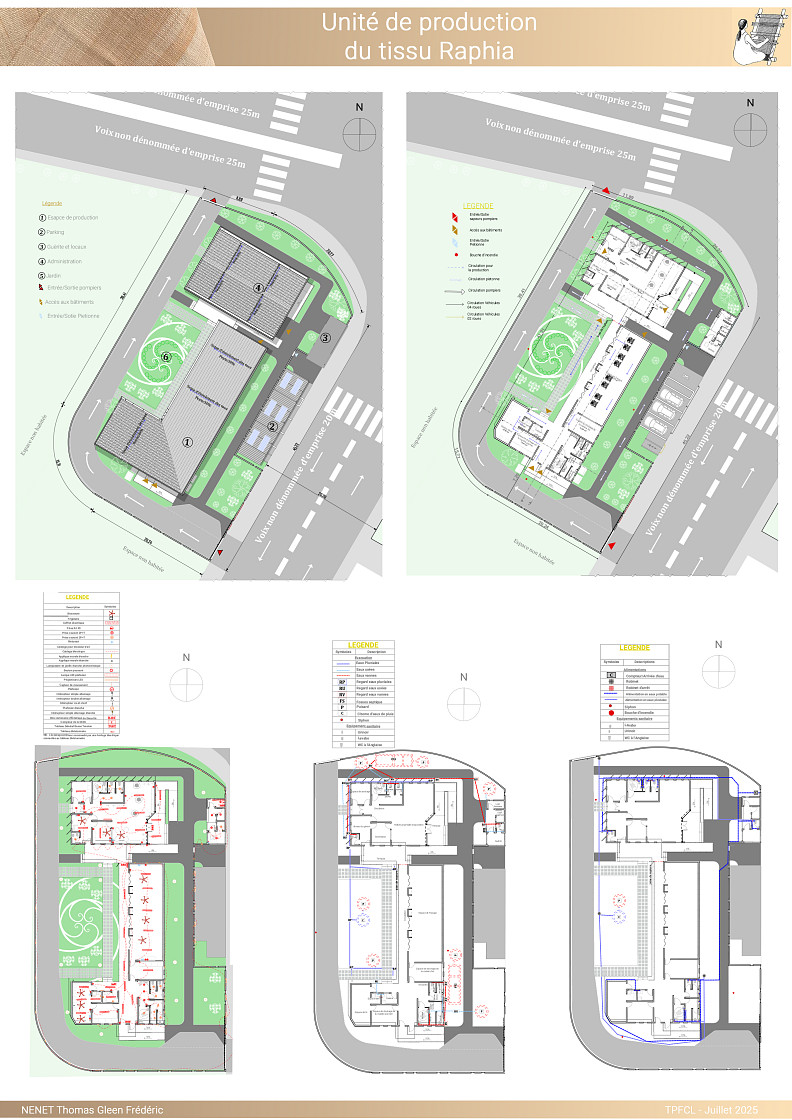
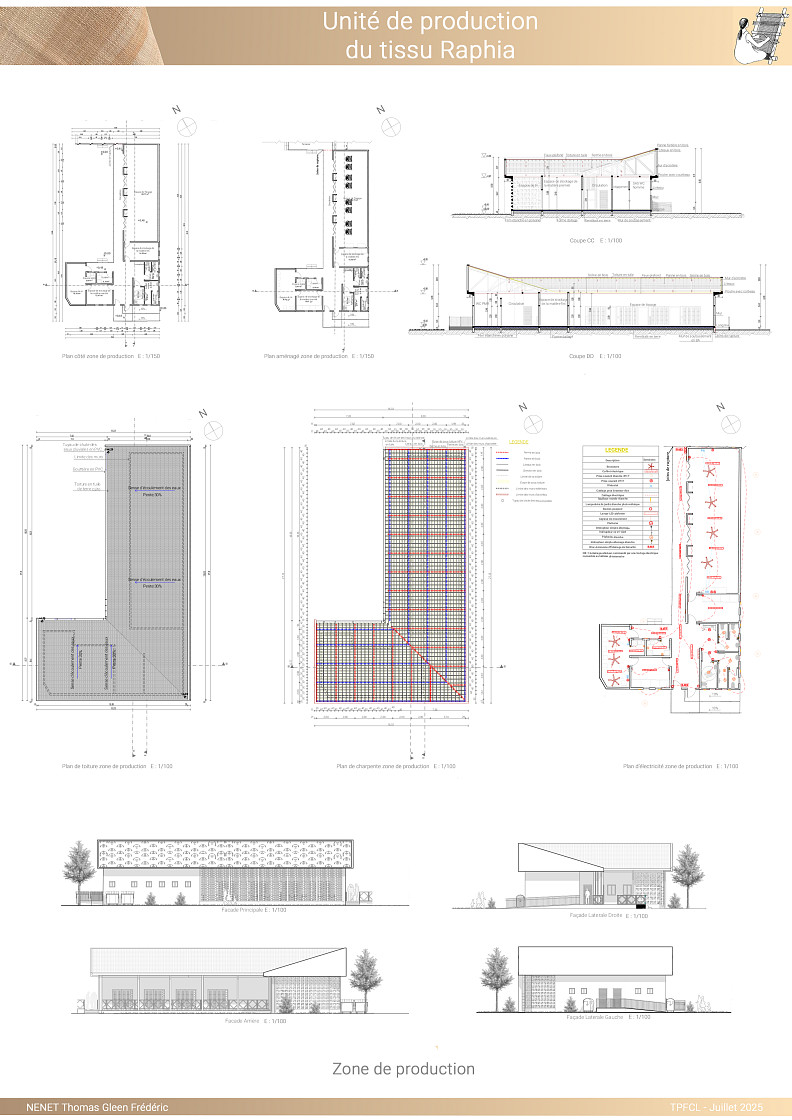
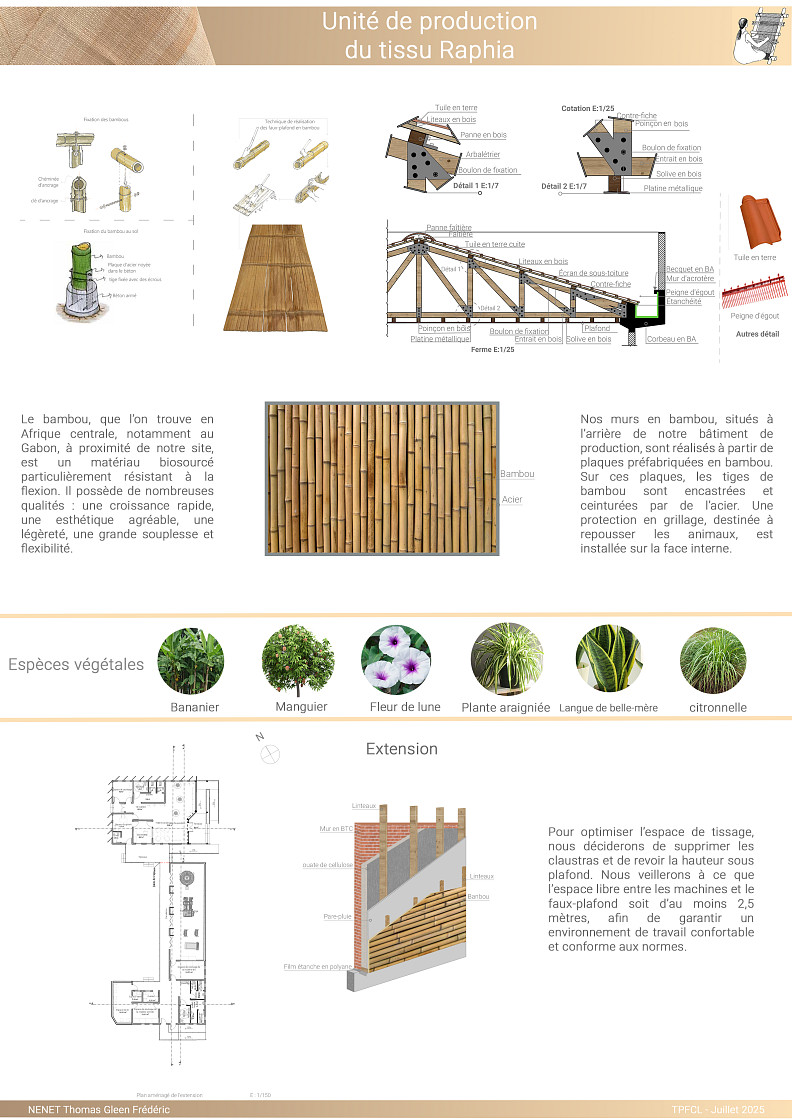
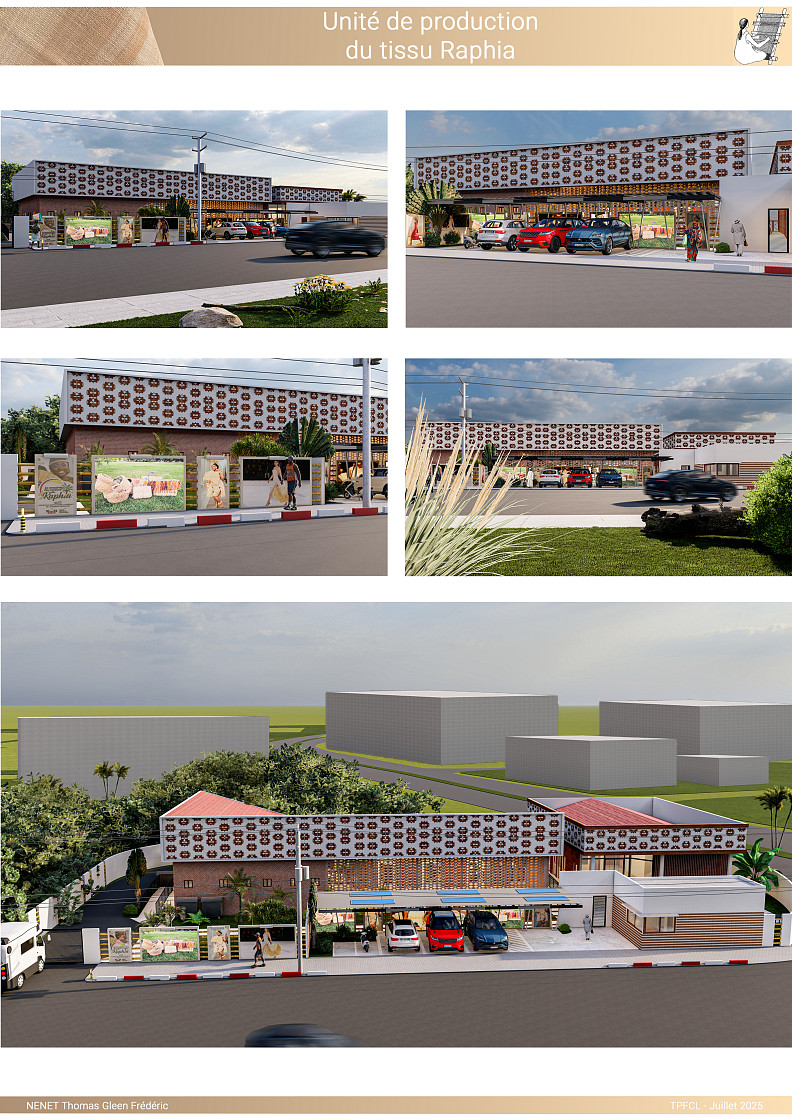
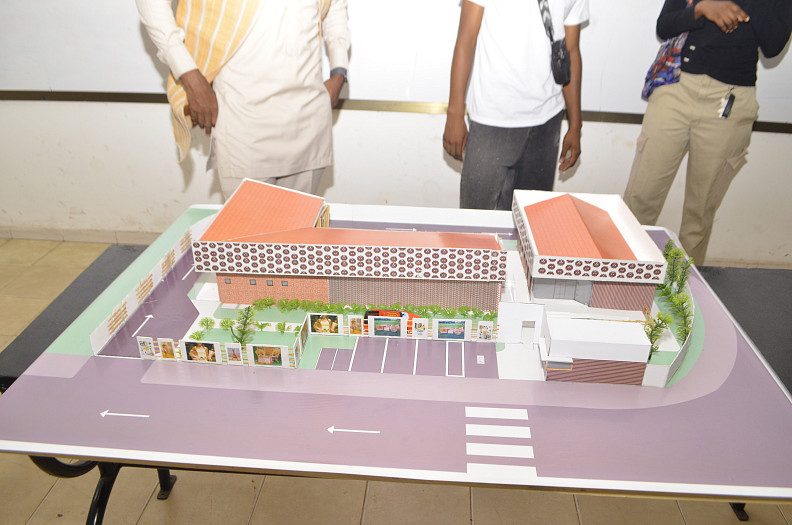
Bioclimatic Project: Dynamic and Social Integration The project is integrated into a bioclimatic dynamic, structured around two distinct blocks: Block 1 (public and semi-public): accommodates public functions (exhibition hall) and semi-public administrative spaces (offices) Block 2 (private): dedicated to production Spaces for conviviality and social cohesion complete this ensemble. Applied Bioclimatic Principles Our bioclimatic structure was designed taking into account six fundamental aspects: 1. Orientation The buildings are oriented so that bay windows and claustras allow maximum natural light to enter, thereby generating energy savings. The claustras, acroters, and solar brises filter light at precise moments of the day (notably at noon) and also offer a spectacle of shadow and light. 2. Ventilation The orientation of the buildings favors transverse ventilation, reinforced by the choice of volume and earth roofs. 3. Thermal Regulation The use of BTC (Fired Earth Blocks) allows heat to be captured during the day and released gently at night, offering a soft temperature in the morning. 4. Local Materials We have privileged several local materials: Earth present on site: BTC walls, claustras, and fired earth tiles Bamboo from the surroundings: walls, false ceiling, and fence Wood: frescoes and wall covering Raphia: decoration and furniture An extension is planned for the possible integration of machines. In this case, claustras will be removed and replaced with cellulose panels for acoustic reasons. 5. Social and Cultural Integration The shape of the claustras is inspired by African elements, incorporating the patterns of local masks The fence wall serves as an advertising space and for valorizing the raphia fabric produced in our unit Gathering spaces (garden) welcome birds and butterflies, offering a spectacle for artisans Plants that foster creativity and stimulate work performance contribute to well-being PMR ramps ensure inclusion for all 6. Energy Quality light and ventilation limit electricity use. The recovery and use of rainwater represent another approach to economy.
Technical information
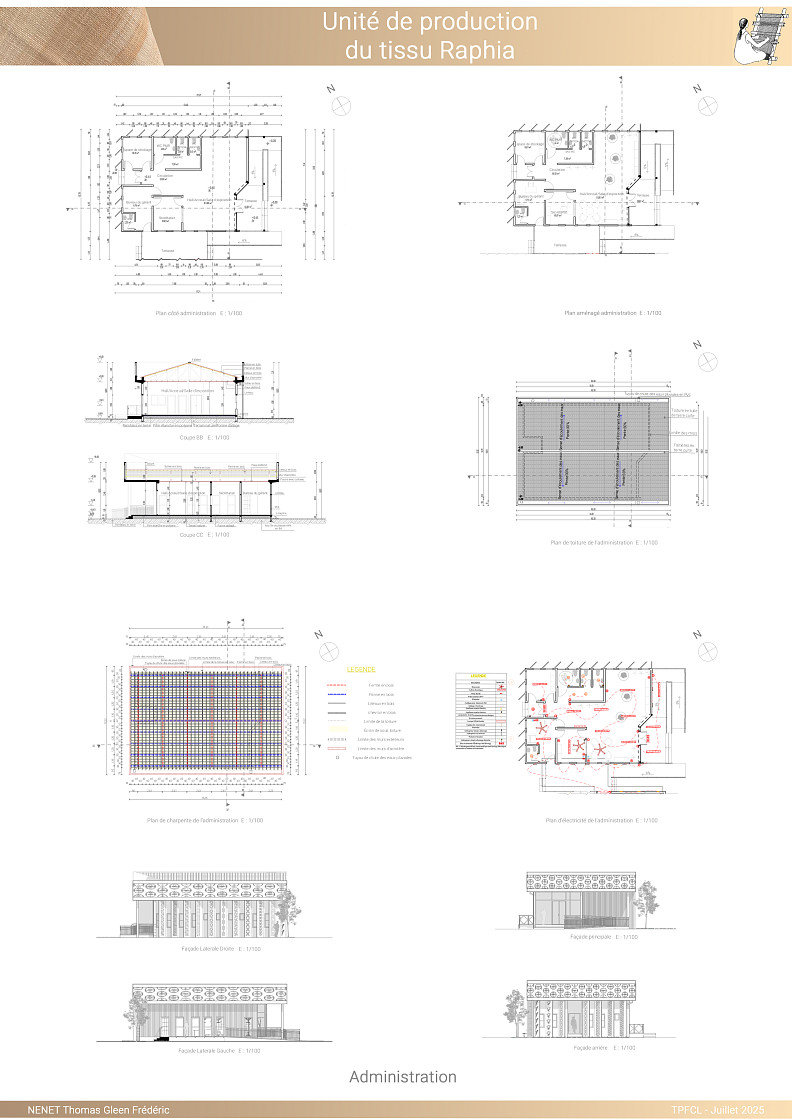
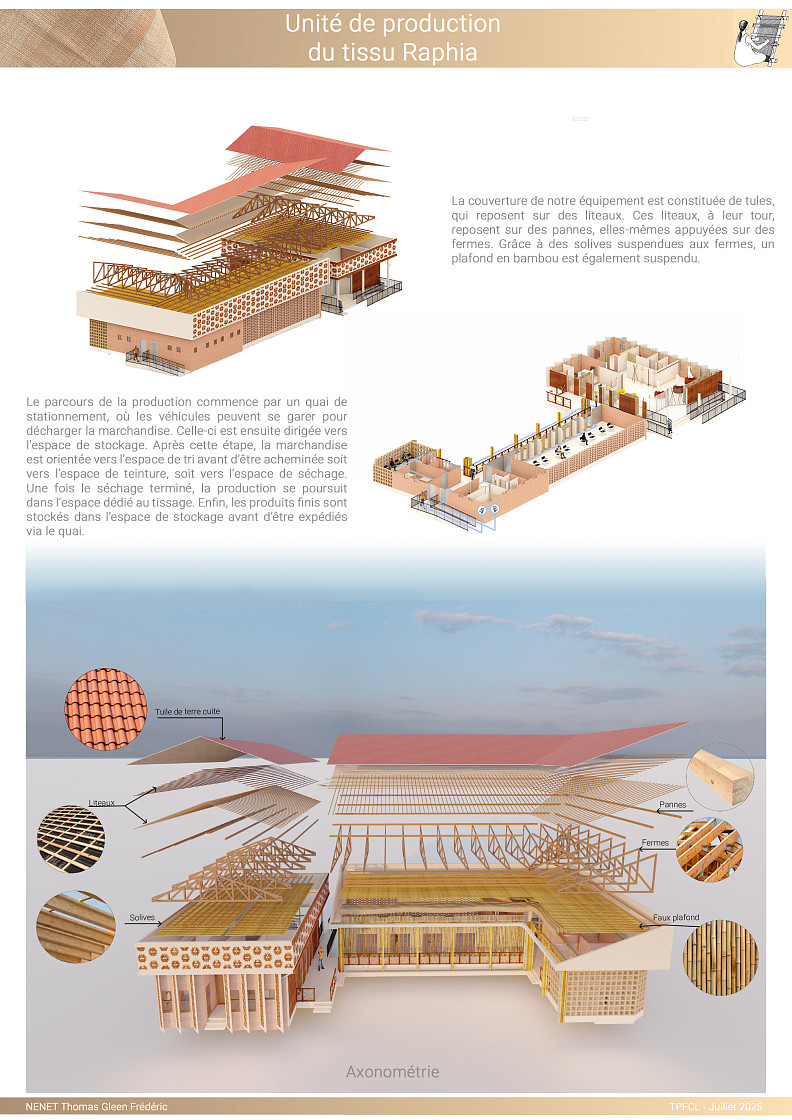
Reinforced Concrete Works: Reinforced concrete (RC) works must be executed in accordance with the calculations and plans established for the project. The required dosage is 350 kg of cement per cubic meter of concrete, which translates into the following proportions for preparing the mix: Cement: 350 kg, equal to 7 packs of 50 kg Gravel: 800 liters, equivalent to 0.8 m³ or approximately 16 wheelbarrows Sand: 400 liters, equal to 0.4 m³ or approximately 8 wheelbarrows This list is not exhaustive and may be adjusted according to the specific needs of the site. Masonry in Elevation: Walls will be constructed using Compacted Earth Blocks (BTC) with a thickness of 15 cm for the administrative building and the production building. Partition walls separating the W.C. will have a thickness of 10 cm. For perimeter walls and annexes, concrete block walls with a thickness of 10 cm will be used. Rain-resistant claustras, with a thickness of 15 cm, will be used at the weaving and sorting area. Rain-resistant claustras will be added to ordinary claustras to achieve better lighting; for insect protection, a protective mesh will be associated. Bamboo walls will be constructed with stems preferably 20 cm in diameter. Wall Frescoes: The wood used for wall frescoes will be treated to reinforce its characteristics, enabling it to resist adverse weather, fungi, wood-boring larvae, and other insects. To this end, we will use water repellent (hydrofuge), UV protection oils, and saturators for reinforcement. Roof Framing: The roof framing of our structure will be made of wood, with spruce trusses of 8 x 12 cm section. The assembly of the framing elements will be carried out using plates, fixing bolts, and nails. The roofing of the buildings will consist of fired earth tiles, with dimensions of 18 cm × 38 cm, for 30 cm of exposure and a thickness of 18 mm. The tiles will be treated with water repellent (hydrofuge). Faux Ceiling: The building will have a faux ceiling made of bamboo, adorned with raphia. This ceiling will rest on the joists, thus adding an artisanal and aesthetic touch to the structure. Rainwater Drainage: PVC pipes, sized to collect water, will be used. Gutters: Rainwater will be discharged into gutters located at the edge of the roof.A tank is planned to collect and store rainwater. This tank will be connected to an infiltration well. Green Spaces: These will consist of grass, fruit-bearing trees providing fruit, shade, and protection against sun rays, as well as depolluting plants such as the moonflower to purify the air and the spider plant improving concentration. Perimeter Fence: The fence will consist of a 15 cm concrete block wall and bamboo crosspieces ensuring separation between the walls. Safety Systems: Smoke detectors will be installed and connected to a fire alarm system to ensure early detection of fires. 6 kg powder extinguishers will also be placed throughout the entire facility. Motion detectors will be installed and connected to the lighting as well as to an alarm to ensure nighttime security. Furthermore, lightning protection will be installed, with mandatory grounding of all electrical equipment and metal elements in each room.
Thomas NENET
Ecole Africaine des Métiers d'Architecture et d'Urbanisme (EAMAU) a Lomé (Togo)
Gabon
Arquitetura
Projeto submetido
06. 06. 2026Etiqueta
Conselho a estudantes

Copyright © 2026 INSPIRELI | All rights reserved. Use of this website signifies your agreement to the Terms of Use, Privacy Policy, and use of cookies.