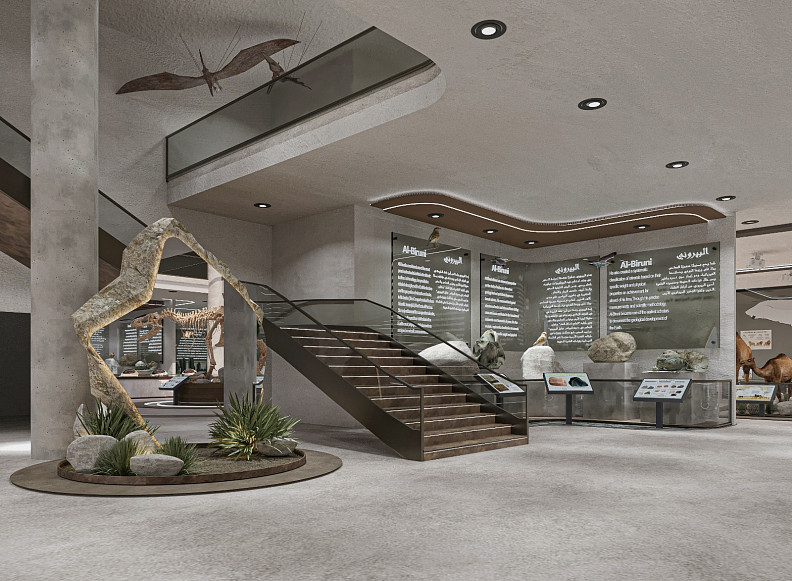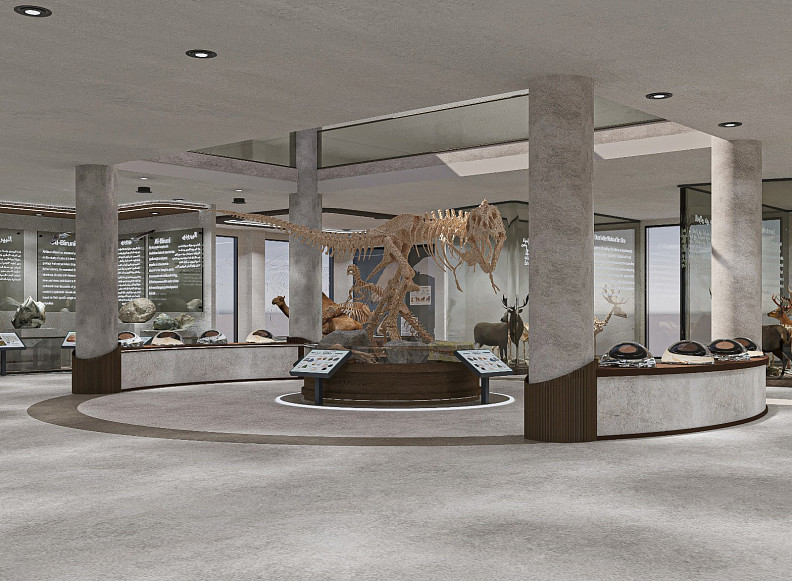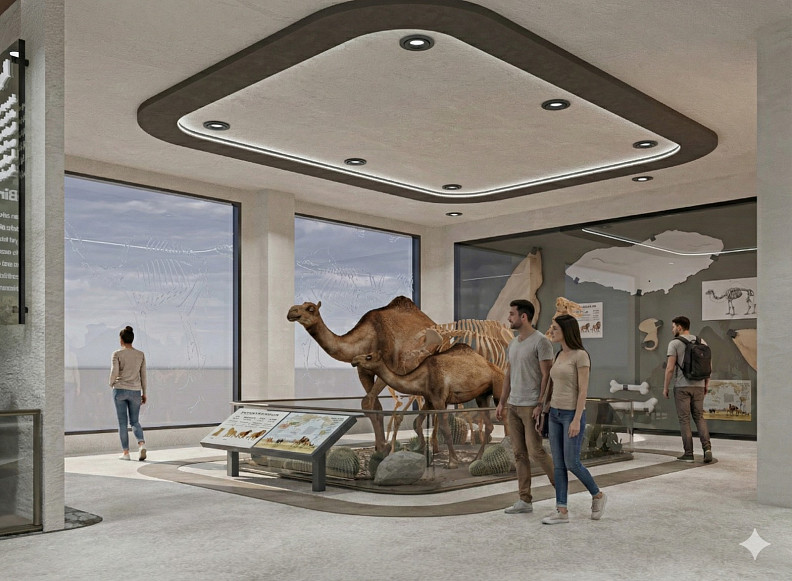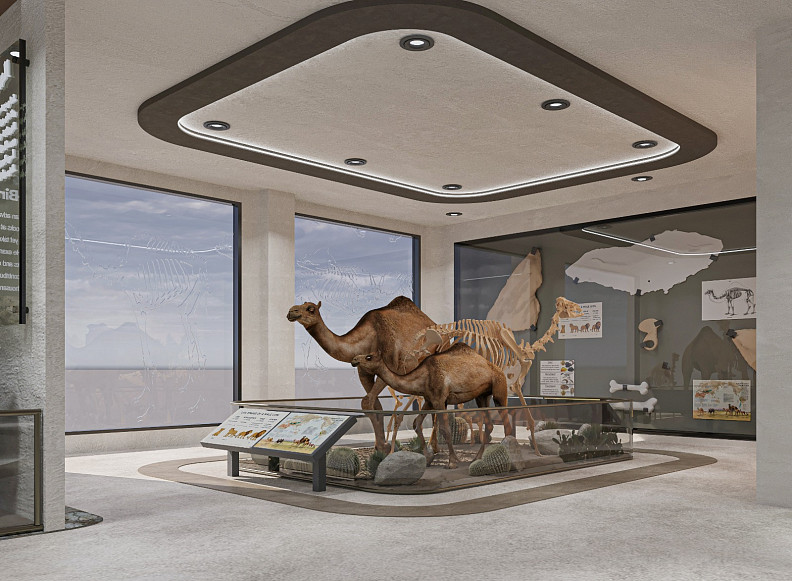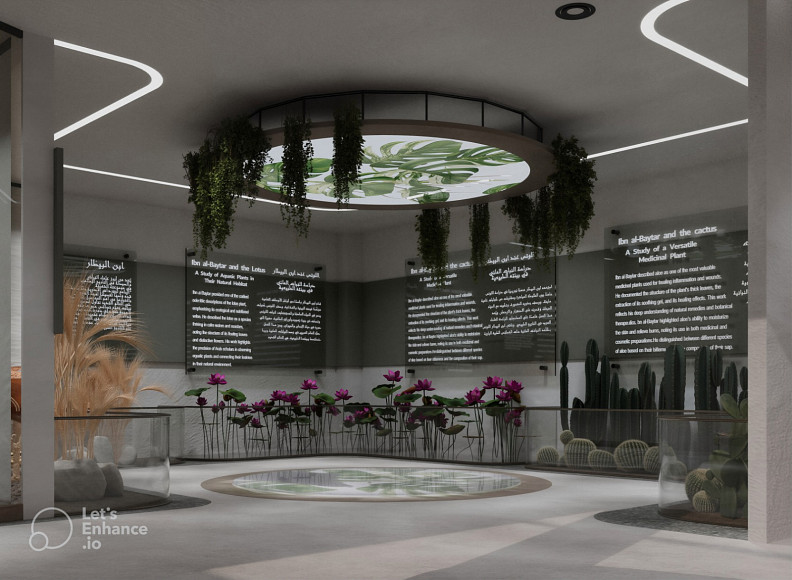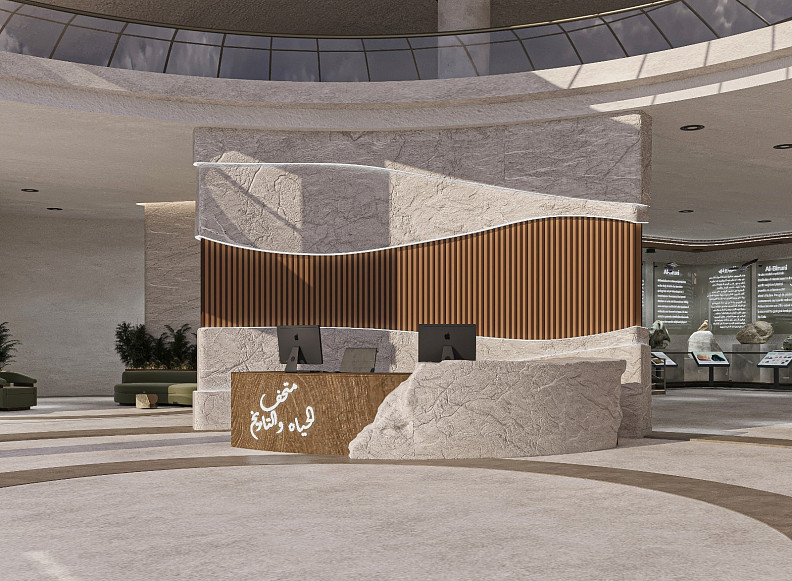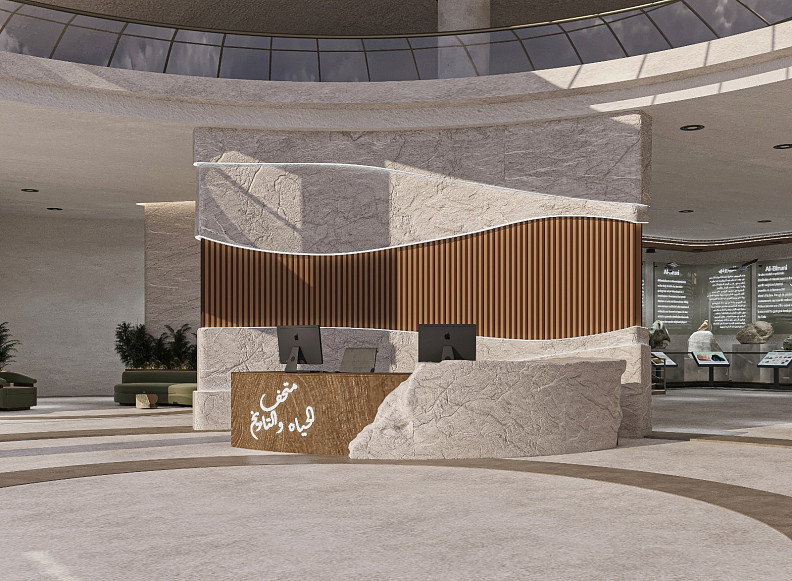
The museum project dedicated to the history of life on Earth represents an interesting attempt to present the long process of the development of the natural world through architectural space and exhibition narrative. The concept, referring to rock formations as a natural archive of the planet’s history, is clear and well aligned with the themes of geology, paleontology, and biodiversity. Inspiration drawn from the structure of rocks helps create a coherent spatial atmosphere that symbolically refers to the layers of the Earth concealing traces of past eras.
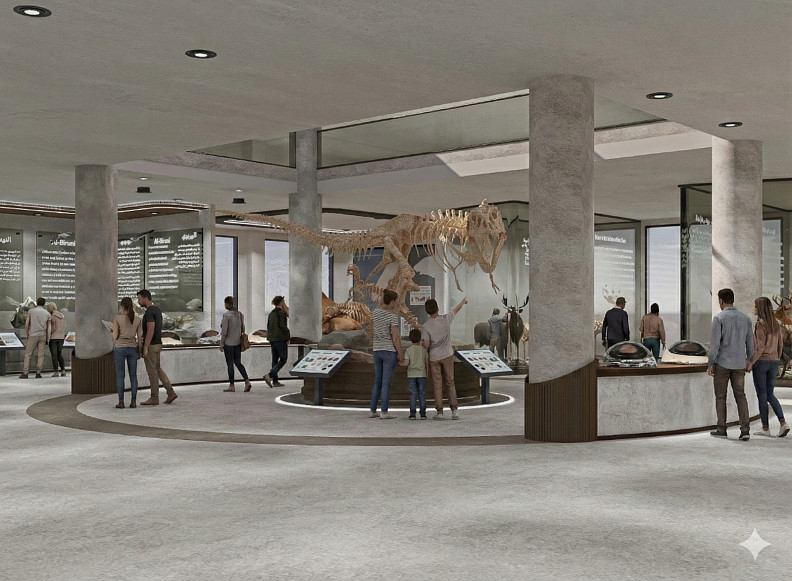
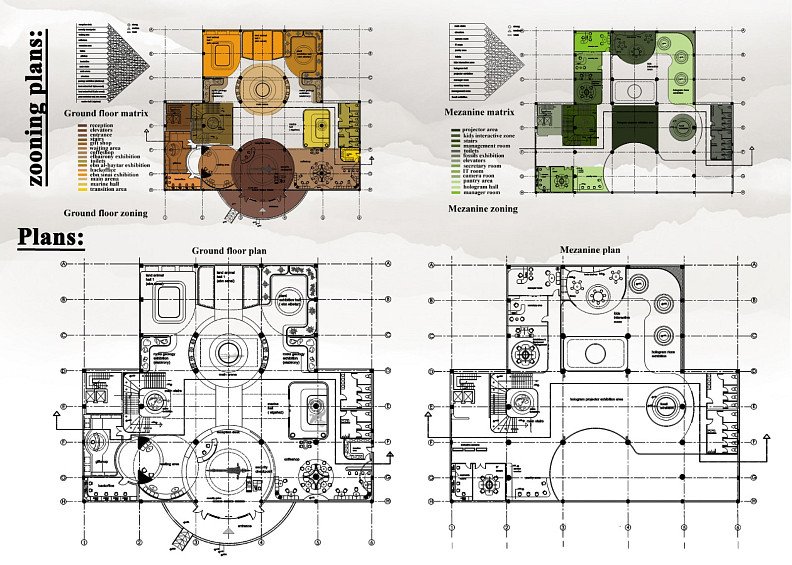
Particular attention should be paid to the composition of the exhibition space based on clearly defined thematic zones—from the geology section, through the plant exhibition area, to the land animal zone. Such organization allows visitors to be guided through successive stages of the history of life on Earth in a logical and educational way. An interesting solution is also the central exhibition focal point featuring a large skeletal specimen, which creates a strong spatial accent and naturally attracts the attention of visitors.
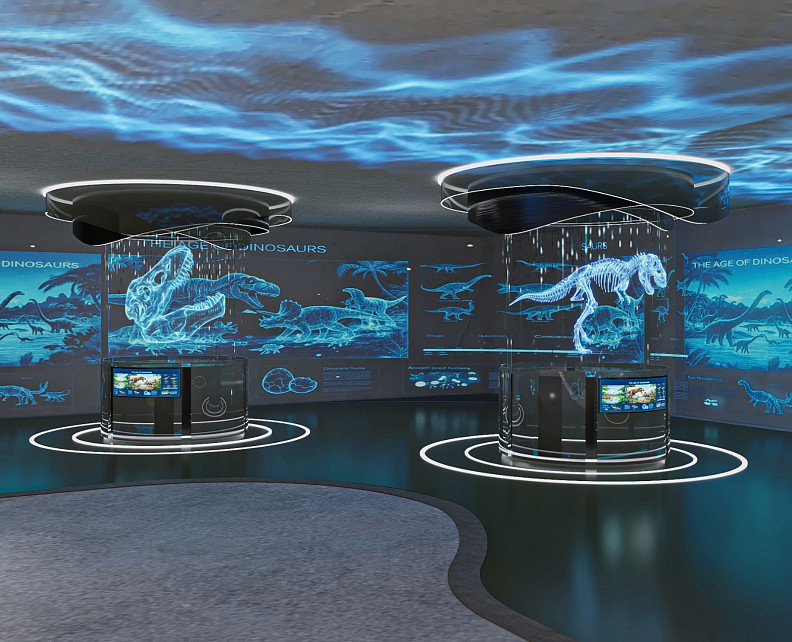
The visualizations also suggest an attempt to create an immersive experience through the use of varied lighting, multimedia elements, and greenery within the exhibition space. In this way, the project seeks to combine traditional museum presentation methods (artifacts, display cases, models) with more contemporary narrative tools such as holograms and interactive presentations.
For the further development of the project, it may be beneficial to consider a clearer differentiation between the character of the individual exhibition zones through light, materials, or spatial scale in order to strengthen the narrative of the successive stages in the development of life on Earth. In some areas, it may also be worth considering simplifying or calming the architectural forms so that the space can function more as a neutral background for the exhibits. Particularly in the case of large museum objects—such as animal skeletons or multimedia installations—reducing the expressiveness of interior elements may help highlight the displayed content and improve the overall clarity of the exhibition.
Natural history museum
Idea projektu
The museum traces the history of life on Earth through fossils, geological layers, and biodiversity, from prehistoric times to today. Inspired by ancient rock formations, it reflects how nature preserved its history beneath the surface while honoring the contributions of Arab scholars to natural science.
Popis projektu
This project consists of the following zones: main entrance , reception desk , stairs geology exhibition , plants exhibition zone , land animal zone , focal point exhibition and hologram zone
Technické informace
The construction of the building is steel construction

Copyright © 2026 INSPIRELI | All rights reserved. Use of this website signifies your agreement to the Terms of Use, Privacy Policy, and use of cookies.