Living Grounds: Bio Remediative research hub, Portsaid
Project idea
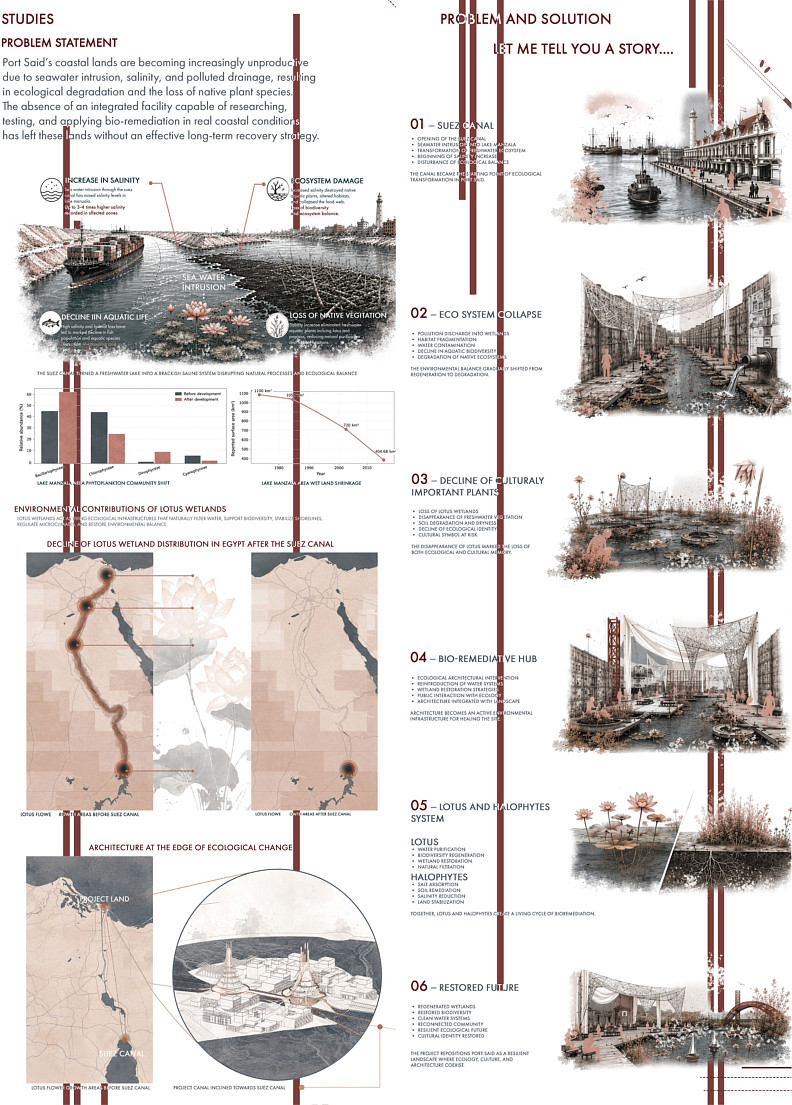
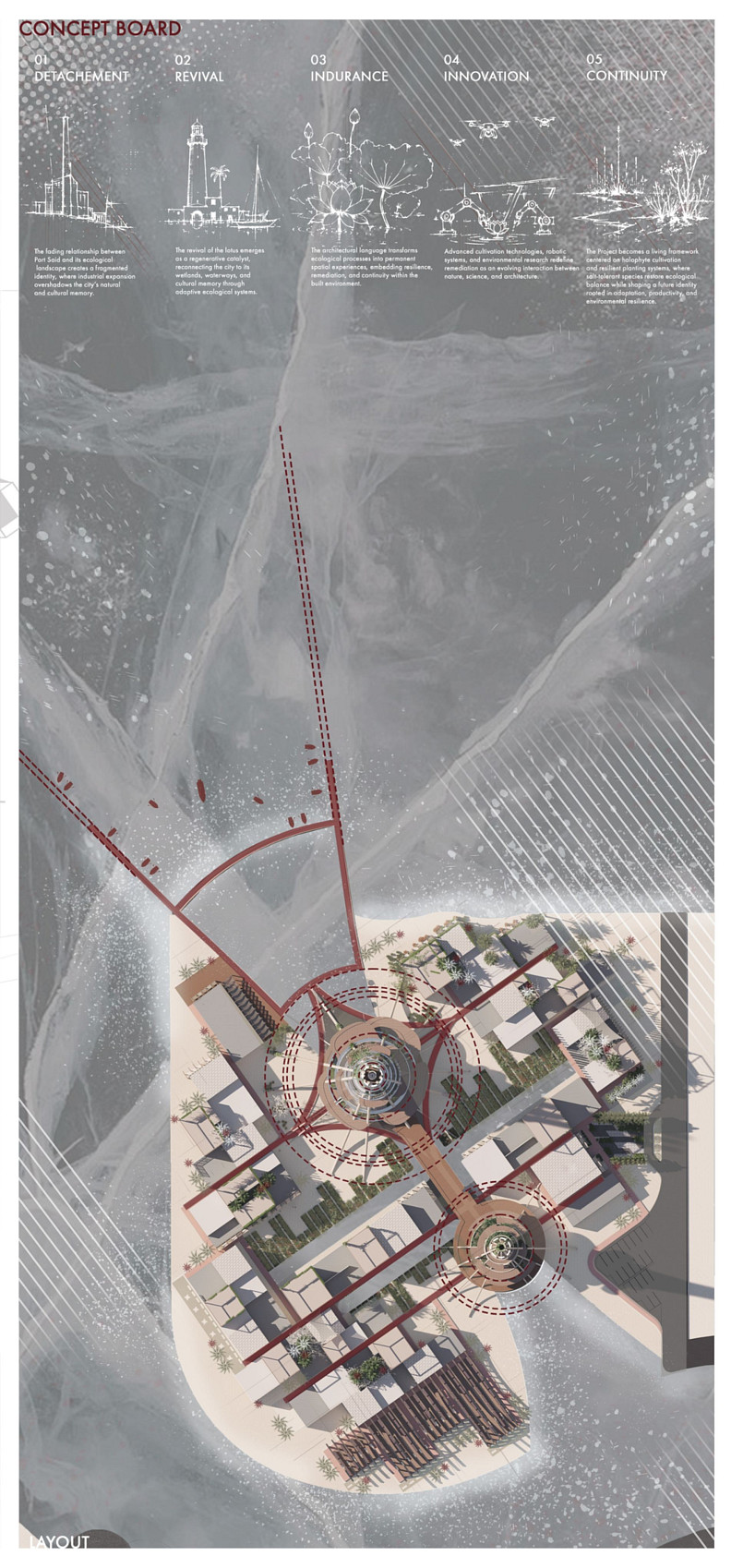
Living Grounds is a Bio-Remediative Research Hub located on the shores of Port Said, Egypt. The project responds to decades of environmental degradation caused by pollution, habitat loss, declining biodiversity, and deteriorating water quality. The idea is to transform architecture into an active participant in ecological restoration by integrating scientific research, environmental education, and ecological cultivation within a landscape-driven framework. Inspired by the regenerative capacity of native wetland ecosystems, the project creates a platform where research, community engagement, and environmental recovery coexist to support the long-term resilience of Port Said.
Project description
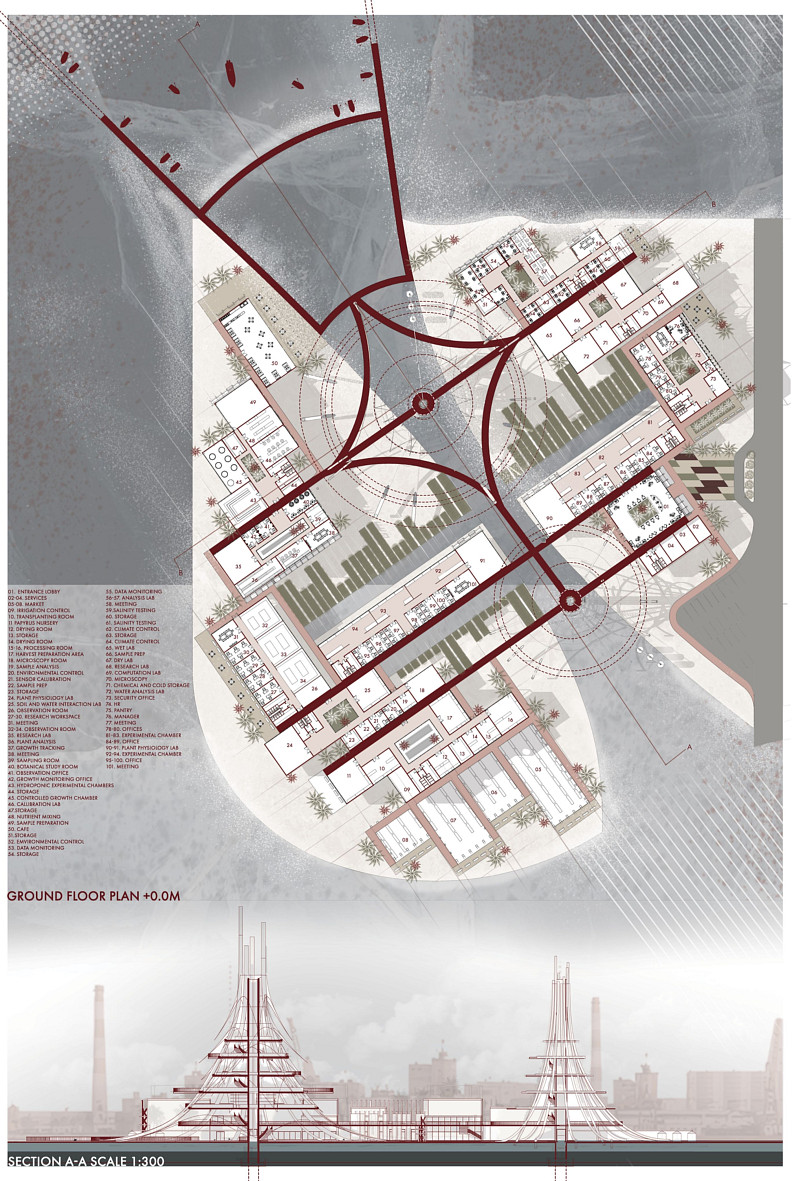
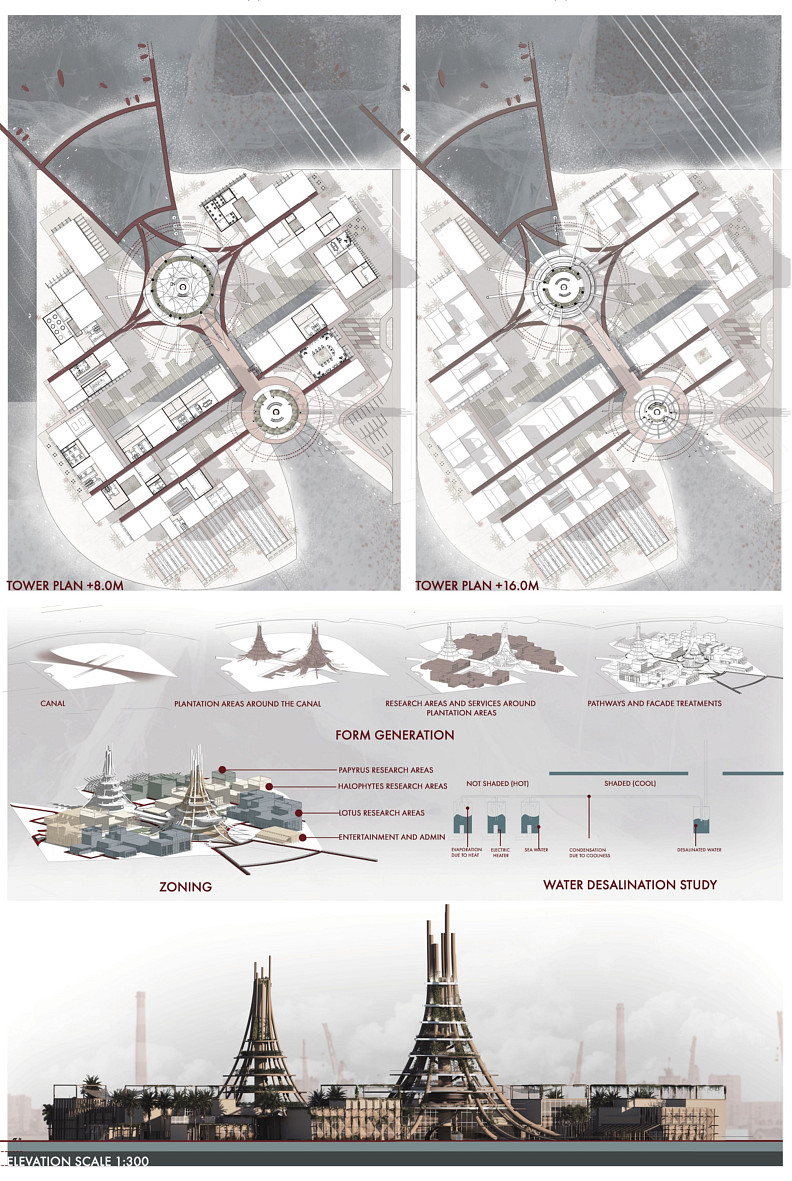
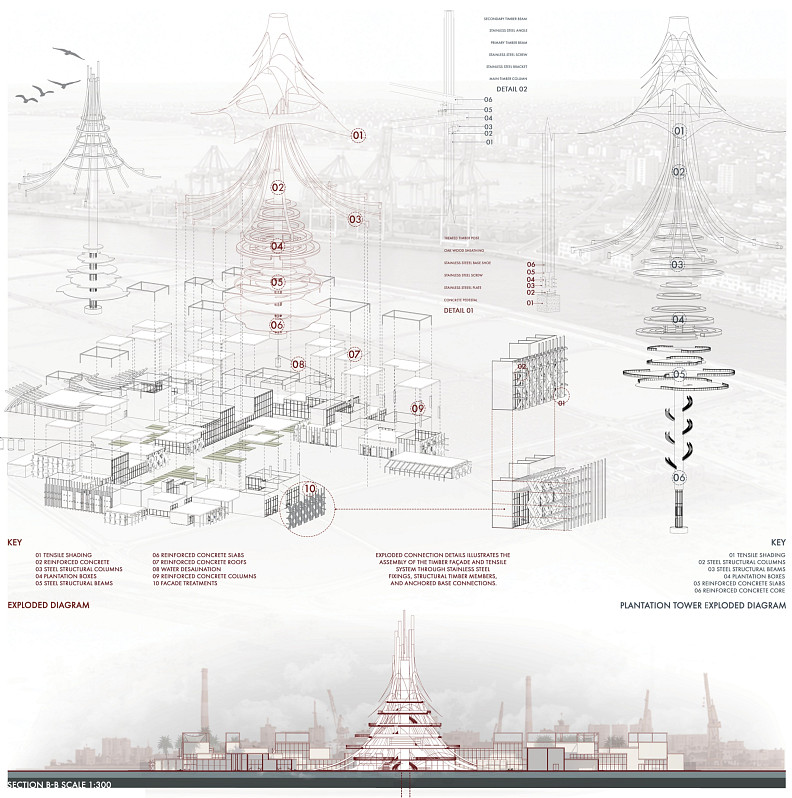
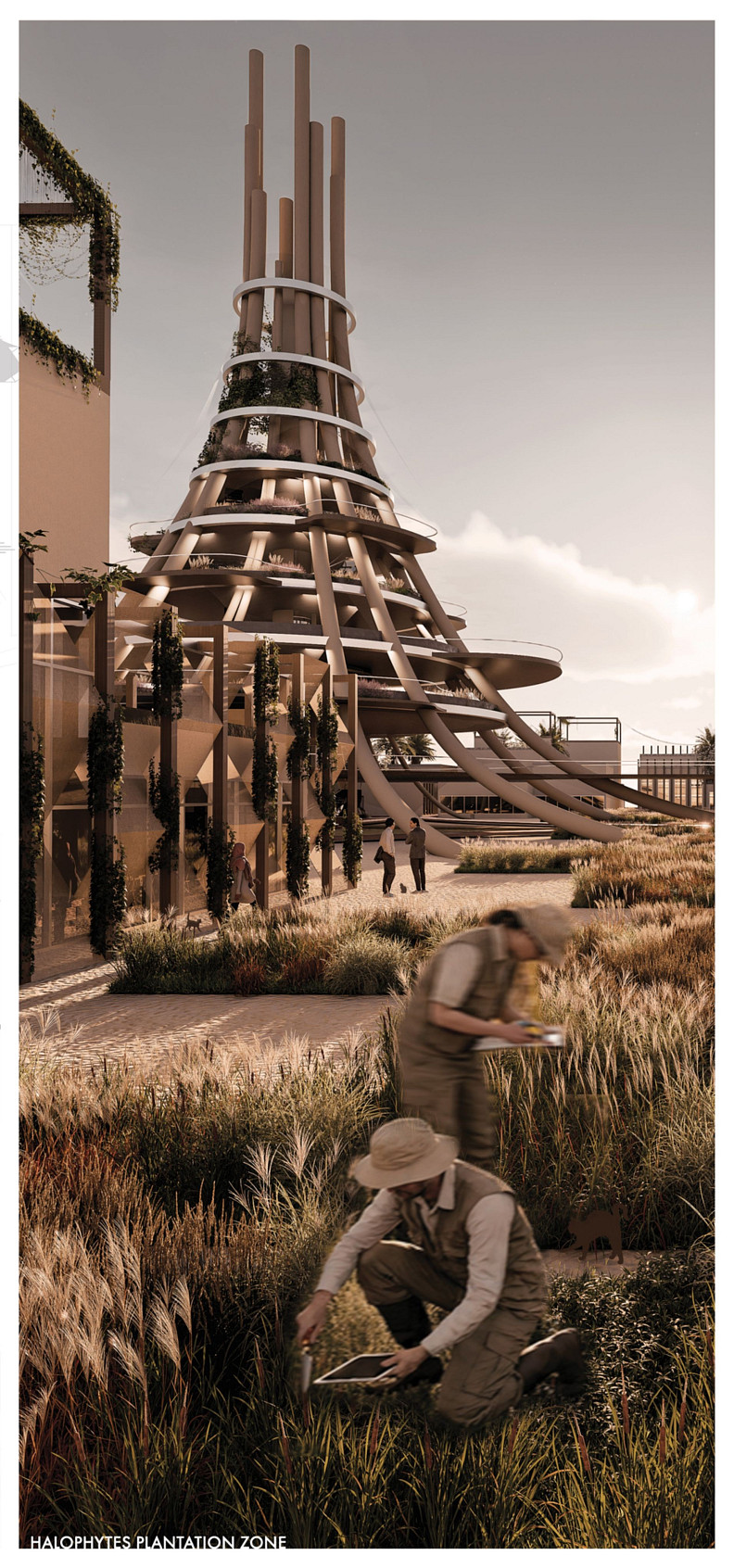
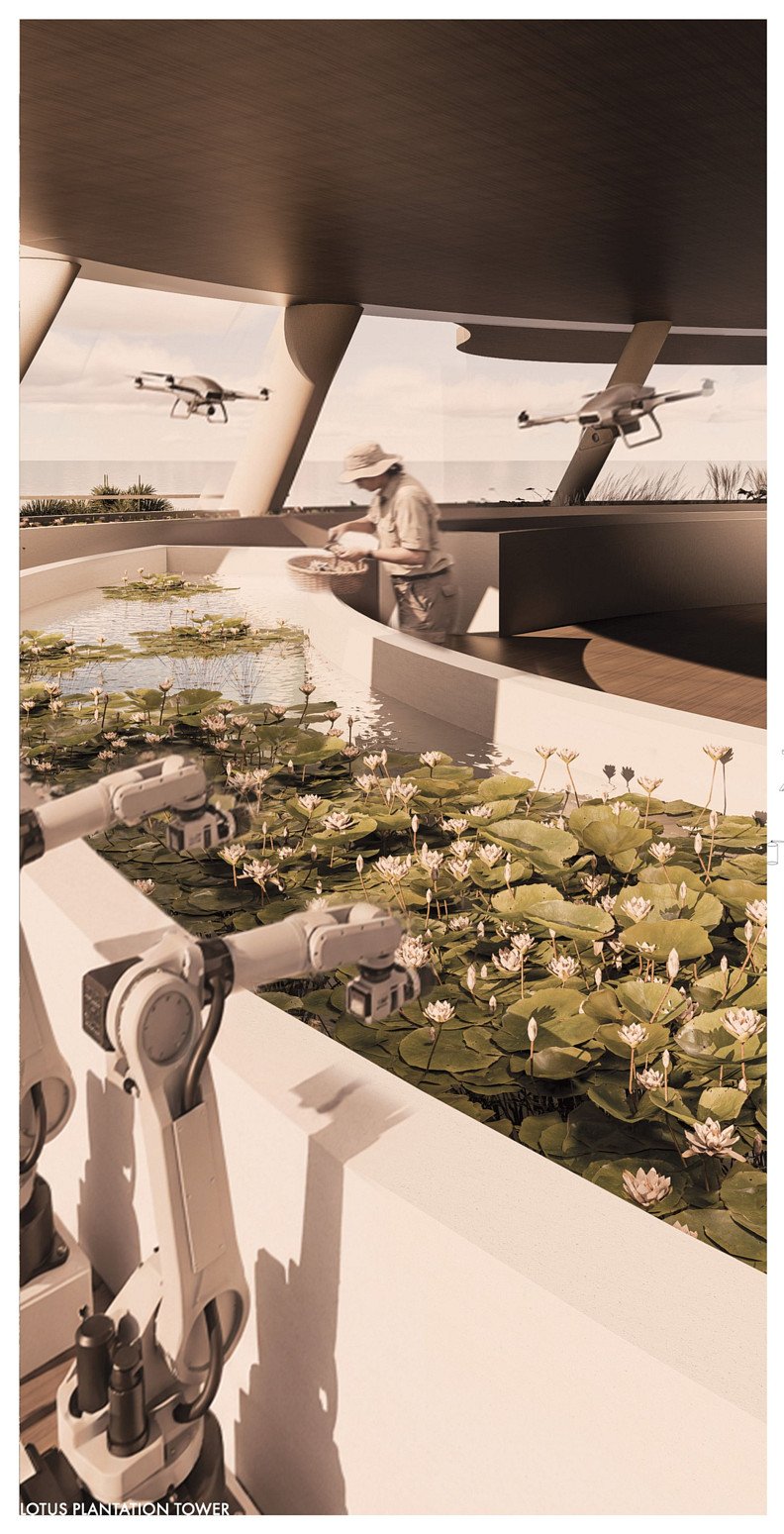
The project consists of a research and education hub dedicated to environmental restoration and bio-remediation. Its program includes scientific laboratories, research facilities, educational spaces, exhibition areas, cultivation fields, community gathering spaces, and public waterfront experiences. The landscape functions as a living laboratory where native wetland species such as lotus, papyrus, and halophytes are cultivated and studied for their role in water purification, habitat regeneration, and biodiversity enhancement. Public circulation routes connect visitors with the restoration process, transforming ecological recovery into a visible and educational experience. By combining architecture, landscape, and environmental science, Living Grounds seeks to reconnect Port Said with its natural heritage while creating a model for sustainable ecological development and environmental awareness.
Technical information
The project is designed as an integrated architectural and landscape system. The buildings are organized around cultivation fields, research zones, and public open spaces to maximize interaction between scientific activities and ecological processes. The structural system consists primarily of reinforced concrete frames with steel and timber shading elements. Sustainable design strategies include passive environmental control, natural ventilation, daylight optimization, water-sensitive landscape design, and the use of native vegetation adapted to the local climate. Bio-remediation zones utilize native wetland species including lotus, papyrus, and halophytes to support water filtration, habitat restoration, and ecosystem regeneration. The project promotes environmental resilience through the integration of research infrastructure, ecological landscapes, and public engagement spaces.
Arwa Elborollosy
Cairo University, Faculty of Engineering Architecture Department.
Egypt
Arquitectura
Proyecto enviado
14. 06. 2026Etiqueta
Consejo a estudiantes

Copyright © 2026 INSPIRELI | All rights reserved. Use of this website signifies your agreement to the Terms of Use, Privacy Policy, and use of cookies.