KEMET
Project idea
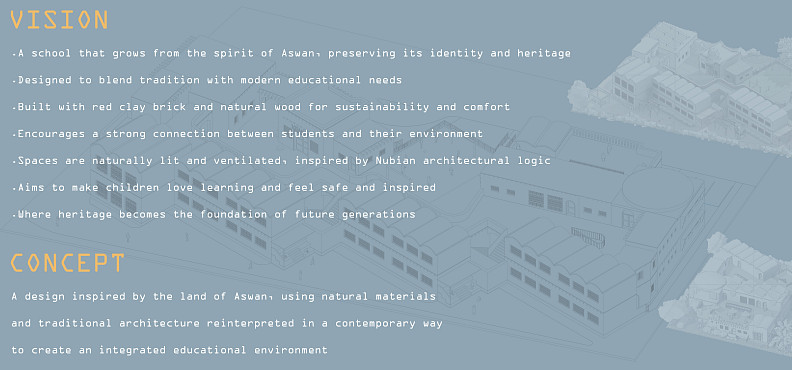
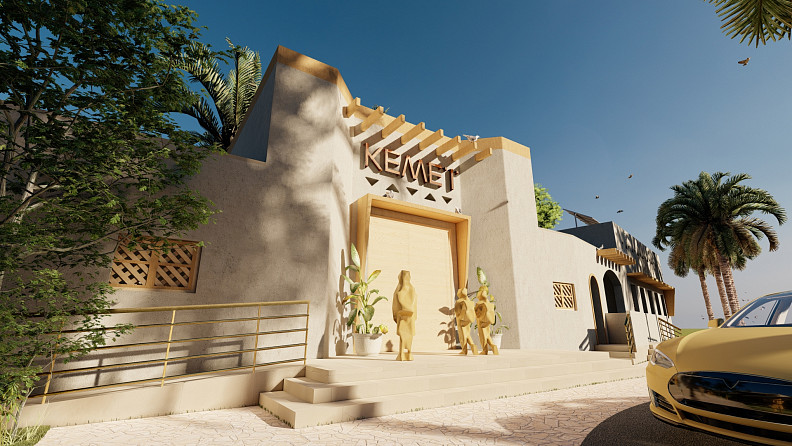
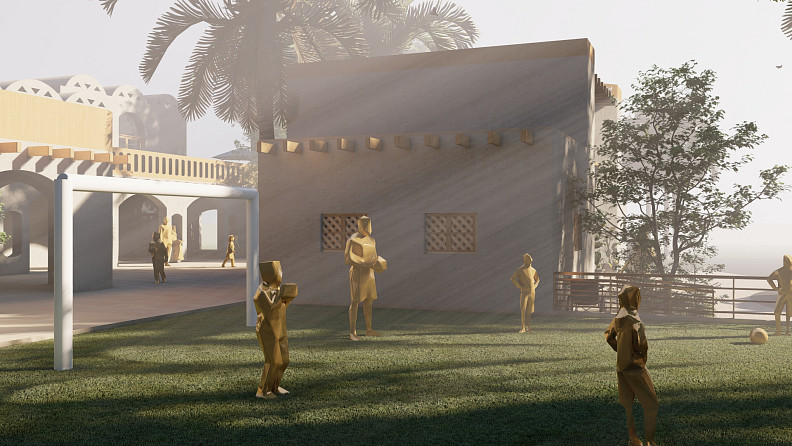
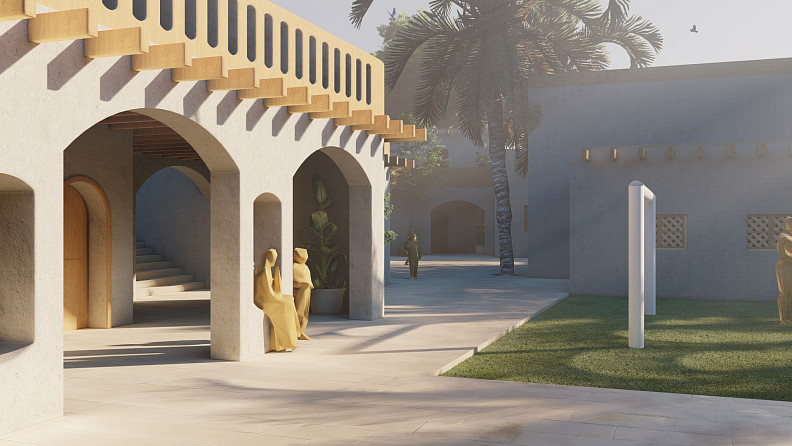
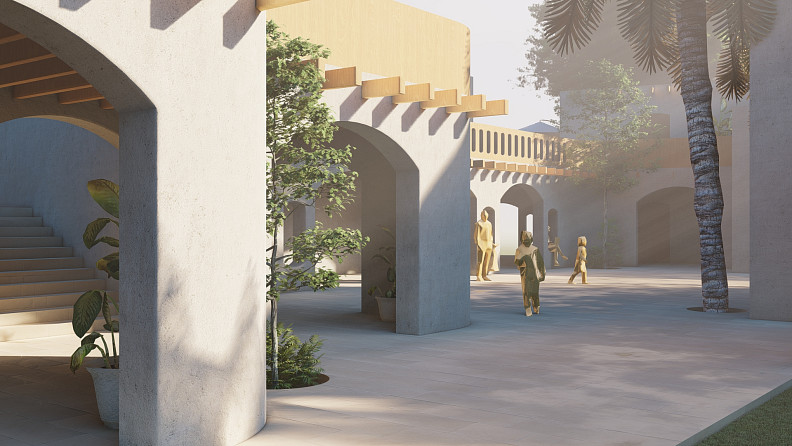
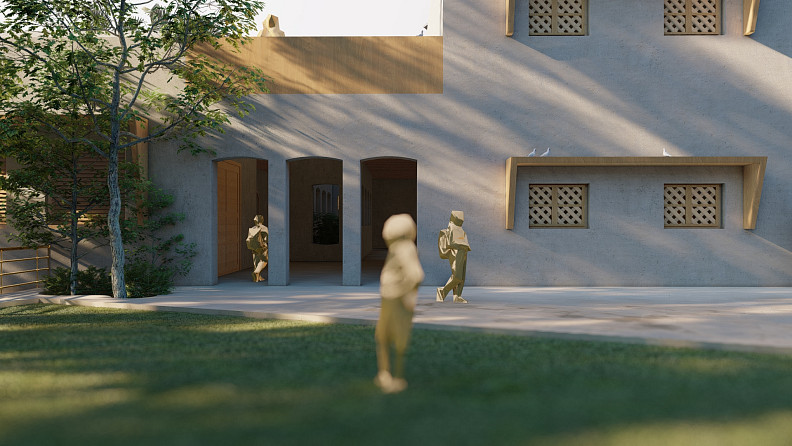
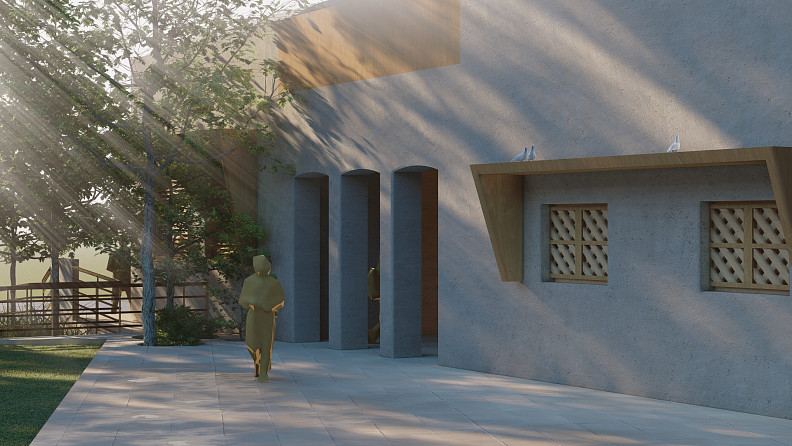
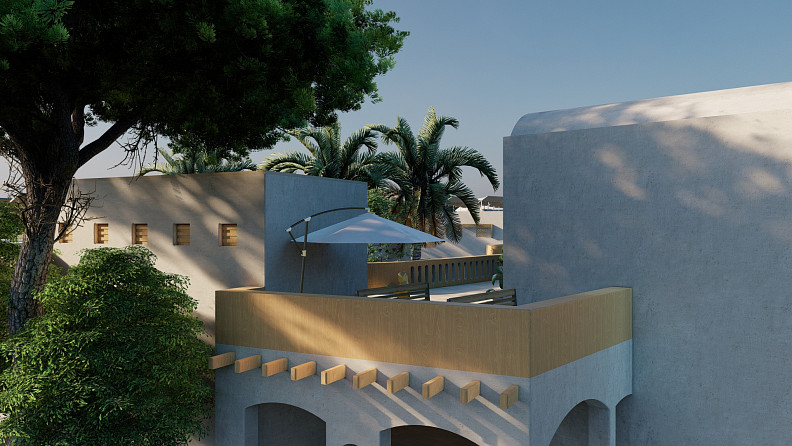
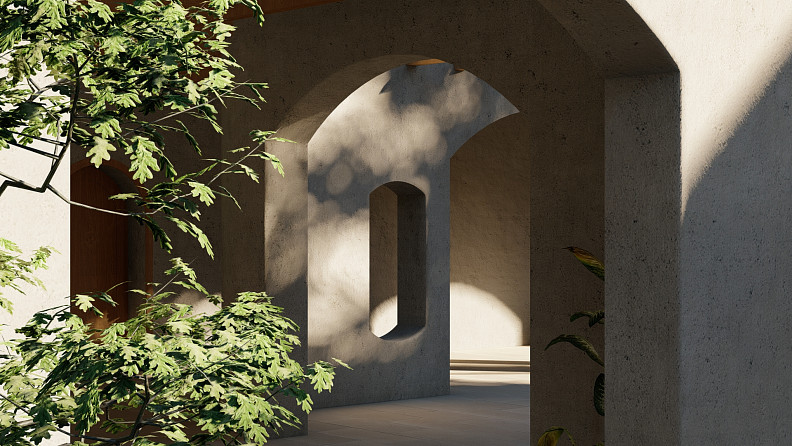
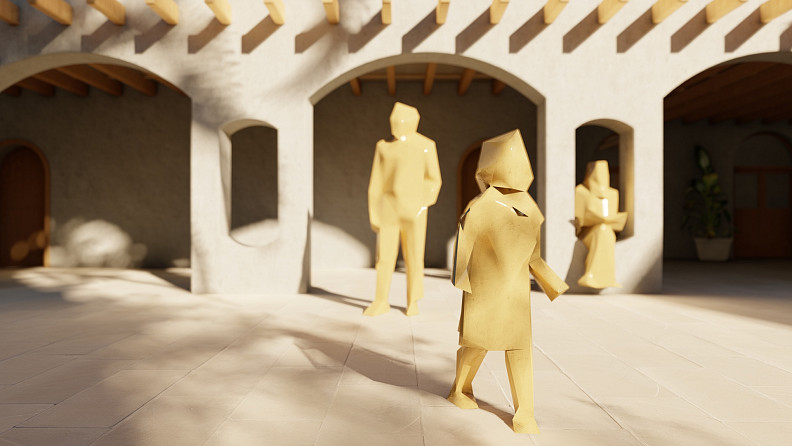
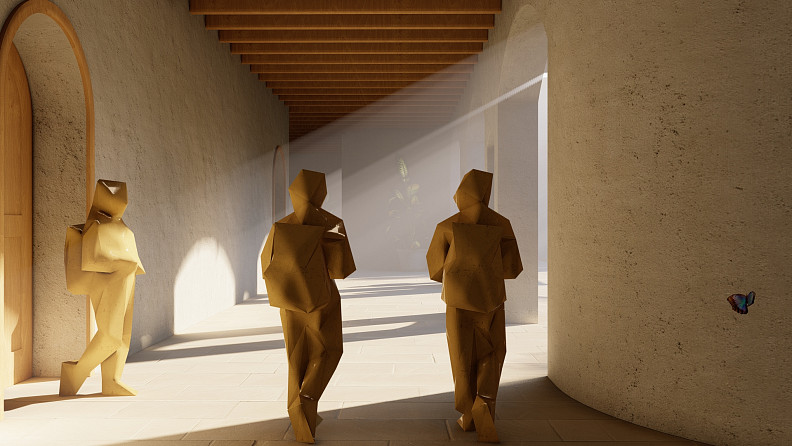
VISION -A school that grows from the spirit of Aswan, preserving its identity and heritage. -Designed to blend tradition with modern educational needs. -Built with red clay brick and natural wood for sustainability and comfort. -Encourages a strong connection between students and their environment. -Spaces are naturally lit and ventilated, inspired by Nubian architectural logic. -Aims to make children love learning and feel safe and inspired. -Where heritage becomes the foundation of future generations. CONCEPT A design inspired by the land of Aswan, using natural materials and traditional architecture reinterpreted in a contemporary way to create an integrated educational environment.
Project description
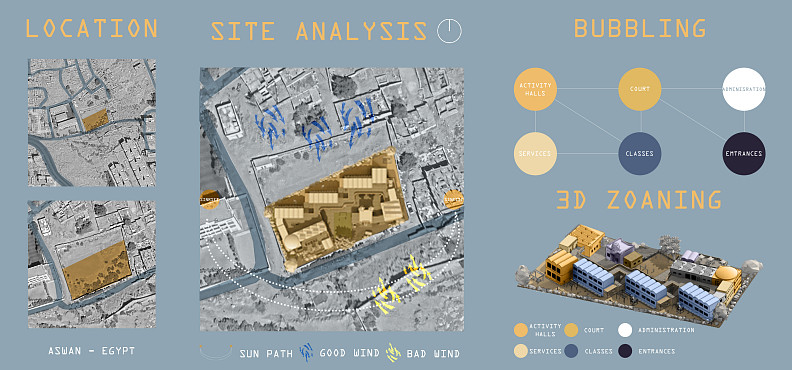
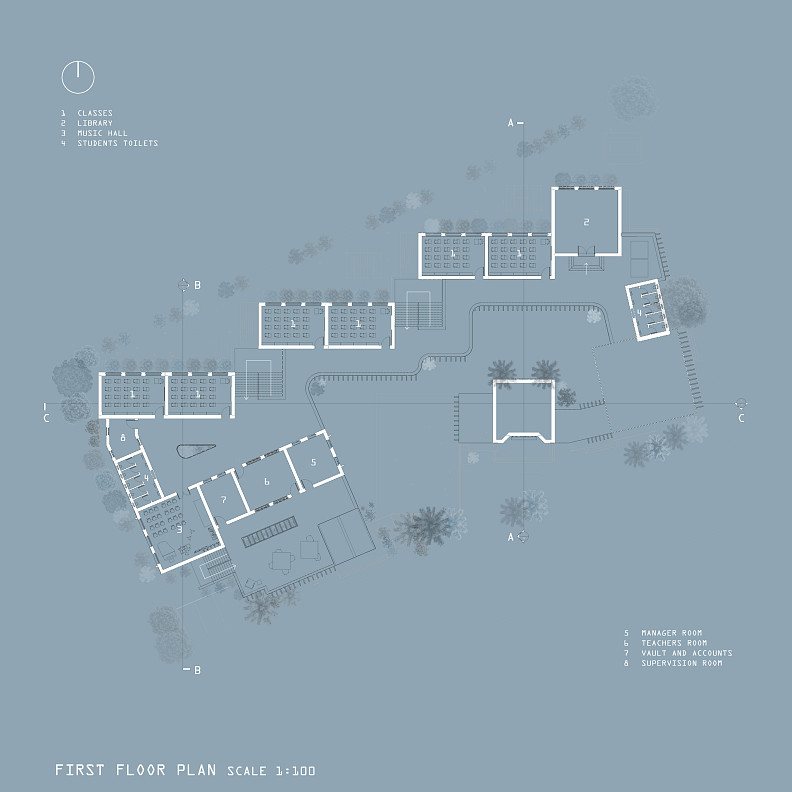
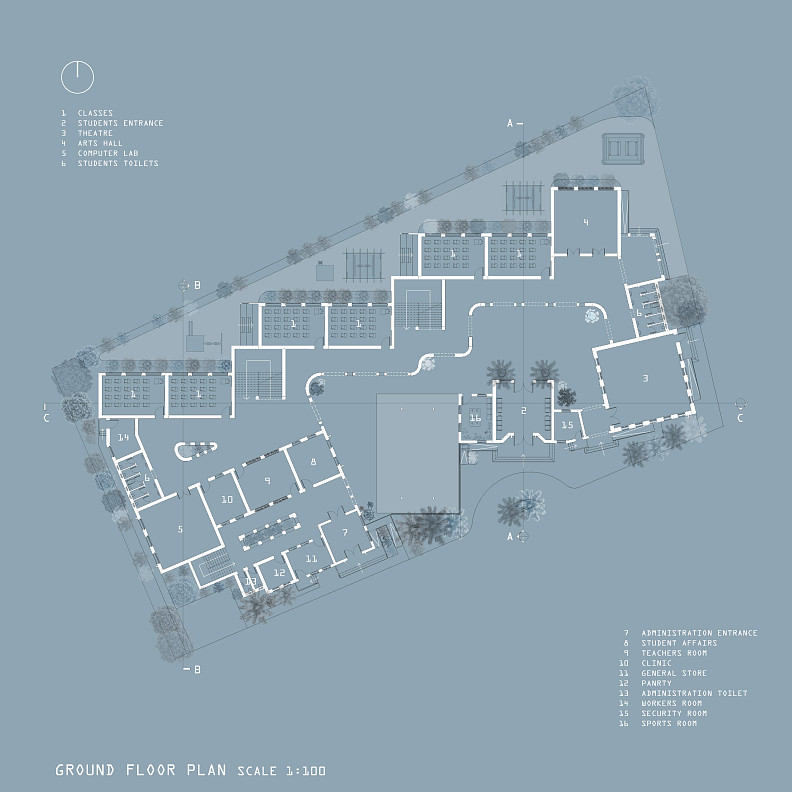
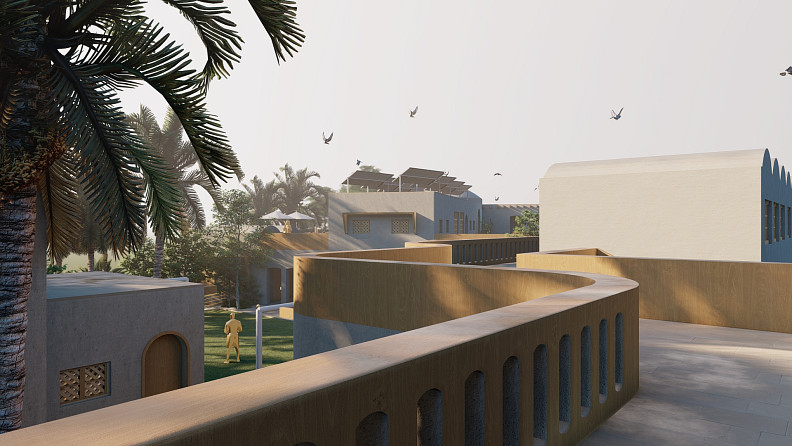
Location & Context The project is situated in Aswan, Egypt, a region characterized by its rich heritage and challenging desert climate. The site analysis focuses on harnessing environmental elements to create a sustainable educational hub. Site Analysis & Environmental Response The design is a direct response to the site’s climatic conditions: -Sun Path: The building orientation and massing are optimized to manage solar gain throughout the day. -Wind Management: The layout is designed to invite "Good Winds" (North/North-West) for natural cooling while creating a barrier against "Bad Winds" (dust-laden or hot southern winds). -Natural Integration: The project respects the existing topography and urban fabric of Aswan. Functional Zoning & Bubbling The spatial organization follows a clear hierarchy to ensure a seamless educational experience: -Core Learning: Centrally located Classes to ensure focus and accessibility. -Social Heart: A central Court that acts as the main gathering space, facilitating natural light and social interaction. -Support Zones: Strategic placement of Activity Halls, Administration, and Services to minimize cross-circulation conflicts. -Access: Clearly defined Entrances that manage the flow of students and visitors efficiently. Architectural Solution (3D Zoning) The 3D Zoning reflects a "human-scale" architectural approach. By breaking down the masses, the project creates a variety of shaded outdoor spaces and courtyards, inspired by traditional Nubian logic but executed with a contemporary structural language. The solution provides a safe, inspired, and thermally comfortable environment for children to grow and learn.
Technical information
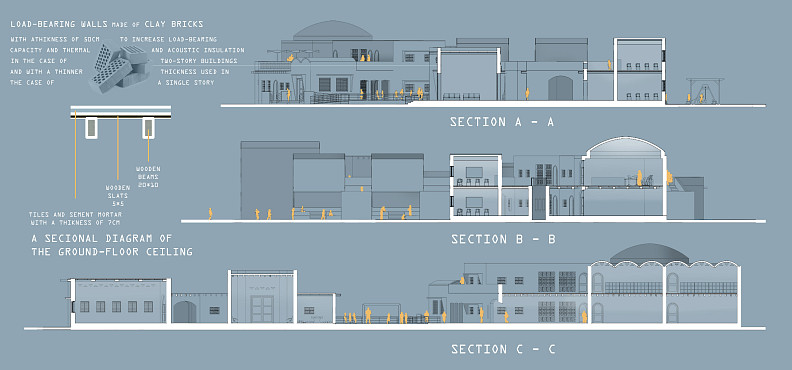
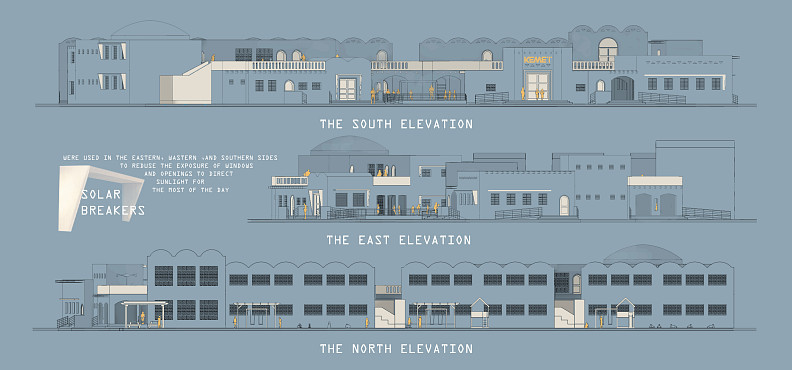
Structural System: Load-Bearing Walls The project utilizes a Load-Bearing Wall System constructed from local clay bricks, honoring the traditional Egyptian building techniques while ensuring structural efficiency: -Two-Story Buildings: Walls are designed with a 50cm thickness to maximize load-bearing capacity and provide superior thermal and acoustic insulation, crucial for the Aswan climate. -Single-Story Buildings: A reduced wall thickness is utilized to optimize material consumption while maintaining structural stability. Passive Solar Strategies To mitigate the harsh desert sun, the design incorporates Solar Breakers (Louvers/Shading Devices): -Strategic Orientation: These elements are installed on the Eastern, Western, and Southern facades. -Function: They are specifically engineered to reduce direct solar exposure on windows and openings, allowing for diffused natural light to enter the spaces without the associated heat gain. Roofing & Material Details The roofing system combines traditional aesthetics with functional layering: -Timber Support: The structure uses 20x10cm Wooden Beams supported by 5x5cm Wooden Slats. -Finishing Layers: A 7cm layer consisting of Cement Mortar and Tiles provides the final weatherproofing and durable walking surface. -Sustainability: By using clay and wood, the project achieves a low carbon footprint and ensures a high level of indoor thermal comfort through the high thermal mass of the walls.
Mohamed Hany
Helwan University in Zamalek, Department of Architecture of the Faculty of Fine Arts, Cairo
Egypt
Arquitectura
Proyecto enviado
18. 03. 2026Etiqueta
Consejo a estudiantes

Copyright © 2026 INSPIRELI | All rights reserved. Use of this website signifies your agreement to the Terms of Use, Privacy Policy, and use of cookies.