SEED SCHOOL
Project idea
Learning Without Borders: An Adaptable School for Latin America
Project description
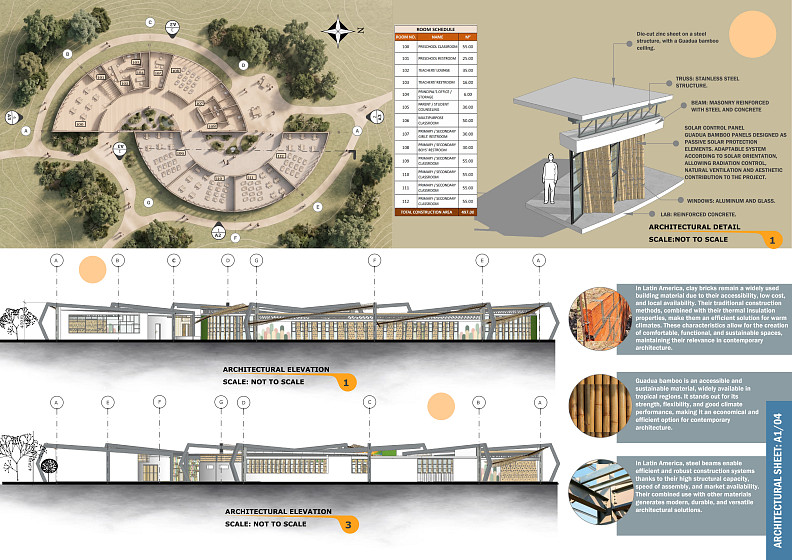
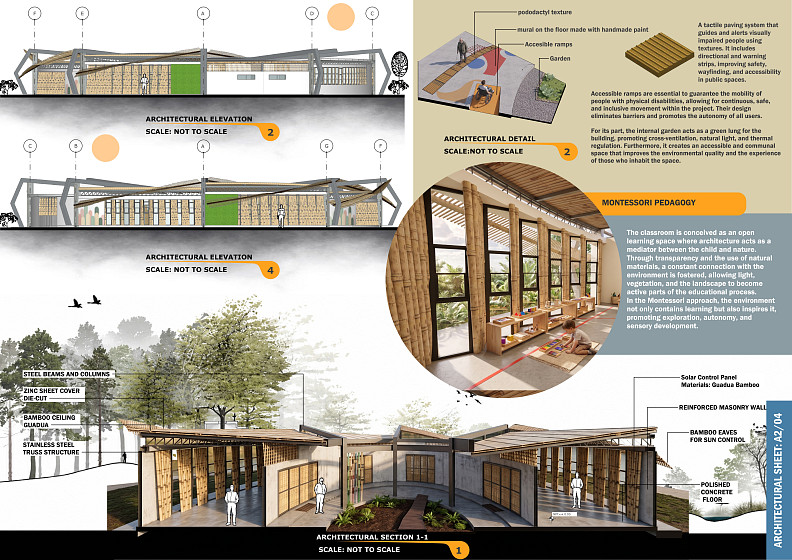
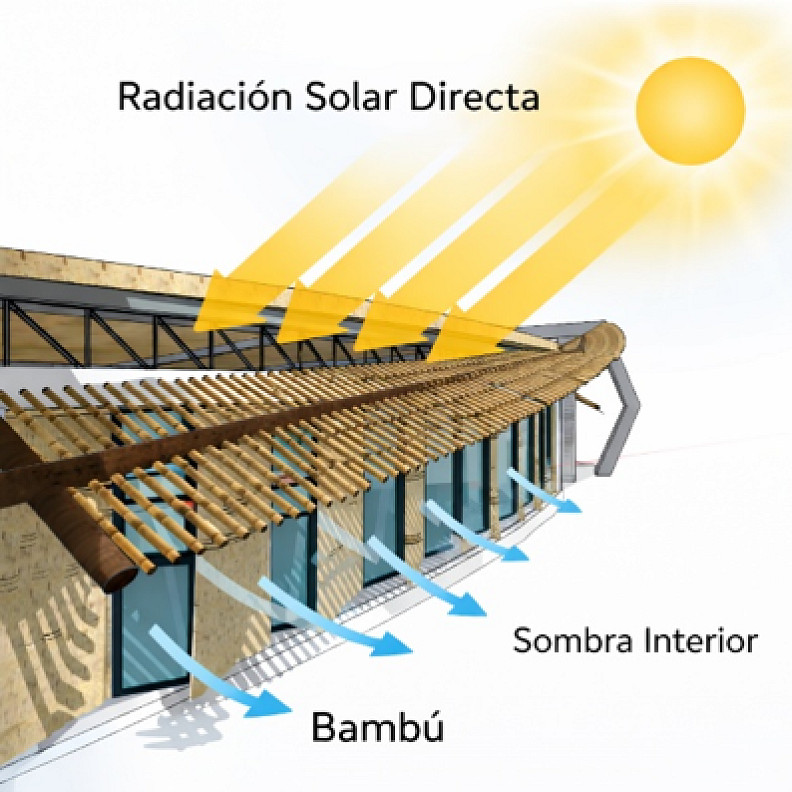
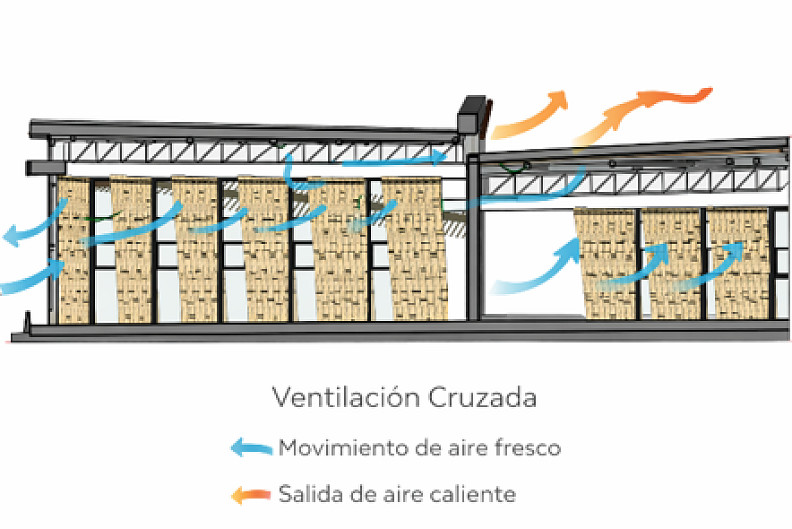
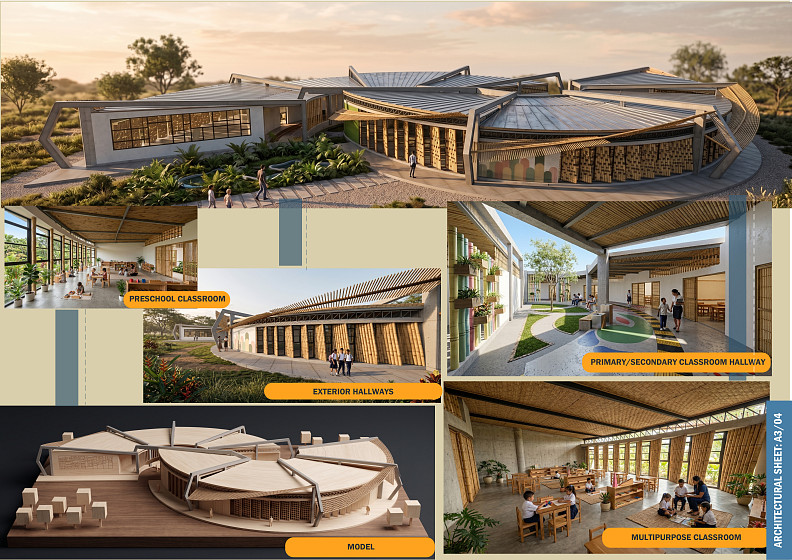
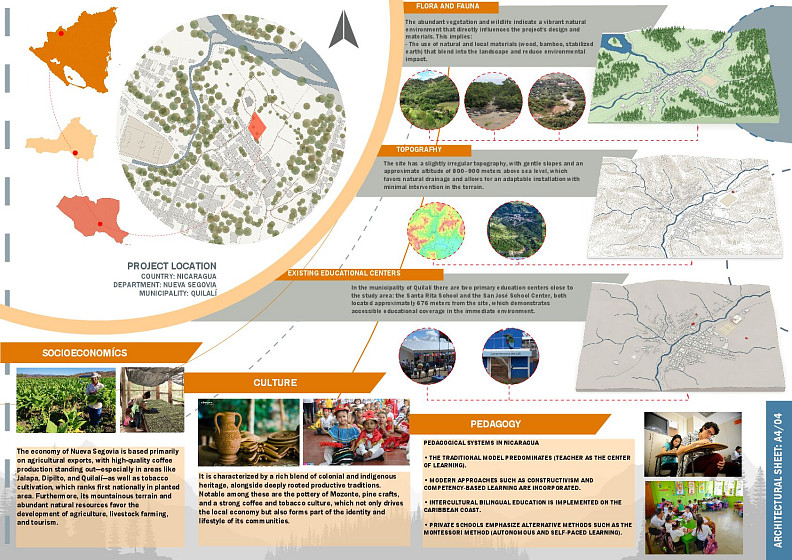
This project envisions education as a catalyst for social transformation, proposing an adaptable school model capable of responding to the diverse realities of Latin America. Rather than belonging to a single place, the architecture is conceived as a flexible system that can be implemented across different climates, landscapes, and communities, transforming local conditions into opportunities for learning and growth. Rooted in Montessori pedagical principles, the school redefines the relationship between child, architecture, and nature. Open and interconnected learning environments encourage autonomy, exploration, movement, and collaboration, while the surrounding landscape becomes an active participant in the educational experience. The building is organized through a radial configuration that strengthens social interaction, visual connectivity, and spatial flexibility, creating a continuous dialogue between indoor and outdoor spaces. The project embraces locally available materials—primarily bamboo, earth-based construction, and steel—to develop an affordable, scalable, and highly replicable educational infrastructure. Passive environmental strategies are embedded throughout the design: bamboo screens regulate solar exposure, elevated roof systems enhance cross ventilation and hot-air extraction, and carefully oriented openings maximize natural daylight while minimizing thermal gain. Together, these elements provide year-round comfort without dependence on mechanical systems. Accessibility is integrated as a core design value through tactile paving, inclusive circulation routes, and universally accessible spaces that promote independence and equal participation for all users. More than a school, the proposal is a framework for resilient and community-centered development. It demonstrates how architecture can transcend its physical boundaries to become a tool for environmental responsibility, cultural relevance, and educational equity. By combining sustainability, adaptability, and human-centered design, the project offers a replicable model capable of expanding access to dignified learning environments throughout Latin America.
Technical information
The structure uses concrete columns and walls with bamboo cladding and roofing elements. Bamboo lattice sliding doors provide natural ventilation to classrooms. The roof structure consists of steel beams supporting bamboo rafters. Floor surfaces are concrete with painted tactile and decorative patterns.
Lisbeth Valverde
Universidad Nacional de Ingeniería de Nicaragua / National University of Engineering
Nicaragua
Arquitectura
Proyecto enviado
11. 06. 2026Etiqueta
Consejo a estudiantes

Copyright © 2026 INSPIRELI | All rights reserved. Use of this website signifies your agreement to the Terms of Use, Privacy Policy, and use of cookies.