Humberto Ak'Abál Memorial
Project idea
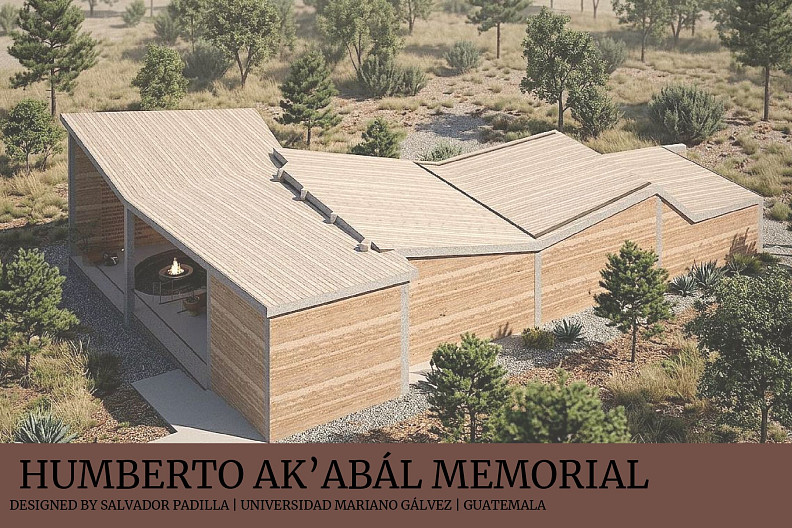
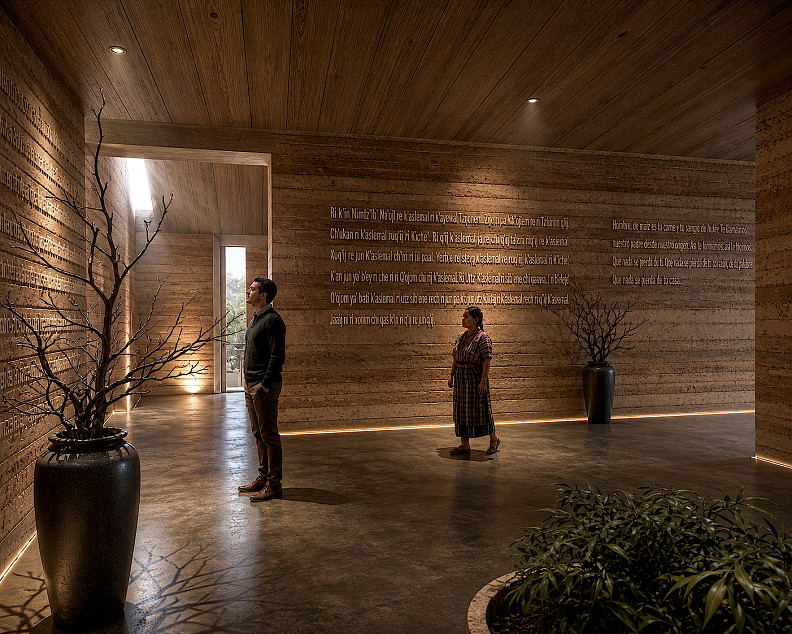
The Memorial Humberto Ak'abal is conceived as an architectural tribute to one of Guatemala’s most influential indigenous poets and to the living memory of the Maya K’iche’ culture. More than a commemorative object, the project is envisioned as a spatial journey that transforms memory into experience, allowing visitors to engage with themes of identity, resilience, and cultural expression. The concept is inspired by the life and work of Humberto Ak'abal, whose poetry gave voice to indigenous traditions, collective memory, and the relationship between people, language, and territory. The architectural proposal interprets these ideas through a sequence of spaces that guide visitors from enclosure to openness, from silence to voice. Compression, light, materiality, and movement become narrative elements that symbolize the transition from historical invisibility to cultural recognition. Rooted in the Guatemalan landscape, the memorial employs rammed earth and timber as primary materials, establishing a direct connection with local traditions, craftsmanship, and the natural environment. The use of natural light reinforces the emotional character of the experience, creating moments of contemplation, remembrance, and discovery. The main objective of the project is to preserve and celebrate the cultural legacy of Humberto Ak'abal while promoting awareness of the Maya K’iche’ heritage within contemporary society. Through architecture, the memorial seeks to create a place of reflection, education, and cultural continuity, transforming memory into an active presence within the landscape and reaffirming indigenous identity as an essential component of Guatemala’s collective future.
Project description
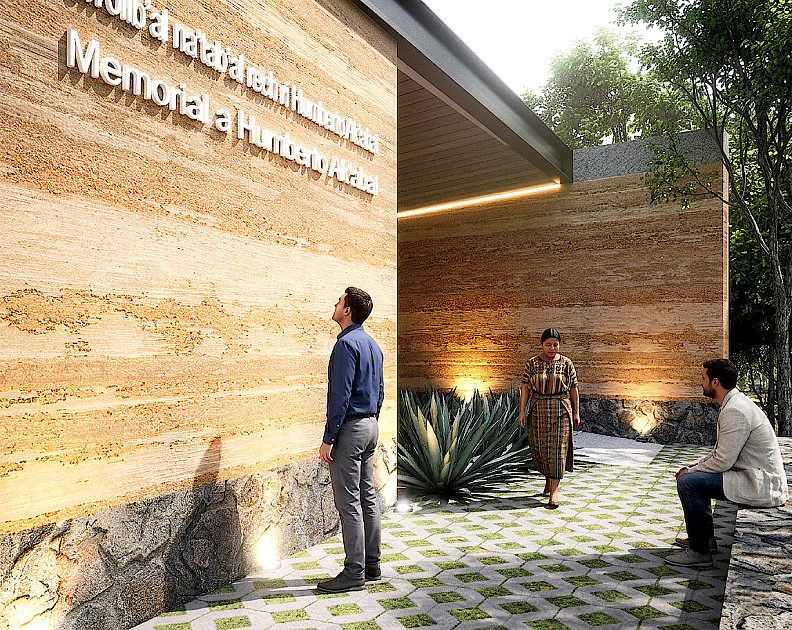
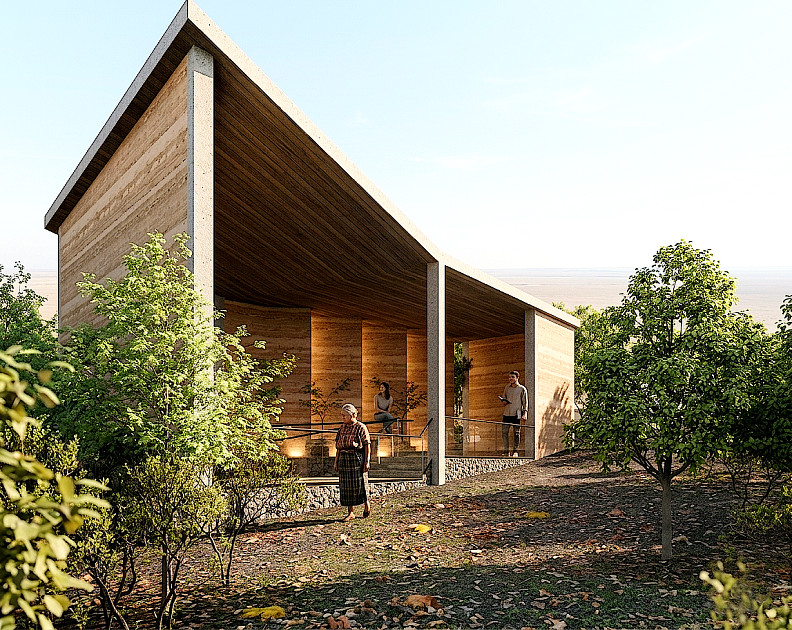
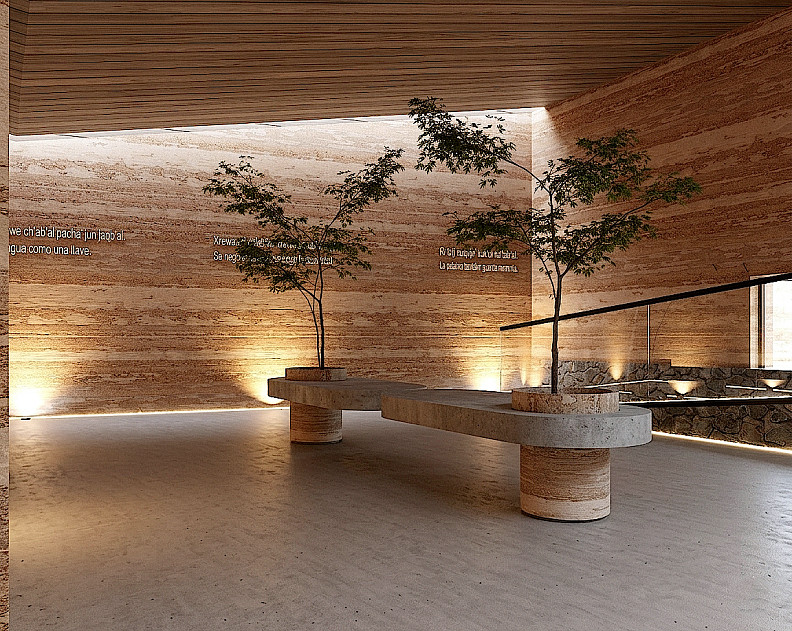
The Memorial Humberto Ak'abal is designed as a cultural and commemorative space dedicated to preserving the legacy of the Guatemalan poet and celebrating the living heritage of the Maya K’iche’ people. The project is organized as a sequential architectural experience in which visitors move through a series of interconnected spaces that gradually reveal the narrative of memory, identity, and cultural expression. The spatial composition is structured around a progression of thresholds that compress, frame, and open the visitor’s perception of the landscape. This sequence creates moments of introspection, contemplation, and discovery, culminating in a central commemorative space dedicated to reflection and collective remembrance. The architectural language is defined by the use of rammed earth walls, timber elements, and controlled natural lighting. These materials establish a strong connection to the territory and local building traditions while creating a warm and immersive atmosphere. Open courtyards, shaded gathering areas, and landscaped spaces strengthen the relationship between architecture and nature, allowing the memorial to become part of the surrounding environment. Beyond its commemorative function, the project serves as an educational and cultural destination where visitors can engage with the work of Humberto Ak'abal and the values of the Maya K’iche’ culture. Through the integration of architecture, landscape, and narrative space, the memorial transforms remembrance into an active and meaningful experience.
Technical information
The project is conceived as a low-impact architectural intervention integrated into the natural landscape. The primary structural system consists of load-bearing rammed earth walls, providing thermal mass, durability, and a direct connection to local construction traditions. Complementary structural elements are constructed from timber, creating lightweight spans and sheltered transitional spaces throughout the memorial. The foundations are designed in reinforced concrete to ensure structural stability while minimizing intervention in the terrain. The material palette prioritizes locally sourced and environmentally responsible materials, reducing the project's carbon footprint and reinforcing its relationship with the territory. Natural lighting plays a fundamental role in the spatial experience. Carefully positioned openings, courtyards, and light wells allow daylight to shape the atmosphere of the memorial while reducing the need for artificial lighting. Passive environmental strategies, including natural ventilation and thermal regulation provided by the rammed earth walls, contribute to user comfort and energy efficiency. Landscape design is integrated into the architectural concept through native vegetation, permeable surfaces, and contemplative outdoor spaces that connect the memorial with its surroundings. Structural System: Load-bearing rammed earth walls and timber structure Foundations: Reinforced concrete foundations Primary Materials: Rammed earth, timber, natural stone, and exposed concrete Environmental Strategy: Passive ventilation, daylighting, thermal mass, and landscape integration Landscape Elements: Native vegetation, permeable pathways, and contemplative outdoor spaces
Salvador Padilla
Universidad Mariano Gálvez de Guatemala, Facultad de Arquitectura
Guatemala
Arquitectura
Proyecto enviado
12. 06. 2026Etiqueta
Consejo a estudiantes

Copyright © 2026 INSPIRELI | All rights reserved. Use of this website signifies your agreement to the Terms of Use, Privacy Policy, and use of cookies.