Forest of Memories
Project idea
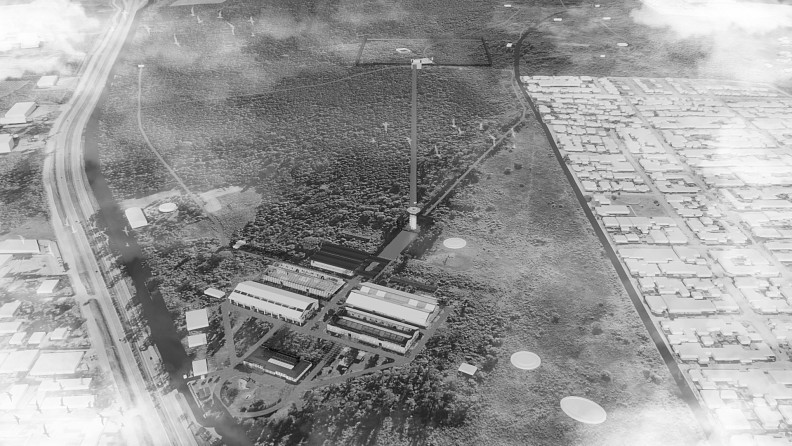
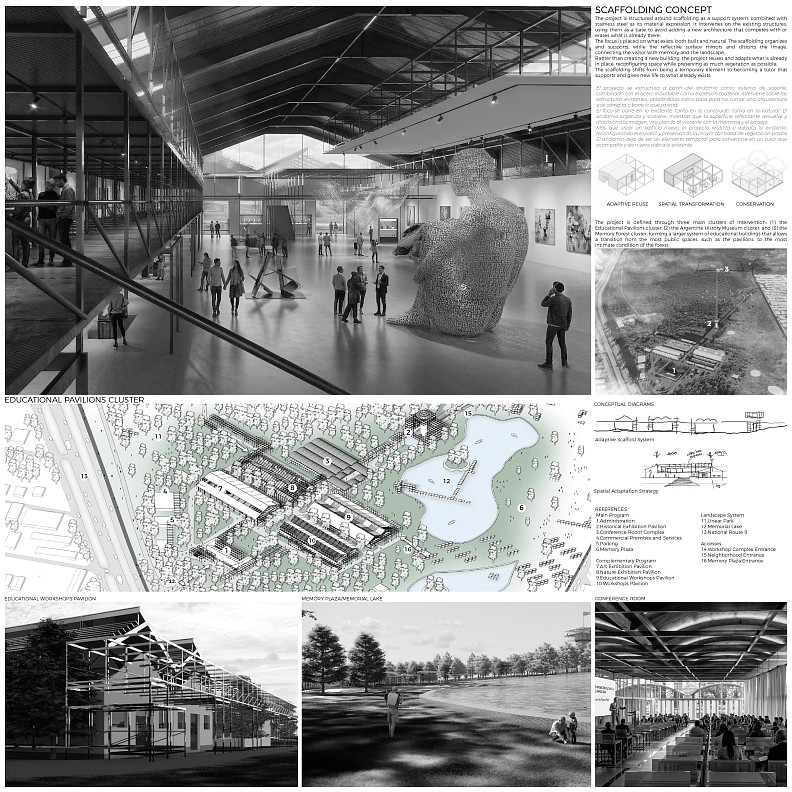
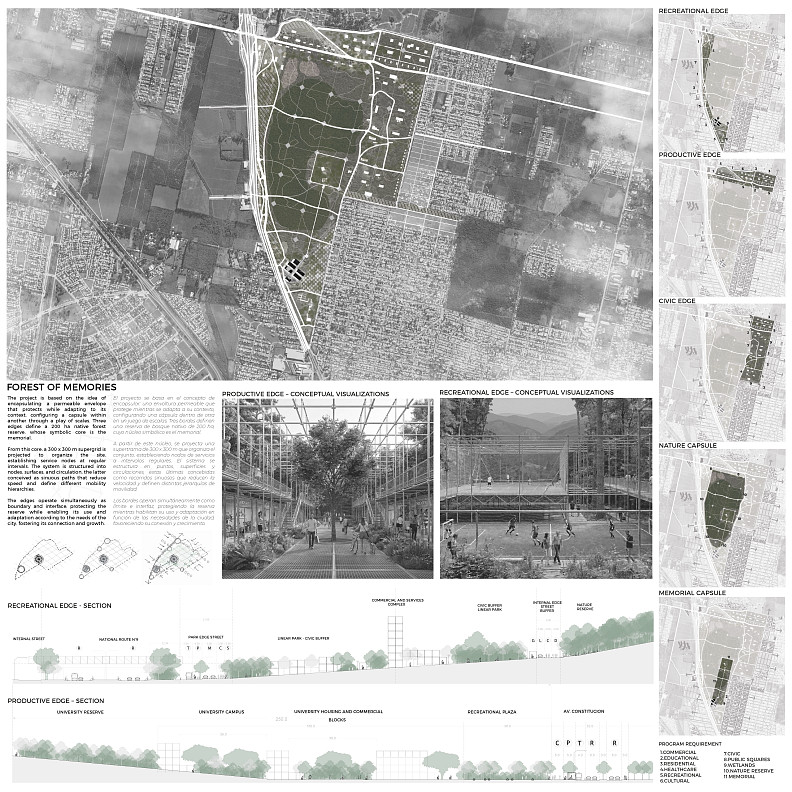
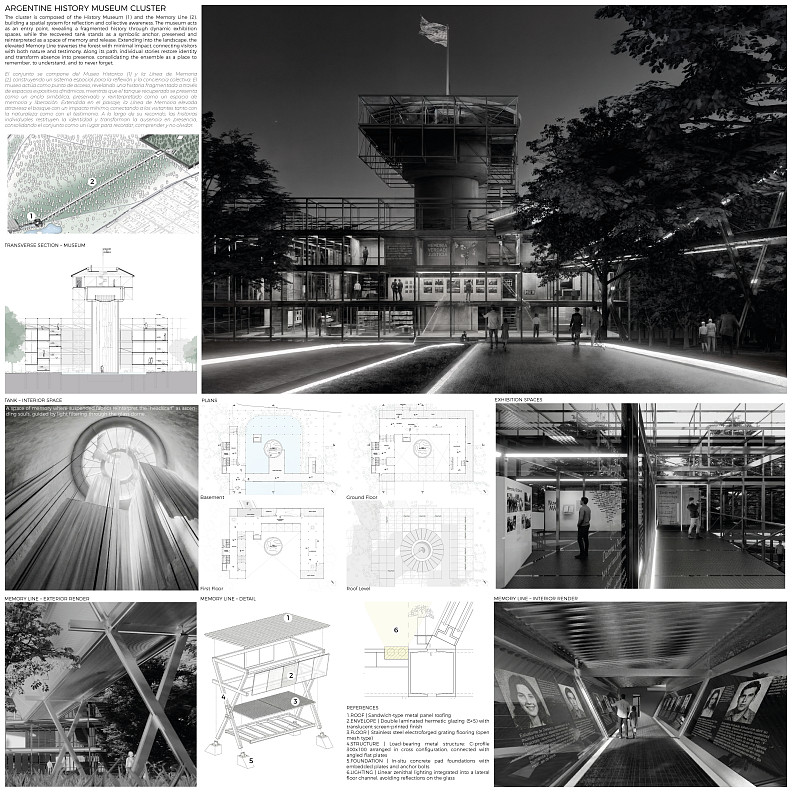
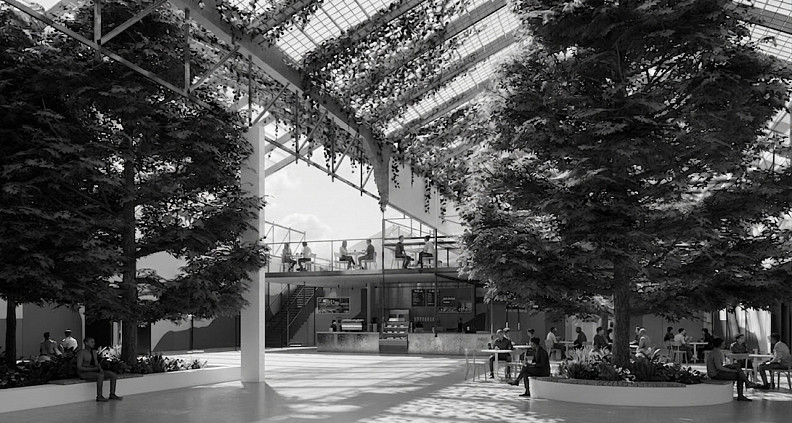
The project is conceived as the transformation of a contested territory into an active system of memory, where nature, infrastructure, and architecture operate as interdependent layers of a single landscape. The forest is no longer understood as a void, but as a living structure where ecological, urban, and historical processes coexist and overlap. The concept is based on ENCAPSULATE, understood as a soluble envelope that contains and protects while adapting to its context and allowing the continuity of what it holds. This concept is not fixed, but changes meaning according to the scale of intervention. At the urban scale, encapsulation is expressed through the relationship between border, forest, and system. The border operates as a permeable interface between city and nature, the forest as a living ecosystem to be preserved, and the system as an organizational network that structures access, flows, and programs. These borders do not act as rigid limits, but as transitional gradients that absorb urban demands, allow controlled penetration, and reorganize the void into a new integrated urban-natural condition. At the architectural scale, encapsulation is redefined as scaffold, tutor, and protector. Architecture is understood not as a closed object, but as a supporting structure that accompanies and sustains both the natural system and spatial experiences. This logic is based on care and the respectful reading of the territory, promoting the reuse and adaptive transformation of existing structures, avoiding the imposition of new architectural mass and working through what is already built as an active support for the project.
Project description
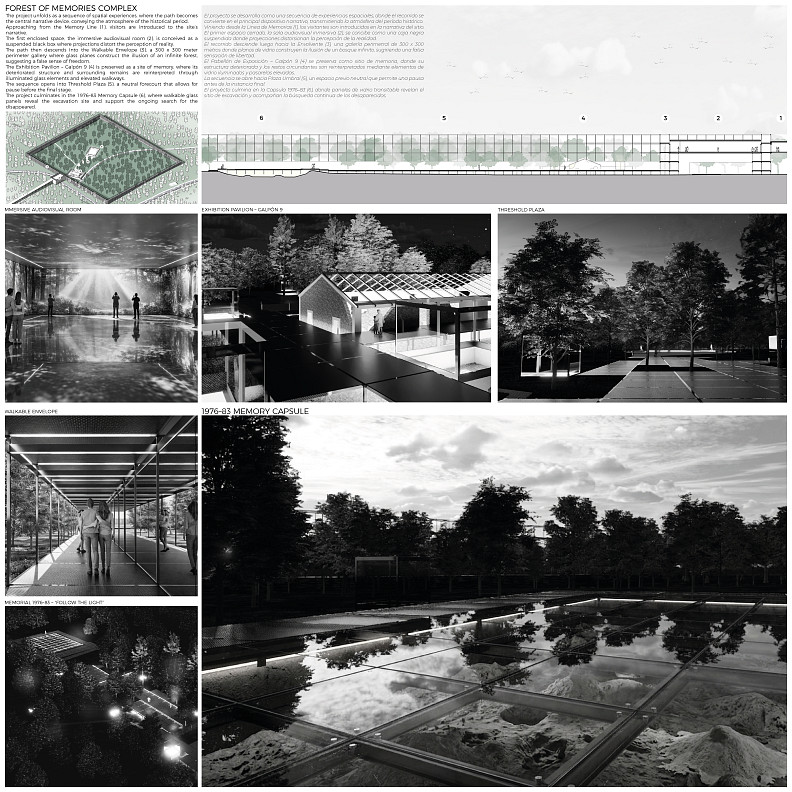
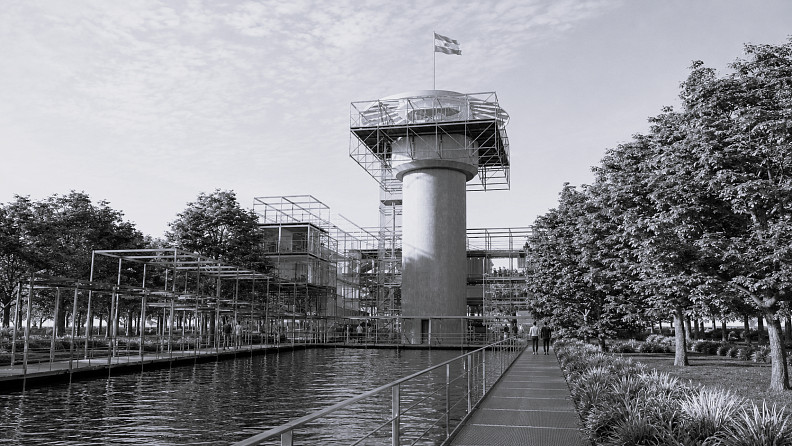
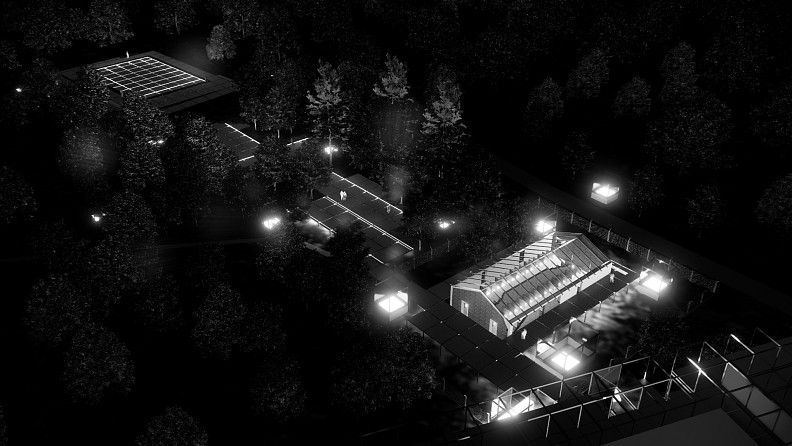
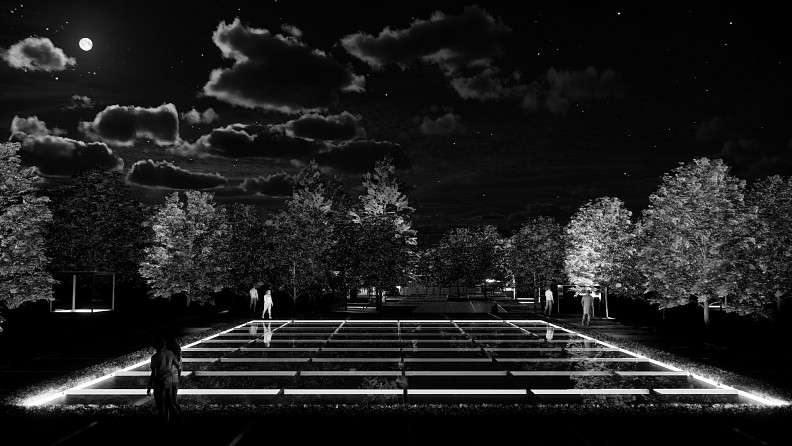
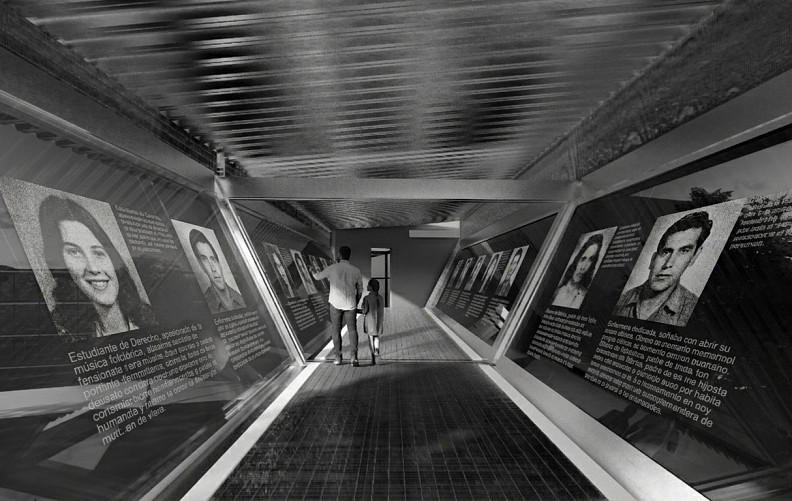
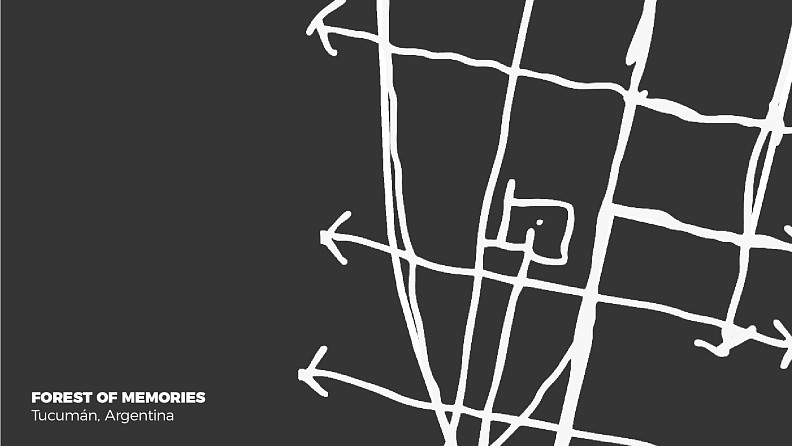
The project is organized as a spatial system rather than a singular object. A 300 x 300 m infrastructural grid structures the territory through nodes, programs, and circulation systems, establishing a gradient between city and forest. A continuous sequence of paths defines the experience, guiding visitors through a series of spatial conditions where perception progressively shifts. The project does not impose a linear narrative, but constructs tensions between exposure and concealment, density and openness, urban condition and natural immersion. Architectural devices—historical museum, adapted warehouses, immersive black boxes, and memory capsules—operate as experiential filters. Each one constructs a specific relationship between body, space, and memory, alternating between revelation, distortion, and reflection, producing a fragmented yet coherent reading of the territory.
Technical information
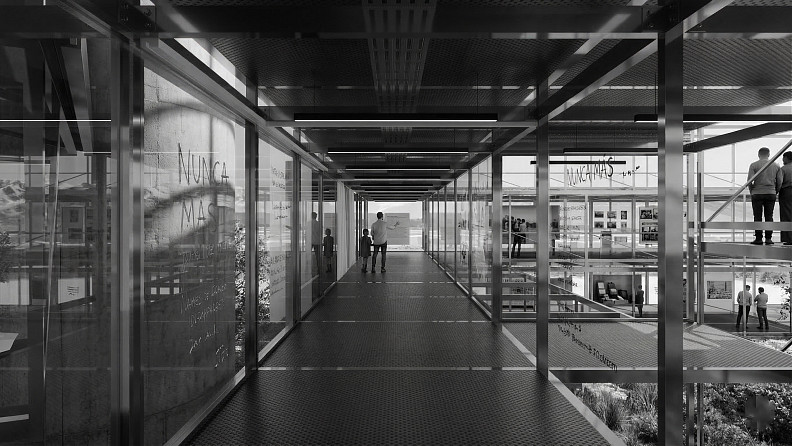
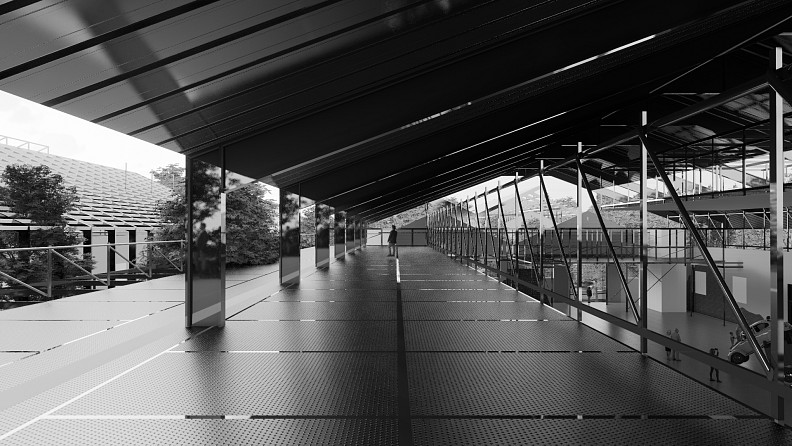
The system is materialized through lightweight stainless steel structures and glass envelopes that allow minimal intervention on the ground and existing vegetation. A scaffold-based structural logic acts as an adaptable support system, enabling the reuse and reinterpretation of existing infrastructures. Materiality introduces a symbolic dimension, where stainless steel and glass are not understood as elements of decay, but as surfaces of permanence and reflection. History does not oxidize or disappear, but remains visible through reflection, becoming a continuous presence of memory within the landscape. Environmental strategies integrate native forest preservation and topographic adaptation, consolidating a system where infrastructure and nature operate in continuity. The technical resolution is not autonomous, but part of the conceptual system, where construction, territory, and memory operate as a single integrated structure.
Agustin Ferulo Sumbay
Universidad Nacional de Tucumán, Facultad de Arquitectura y Urbanismo, Tucumán
Argentina
Arquitectura
Proyecto enviado
15. 06. 2026Etiqueta
- Cultural Center
- Gallery
- Hall/Theatre
- Memorial
- Observation Tower
- Pavillion
- Religious
- Scuplture
- Playground
- Parks
- Public spaces
- Gardens
- Waterway
- Cemetery
- Airport
- Bridges
- Public transport
- Highway
- Marina and Ports
- Parking
- Train/Subway
Consejo a estudiantes

Copyright © 2026 INSPIRELI | All rights reserved. Use of this website signifies your agreement to the Terms of Use, Privacy Policy, and use of cookies.