Integro – mixed-use building with an integration facility for people in need
Idea projektu
Na začiatku bol len skelet a bytová kríza... Integro predstavuje architektonickú odpoveď na niekoľko súbežných kríz v Bratislave. Uprostred eskalujúcej bytovej krízy a boomu developerských intervencií máme tendenciu prehliadať tie najznepokojivejšie a život ohrozujúce problémy, ako je napríklad kríza bezdomovectva. Spoločnosť bezdomovectvo súčasne odsudzuje a normalizuje svojou ľahostajnosťou. Podľa sčítania z roku 2023 je takmer 2 200 ľudí v Bratislave bez domova alebo zažíva vážnu bytovú nestabilitu. Pre tento ateliérový projekt som sa preto rozhodol zamerať na sociálne vylúčených jednotlivcov, pričom architektúru a urbanistický dizajn využívam ako nástroje na obnovenie ich dôstojnosti a uľahčenie ich integrácie do spoločnosti. Aby som to dosiahol bez zaberania ďalšieho zeleneného územia, návrh rehabilituje zanedbané brownfield, čím šetrí zdroje, obnovuje mestskú kompaktnosť a vracia život pôvodnému betónovému skeletu.
Popis projektu
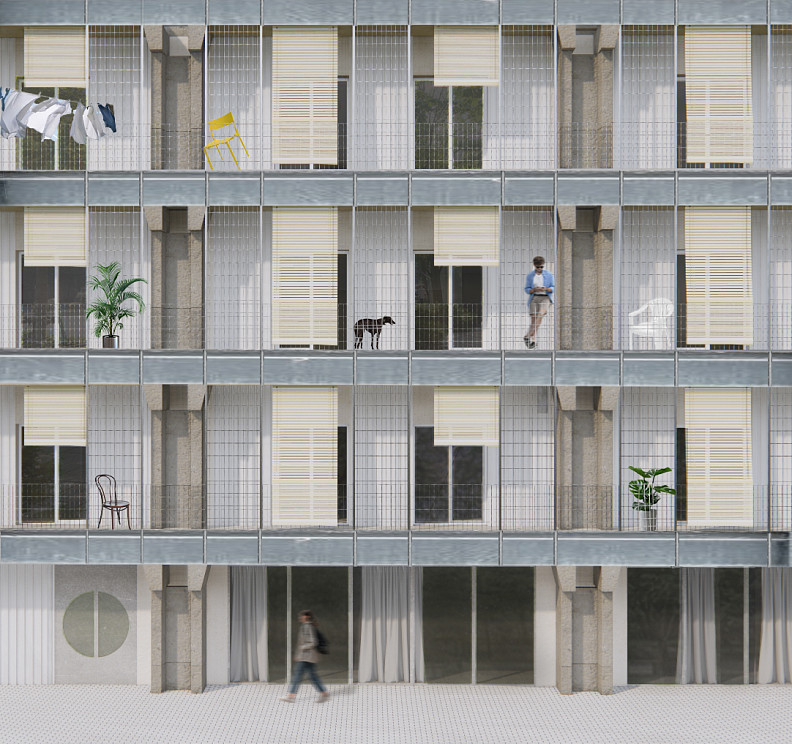
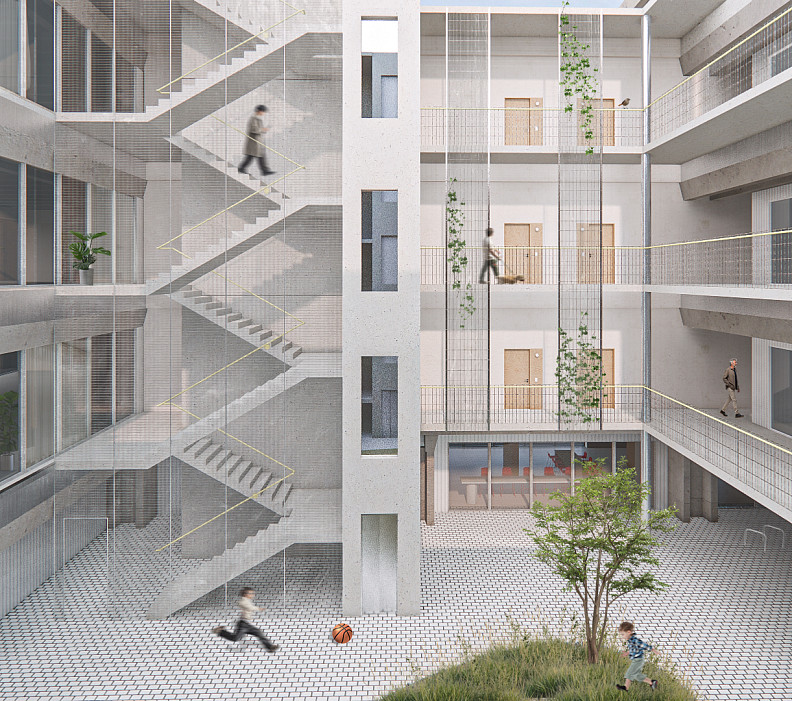
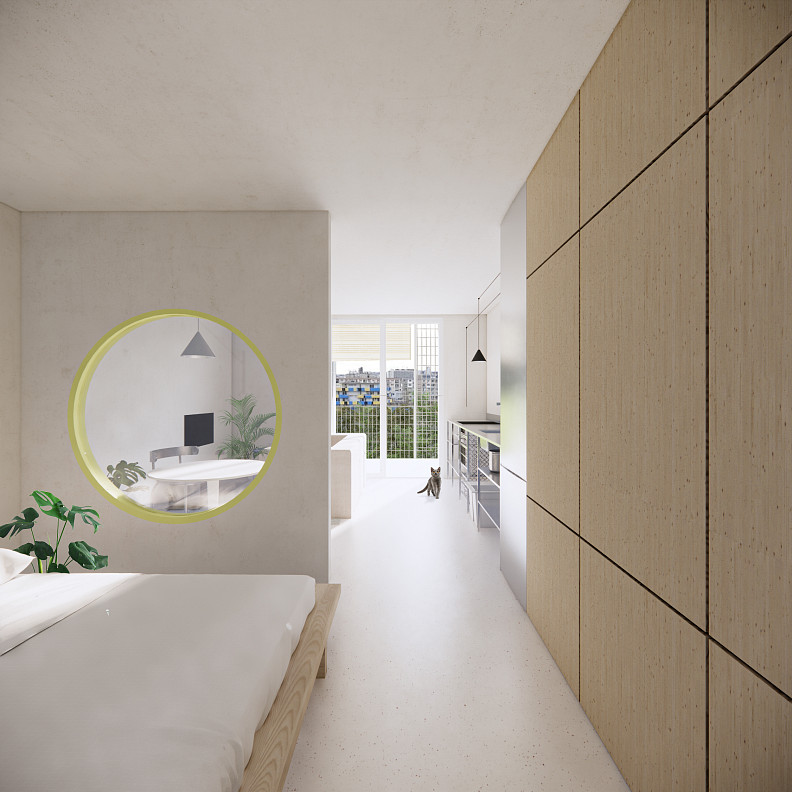
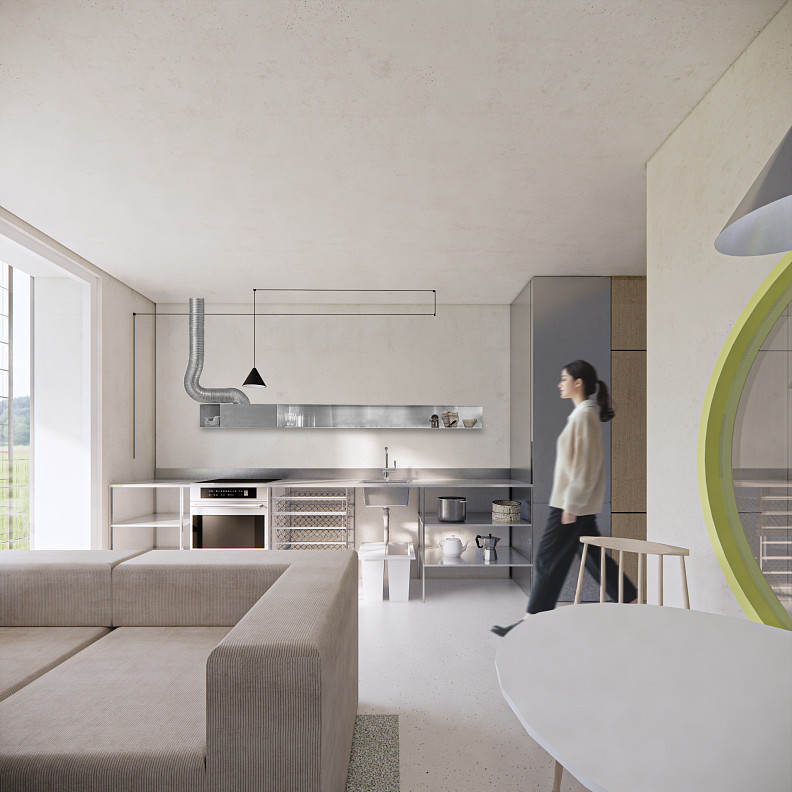
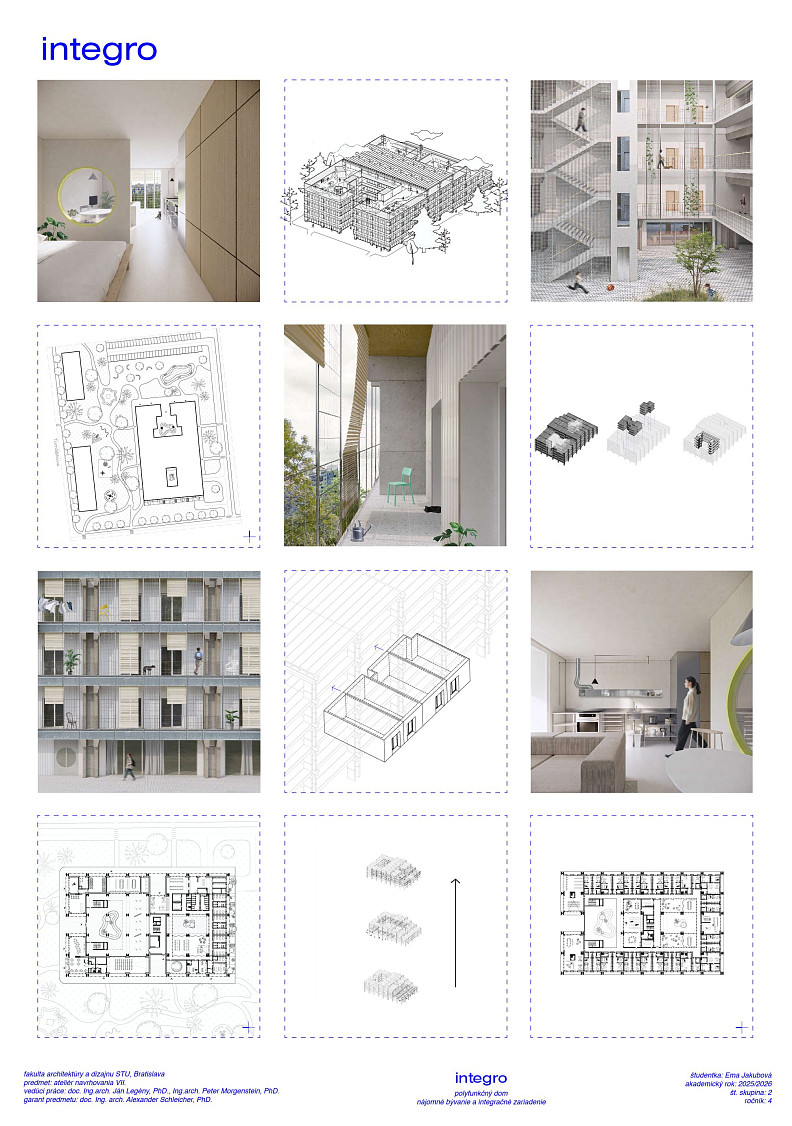
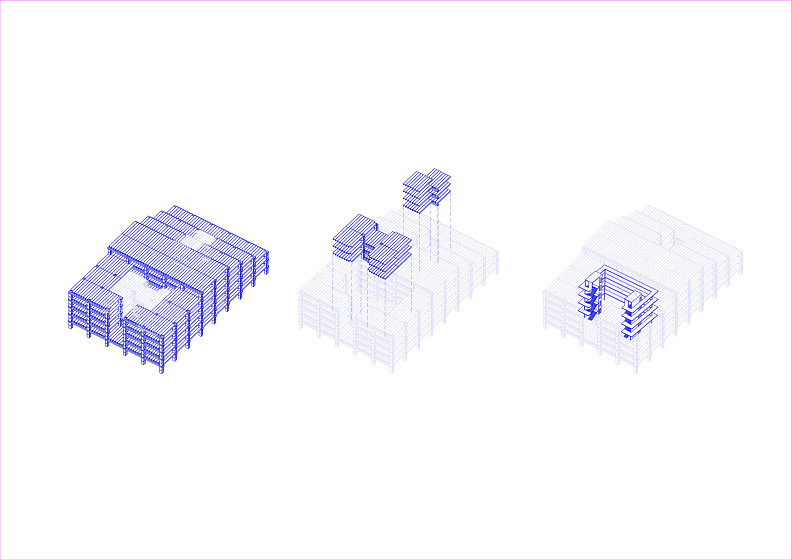
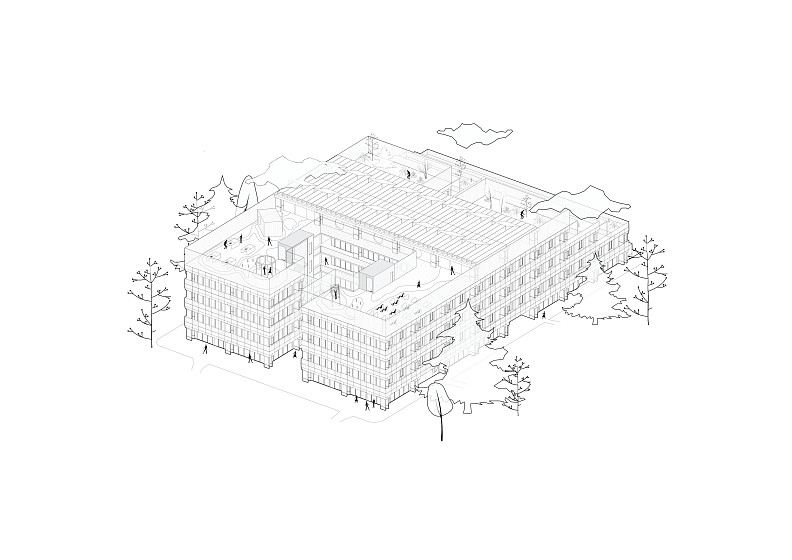
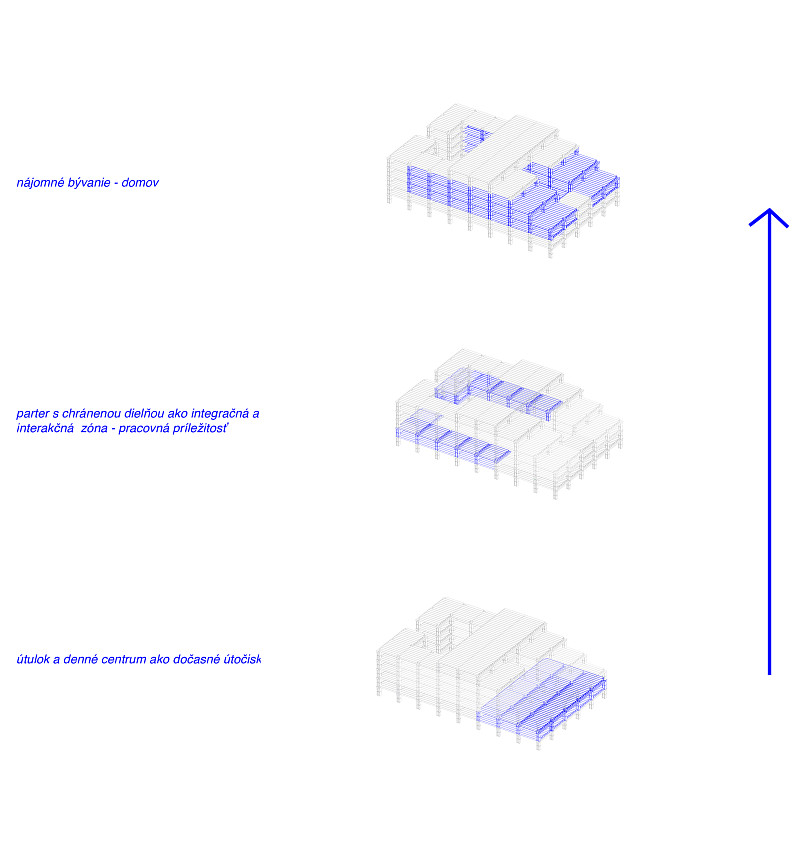
Programme: Underground parking: The garage provides technical facilities for the building, cellar storage units for residents, general storage, and 61 parking spaces, 2 of which are designated for persons with disabilities. Ground floor: I propose the ground floor, a space with high potential for the public's first contact with homeless individuals, with a clear spatial hierarchy. Day center (first step to integration - facilities) The southern part of the ground floor serves as a day center for the homeless, offering low-threshold services (hygiene, food distribution, sleeping bags and clothing, leisure activities, social counseling), as well as a low-threshold accommodation facility providing temporary overnight stays for 24 people. The main entrance to this part of the ground floor is regulated and, unlike the entrance to the residential building, moved to the eastern facade facing a less frequented street. This ensures clear operational zoning and increases the sense of privacy and safety for both user groups. This approach is crucial for minimizing potential tension and stigmatization on the ground floor and guarantees the smooth operation of the accommodation facility without disrupting the residents' zone. Simultaneously, it ensures discretion and dignity for socially vulnerable individuals arriving from the street. Active ground floor with a sheltered workshop (second step to integration - income for long-term housing) The northern part of the ground floor, adjacent to Papánek Square and the cultural center, has a public character, encouraging the concentration of the general public in the neighborhood. It acts as a catalyst for a subconscious integration process that tends to arise spontaneously in spaces designed and adapted for this purpose – primarily a café operating as a sheltered workshop. Work integration in spaces open to the public serves as a tool for destigmatization. According to psychologist Gordon Allport, the regular visual and interactive presence of people in need engaged in meaningful activity changes the majority's perception from passive recipients to active community contributors, thereby breaking down barriers of fear and prejudice. Although the western facade borders a main traffic artery, the architecture here engages in a dialogue with its surroundings through a semi-public inner courtyard. The space, defined by play elements, street furniture, and greenery, fosters a sense of belonging and safe movement for residents, children, and passers-by. This urban courtyard transforms the linear traffic barrier into a layered community zone, fulfilling the requirement for the quality and sustainability of social housing. The ground floor of this facade opens up to the public. Directly adjacent to the café is a multifunctional hall—a space suitable for community events, tenant meetings, or educational activities, supporting the idea of integration and the importance of community participation. Thanks to large-format glazing that can be fully opened, the courtyard transforms during the summer months into a vibrant urban scene and a natural community hub that breaks down the boundary between interior and exterior. Residential floors (third step to integration - Housing First principle and classic rental housing): Providing stable housing is essential for the transition from a sheltered workshop to the open labor market. The design presents minimally furnished residential units in various sizes. The structural system is based on the box-in-box principle, where self-supporting prefabricated wooden modules are inserted into the existing reinforced concrete skeleton, eliminating thermal bridges and acoustically separating from the primary structure. They allow a high degree of standardization and accelerate the construction process. The modules are inserted as finished units, including building services distribution (MEP), which minimizes wet construction processes on site and increases detailing precision. Each residential floor features common rooms that serve for gatherings and joint activities among residents. Residential Units: • 1-room apartment (studio), 2 beds: 33 m² • 1-room apartment (studio), 3 beds: 44.5 m² • 1-room apartment, 2 beds, accessible (barrier-free): 44.5 m² • 1-room apartment, 2 beds, economical: 24 m² • 3-room apartment, 4 beds: 78.28 m² • Average apartment area: 44.945 m² Total number of apartments: 77 Number of accessible (barrier-free) apartments: 12 Accessible Roof (The result of cooperation and coexistence): The active roof connects diverse spaces for the resident community. It includes outdoor kitchens, raised beds for growing vegetables, a space for a summer rooftop cinema, ping-pong tables, climbing frames, and a shared sauna. The top two rows of the skeleton's modules serve a new function as a shelter and roof area for photovoltaic panels. With this solution, the roof is transformed into a pillar of the building's energy concept, where technological self-sufficiency coexists in direct synergy with active community life.
Technické informácie
Box-in-box: Vložené drevené moduly vytvárajú vysoko izolovanú sekundárnu obálku v rámci temperovaného skeletu, čím eliminujú tepelné mosty. Periférny plášť modulov s hrúbkou izolácie 240 mm dosahuje U = 0,14 W/(m2.K). Táto hrúbka sa aplikuje výlučne na fasádne panely modulov, ktoré tvoria chladenú periférnu obálku v priamom kontakte s exteriérom, čím spĺňa štandard pre pasívne domy. RES (Obnoviteľné zdroje energie): Systém tepelných čerpadiel a strešných fotovoltaických panelov (odhadovaný inštalovaný výkon je 20-30 kWp) zabezpečuje vysoký stupeň energetickej sebestačnosti. Cirkularity: Implementácia rekuperácie vzduchu a inovatívneho spätného získavania tepla z šedej vody zo sanitárnych zariadení denného centra dramaticky znižuje náklady na ohrev teplej úžitkovej vody a vykurovanie priestorov. Tento systém dokáže získať späť až 60 % tepla z odpadovej vody.
Projekt odovzdaný
05. 06. 2026Štítok
Rady študentom

Copyright © 2026 INSPIRELI | All rights reserved. Use of this website signifies your agreement to the Terms of Use, Privacy Policy, and use of cookies.