Materská škola Limbová, Trnava
Idea projektu
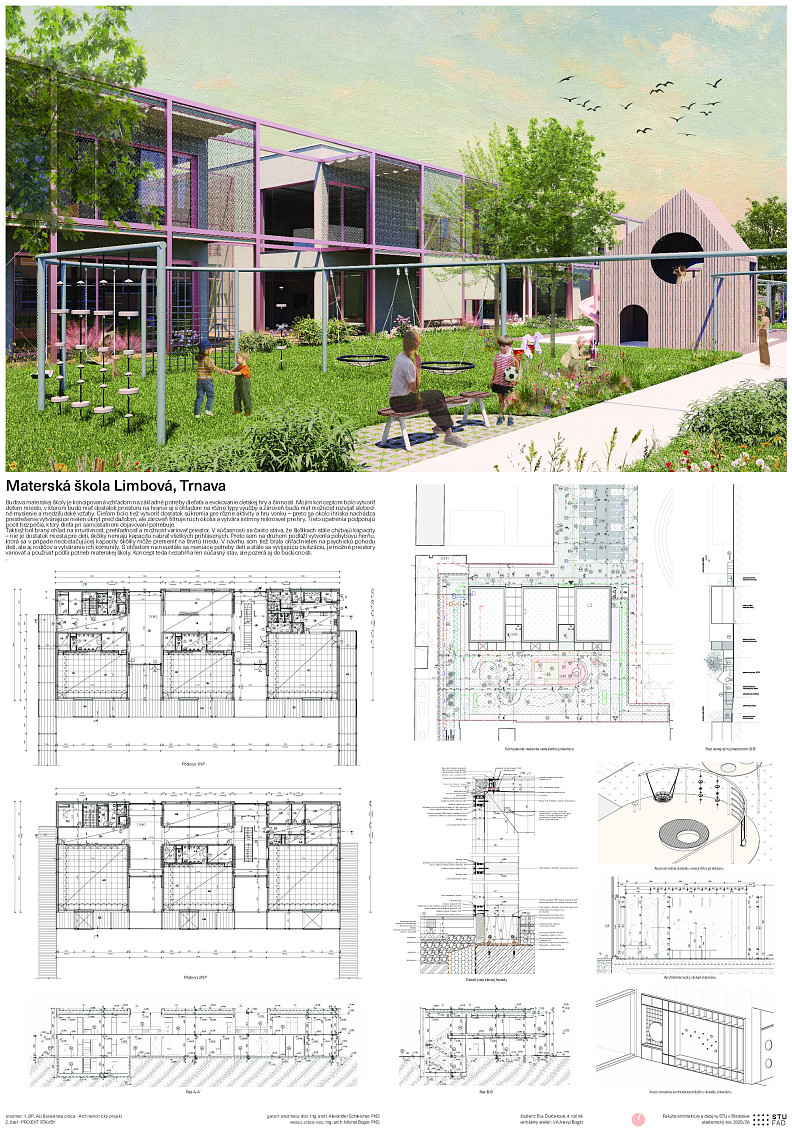
Návrh budovy materskej školy je koncipovaný s ohľadom na základné potreby dieťaťa, evokujúc detskú hru a aktivity. Mojím konceptom bolo vytvoriť priestor pre deti, kde by mali dostatok miesta na hru, pričom by sa zohľadňovali rôzne vzdelávacie metódy a poskytovali by sa príležitosti na rozvoj slobodného myslenia a medziľudských vzťahov. Cieľom bolo tiež zabezpečiť dostatočné súkromie pre rôzne aktivity a vonkajšiu hru – preto strieška okolo ihriska, ktorá slúži nielen ako úkryt pred dažďom; súčasne filtruje okolitý hluk a vytvára intimný mikrosvet pre hry. Tieto opatrenia podporujú pocit bezpečia, ktorý dieťa potrebuje počas samostatného objavovania. Zohľadnená bola tiež intuitívnosť, prehľadnosť a priestorová adaptabilita. V súčasnosti materské školy často trpia nedostatkom kapacity; nie je dostatok miesta pre deti a školy nemajú možnosť prijať všetkých záujemcov. Preto som vytvoril pohybovú herňu na druhom poschodí, ktorú možno premeniť na štvrtú triedu v prípade, že kapacita materskej školy bude nedostatočná. V návrhu som tiež myslel na psychickú pohodu nielen detí, ale aj rodičov, ako aj na vytváranie ich komunity. S ohľadom na neustále sa meniace potreby detí a neustále sa vyvíjajúcu civilizáciu možno priestory prispôsobiť a využívať podľa aktuálnych požiadaviek materskej školy. Koncept teda nerieši iba súčasný stav, ale aktívne hľadí do budúcnosti.
Popis projektu
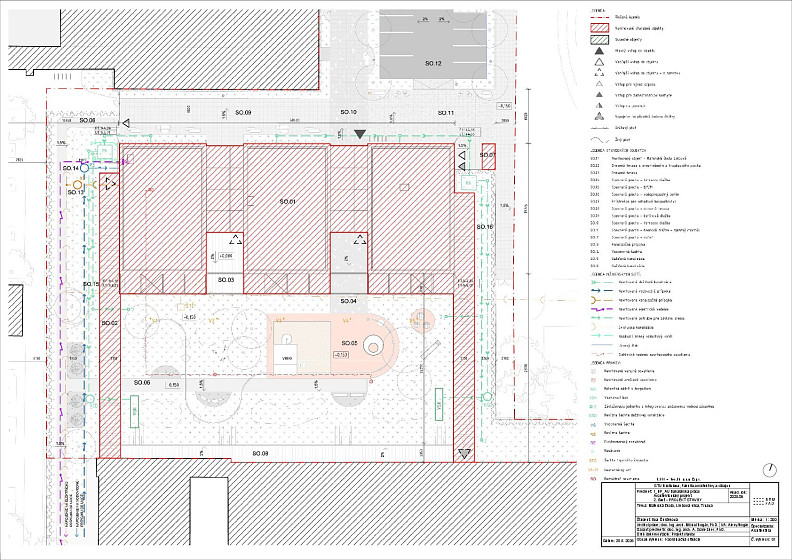
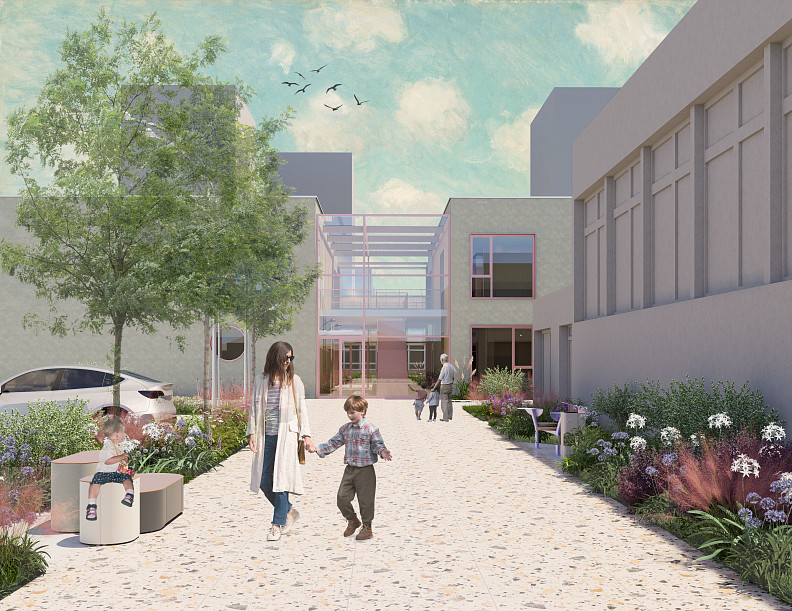
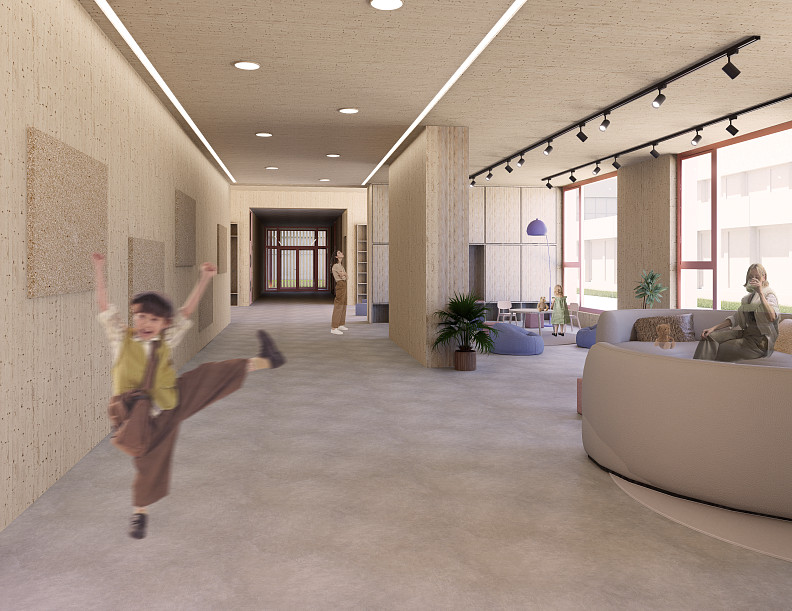
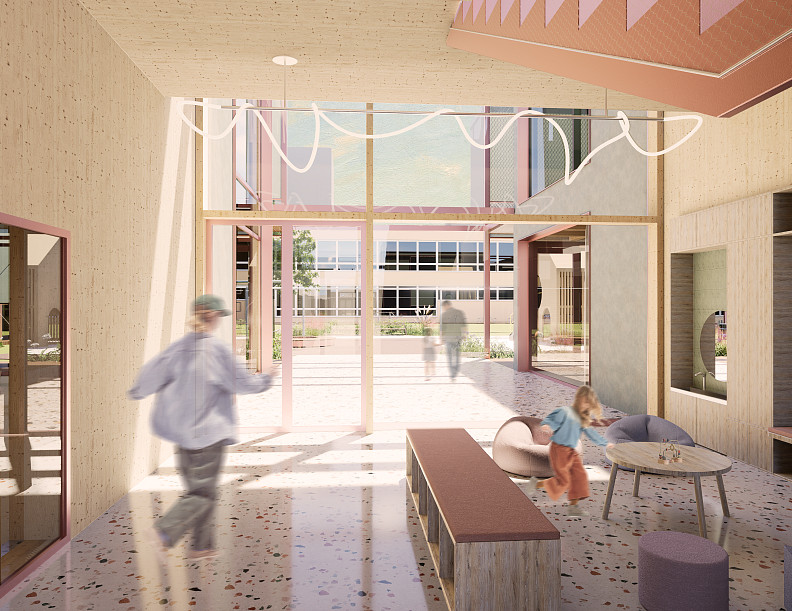
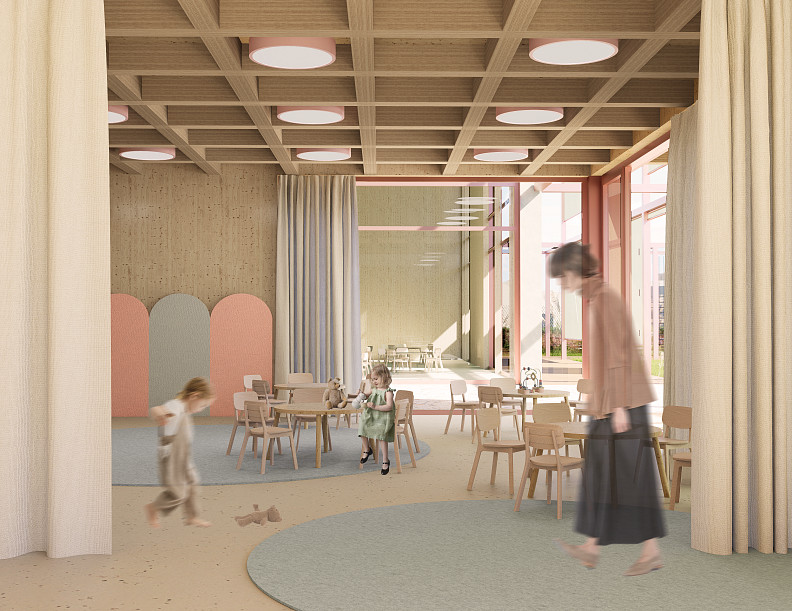
Urban Design and Site Solution In my design, I primarily anticipate pedestrian access from the northern side from Limbová Street. The building is situated on the northeastern part of the plot for this reason, as well as to secure a southeastern orientation; morning sunlight is crucial for children, as it coincides with the time they spend the most hours at the kindergarten. Additionally, this placement prevents the newly designed building from being overshadowed by the original two-story kindergarten. The parking lot is designed in connection with the access road from Limbová Street, where a previously missing pedestrian route has been added. A gathering plaza (dispersal area) is created in front of the proposed building, along with a sidewalk leading all the way to the sports complex. The main entrance to the building is designed in direct continuation of the pedestrian access route and is also directly accessible from the parking lot. A secondary entrance is located in the sheltered part on the southwestern side of the building, serving as a link to the original kindergarten building. The entrances are also designed in connection with the kitchen and waste collection management. These are located near the parking lot and the outdoor waste management area. The service entrance to the plot is situated on its northern side, but its use is primarily operational. The concept also includes creating maximum privacy for the kindergarten children through a canopy framing the playground. The project site is fenced and incorporates a hedgerow. The connection with the original kindergarten building consists of an enclosed corridor, which allows children from the original school building to access the dining room "dry-shod" (protected from the elements), since there is no dining room in the original building. Furthermore, shading on the playground is provided by newly proposed trees. The plot also features a sensory path, a sandbox, a playhouse, and a set of climbing frames. These elements are designed in a playful form and are shaped to stimulate children's imagination and develop their motor skills and physical abilities. The building is designed as a two-story structure, thereby matching the height of the surrounding buildings. Architectural and Layout Design The project development was divided into two distinct phases: the design study phase and the construction design phase. During the construction design stage, the initial study underwent a process of optimization. To better suit the site conditions and programmatic requirements, the building layout was mirrored, a basement was incorporated to house the technical facilities, and an enclosed corridor was introduced to establish a functional connection with the existing building. The two-story building is conceived as three main masses with flat roofs, interconnected by glazed halls. The structure features a projected frame system that acts as a shading element while simultaneously providing terraces, ensuring children have direct access to the outdoors even in inclement weather. The entrance hall is designed to provide space for parents to leave their outerwear or change footwear; it also connects to their waiting area combined with a playroom, which can enhance the psychological well-being of the children. Additionally, a small washbasin is situated in the entrance hall area for children to wash their hands immediately upon arrival from the outside, significantly contributing to maintaining a clean environment. The entrance hall links to the dining room and a staircase, which provides direct access to the third classroom on the upper floor and the teachers' facilities. The classrooms are oriented to the southeast, securing morning sunlight in the interior when the children spend most of their time in these spaces. In the northeastern part of the building, there is a double-height dining room connected to the kitchen and its service facilities. The dining room is directly linked to the original kindergarten building by an enclosed corridor, allowing children to walk straight into the dining hall dry-shod. The technical facilities of the building are located in the basement, which also houses a laundry room. The building is designed to maximize future variability in response to the constantly changing needs of the population. This is demonstrated by the movement playroom, which can be converted into a fourth classroom in the future if necessary. The entire building is conceived as a nod to children's play and aims to fulfill children's needs, while also reflecting Montessori educational methods. Therefore, it includes a creative workshop space, play areas, and the aforementioned movement playroom. These rooms support the development of children in all areas and help build interpersonal relationships. Furthermore, a technical room is located in the basement of the building.
Technické informácie
Budova je navrhnutá so zameraním na ekológiu, adaptabilitu a budúce využitie, či už ide o potenciálnu zmenu funkcie alebo opätovné použitie stavebných materiálov. Z tohto dôvodu je drevo primárnym konštrukčným materiálom – konkrétne konštrukcie CLT (krížom vrstvené drevo), doplnené oceľovými nosníkmi. Základy sú zhotovené zo železobetónu, pozostávajúceho zo základovej dosky a páskových základov. Exteriér budovy je upravený svetlozelenom omietkou, zatiaľ čo interiér je charakteristický priznaným drevom, doplneným akustickými panelmi tam, kde je to potrebné. Konštrukciu ďalej obohacuje systém vystupujúceho rámu, ktorého jadro tvorí ružovo sfarbené oceľové stĺpy v kombinácii s drevenými terasami a tieniacimi systémami. Budova je vybavená zelenou strechou, ktorá zároveň poskytuje priestor pre fotovoltaické panely prispievajúce k energetickej efektívnosti. Súčasťou ekologickej koncepcie budovy je aj zber dažďovej vody do retenčných nádrží na závlahu areálu, ako aj riadenie vsakovania zrážkových vôd priamo na pozemku. Výber materiálov pre vonkajšie povrchy sa tiež riadi ekologickými princípmi. Ihrisko je navrhnuté s dostatkom trávnatých plôch, čím sa zabezpečuje príjemná mikroklíma. Povrchy ihriska tvoria EPDM a piesok; chodník je dlážený, doplnený o priepustné zatrávňovacie dlaždice pod lavičkami a vyvýšenými náučnými záhonnými záhonmi. Plocha pred budovou je vydláždená, pričom časť je navrhnutá ako pojazdný chodník pre obsluhu a zásobovanie. Parkovisko je doplnené zatrávňovacími dlaždicami, ktoré napomáhajú vsakovaniu vody. Hlavná pešia prístupová trasa je navrhnutá s vonkajšou terazovou dlažbou, čím sa vytvára vizuálne prepojenie medzi interiérom a exteriérom, keďže v samotnej vstupnej hale sa používa interiérový terazzo. Ostatné interiérové povrchy zahŕňajú podlahy z mikrocementového poteru, ktoré sú v triedach doplnené marmoléom.
Projekt odovzdaný
15. 06. 2026Štítok
Rady študentom

Copyright © 2026 INSPIRELI | All rights reserved. Use of this website signifies your agreement to the Terms of Use, Privacy Policy, and use of cookies.