Aquatic Museum
Idea projektu
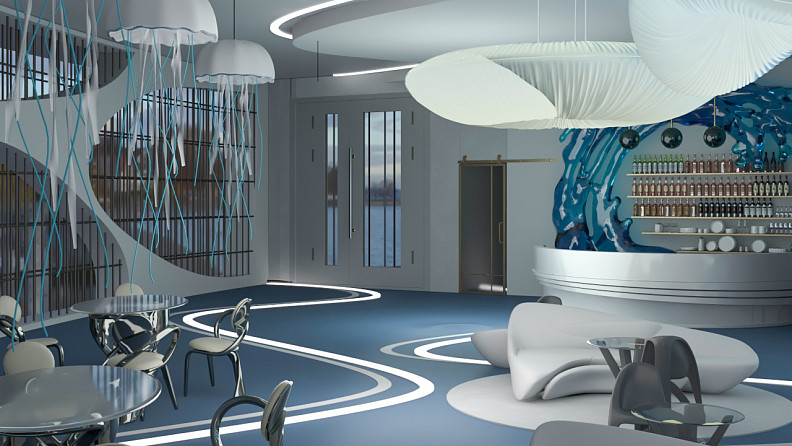
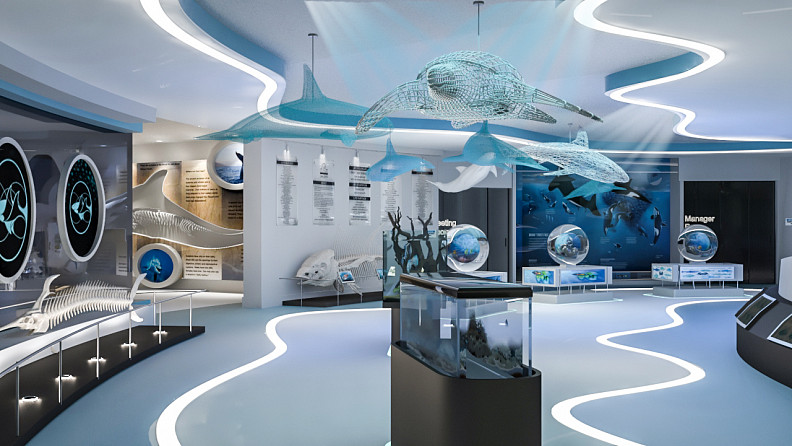
Aquatic Museum – A Gateway to Marine Awareness The idea of this project stems from the urgent need to raise awareness about marine life and its preservation. With increasing environmental challenges and the loss of biodiversity in aquatic ecosystems, there is a growing need for educational and experiential spaces that bring people closer to the underwater world. This museum aims to bridge that gap by offering a unique, interactive journey into marine environments, encouraging both learning and conservation.
Popis projektu
This project consists of several key functional zones including exhibition halls, immersive aquarium tunnels, educational areas, interactive digital zones, and recreational spaces. The main area is the central aquarium, which simulates different marine habitats such as coral reefs, deep-sea environments, and coastal zones. The design integrates architectural fluidity and transparency to reflect the essence of water, aiming to offer visitors an inspiring and educational experience.
Technické informácie
The construction of the building uses reinforced concrete and steel structures for durability and flexibility, with large-span spaces and transparent facades made of tempered glass and ETFE membranes to maximize visibility and natural light. Sustainable solutions such as solar panels, water recycling systems, and energy-efficient HVAC systems are integrated to minimize environmental impact and maintain ecological harmony.
Projekt odovzdaný
18. 04. 2025Štítok
Rady študentom
Rady študentom

Aquatic Museum

Copyright © 2026 INSPIRELI | All rights reserved. Use of this website signifies your agreement to the Terms of Use, Privacy Policy, and use of cookies.