HYDRO-FLUX COASTAL RESORT DISTRICT
Project idea
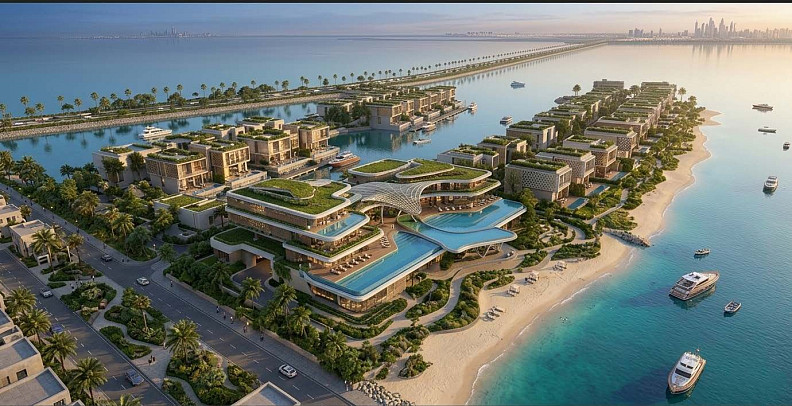
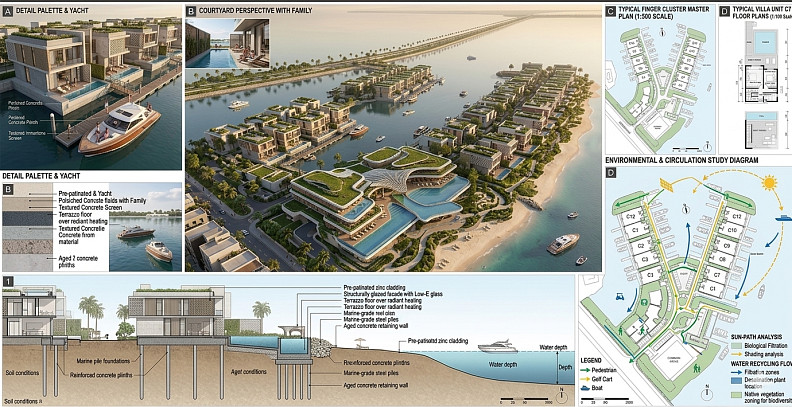
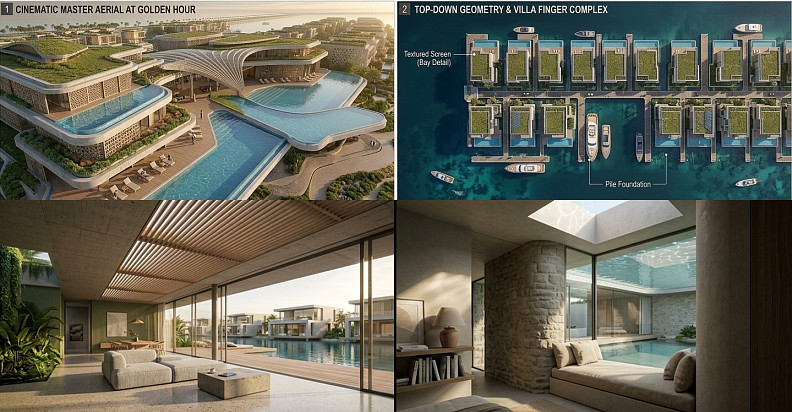
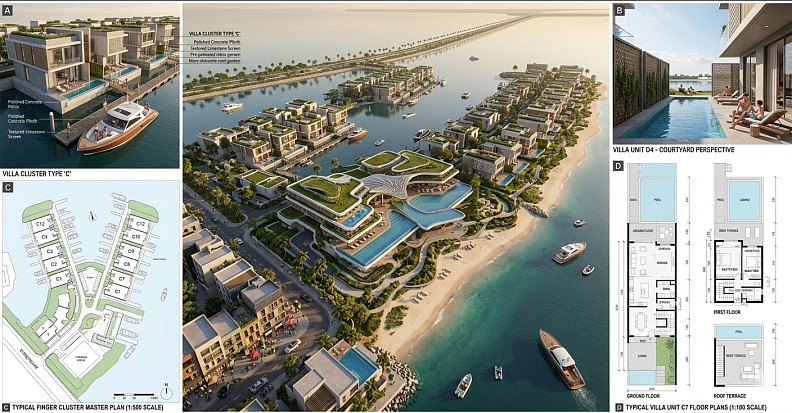
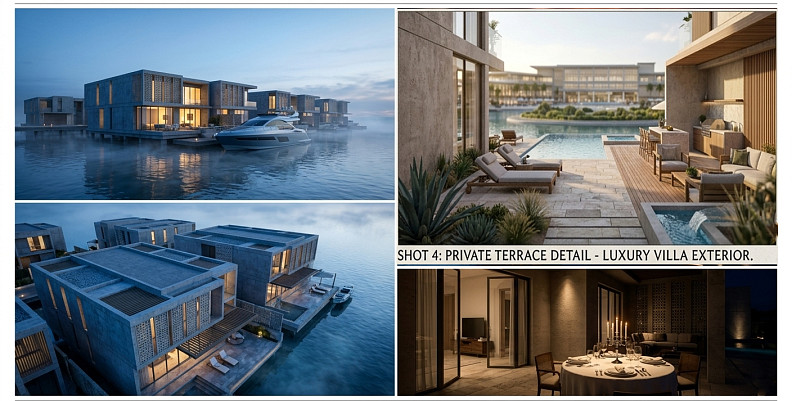
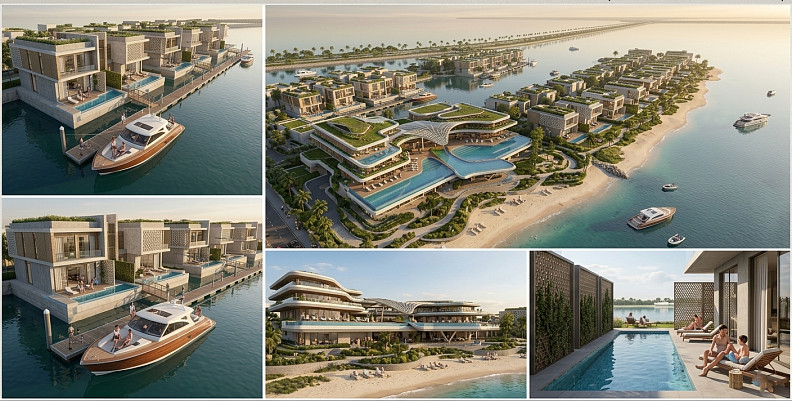
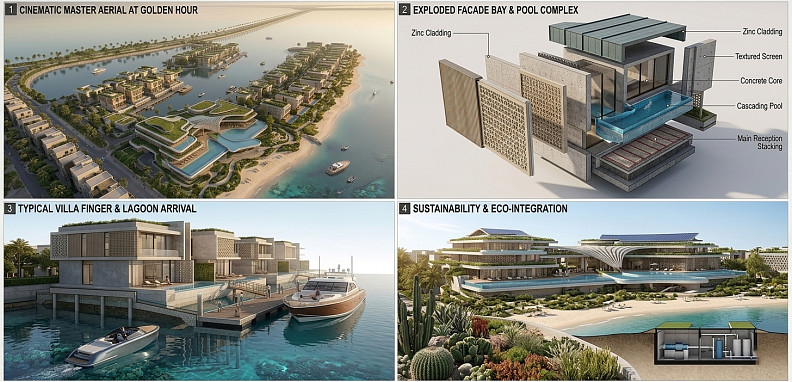
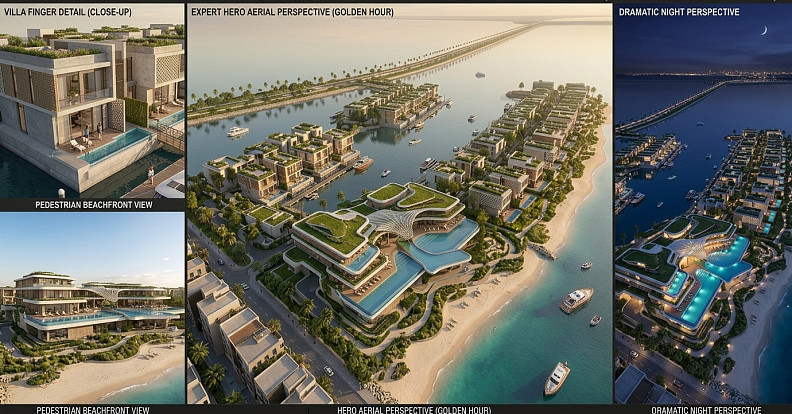
-The Core Idea An avant-garde, "Water-First" luxury hospitality master plan driven by fluid dynamics, where coastal infrastructure and guest mobility function as a single integrated ecosystem. The design shifts away from traditional rigid land plots to introduce a dendritic, overwater villa "finger" morphology that maximizes maritime frontage, shoreline preservation, and private lagoon access.
Project description
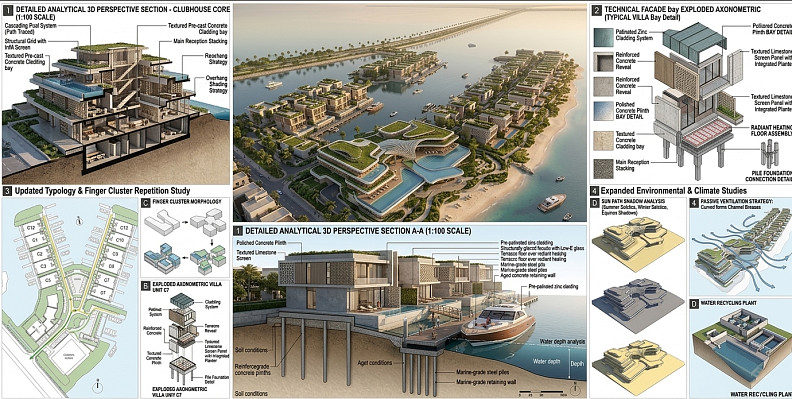
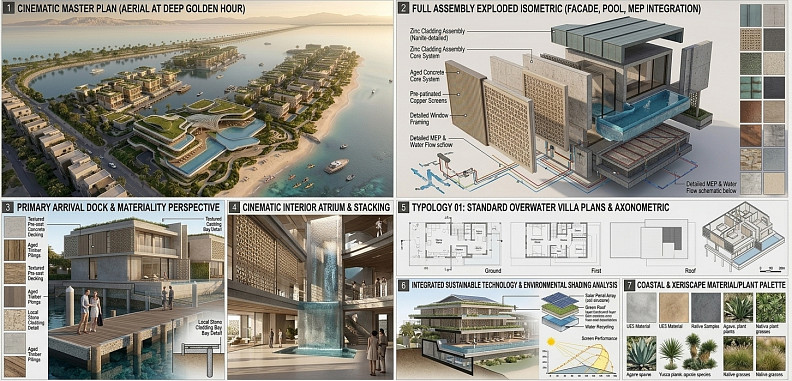
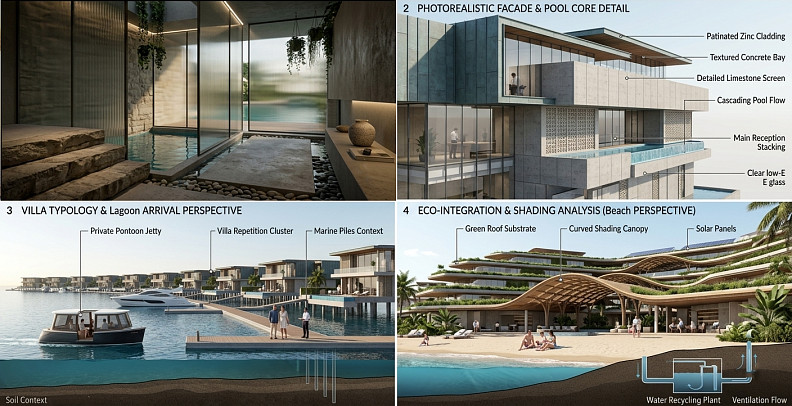
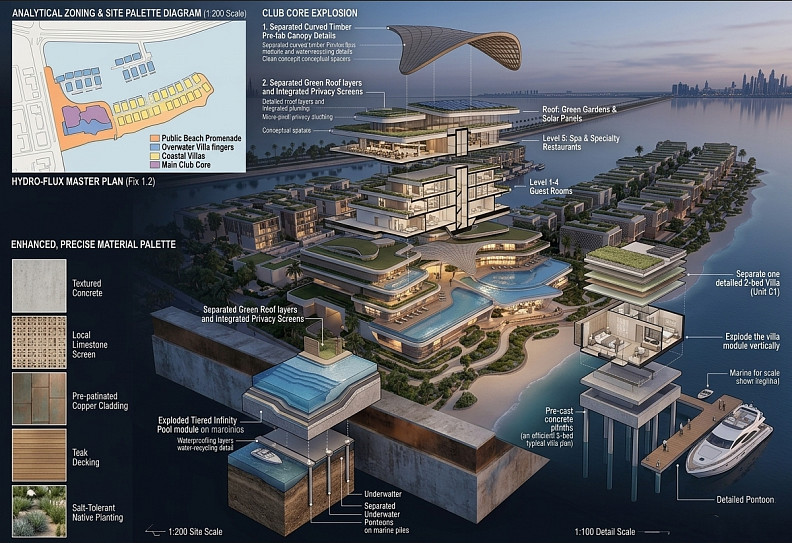
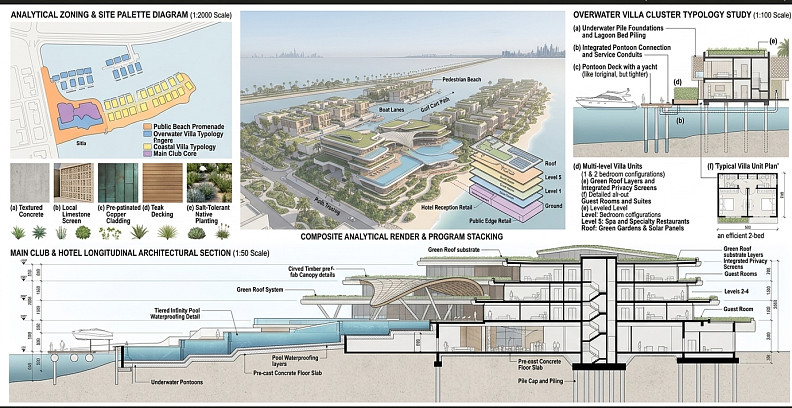
-Scope of the Problem Ecological Footprint vs. High Density: Balancing an intensive luxury resort program with the fragile marine dynamics of a coastal lagoon ecosystem. Circulation Cross-Interference: Resolving spatial conflicts between heavy back-of-house hospitality logistics, pedestrian leisure paths, and private marine watercraft channels. Microclimate Vulnerability: Mitigating high thermal massing, intense solar heat gain, and high humidity levels inherent to open, unprotected waterfront developments. -?️ Scope of the Solution Dendritic Layout Overwater Urbanism: Segmenting private guest zones into floating "fingers" to distribute structural loads, promote natural lagoon flushing, and guarantee 100% waterfront orientation. Vertical Program Stacking: Centralizing the public social fabric inside a multi-tiered Clubhouse core, utilizing a compact structural footprint to protect natural beach zones. Passive Performance Envelope: Deploying smart structural shading, deep overhangs, and operable local limestone screens to form an intelligent microclimatic shield across all building facades.
Technical information
-Technical Specifications 1. Structural & Sub-Structure Engineering -Foundation: Marine-grade steel piles combined with anti-corrosive reinforced concrete plinths driven into the lagoon bed. -Primary Framework: Pre-cast concrete structural core systems optimized for high lateral stability against coastal wind loads and tidal changes. 2. Materials & High-Performance Envelope -Facade Systems: Modular pre-patinated zinc cladding assemblies coupled with high-durability timber screening panels. -Solar Shading: Parametrically patterned, locally sourced limestone screens with integrated structural planter boxes to filter solar glare and optimize daylight factor. -Glazing: Structurally glazed, floor-to-ceiling Low-E insulated glass units designed to block UV radiation while maximizing unobstructed panoramic views. 3. Sustainability & MEP Integration Water Management: Sub-deck, integrated water recycling and closed-loop desalination plant systems utilizing biological filtration zones for local graywater remediation. Active/Passive Roofs: Intensive green roof substrate layers for natural thermal mass insulation, paired with a high-efficiency solar panel array for localized clean energy production.

Copyright © 2026 INSPIRELI | All rights reserved. Use of this website signifies your agreement to the Terms of Use, Privacy Policy, and use of cookies.