THE GHOST PORTICO | Pavlov Estate Reconstruction
Project idea
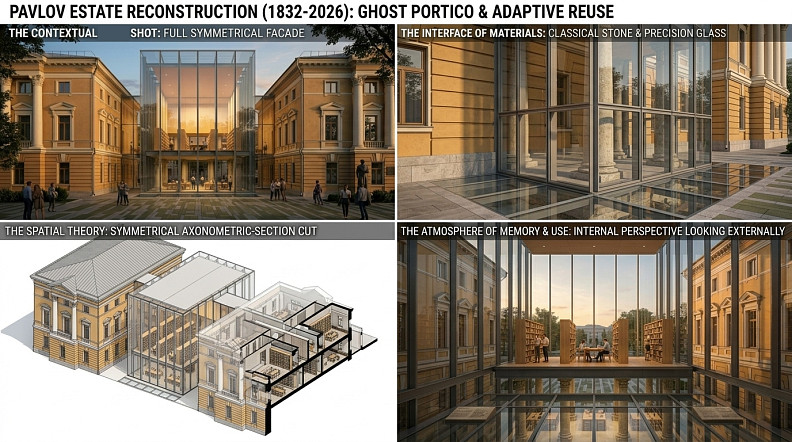
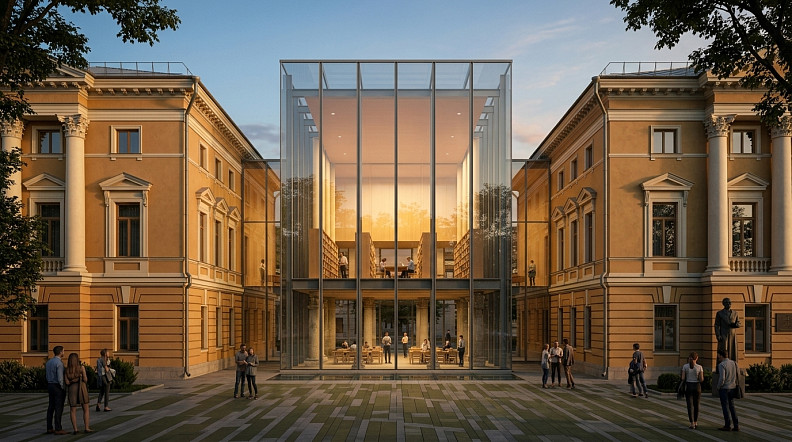
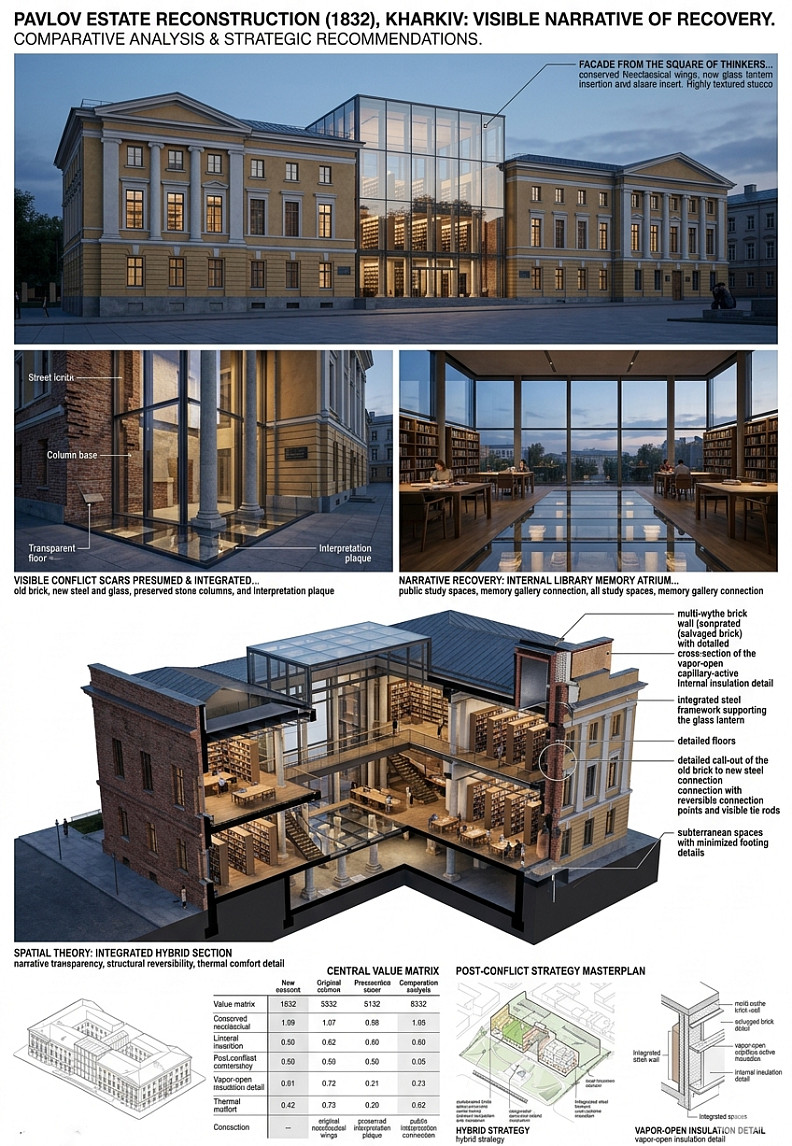
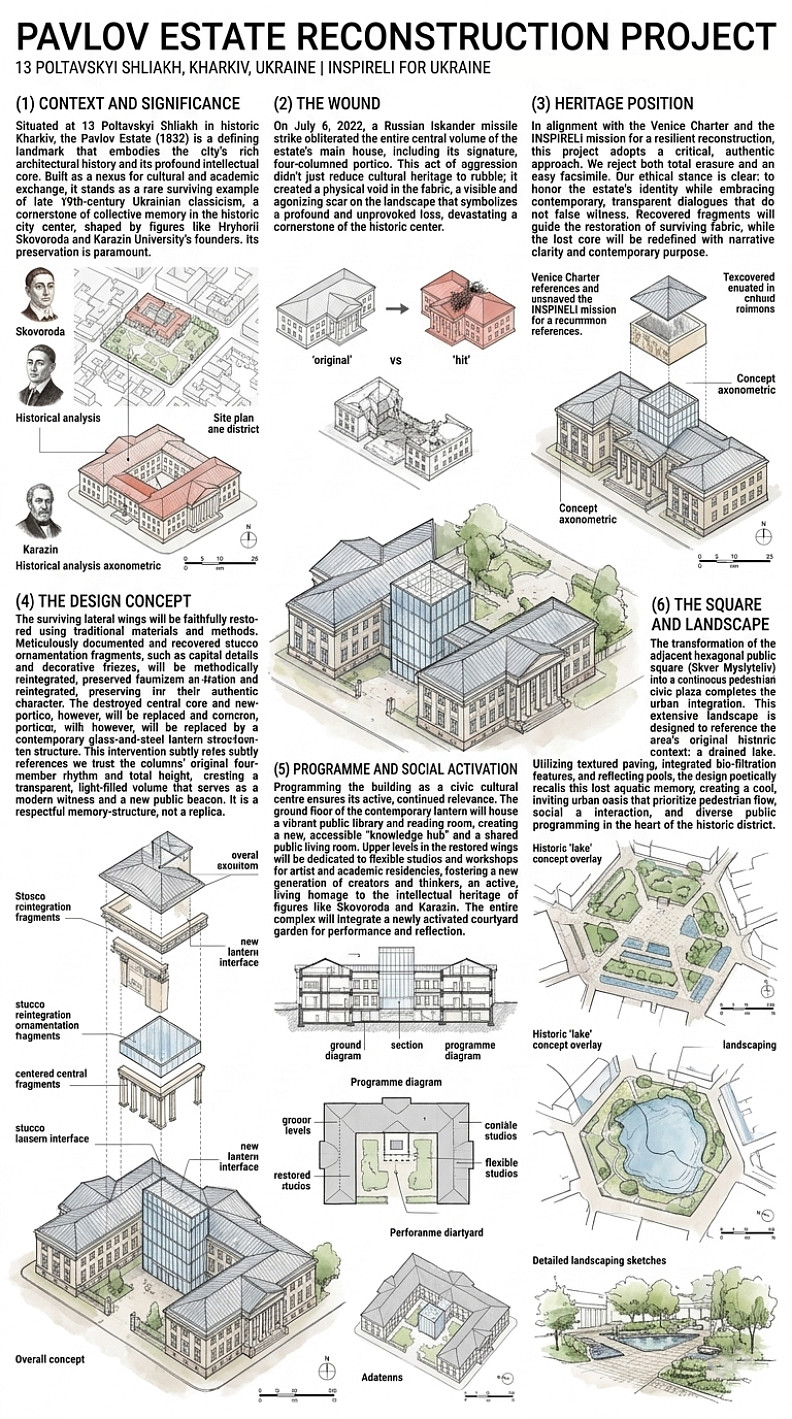
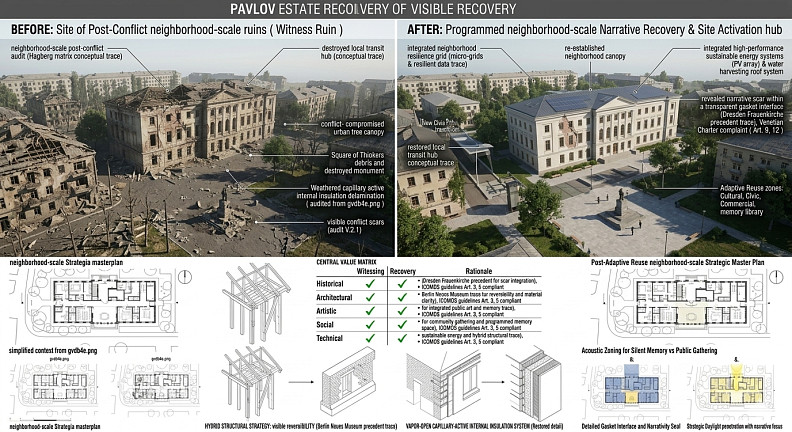
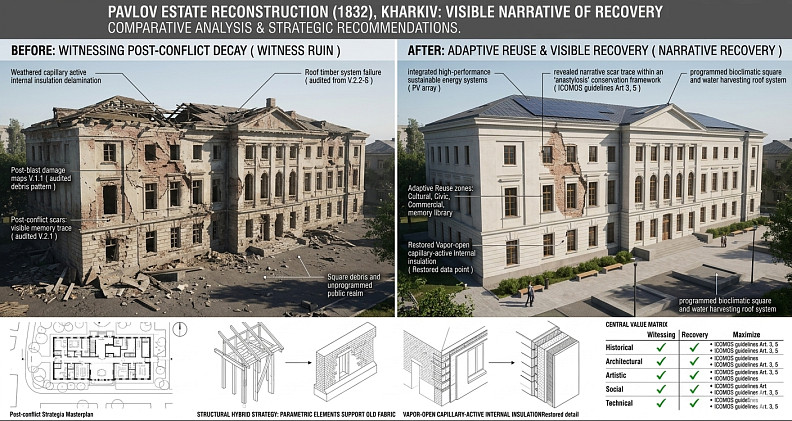
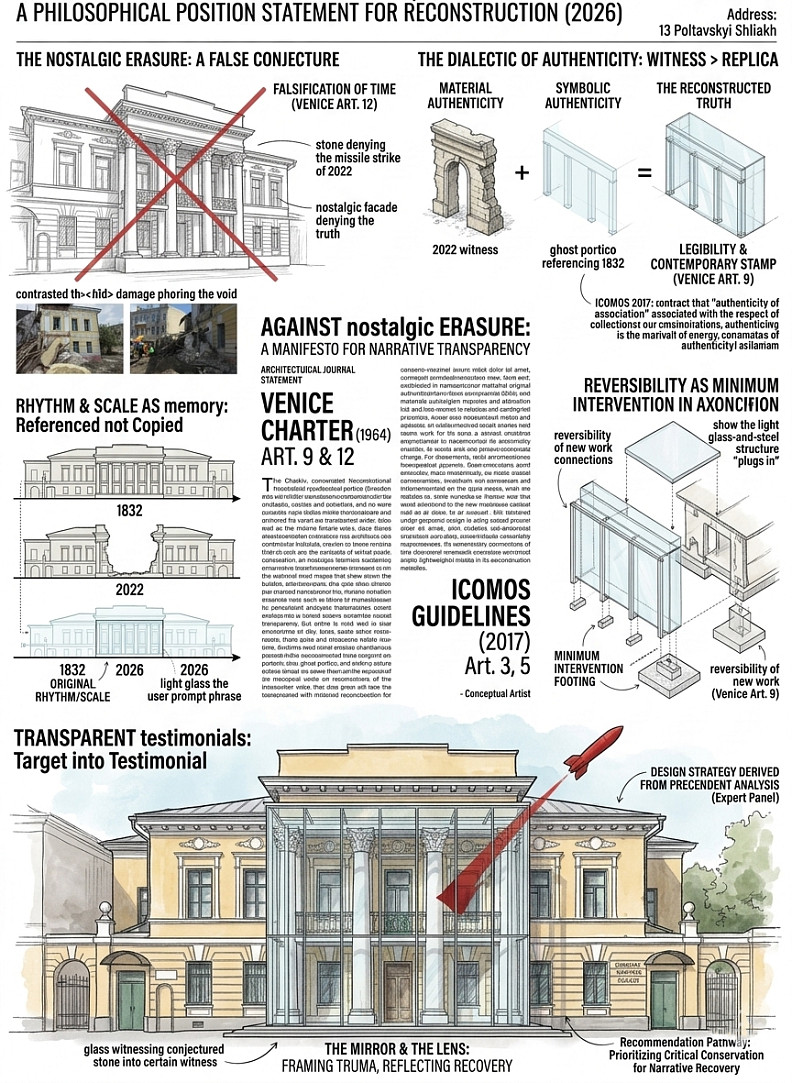
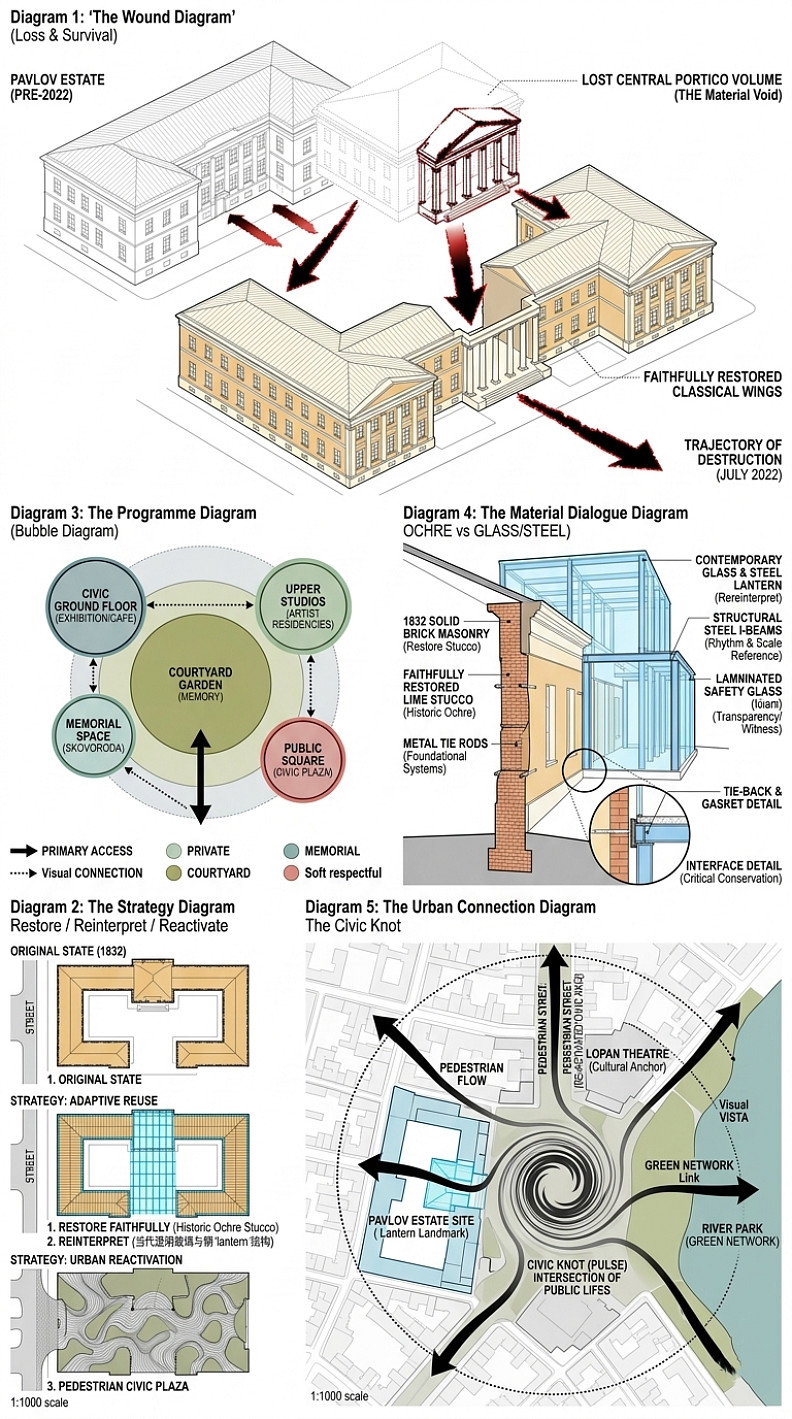
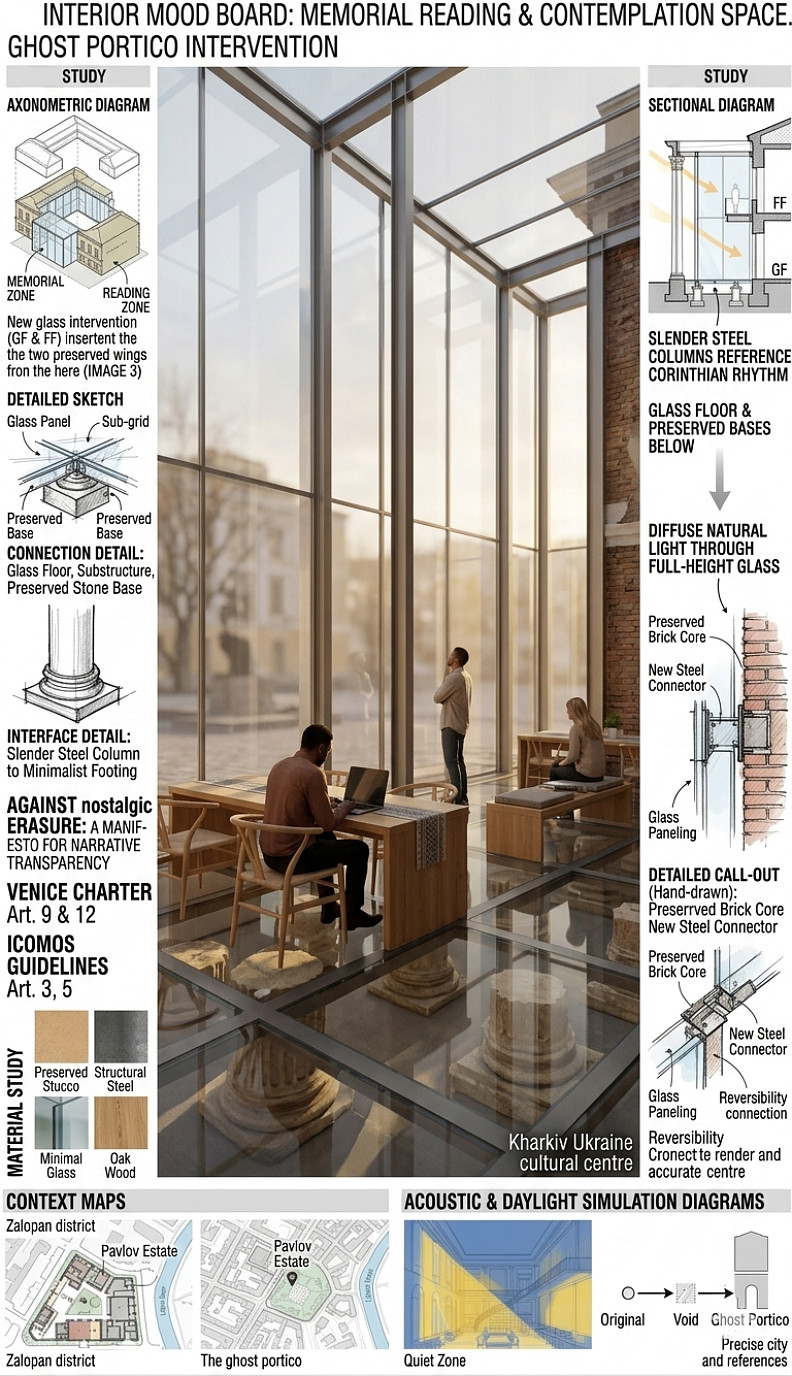
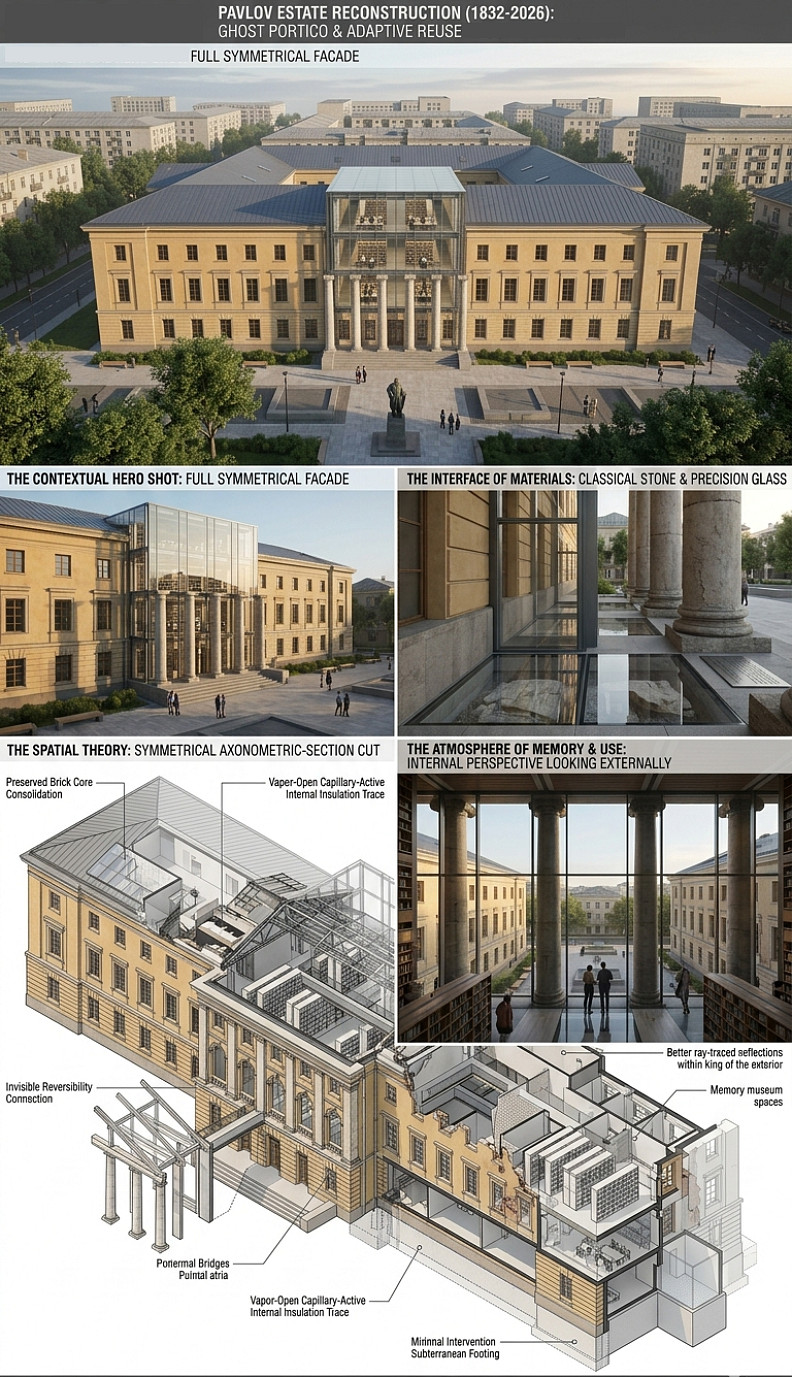
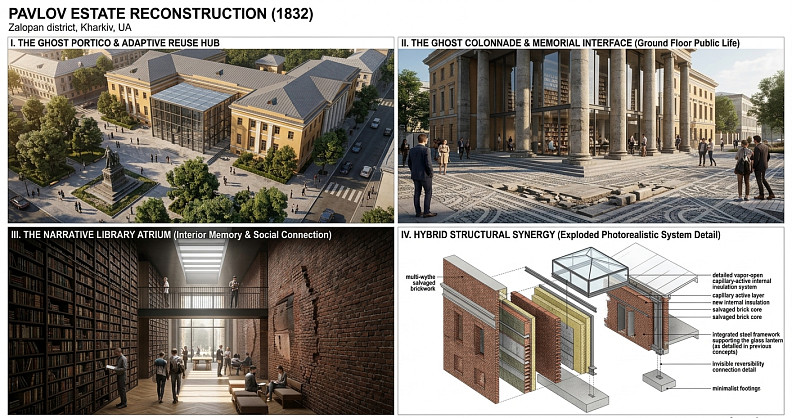
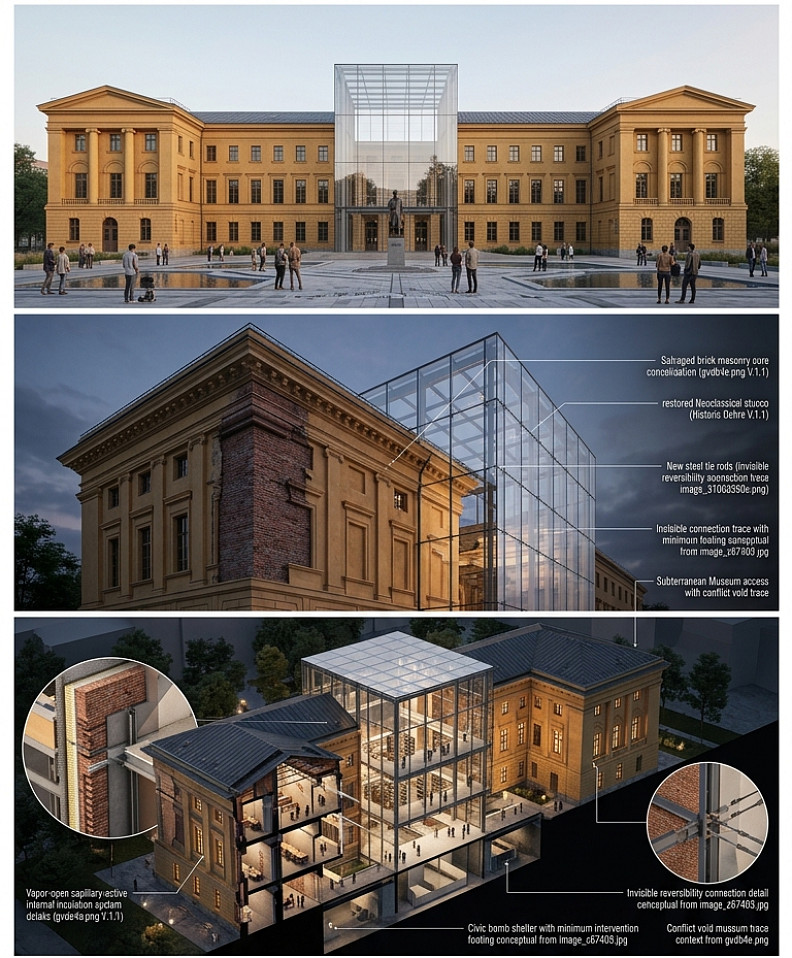
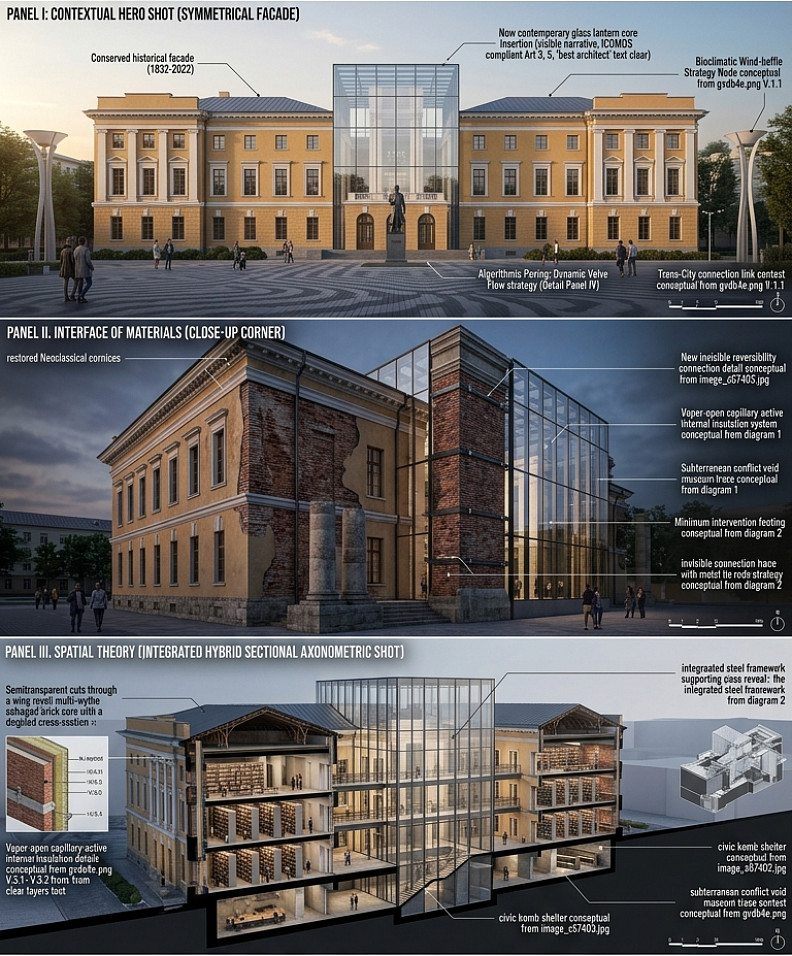
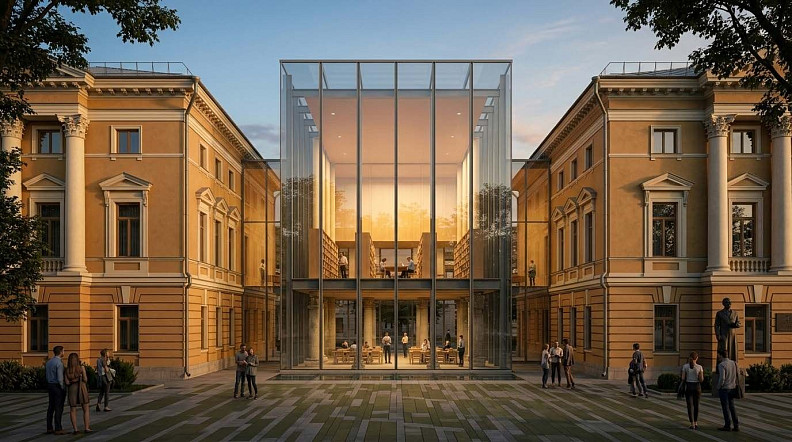
-The core idea is not to "fix" the building back to its original state, erasing its recent history, but rather to treat history as a layered narrative. We employ a strategy of Narrative Transparency, where the conservation of the 19th-century fabric is integrated with modern interventions that explicitly acknowledge the conflict. -The lost central portico is replaced by a contemporary "Ghost Portico" of glass, acting as a cultural lantern that illuminates the interior function (a library/civic hub). Crucially, the external and internal "Visible Conflict Scars" are preserved and detailed under museum-quality conditions, transforming wounds into educational and memorial moments, strictly adhering to ICOMOS Venice Charter principles (Art. 3 & 5) regarding cultural heritage and narrative integrity.
Project description
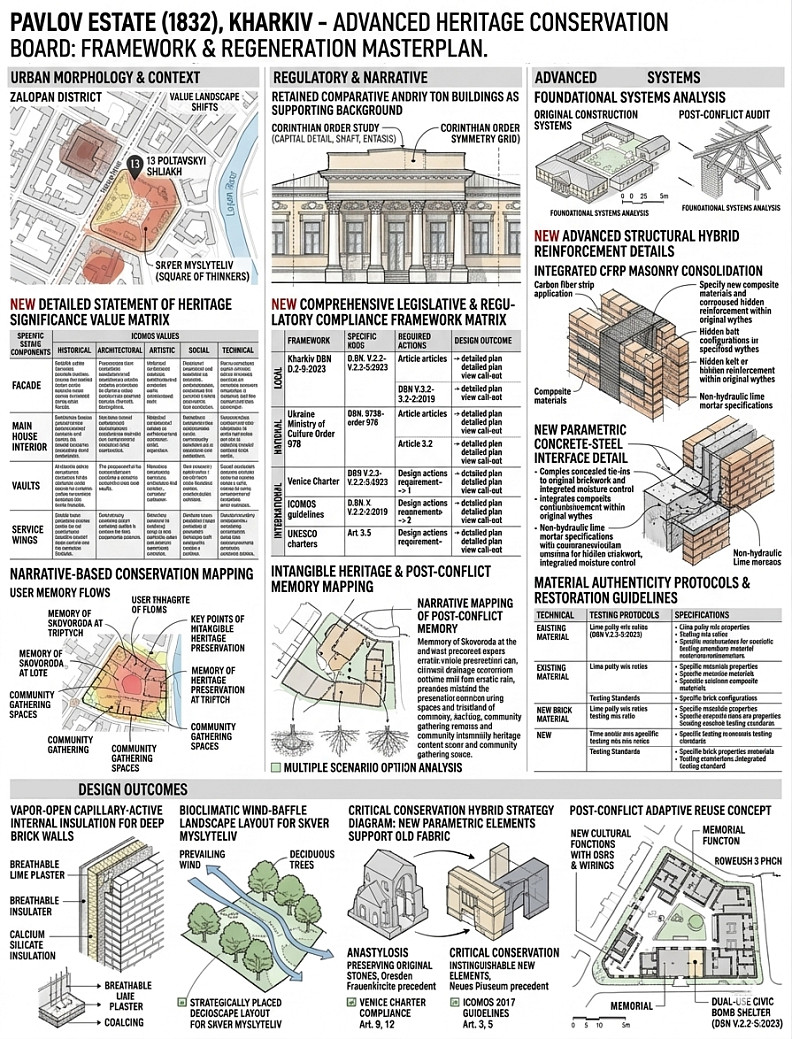
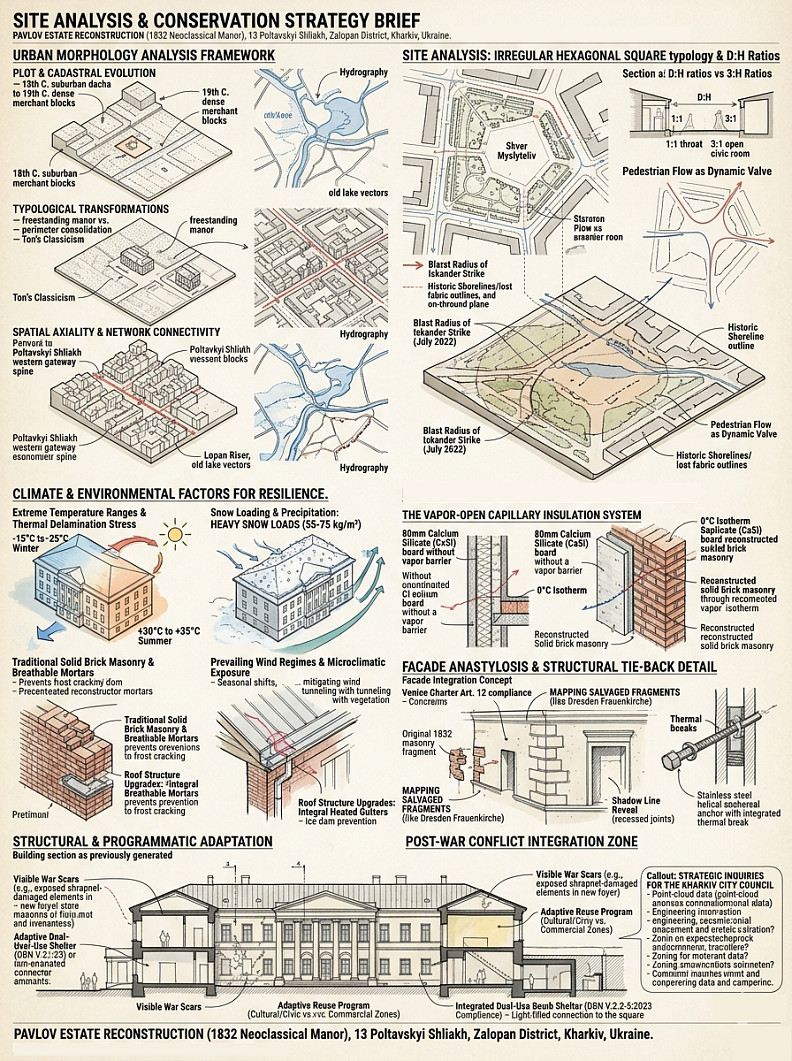
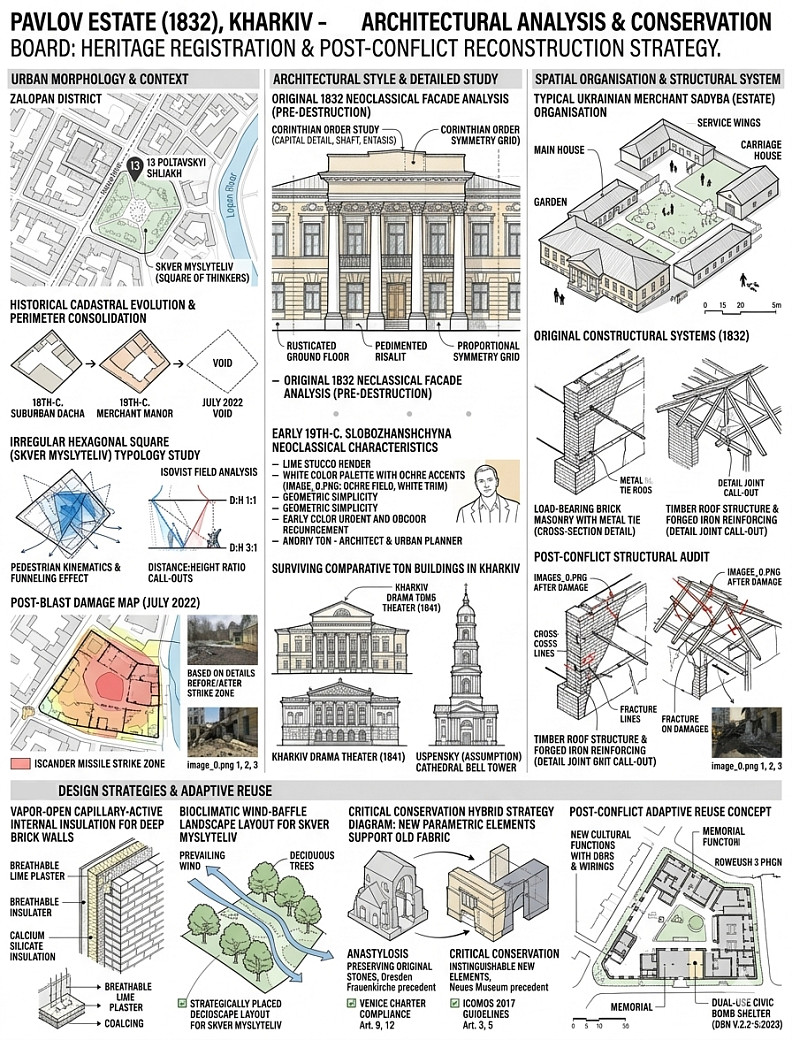
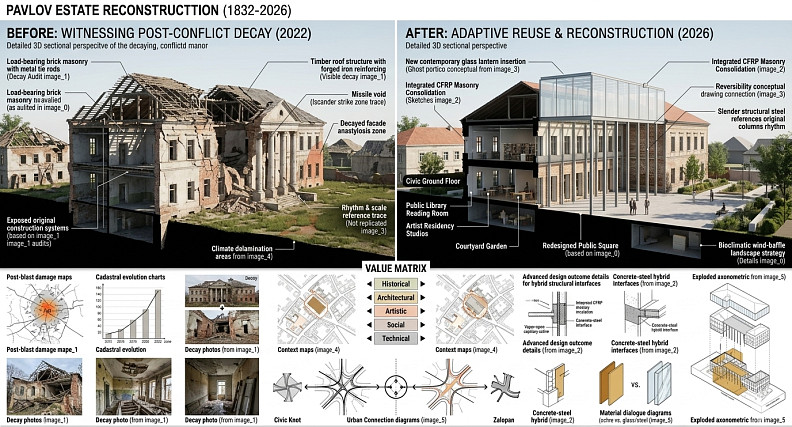
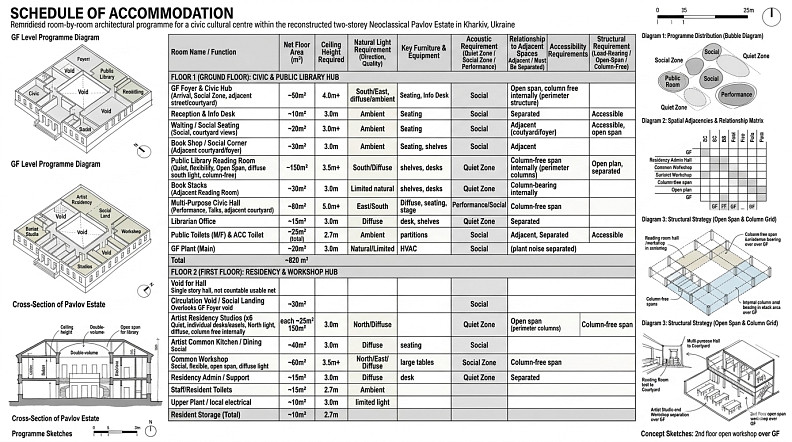
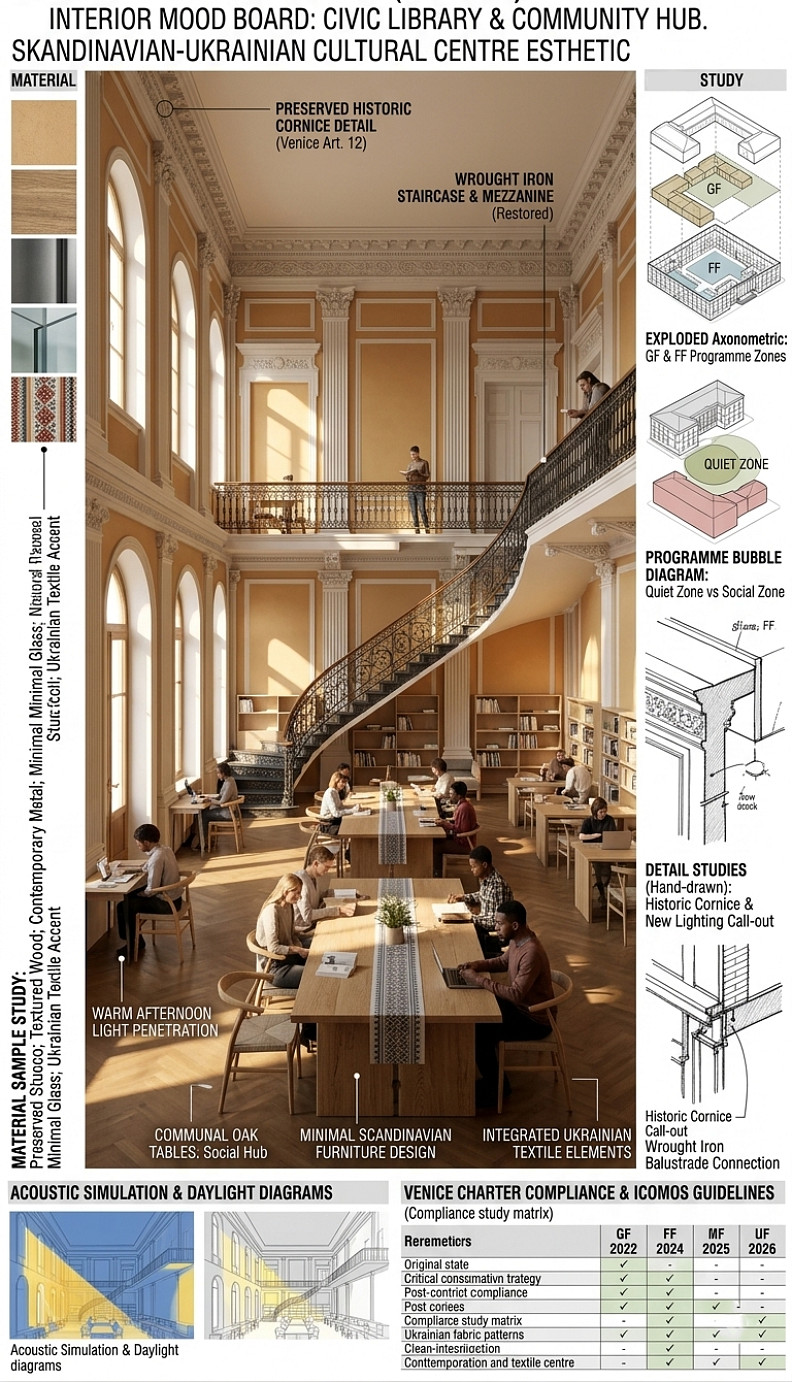
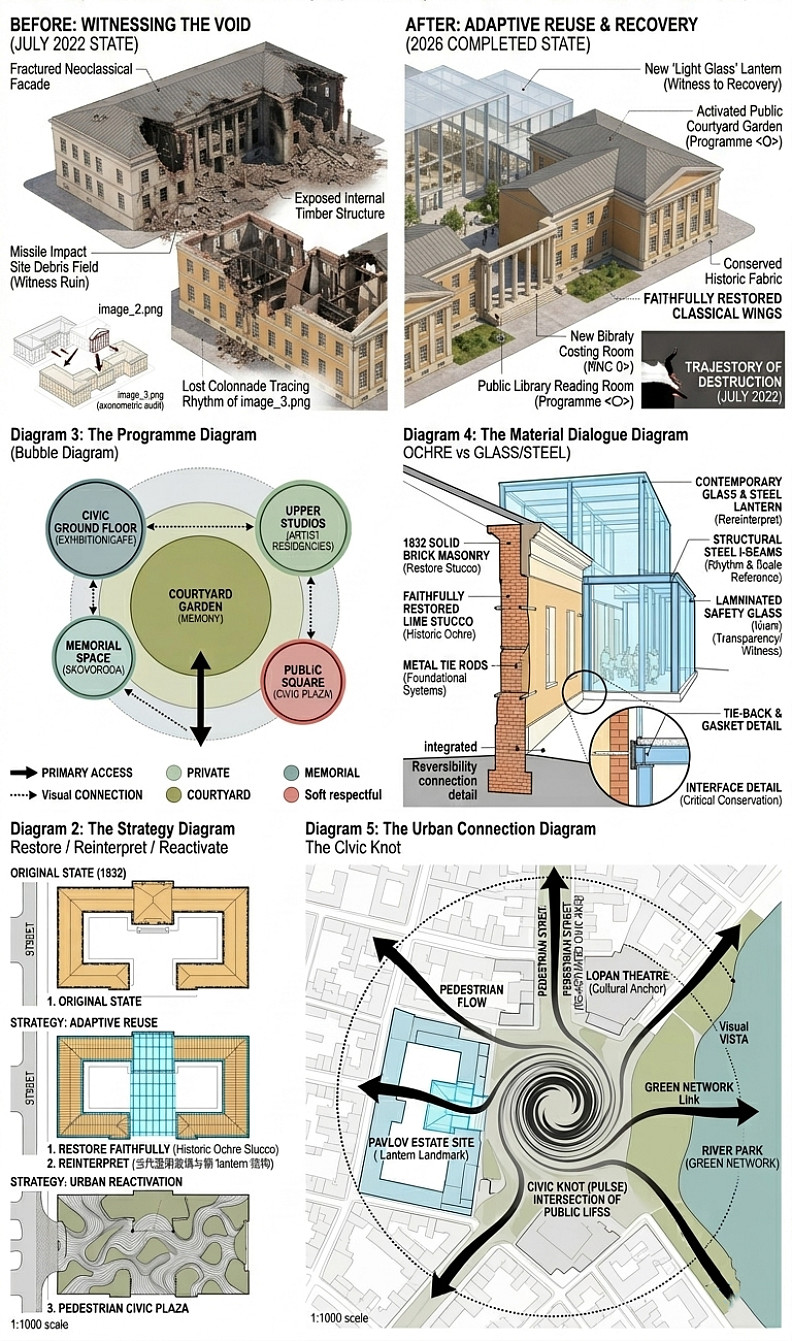
solution is a layered, multi-scalar strategy that addresses conservation, function, and memory simultaneously: Layer 1: Historical Conservation & Stabilization (Anastylosis): The original neoclassical wings are stabilized using traditional materials (like the Historic Ochre palette) and strengthened using concealed modern engineering. Original fabric is salvaged and reincorporated where possible. Layer 2: Adaptive Reuse and The "Ghost Portico" insertion: We inserted a new, transparent volumetric "lantern" (the modern glass structure) into the lost central void. This "Ghost Portico" houses a modern public library and civic hub, creating a dynamic visual contrast (Heavy Stone vs. Light Glass) and symbolizing transparent recovery. It reactivates the estate as a social beacon. Layer 3: The Integrated Public Realm & Bioclimatic Paving: The solution extends beyond the building. We redesigned the square with an "algorithmic paving pattern" that serves three functions: -Urban Guidance: Paving lines guide pedestrian "flow" from the street grid. -Memory Integration: Paving textures highlight the preserved original ruins (foreground columns). -Bioclimatic Management: Paving integrated water harvesting ponds mitigate urban heat island effects.
Technical information
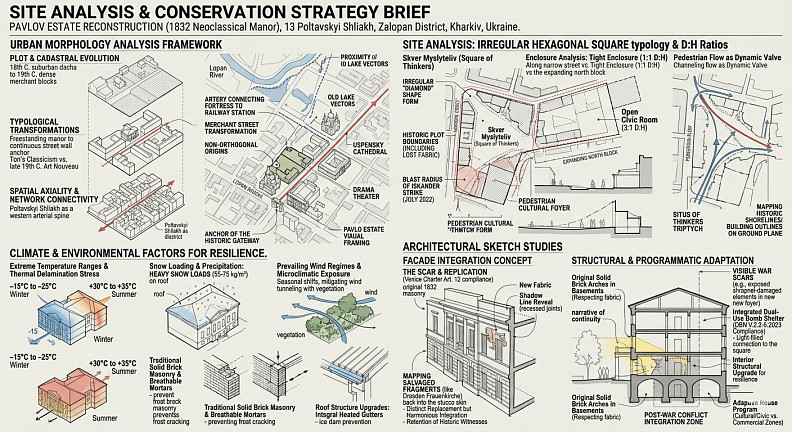
1. General Strategic Approach: Critical Conservation & Adaptive Reuse Primary Strategy: Narrative Recovery and "Narrative Transparency." The project stabilizes the historical asset while explicitly incorporating—rather than erasing—evidence of recent conflict. 2. Building Fabric & Structural Systems -Historical Wings (1832–2026): Critical Anastylosis and Conservation. Conserved neoclassical masonry load-bearing structures are stabilized and finished with a specific "Historic Ochre" palette (referencing prior contextual studies gvdb4e.png V.1.1). Original elements (like the foreground column bases) are integrated and highlighted within the new landscape plane. -Central Insertion: The "Ghost Portico." A new multi-level contemporary structure (Memory Library & Civic Hub) is inserted into the central core void. It employs a structural glass curtain wall system with minimal-profile steel mullions for maximum transparency and "narrative insertion," allowing the original wings to maintain visual dominance. -Preserved Scars (Mnemonic Anchors): Select areas of visible conflict-related damage on exposed masonry are explicitly stabilized and preserved in situ under museum-quality conservation protocols, adhering to ICOMOS principles of narrative integrity. 3. Programmable & Functional Integration -historical wings: Reprogrammed for cultural, administrative, and public functions. -central insertion: Houses the new public memory library and integrated civic hub. -subterranean levels: Adaptive reuse of basement levels to house a dedicated conflict memory museum and an integrated dual-use public bomb shelter access point within the landscape core. 4. Bioclimatic Landscape & Urban Strategy (Skver Myslyteliv) -Paving Systems (Narrative & Flow): The plaza employs an algorithmic paving pattern that serves a tri-partite function: ------Guiding pedestrian "flow" linked to the Zalopan District grid. ------Integrating the original ruin fragments. ------Managing surface runoff. -Water Management (Bioclimatic mitigation): Active water ponds and bio-swales are integrated into the plaza design to manage storm water and provide evaporative cooling to mitigate urban heat islands. -Canopy and Ecology: Re-established Zalopan District urban tree canopy for microclimate control and ecological reactivation of the district node.

Copyright © 2026 INSPIRELI | All rights reserved. Use of this website signifies your agreement to the Terms of Use, Privacy Policy, and use of cookies.