THE NET MARGIN
Project idea
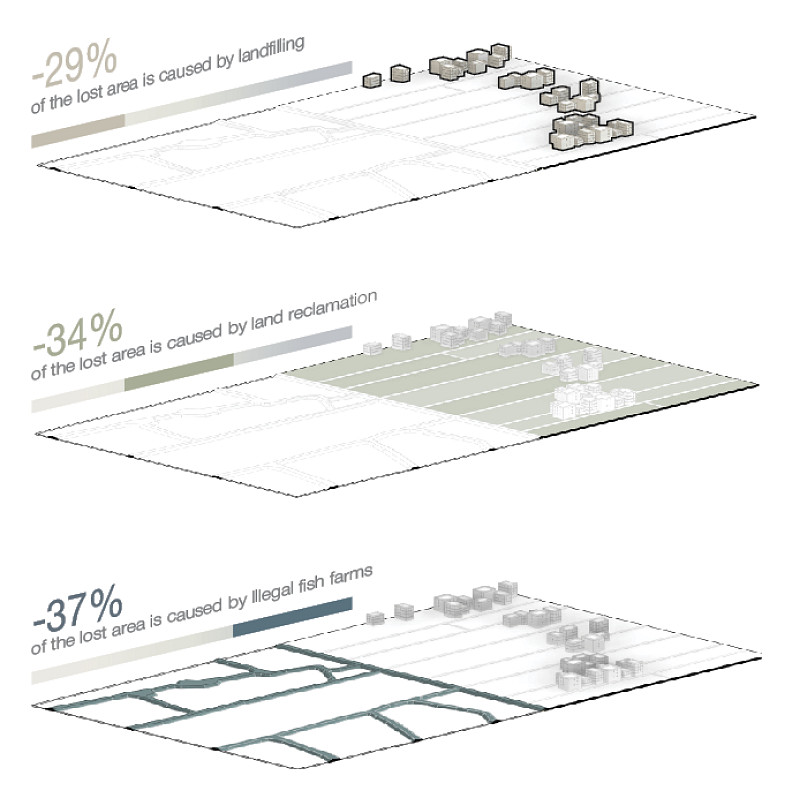
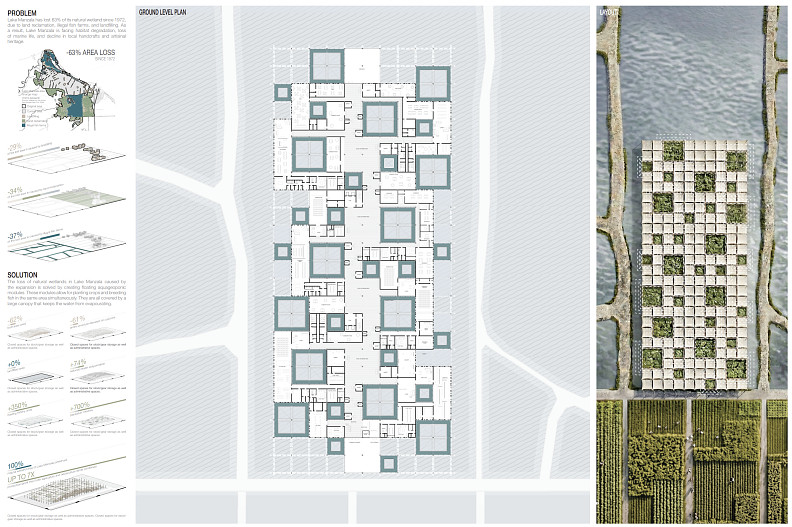
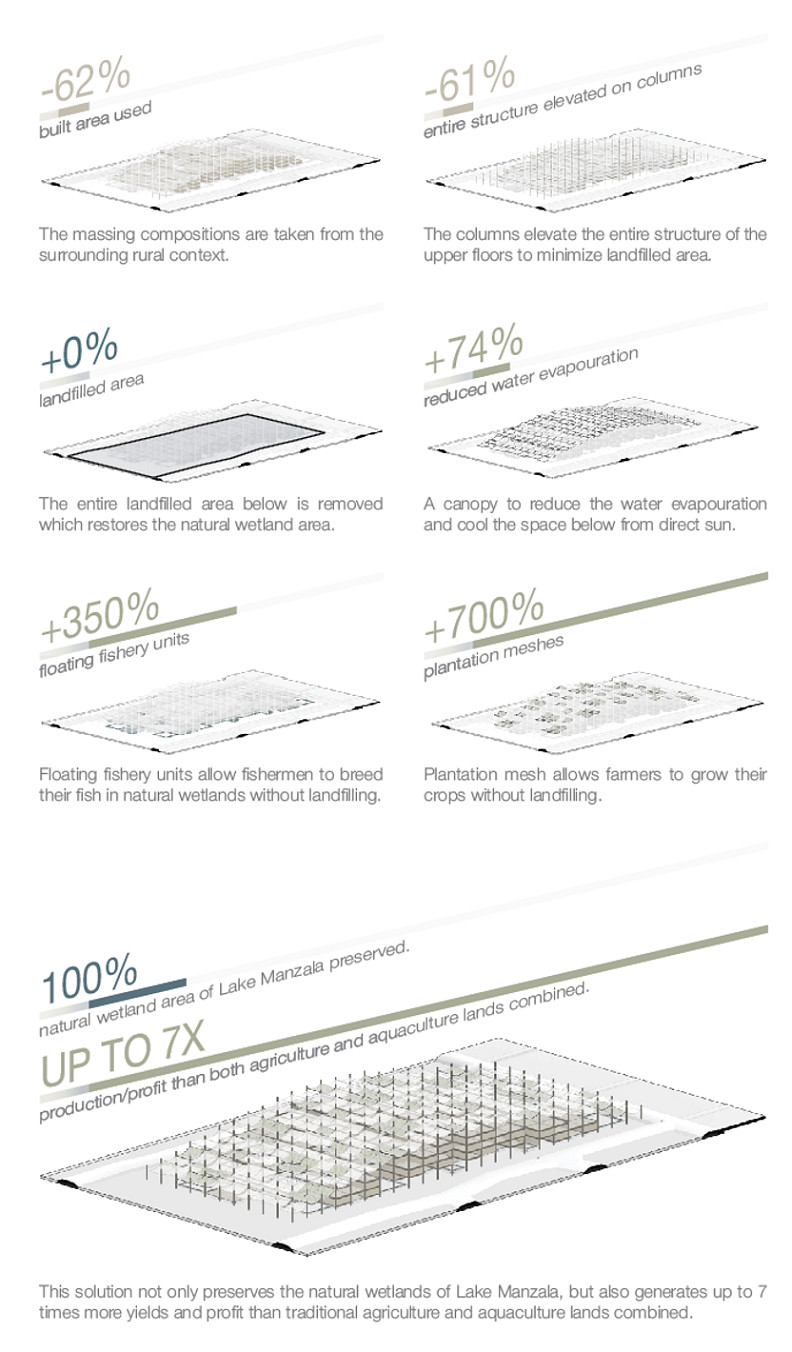
Historically, Lake Manzala has been a vital biodiversity habitat for aquatic life. Home to over 150,000 fishermen, Lake Manzala has been the primary source of livelihood for the local community. In recent years, Lake Manzala has faced major environmental challenges caused by anthropogenic influences. Lake Manzala has lost 63% of its natural wetland since 1972, due to land reclamation, illegal fish farms, and landfilling. As a result, Lake Manzala is facing habitat degradation, loss of marine life, and decline in local handcrafts and artisanal heritage. The loss of natural wetlands in Lake Manzala caused by the expansion is solved by creating floating aquageoponic modules. These modules allow for planting crops and breeding fish in the same area simultaneously. They are all covered by a large canopy that keeps the water from evapourating.
Project description
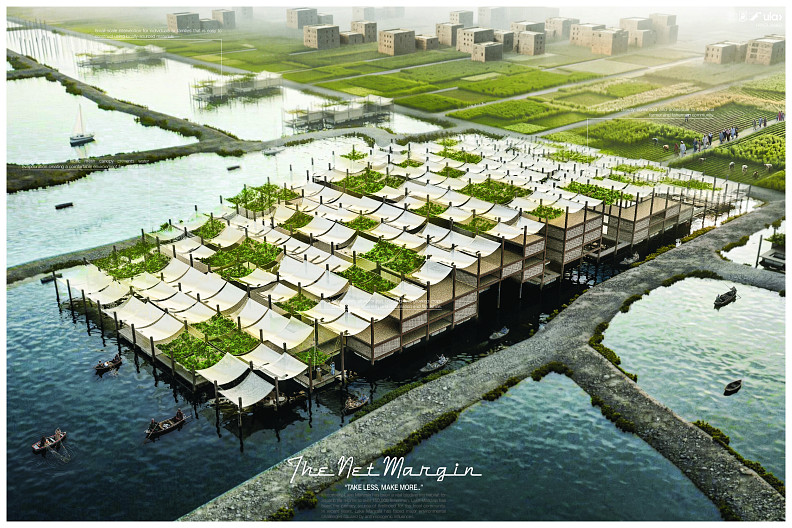
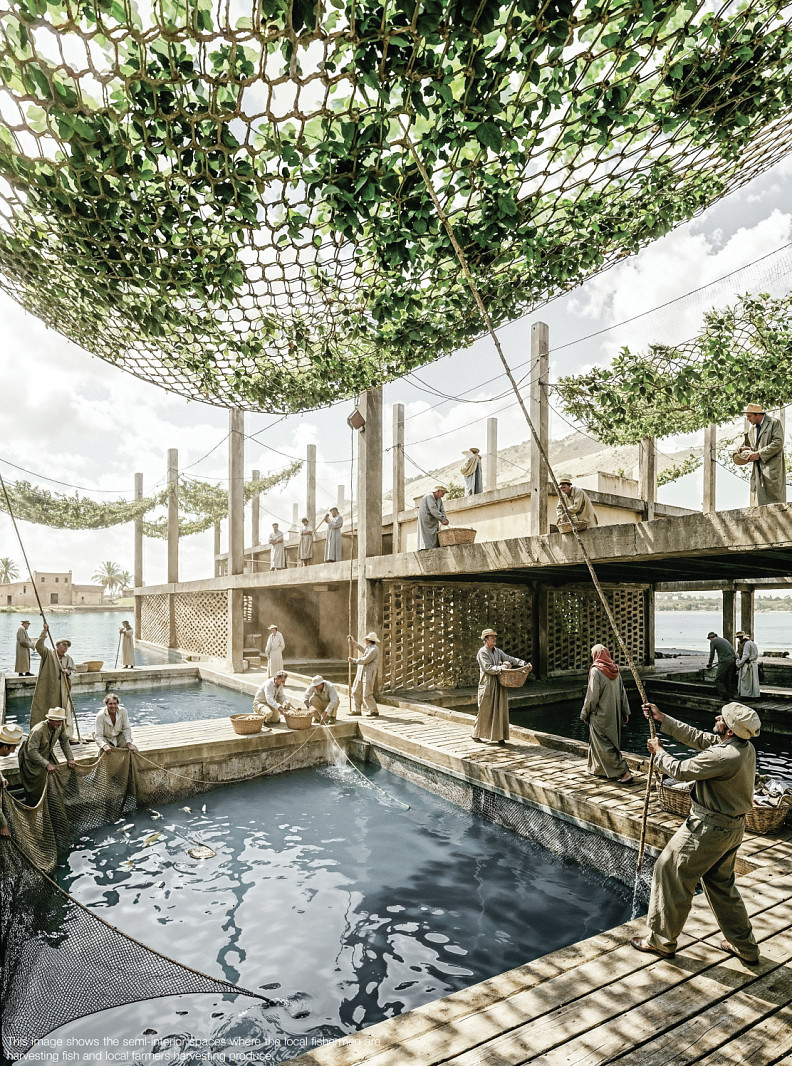
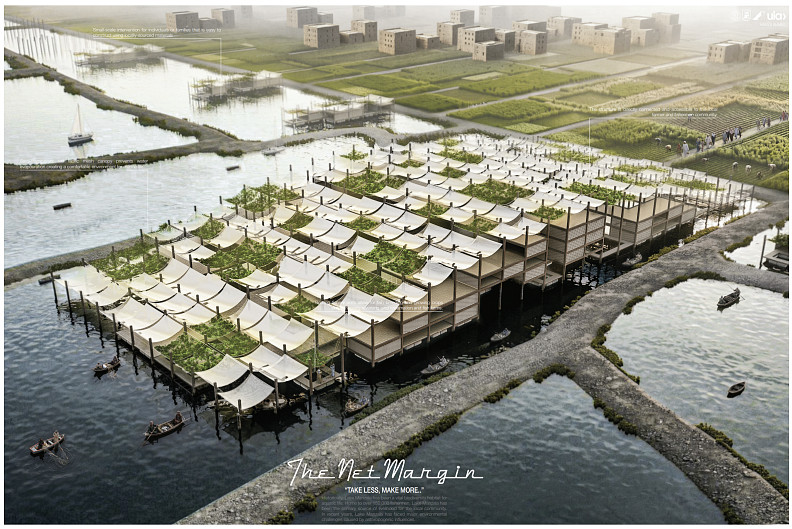
The loss of natural wetlands in Lake Manzala caused by the expansion is solved by creating floating aquageoponic modules. These modules allow for planting crops and breeding fish in the same area simultaneously. They are all covered by a large canopy that keeps the water from evaporating.
Technical information
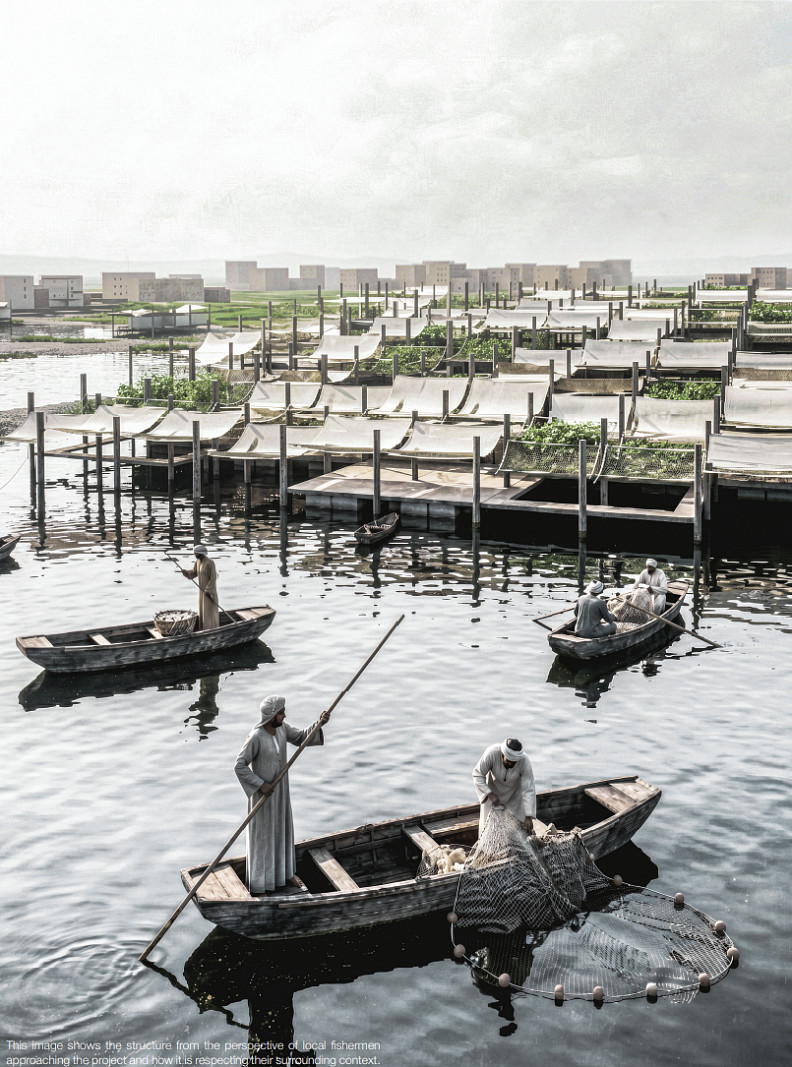
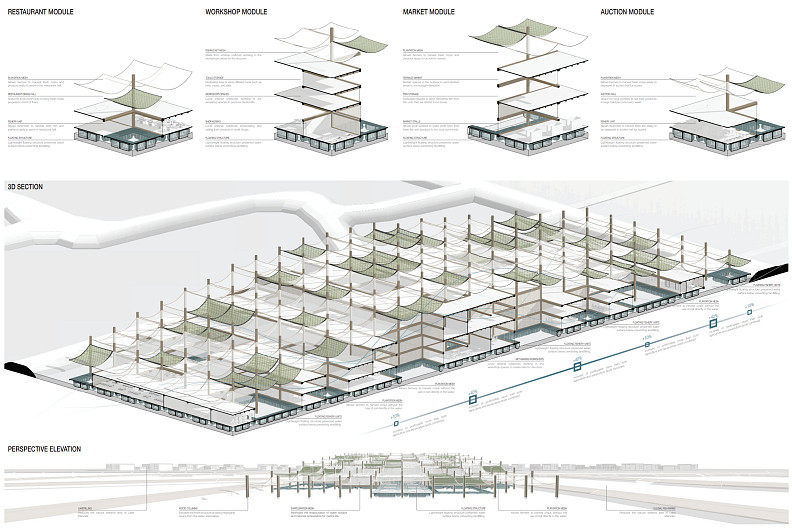
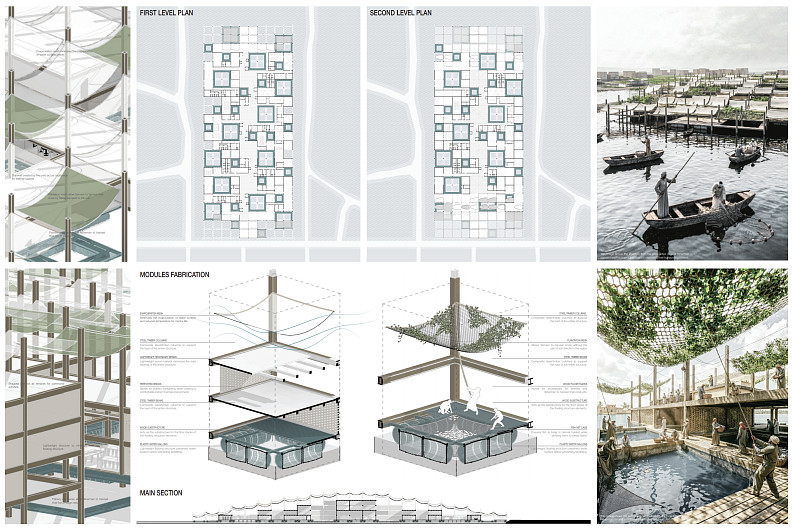
The massing compositions are taken from the surrounding rural context. The columns elevate the entire structure of the upper floors to minimize the landfilled area. The entire landfilled area below is removed which restores the natural wetland area. A canopy to reduce the water evaporation and cool the space below from direct sun. Floating fishery units allow fishermen to breed their fish in natural wetlands without landfilling. Plantation mesh allows farmers to grow their crops without landfilling.
Hamza Ahmed
Cairo University, Faculty of Engineering Architecture Department.
Egypt
Architecture
Project submitted
13. 06. 2026Tag
- Cultural Center
- Gallery
- Hall/Theatre
- Memorial
- Observation Tower
- Pavillion
- Religious
- Scuplture

Copyright © 2026 INSPIRELI | All rights reserved. Use of this website signifies your agreement to the Terms of Use, Privacy Policy, and use of cookies.