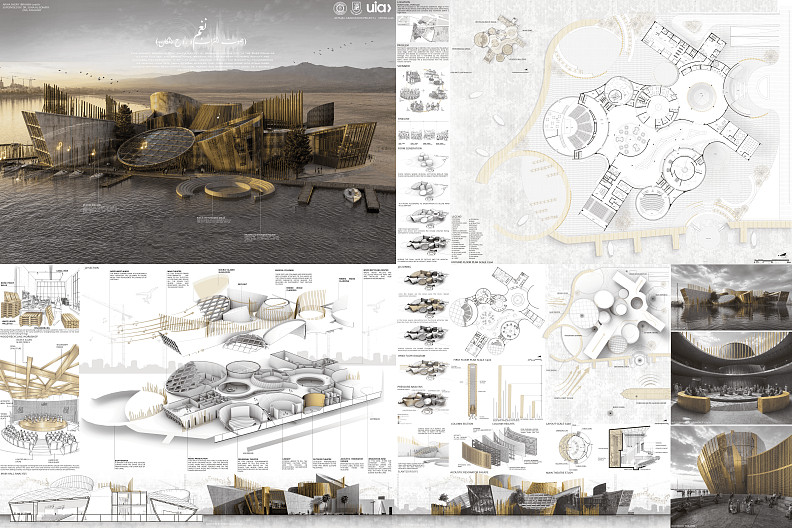
Nagham
Project idea
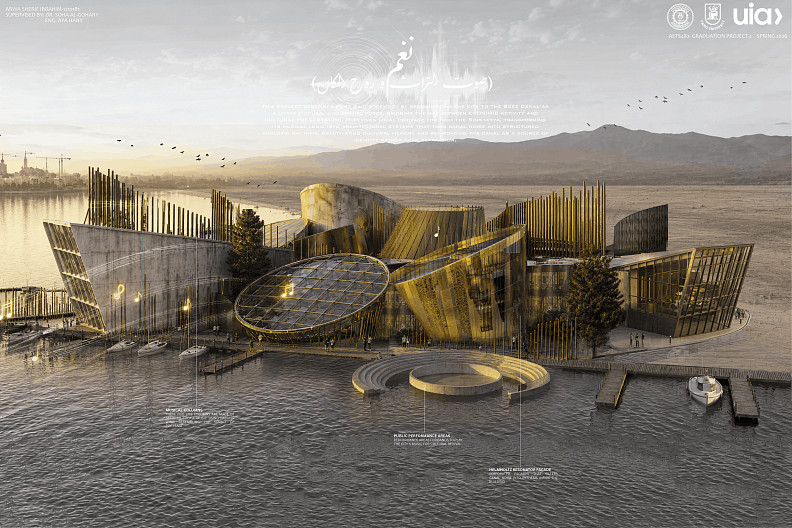
Reviving the Sound of Port Said Port Said is a city shaped by sound. From the rhythms of its harbor to the melodies of the Simsimiyya, music has long been embedded within its cultural identity. Today, however, this heritage is gradually disappearing, threatened by urban transformation and the loss of cultural engagement among younger generations. This project reimagines architecture as a tool for cultural preservation by transforming a Cultural Center into a living musical instrument. Rather than simply housing performances and exhibitions, the building actively generates a sensory experience inspired by the sounds of the city itself. The architectural concept is derived from rhythm, resonance, and acoustic transformation. A system of vertical columns and sound-responsive façades interacts with the surrounding urban environment, filtering and absorbing selected noise frequencies. Through carefully designed acoustic elements, unwanted noise is transformed into rhythmic sound patterns that travel through the building, creating an ever-changing composition generated by the city. In this way, the architecture performs. The building listens to Port Said, interprets its sounds, and translates them into spatial and auditory experiences. Visitors do not merely observe cultural heritage they become immersed within it. Inspired by the Simsimiyya, a symbol of Port Said's collective memory, the project establishes a dialogue between tradition and innovation. It demonstrates how architecture can preserve intangible heritage not through replication, but through transformation, allowing culture to evolve while remaining rooted in its origins. The Cultural Center becomes more than a destination; it becomes an instrument that amplifies the voice of the city. By converting urban noise into rhythm and experience, the project revives the spirit of Port Said and reintroduces its musical identity to future generations through architecture, sound, and participation.
Project description
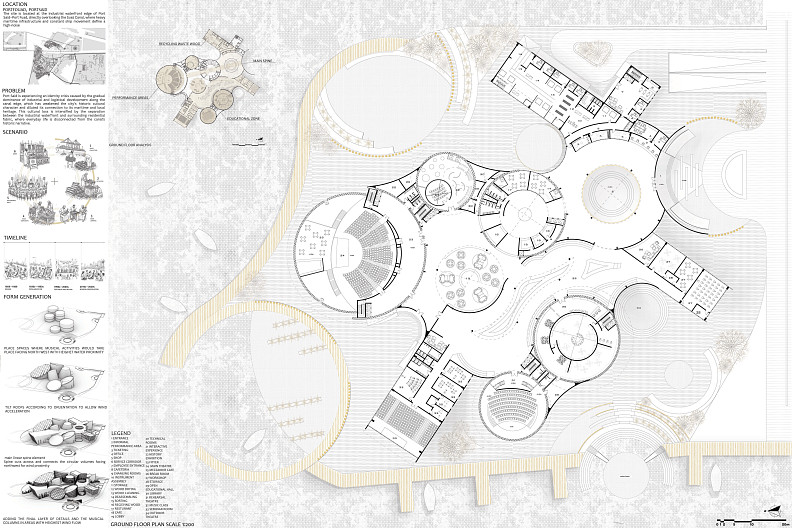
The project addresses the gradual loss of Port Said's musical heritage, particularly the cultural significance of Simsimiyya music, by creating a contemporary Cultural Center that combines preservation, education, performance, and innovation within a single architectural framework. The proposed solution extends beyond the provision of cultural facilities. It transforms architecture itself into an active medium for cultural expression. Through a system of acoustic façades, resonant columns, and sound-responsive spaces, the building captures and filters selected frequencies from the surrounding urban environment, converting noise into rhythmic acoustic experiences inspired by the principles of music. The project includes performance venues, exhibition galleries, educational spaces, rehearsal studios, workshops, archives, and public gathering areas designed to support artists, musicians, students, researchers, and the wider community. These spaces provide opportunities for learning, cultural exchange, artistic production, and public engagement. By integrating sound into the architectural experience, the Cultural Center creates a unique environment where visitors can interact with the heritage of Port Said through both physical and sensory experiences. The project seeks to reconnect younger generations with local traditions while presenting cultural heritage in a contemporary and engaging way. On an urban scale, the building acts as a cultural landmark that strengthens community identity and revitalizes the relationship between the city and its musical legacy. The project demonstrates how architecture can contribute to the preservation of intangible cultural heritage by transforming the sounds of the city into a living expression of culture, memory, and place.
Technical information
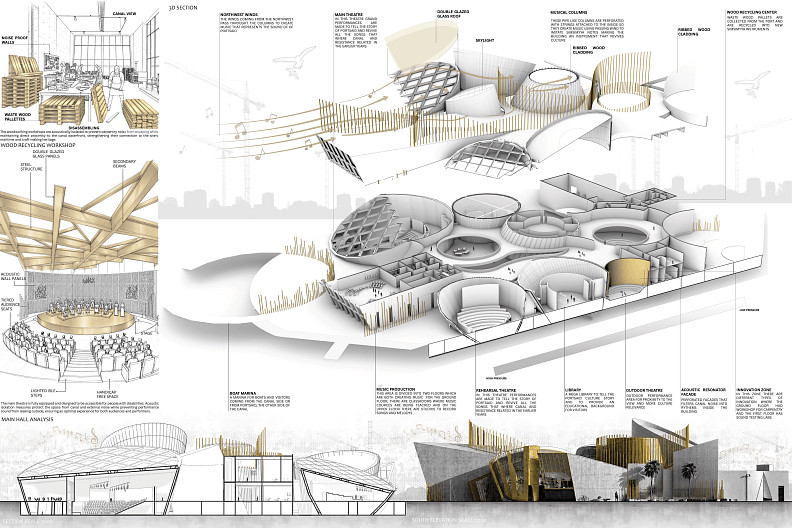
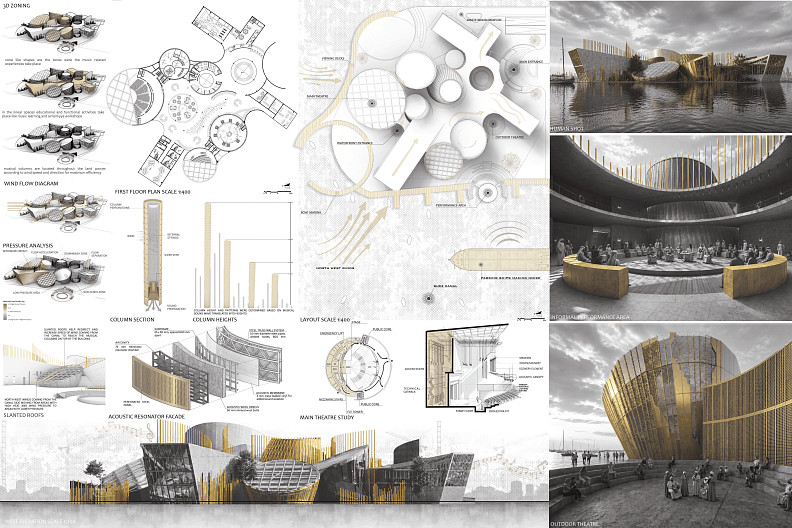
The project is designed as a contemporary cultural center that merges architecture, acoustics, and environmental performance to revive the musical heritage of Port Said through an immersive spatial experience. The primary structural system consists of load-bearing truss walls that provide both structural stability and architectural expression. This system enables the creation of large, flexible interior spaces suitable for cultural activities, exhibitions, workshops, and public gatherings. The theater spaces utilize long-span steel roof structures to support large glass roof elements, allowing natural daylight to penetrate the interior while maintaining unobstructed performance spaces. A key technological feature of the project is its acoustic building envelope. The façade incorporates a system of Helmholtz resonator modules specifically designed to absorb selected noise frequencies from the surrounding urban environment. These acoustic elements filter unwanted sounds while contributing to a controlled auditory atmosphere within the building. The architectural concept transforms the building into a large-scale musical instrument. The building is oriented toward the north-west to maximize the capture of prevailing winds. As air moves through the vertical resonant columns, it generates sound and rhythmic acoustic effects that reference the musical traditions of Port Said. The columns act as architectural sound devices, converting natural airflow into a sensory experience that reinforces the project's cultural narrative. To enhance this phenomenon, a series of inclined roof planes are strategically positioned to accelerate, redirect, and channel wind movement throughout the site. These aerodynamic forms improve natural ventilation while increasing airflow through the acoustic columns, strengthening the interaction between wind, sound, and architecture. Environmental performance is achieved through passive design strategies including natural ventilation, daylight optimization, solar control, and acoustic regulation. The combination of wind-responsive architecture, acoustic façade technology, and sustainable environmental design reduces dependence on mechanical systems while enhancing user comfort. Through the integration of structural innovation, acoustic engineering, and climate-responsive design, the project creates a contemporary cultural landmark that transforms the sounds and winds of Port Said into a living expression of its musical heritage.

Copyright © 2026 INSPIRELI | All rights reserved. Use of this website signifies your agreement to the Terms of Use, Privacy Policy, and use of cookies.