Bio-Mass
Project idea
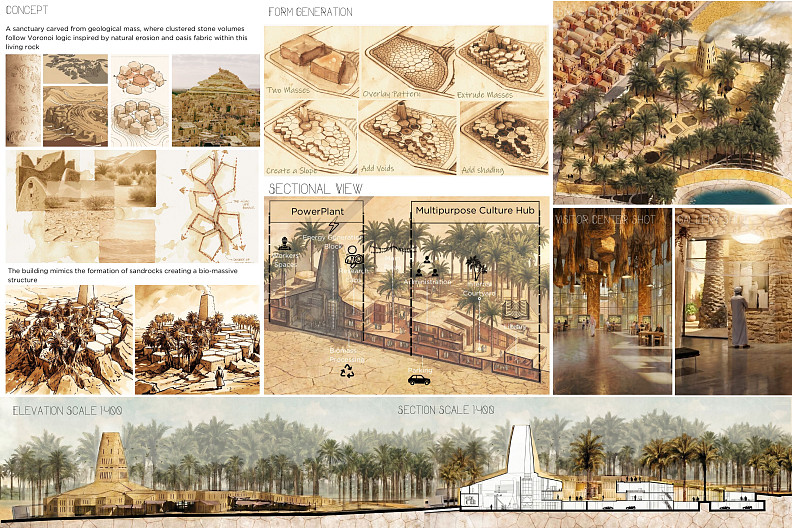
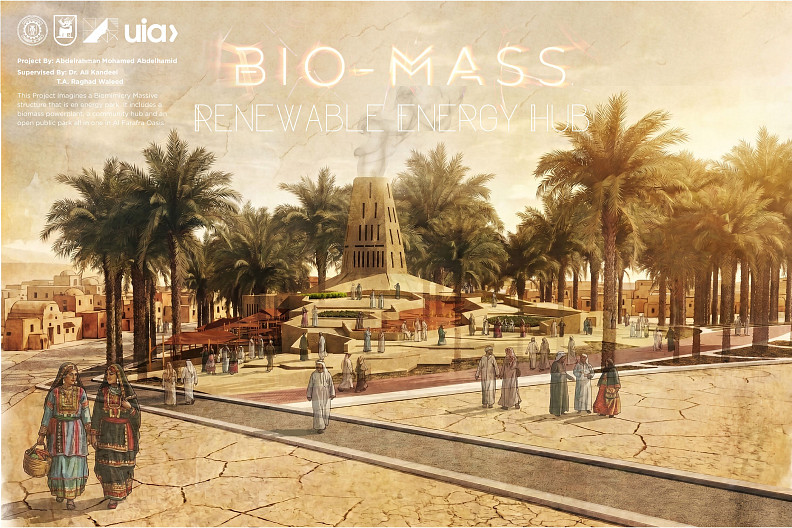
BIO-MASS is a renewable energy hub located in Al Farafra Oasis, Egypt. The project addresses the environmental and infrastructural challenges faced by remote desert communities, where agricultural waste is frequently burned despite its significant energy potential. By transforming crop residues and palm waste into renewable energy, the project establishes a circular system that converts waste into a valuable resource. Beyond energy production, BIO-MASS creates a public destination that combines research, education, culture, and recreation. The architecture draws inspiration from the geological formations of the Western Desert, creating a biomimetic "bio-massive" structure that emerges from the landscape and reflects the natural processes of erosion, growth, and regeneration.
Project description
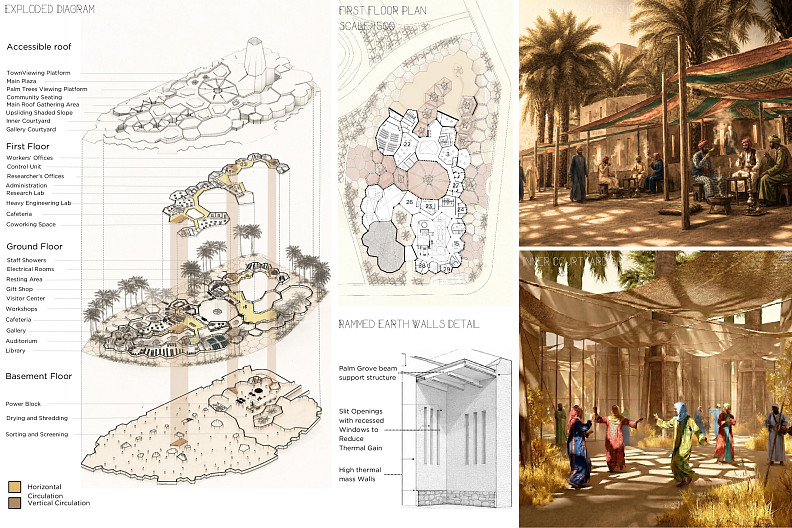
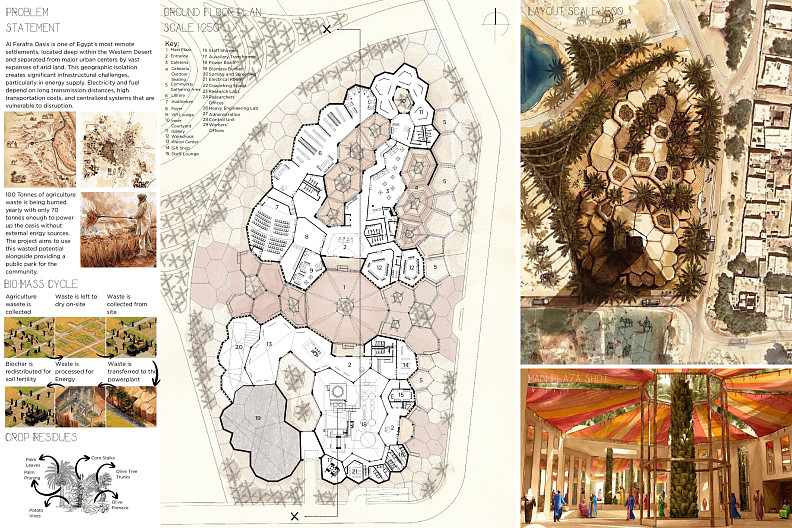
BIO-MASS is a multifunctional complex that integrates a biomass power plant, agricultural research facilities, a community hub, and a public energy park into a single destination. The project includes: Biomass collection, sorting, screening, drying, and shredding facilities. Renewable energy generation and power block operations. Agricultural and environmental research laboratories. Heavy engineering laboratories and innovation spaces. Administrative and operational facilities. A public cultural hub containing a library, gallery, auditorium, workshops, coworking spaces, and visitor center. Cafeterias, gathering spaces, courtyards, viewing platforms, and public parks. The project follows a circular biomass cycle in which agricultural waste is collected, dried, processed into energy, and converted into biochar that is redistributed to improve soil fertility. Through this system, the project strengthens local energy independence while providing educational, cultural, and economic opportunities for the community.
Technical information
The project is located in Al Farafra Oasis in Egypt's Western Desert. The design is based on a clustered massing strategy inspired by natural erosion patterns, oasis settlements, and Voronoi geometries. The building form mimics the appearance of desert sandstone formations, creating a structure that appears carved from a single geological mass. The architectural and environmental strategies include: High thermal-mass walls to stabilize indoor temperatures. Rammed earth construction inspired by local materials and building traditions. Recessed slit openings that reduce solar heat gain while allowing controlled daylight. Shaded outdoor circulation and gathering spaces. Palm-grove-inspired structural elements. Integrated landscape and courtyard systems that improve microclimatic comfort. The biomass facility utilizes agricultural residues including palm leaves, palm pruning waste, olive pomace, olive tree trunks, corn stalks, and potato vines. The generated energy contributes to reducing dependence on external energy sources while supporting a sustainable circular economy model for the oasis.

Copyright © 2026 INSPIRELI | All rights reserved. Use of this website signifies your agreement to the Terms of Use, Privacy Policy, and use of cookies.