REPI Urban Recreational Center: Tectonic Expression
Project idea
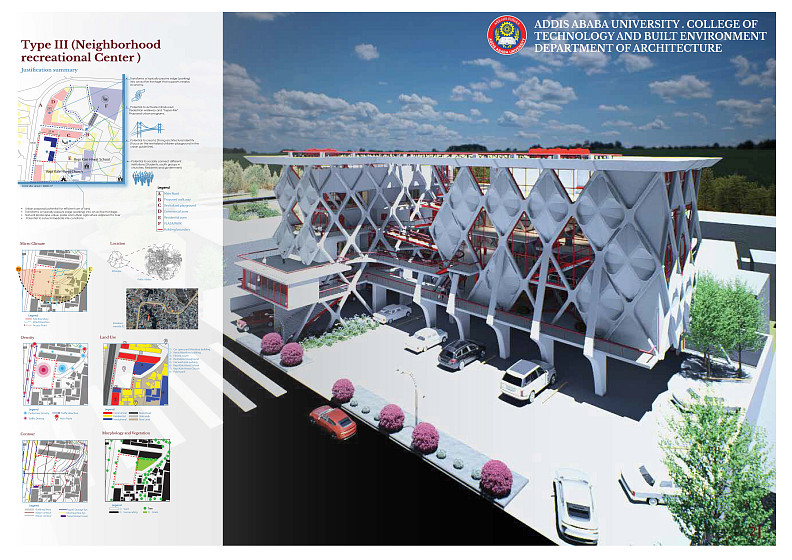
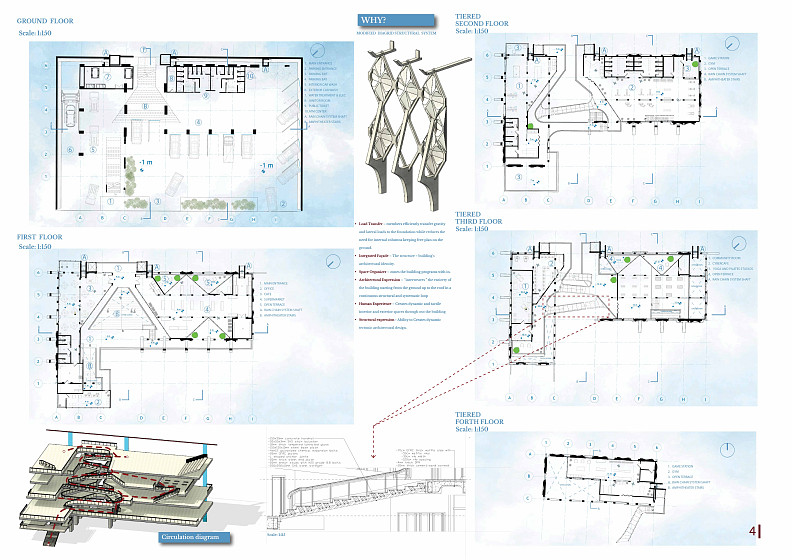
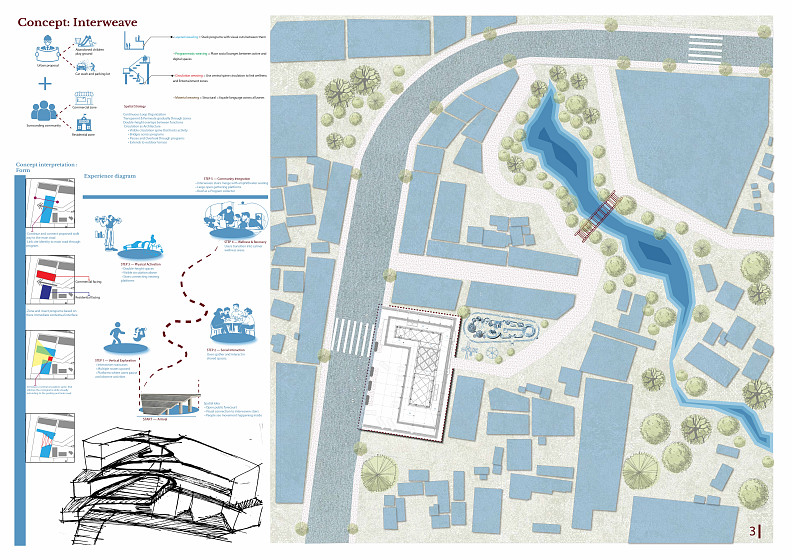
The REPI Urban Recreational Center is a civic building located in Kolfe Keranio - Addis Ababa, Ethiopia. It combines recreation and wellness by “interweaving” social interaction between the residents and commercial centers in the area. In addition, the project also links the grand urban fabric proposals where it serves as a catalyst for development through tectonic expression. The project concept of “interweaving” was implemented through several layers according to the urban development need to be integrated, primarily upgrading parking and car wash land, revitalizing abandoned playground adjacent to the area, continuing proposed river side walk way, and lastly connection the commercial and residential side of the site. To achieve this the project used a continuous modified diagrid and mega concrete system that not only functions as the primary load-bearing structure but also the architectural façade, and interior space organizer “interweaving” the building system from roof down to the ground. The striking identity, the central “interweaving” stairs also define the building architecturally by visually and physically connection the two sides of the site through layered programmatic allocation facing the residents (wellness) and commercial (entertainment).
Project description
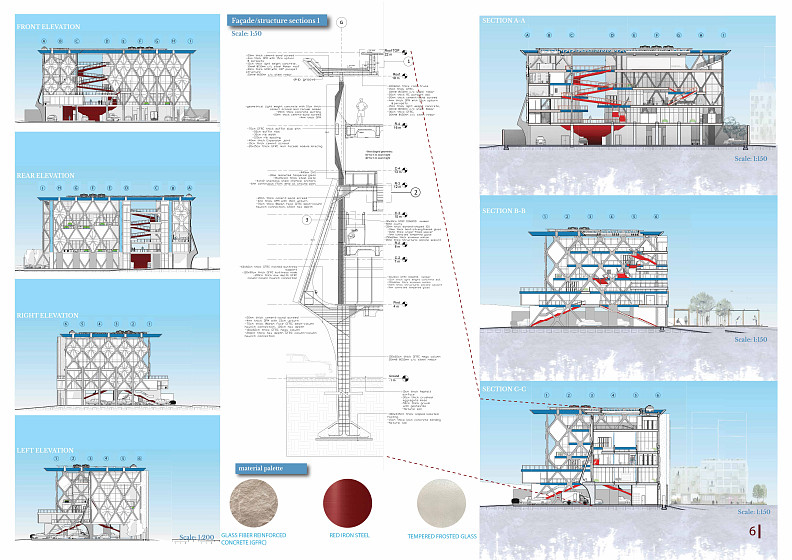
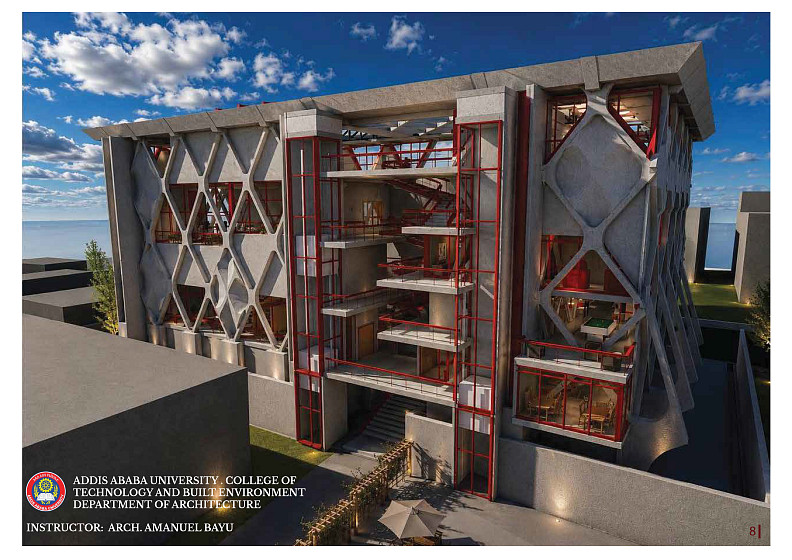
REPI Urban Recreational Center is a multi-functional public facility designed to serve the people of Karakore by providing spaces for recreation, wellness, and community engagement. The project holds several programs includes parking and carwash, indoor sports courts, fitness facilities, social gathering areas, cafés, outdoor recreational spaces, and administrative functions that collectively support physical well-being and social interaction. Designed as a contemporary community landmark the building is organized around a central atrium that acts as the social heart of the project. This space visually connects multiple floors, improves wayfinding, and promotes interaction between different user groups. Large transparent façades maximize natural daylight while maintaining strong visual relationships between interior activities and the surrounding urban environment. The defining feature of the project is its exposed diagrid exoskeleton. Beyond creating a distinctive architectural identity, the structural system reduces the need for internal columns, allowing flexible floor layouts and adaptable public spaces. The integration of structure, circulation, and enclosure creates an efficient and visually expressive building that responds to both functional and environmental requirements.
Technical information
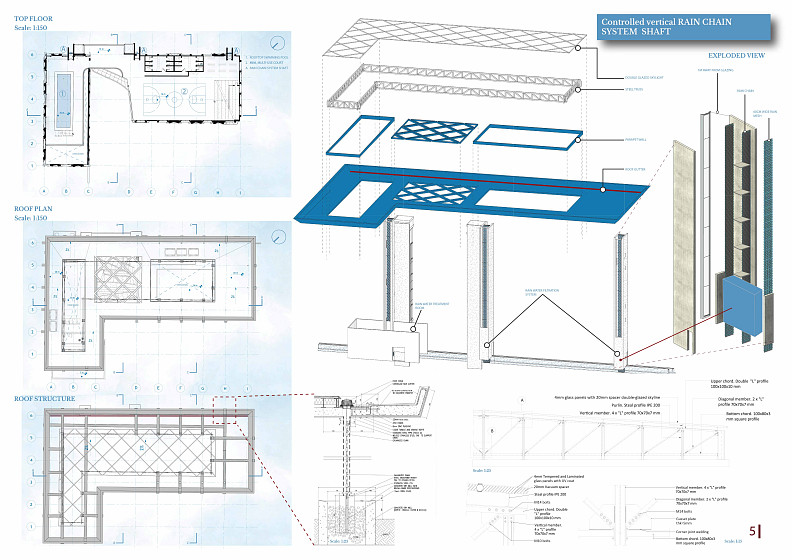
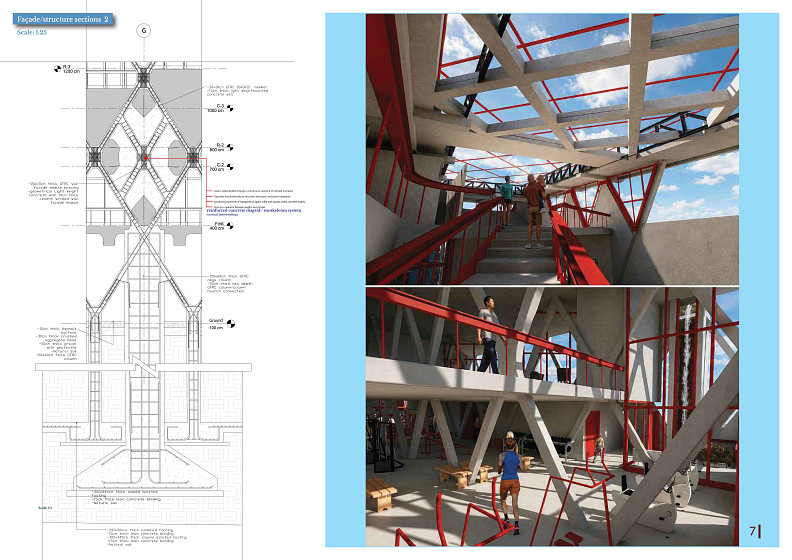
The structural was designed from reinforced concrete and steel hybrid system supported by an external diagrid exoskeleton. The diagrid was chosen not only because it transfers both gravity and lateral loads efficiently to the foundation through a triangulated framework which are connected to external mega columns, but also represents the concept of “interweave” where the façade and structural frame are integrated into a single tectonic system. Large glazed openings positioned within the diagrid maximize daylight penetration and strengthen the visual connection between indoor and outdoor spaces. Environmental performance is enhanced through passive design strategies including the “interweave” of structural system to roof drainage then back to building water system usage. Through its tectonic approach, the building becomes more than a recreational facility the building becomes a civic landmark where structure, space, and community are seamlessly integrated.

Copyright © 2026 INSPIRELI | All rights reserved. Use of this website signifies your agreement to the Terms of Use, Privacy Policy, and use of cookies.