ONO OLA
Project idea
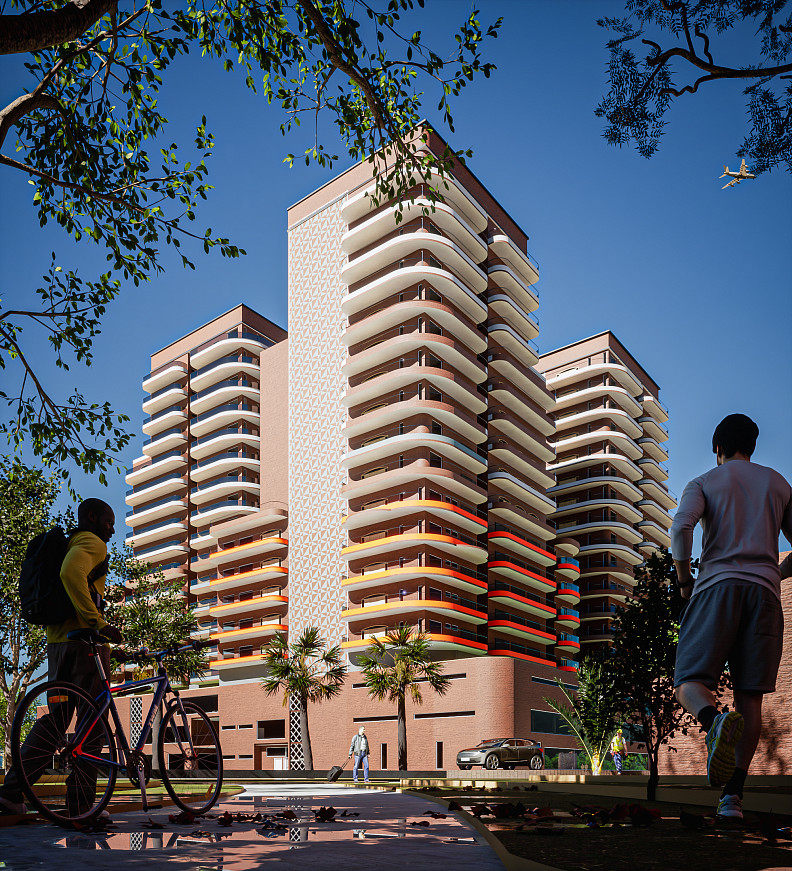
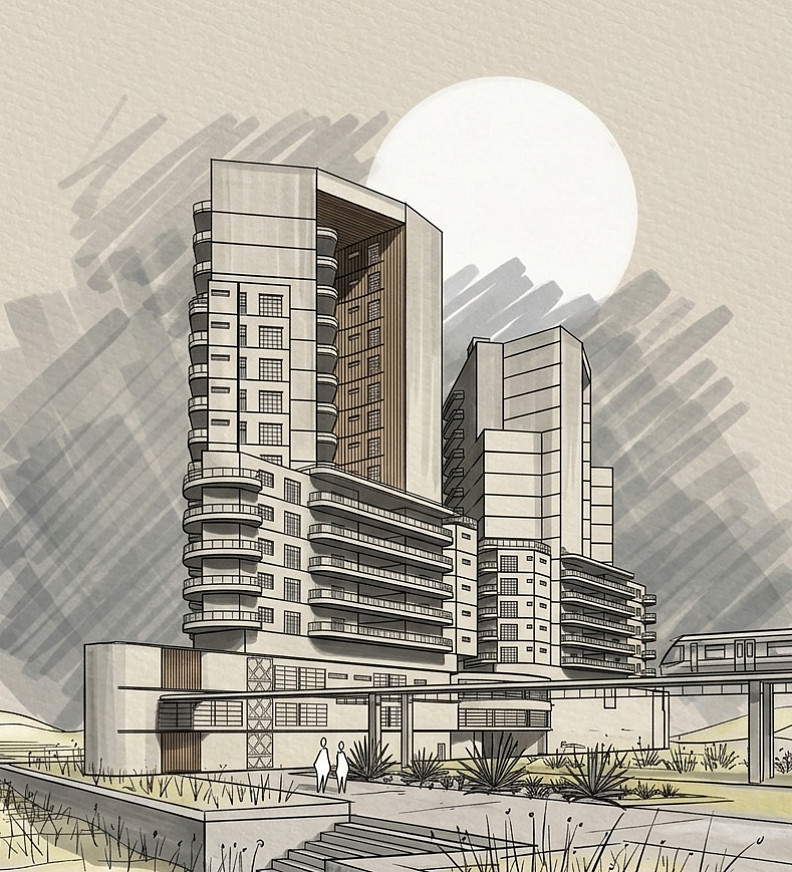
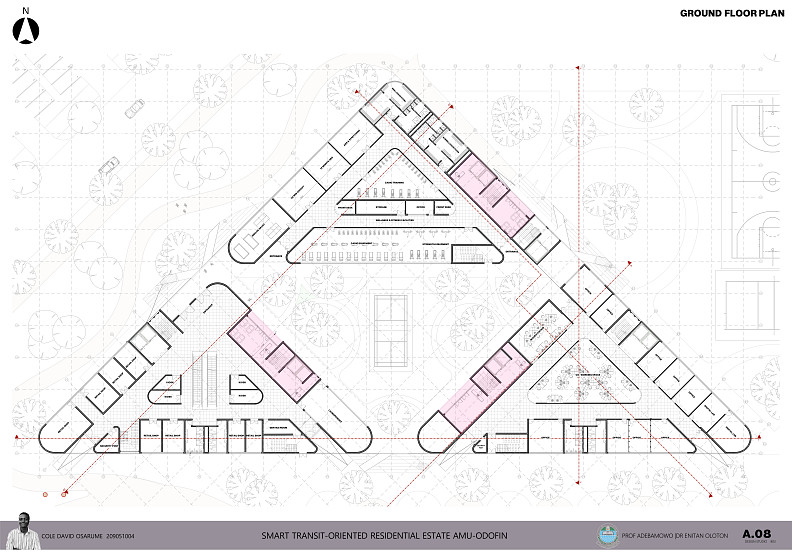
Ọ̀nà Ọ̀la (Path to the Future) is a Transit-Oriented Development proposed for Amuwo-Odofin, Lagos, aimed at creating a more connected, accessible, and sustainable urban environment. The project responds to the growing challenges of rapid urbanization, traffic congestion, inadequate public spaces, and the disconnect between transportation systems and everyday urban activities. The idea behind the project is to move beyond the design of individual buildings and develop an urban framework that integrates transportation, commerce, housing, and community life into a single system. Inspired by fractal principles, the development is organized as a series of interconnected clusters that can grow and be replicated while maintaining a coherent structure and identity. At the heart of the proposal is a mixed-use development centered around a transit node, encouraging walkability, reducing dependence on private vehicles, and improving access to essential services. The project also recognizes the role of informal economic activities within Lagos and incorporates organized village markets into the transit network, creating opportunities for economic participation while improving urban order. The goal of Ọ̀nà Ọ̀la is to demonstrate how transit-oriented development can serve as a model for future urban growth in Lagos and Nigeria. By integrating mobility, housing, commerce, and public spaces, the project seeks to create a livable, resilient, and inclusive environment that can be adapted and replicated in other communities.
Project description
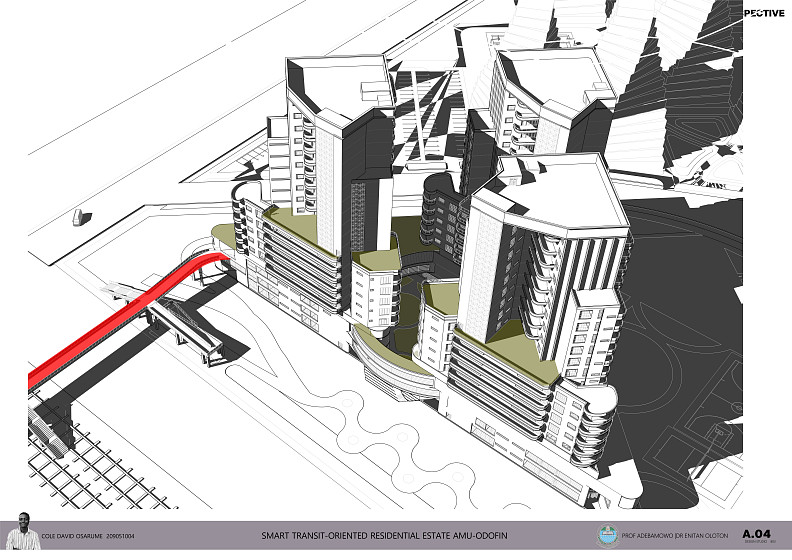
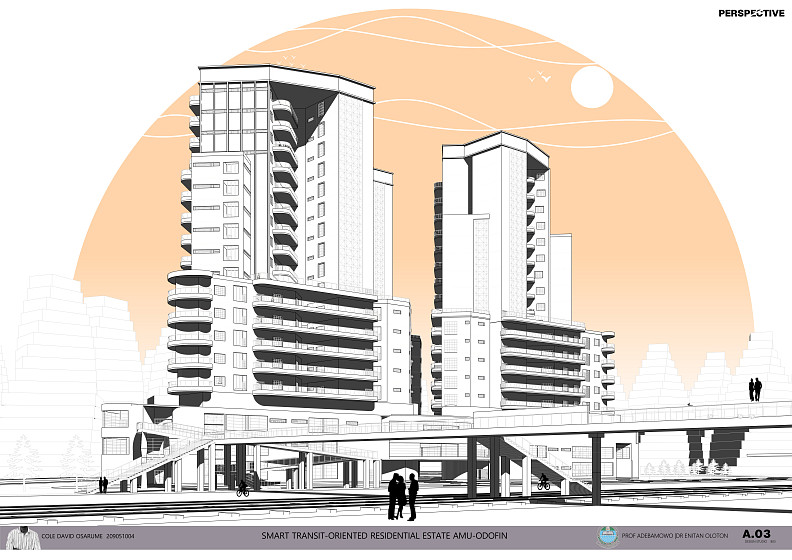
The project is designed around a major transit node and integrates residential, commercial, recreational, and public functions within a compact and walkable environment. The development consists of a high-rise residential tower sitting on a mixed-use podium that accommodates retail spaces, shopping facilities, restaurants, offices, co-working spaces, a gym, and other supporting amenities. The project is connected to surrounding transportation infrastructure through pedestrian-friendly networks and bridges, ensuring seamless movement between transit facilities and urban activities. The proposal incorporates organized village markets at transit nodes to support local commerce and improve the integration of informal trading activities within the urban environment. The project aims to demonstrate how transportation, housing, commerce, and public spaces can be combined into a single development model that enhances the quality of urban life while providing a replicable approach for future developments across Lagos and Nigeria.
Technical information
The building is made of a reinforced concrete structural system, lightweight compressed earth block infill walls, high-performance glass façades, aluminum cladding, and locally sourced sustainable materials.

Copyright © 2026 INSPIRELI | All rights reserved. Use of this website signifies your agreement to the Terms of Use, Privacy Policy, and use of cookies.