Azhar Al Ofoq
Project idea
_“This project presents a sustainable primary school designed for Aswan, Egypt — a region characterized by extreme heat and strong cultural identity. The school is more than an educational facility; it is a community-integrated learning environment that respects local traditions while embracing environmental responsibility. The design applies passive cooling strategies, such as shaded courtyards, wind corridors, thermal mass, and local materials like adobe and sandstone to reduce energy use and improve thermal comfort. Classrooms are arranged around open interactive spaces, promoting both educational flexibility and social development. The aim of this project is to create a safe, inspiring, and climatically responsive space where children can learn, play, and grow with dignity. It seeks to offer not only architectural function but emotional, cultural, and ecological value to the community it serves.”
Project description
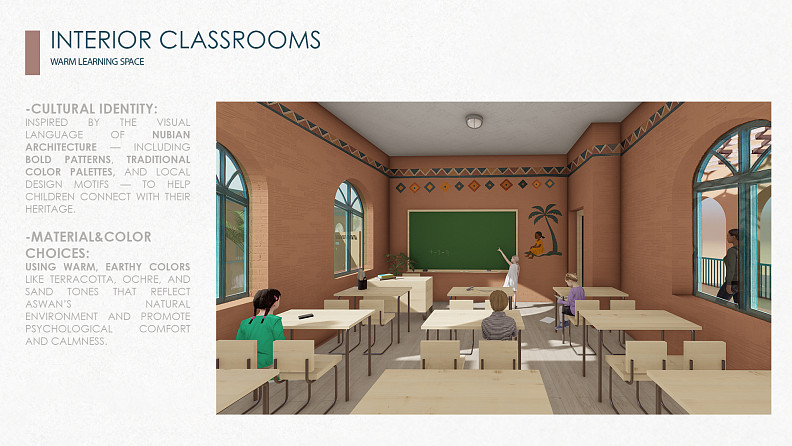
The scope of the project addresses architectural, environmental, educational, and social aspects through an integrated design approach. The solution includes: A masterplan adapted to the hot arid climate of Aswan, with passive design strategies such as cross ventilation, shaded courtyards, and orientation-based zoning. Design of classrooms, administrative areas, multi-use spaces, and open courtyards that support flexible teaching and interaction. Integration of local materials and construction methods to reduce cost and environmental impact. Landscaping and outdoor play areas designed for shade, safety, and sensory learning. Cultural and contextual integration, ensuring the project reflects local identity and supports the community. The project aims to create a replicable model for sustainable educational facilities in similar climatic and socio-economic contexts.
Technical information
Project Type: Primary School Location: Aswan, Egypt Total Built-up Area: approx. 3,400 m² Construction System: Traditional stone masonry walls with reinforced concrete slabs Main Materials: Local natural stone (sandstone), mud bricks, wood Sustainability Features: – Passive cooling strategies (natural ventilation, thermal mass, shaded courtyards) – Orientation-based zoning and daylight optimization – Use of local and low-impact materials to reduce environmental footprint

Copyright © 2026 INSPIRELI | All rights reserved. Use of this website signifies your agreement to the Terms of Use, Privacy Policy, and use of cookies.