Renacer – Recovery and Reintegration Center for Older Adults
Project idea
A self-sustaining recovery and reintegration center for older adults recovering from addiction, promoting autonomy, sustainability, and social reintegration through human-scale design, passive climate strategies, and a close relationship with nature.
Project description
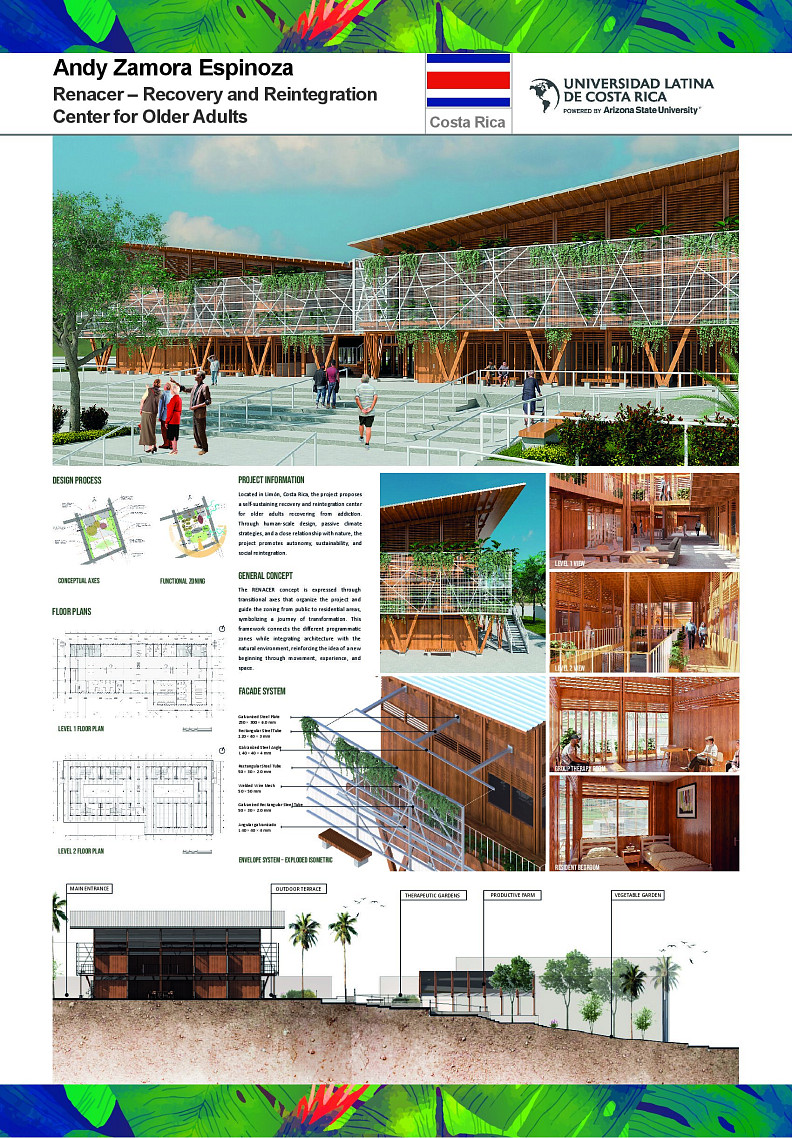
Located in Limón, Costa Rica, the project proposes a self-sustaining recovery and reintegration center for older adults recovering from addiction. The RENACER concept is expressed through transitional axes that organize the project and guide the zoning from public to residential areas, symbolizing a journey of transformation and renewal. This framework connects the different programmatic zones while integrating architecture with the natural environment, reinforcing the idea of a new beginning through movement, experience, and space. The center combines therapeutic, residential, and productive functions to promote long-term recovery, autonomy, and social reintegration. The program includes therapeutic gardens, a productive farm, vegetable gardens, group therapy rooms, resident accommodations, outdoor terraces, and communal spaces designed to encourage social interaction and well-being. Passive bioclimatic strategies, human-scale design, and a close relationship with nature contribute to a restorative environment that supports both physical and emotional recovery.
Technical information
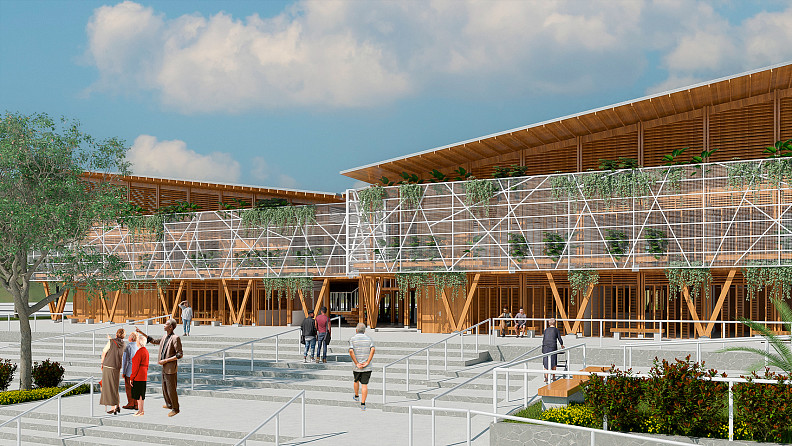
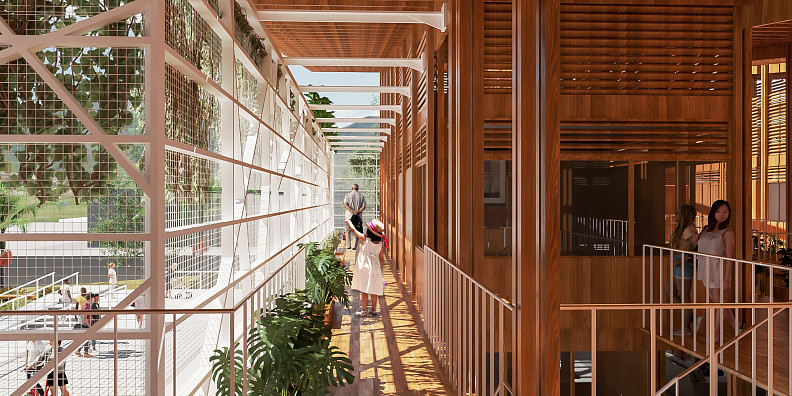
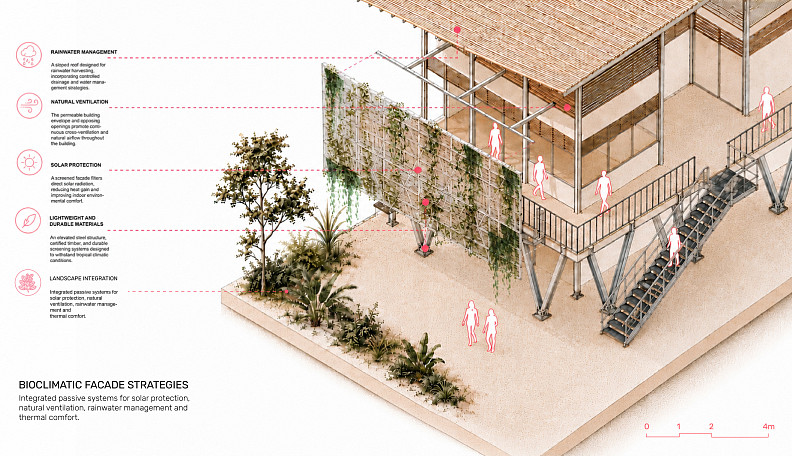
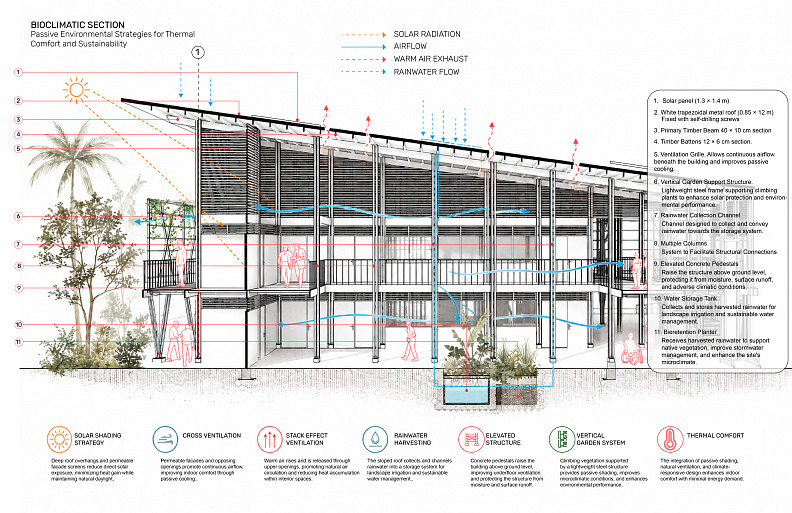
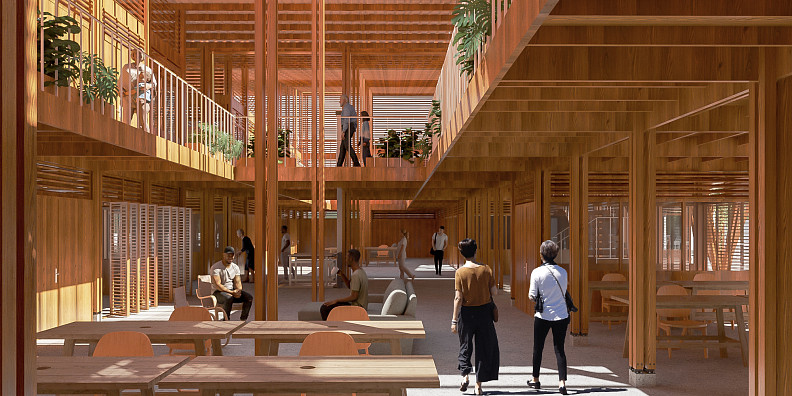
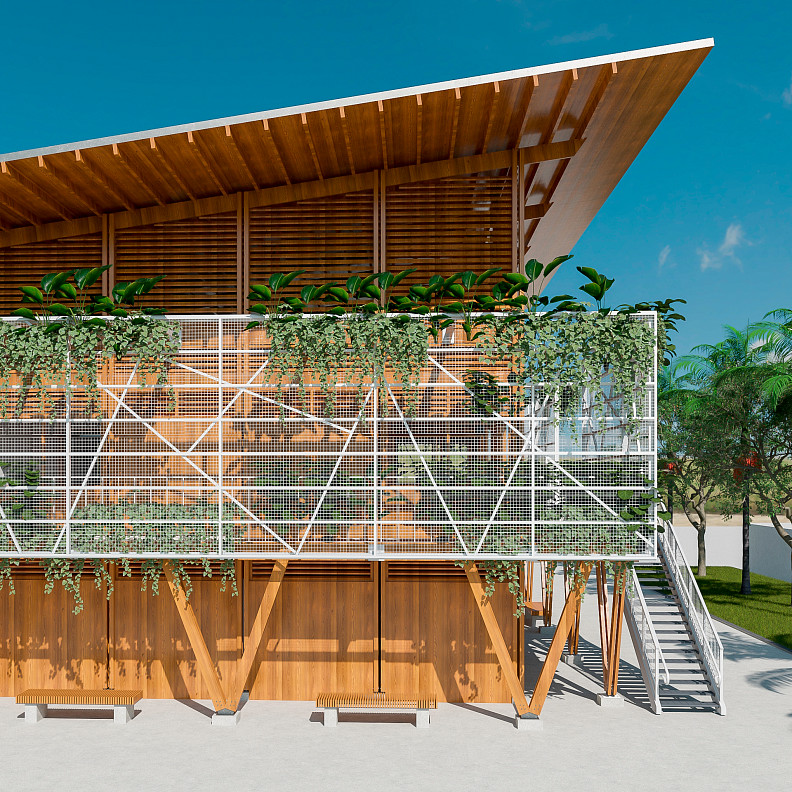
The project is primarily conceived as a timber-based building, with wood serving as the main structural and architectural material. Beyond its environmental benefits as a renewable, low-carbon resource, the use of timber responds to the vernacular building traditions of Costa Rica’s Caribbean region, where lightweight construction systems and natural materials have historically adapted to the tropical climate. Wood contributes to thermal comfort, reduces heat absorption, and creates warm, human-centered spaces that support emotional well-being and recovery. Its tactile qualities, natural appearance, and connection to local building culture reinforce the project's restorative character while strengthening the relationship between architecture, landscape, and place. The structural system is complemented by reinforced concrete and steel elements in strategic areas where greater resistance, anchoring, or support is required. The building was conceived through a modular design approach, allowing future expansion and adaptation according to the evolving needs of the rehabilitation center. This flexibility enhances construction efficiency, facilitates phased growth, and supports the replication of the model in other regions of the country. A defining feature of the project is the steel exoskeleton that supports a vertical garden system. This architectural envelope functions as a passive bioclimatic strategy by providing solar shading, filtering natural light, reducing heat gain, and improving thermal comfort. At the same time, it serves as a therapeutic landscape where residents can participate in cultivation and maintenance activities, promoting occupational therapy, social interaction, and a meaningful connection with nature.

Copyright © 2026 INSPIRELI | All rights reserved. Use of this website signifies your agreement to the Terms of Use, Privacy Policy, and use of cookies.