National Velodrome of Guatemala
Project idea
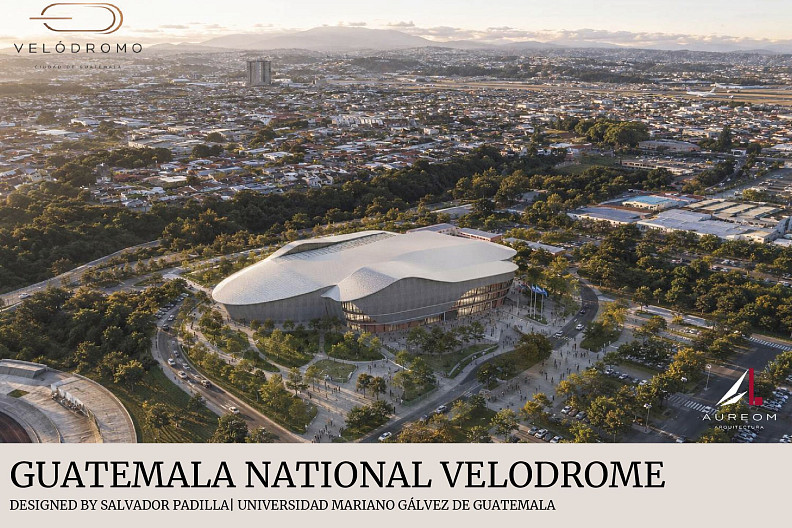
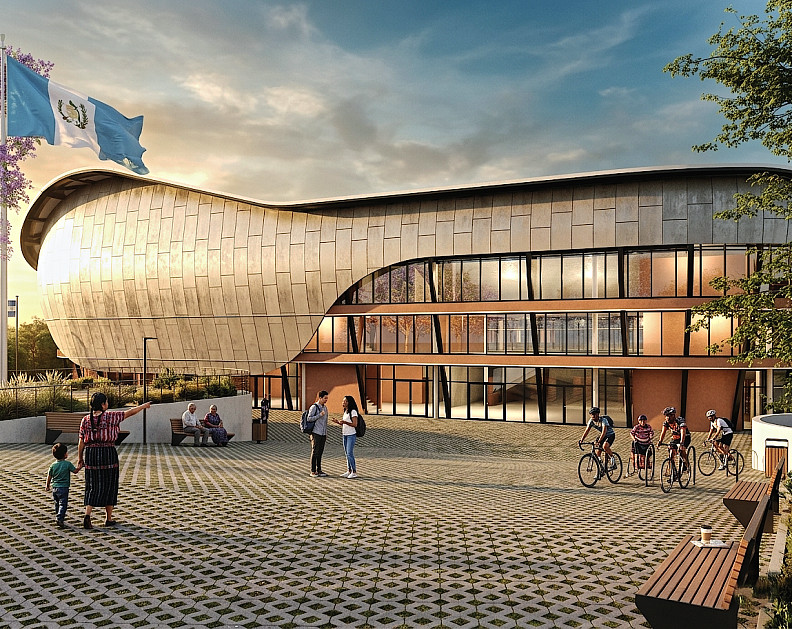
The Metropolitan Velodrome is conceived as a sports and urban facility aimed at strengthening the infrastructure for high-performance cycling in Guatemala while creating a new public destination for the city. Located within the Cultural District of Zone 13, the project responds to the growing need for modern sports facilities that promote athletic excellence, community engagement, and sustainable urban development. The architectural concept is inspired by the continuous movement, speed, and fluidity of cycling. These qualities are expressed through a lightweight grid-shell roof that envelops the building with a dynamic and organic form, creating a strong visual identity while ensuring structural efficiency. The project seeks to transform the velodrome into more than a sports venue, establishing it as a contemporary urban landmark for Guatemala City. Beyond its athletic function, the proposal integrates a public park with pedestrian pathways, green spaces, and recreational areas that encourage social interaction and sustainable mobility. By combining sports infrastructure, landscape design, and public space, the project promotes physical well-being, environmental quality, and community participation. The main objective of the project is to create an iconic, functional, and accessible facility that supports the development of competitive cycling while enriching the urban experience of Zone 13. Through its integration of architecture, nature, and public life, the Metropolitan Velodrome aspires to become a symbol of innovation, sustainability, and civic identity for Guatemala City.
Project description
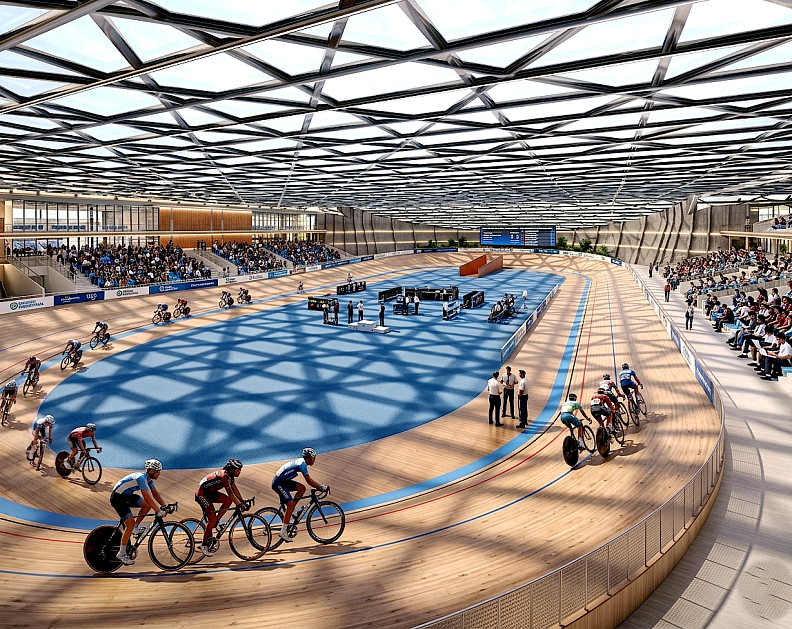
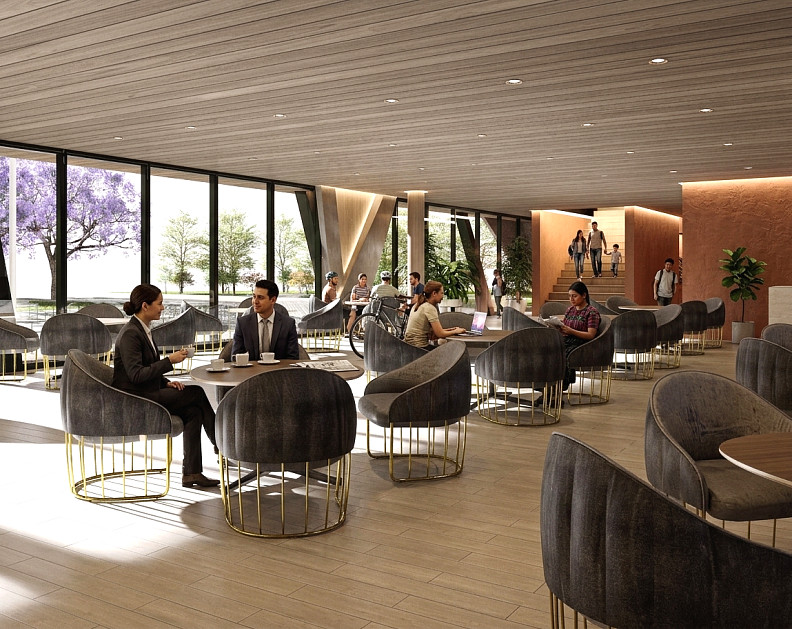
Project Description The project consists of a metropolitan velodrome designed to host high-performance cycling competitions, training activities, and public sporting events. The facility is organized around a professional cycling track enclosed by a lightweight grid-shell structure that provides a large column-free interior space and optimal visibility for spectators. The program includes athlete support facilities, locker rooms, technical and administrative areas, spectator seating, circulation cores, emergency evacuation routes, and complementary service spaces. The structural system is based on a tubular steel grid shell with three-dimensional connection nodes, creating an efficient and expressive architectural form. Surrounding the building, the proposal incorporates a public park with pedestrian pathways, landscaped areas, recreational spaces, and outdoor gathering zones. These elements extend the use of the complex beyond sporting events, encouraging community interaction, sustainable mobility, and everyday public use. The project establishes a strong relationship between architecture, landscape, and public space, creating an iconic sports facility that contributes to the urban development of Guatemala City's Cultural District in Zone
Technical information
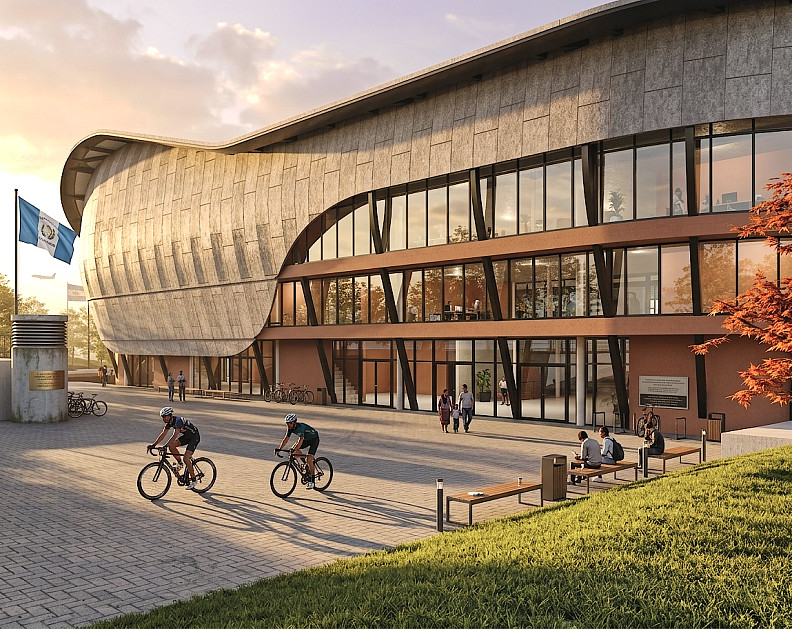
The project is based on a tubular steel grid-shell structure designed to achieve large spans with minimal material usage while maintaining high structural efficiency. The double-curvature geometry enhances stiffness and allows the roof to function as a self-supporting system with reduced intermediate supports. The primary structural system consists of steel frames and bracing elements designed to resist lateral and shear forces, ensuring stability under wind and seismic loads. Foundations are composed of reinforced concrete piles and pile caps, transferring structural loads efficiently to the ground. The building envelope combines aluminum cladding panels, glazed surfaces, and lightweight roofing components to provide durability, weather protection, and a contemporary architectural expression. The façade system is designed to maximize natural light while maintaining thermal comfort within the facility. The surrounding landscape incorporates permeable surfaces, pedestrian pathways, and green areas that contribute to environmental performance, stormwater management, and user comfort. Structural System: Tubular steel grid shell Foundations: Reinforced concrete piles and pile caps Lateral Stability: Steel bracing and shear-resistant structural system Building Envelope: Aluminum composite panels, glazing, and lightweight roofing systems Landscape Strategy: Green areas, permeable surfaces, and pedestrian circulation networks

Copyright © 2026 INSPIRELI | All rights reserved. Use of this website signifies your agreement to the Terms of Use, Privacy Policy, and use of cookies.