Park of the Arts
Project idea
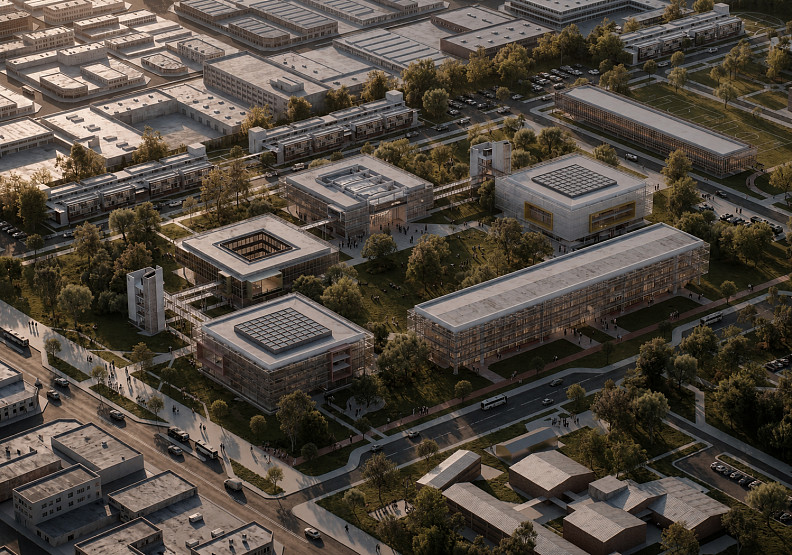
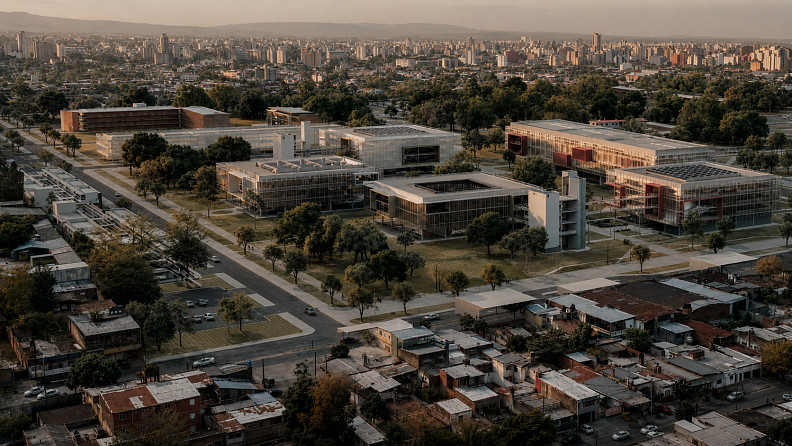
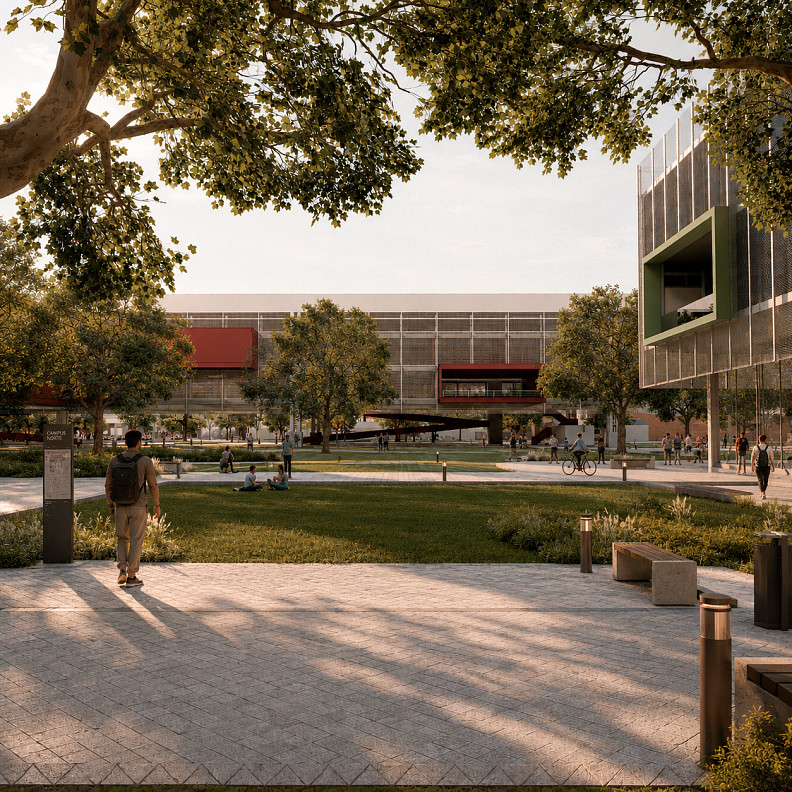
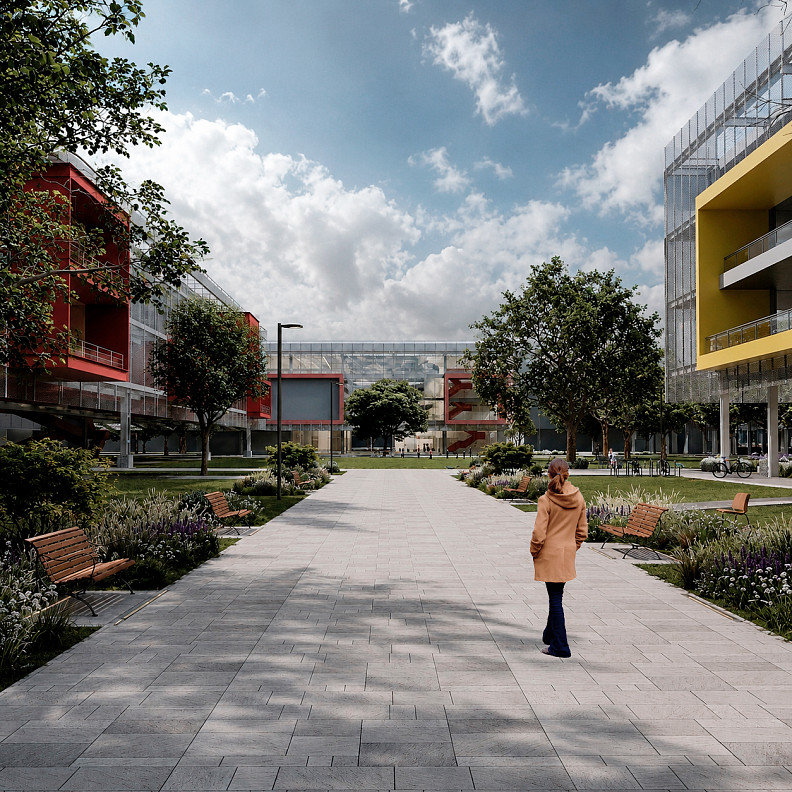
Located at a strategic point within the metropolitan structure, Quinta Agronómica represents a unique opportunity to reconnect university, city, and landscape. Despite its environmental and institutional significance, its limited permeability and weak connections with the surrounding urban fabric have historically constrained its potential as a space of exchange and collective life. The project responds to this condition by envisioning the transformation of Quinta Agronómica into an integrated urban campus where education, culture, and public life converge. The incorporation of a new Faculty of Arts acts as a catalyst for this transformation, promoting new relationships between learning, artistic production, and community engagement. More than the design of a new academic building, the proposal seeks to redefine the role of the campus within the city, transforming an urban barrier into a platform for cultural interaction, creativity, and collective participation.
Project description
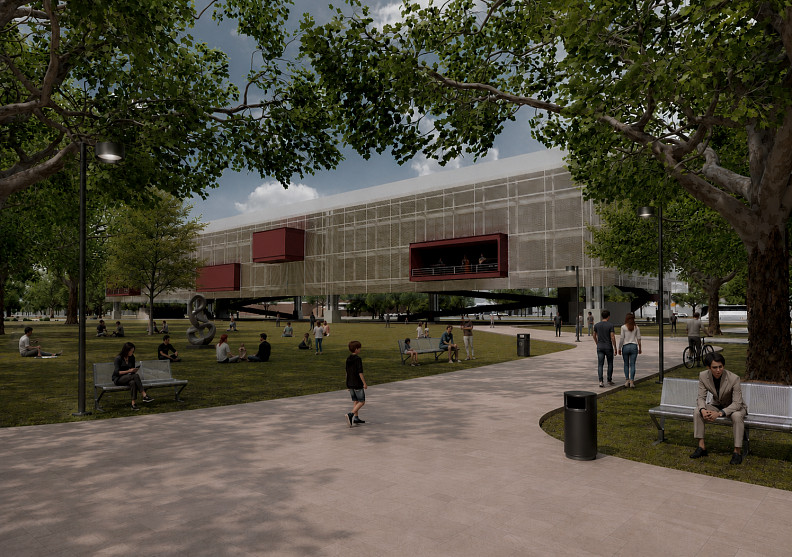
The project materializes this vision through a series of urban and architectural interventions aimed at increasing permeability, strengthening accessibility, and enhancing the site's role as a link between the university, the city, and the landscape. New pathways and public spaces integrate Quinta Agronómica into the surrounding urban fabric, transforming it into an open, accessible, and interconnected campus. The incorporation of a new Faculty of Arts acts as a catalyst for this process. Conceived as an open space for learning, creation, and exhibition, the Faculty fosters new relationships between cultural production, academic life, and the community. More than the addition of new educational infrastructure, the proposal seeks to establish a place for encounter and exchange that strengthens the relationship between the university and society, contributing to the development of a more inclusive, diverse, and participatory city.
Technical information
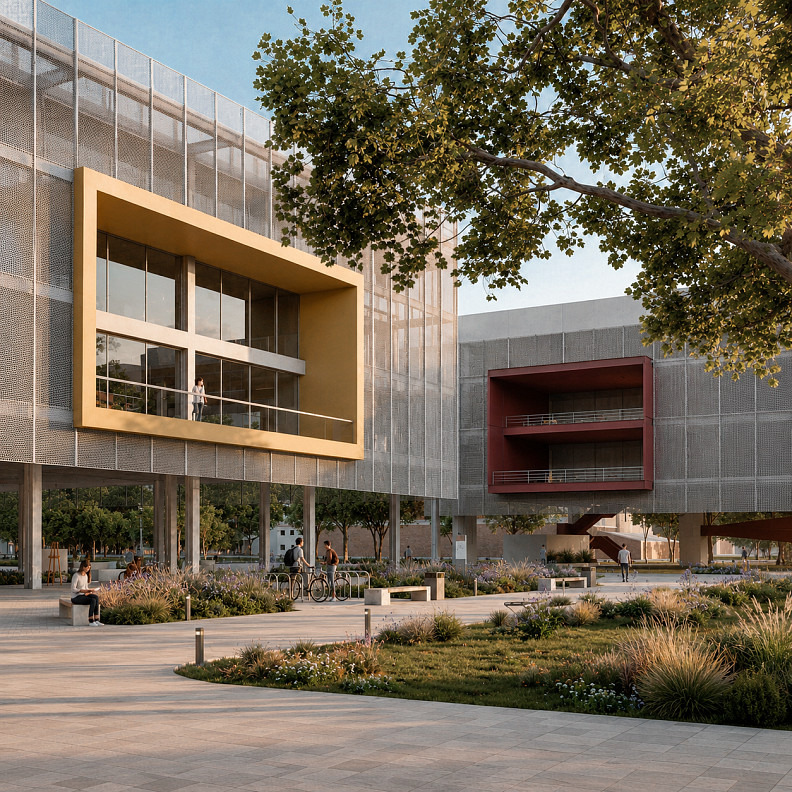
The project adopts a steel structural system as a strategy for flexibility, adaptability, and long-term sustainability. Its modular nature allows buildings to evolve over time, responding to changing academic, cultural, and community needs through modification, expansion, or partial disassembly. Steel also enables larger spans with smaller structural sections, reducing visual obstruction and creating open, flexible interiors. This condition is especially valuable for artistic programs, where spatial freedom, greater ceiling heights, and adaptable environments are essential for performances, exhibitions, rehearsals, and creative production. The structure is therefore conceived not as a fixed framework, but as an adaptable support capable of accommodating future transformations while maintaining the architectural quality of the spaces.
Maximiliano Romano, Franco Bulacio Sanchez, Martina Lujan Papa
Universidad Nacional de Tucumán, Facultad de Arquitectura y Urbanismo, Tucumán
Argentina
Urban Design
Project submitted
15. 06. 2026Tag

Copyright © 2026 INSPIRELI | All rights reserved. Use of this website signifies your agreement to the Terms of Use, Privacy Policy, and use of cookies.