Under the Baobab
Project idea
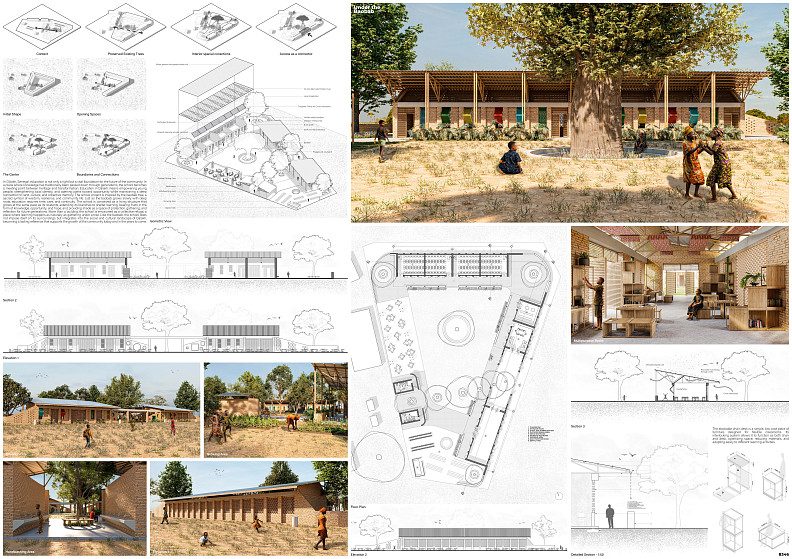
In Djilakh, Senegal, education is not only a fundamental right but a vital foundation for the future of the community. In a context where knowledge has traditionally been transmitted through generations, learning is deeply connected to place, culture and collective life. The project understands the school not merely as an educational facility, but as a space where heritage and transformation meet, empowering young people while reinforcing local identity and community cohesion. The proposal is inspired by the baobab tree, a powerful social and climatic reference in Senegalese rural life. More than a natural element, the baobab functions as a place of gathering, protection and knowledge exchange. Translating its environmental and symbolic role into architecture, the project is conceived as an infrastructure of shade, air and permanence rather than a conventional school building.
Project description
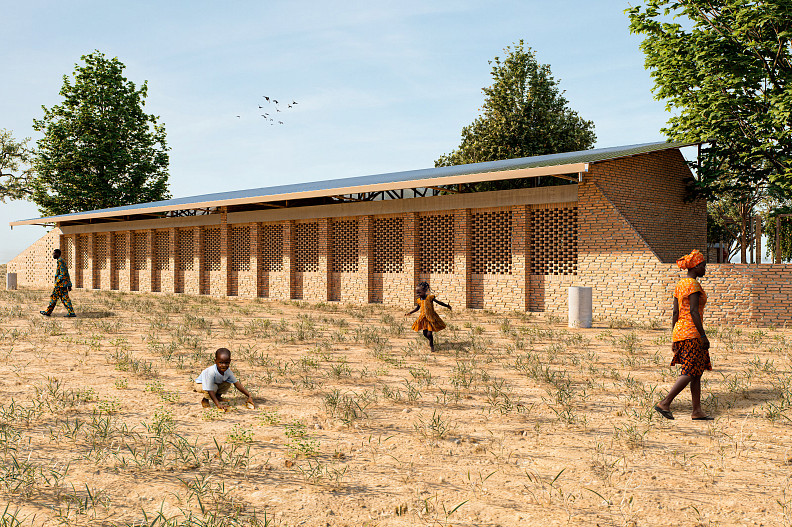
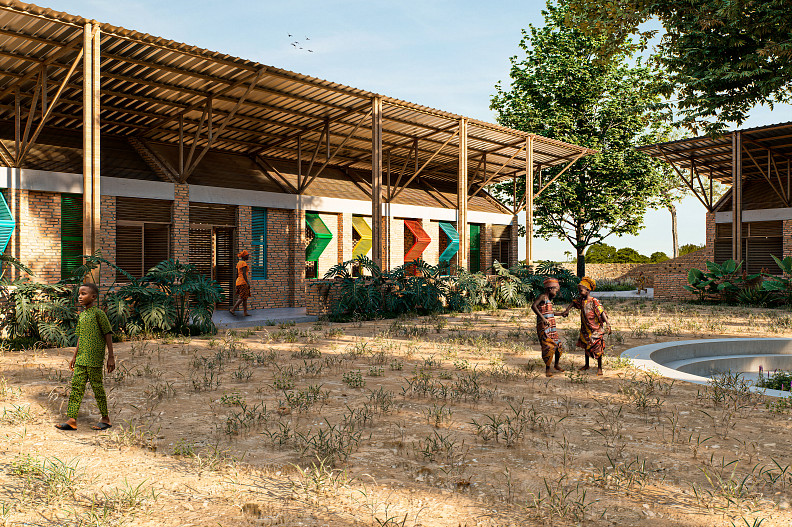
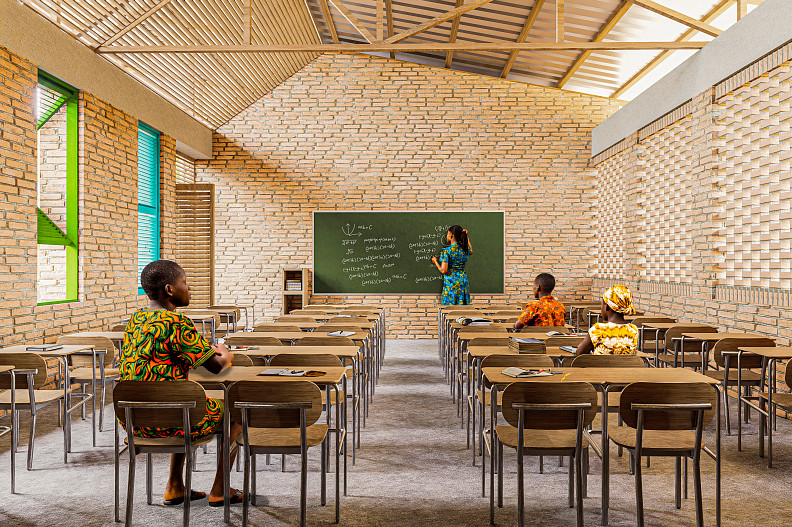
Instead of a compact object, the school is organized as a sequence of thick stabilized adobe brick walls and open voids, where enclosed spaces are embedded within a continuous climatic system. The walls provide thermal mass and durability, anchoring the project to the ground, while elevated roofs generate deep shade and create a ventilated layer that allows hot air to rise and escape. Between these elements, a linear void operates as a breathing space regulating temperature, promoting natural ventilation and organizing circulation through environmental logic rather than programmatic hierarchy. Learning spaces open toward shaded outdoor areas, extending the classroom beyond its physical limits and encouraging informal education, interaction and collective use. The project prioritizes passive design strategies, minimizing the need for mechanical systems and responding directly to the semi-arid climate of Djilakh through orientation, cross ventilation and controlled solar exposure.
Technical information
The project’s materiality responds directly to the climatic, social, and cultural conditions of Djilakh, Senegal, through the use of local materials and passive construction systems that strengthen the relationship between architecture, landscape, and community. The proposal is primarily structured through thick stabilized adobe walls, whose thermal mass helps regulate indoor temperatures and provide comfort within the semi-arid climate. These solid elements anchor the building to the ground while expressing an austere, robust architectural language deeply connected to local construction traditions. The roof is composed of a lightweight timber structure with zinc sheet roofing, elevated above the walls to create a ventilated layer that promotes heat dissipation and natural airflow. Large overhangs generate continuous shaded areas over classrooms and gathering spaces, extending educational activities outdoors while reinforcing the idea of collective learning under climatic protection. Open spaces, circulation paths, and transitional areas are developed in concrete, providing durability, resistance, and spatial continuity throughout the project. These elements articulate the different programmatic areas, creating fluid circulation and spaces of permanence that naturally integrate interior and exterior environments.
IVAN CAMILO HERNANDEZ MATEUS, ERIKA TATIANA GASTELU DUITAMA, DANIEL ESTEBAN VALDEZ SANCHEZ, ORLANDO JOSE ESTEPA HERNANDEZ
Catholic University of Colombia, Faculty of Architecture, RIBA
Colombia
Architecture
Project submitted
19. 05. 2026Tag
- Schools
- Nursery
- University
- Library
- Other

Copyright © 2026 INSPIRELI | All rights reserved. Use of this website signifies your agreement to the Terms of Use, Privacy Policy, and use of cookies.