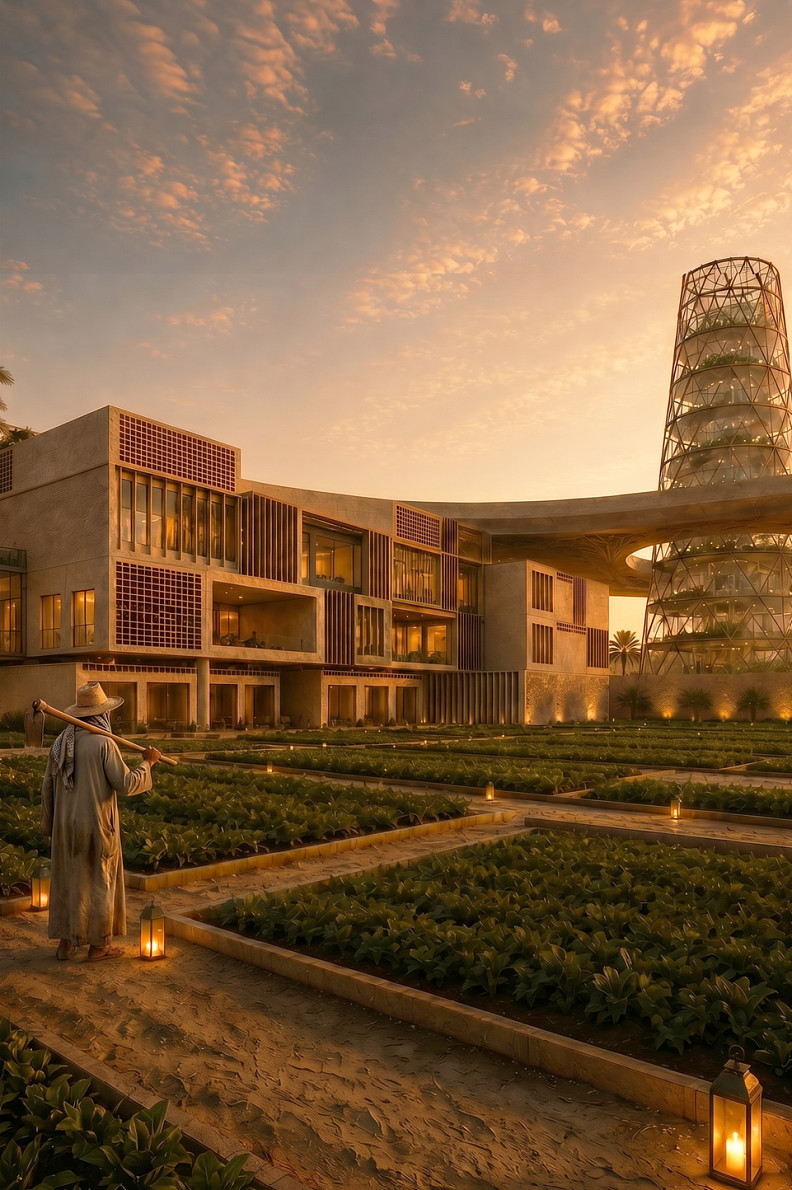
The Oasis Threshold
Project idea
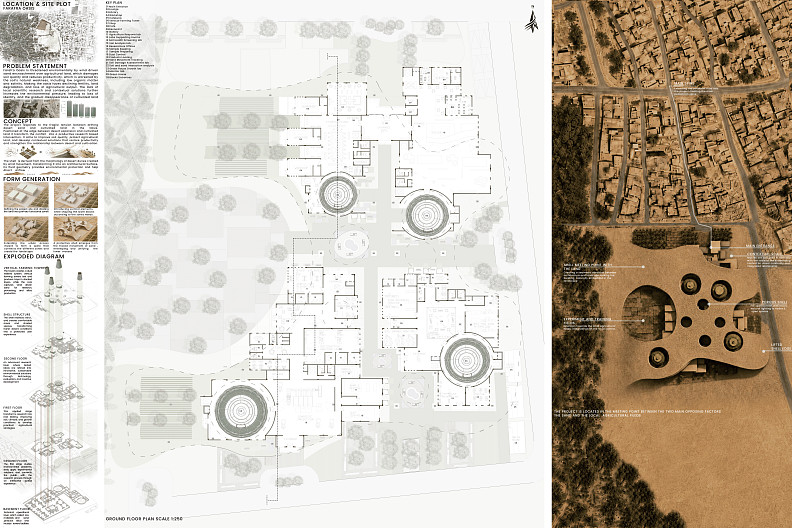
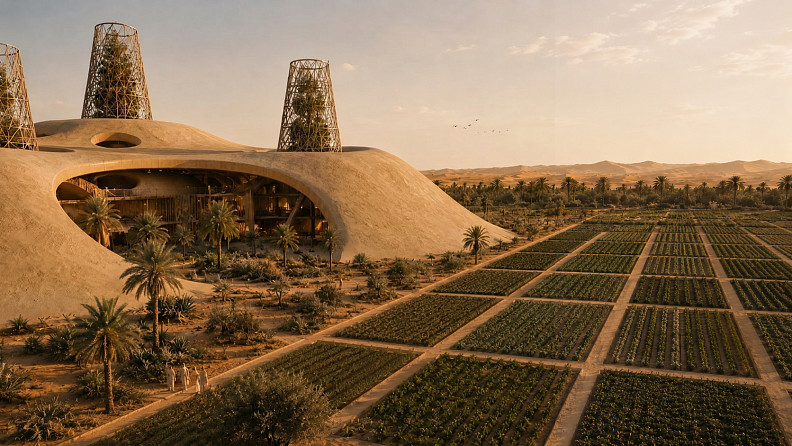
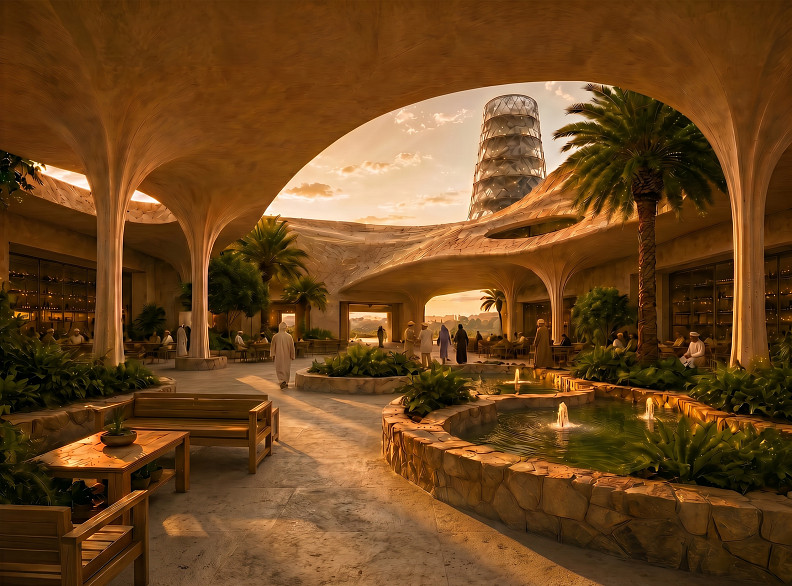
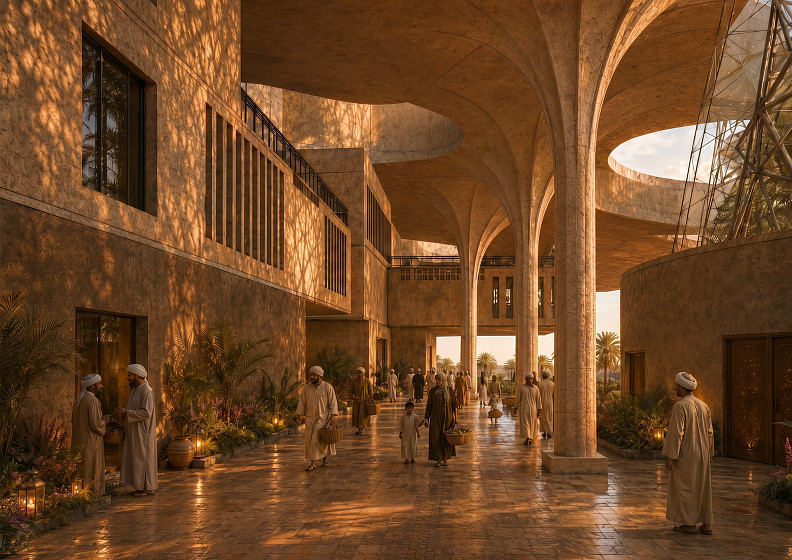
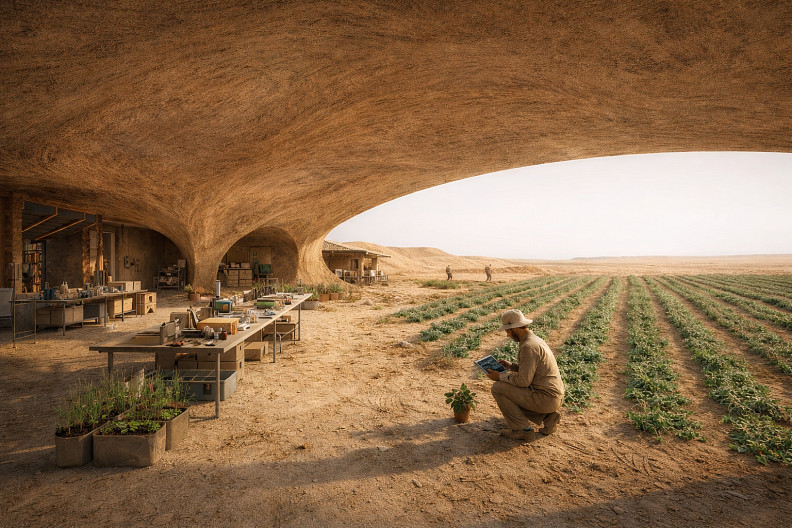
The idea of this project is to respond to the agricultural, environmental, and social challenges facing Farafra Oasis by proposing a new productive architecture that transforms the desert condition into a source of regeneration. Farafra has always been strongly connected to agriculture; cultivation is part of its identity, economy, and daily life. However, this identity is increasingly threatened by harsh climatic conditions, moving sand, poor soil performance, high temperatures, water limitations, and the difficulty of maintaining productive land in an arid environment. The project begins from this conflict between a community that depends on agriculture and a landscape that constantly challenges it. Instead of seeing sand as a problem only, the project reimagines it as part of a productive cycle. The main concept is to turn sand, agricultural waste, biomass, and local environmental forces into tools for restoring land and supporting food production. The project introduces a research , testing labs and production center ,local workshops and lecture halls where farmers, researchers, students, and the local community can test new agricultural techniques, improve soil quality, produce biochar, develop climate responsive farming methods, local educational labs and workshops and learn how to cultivate more efficiently in the desert. Architecturally, the project is inspired by the movement of dunes and the natural continuity of the desert landscape. A large protective shell rises from the ground and merges with the sand, creating a shaded environmental envelope that reduces heat exposure and protects the internal productive spaces. Inside this shell, the project combines laboratories, testing plots, vertical farming areas, biomass and biochar production, farmer training spaces, observation towers, and community zones. The contrast between the soft desert-like shell and the organized agricultural systems expresses the transformation from raw desert conditions into controlled production. The goal of the project is not only to create a building, but to create an agricultural infrastructure for Farafra’s future. It supports land restoration, knowledge exchange, sustainable production, and community resilience. The project aims to reconnect people with the land, strengthen Farafra’s agricultural identity, and present a model for how architecture can help transform fragile desert environments into productive, educational, and sustainable landscapes.
Project description
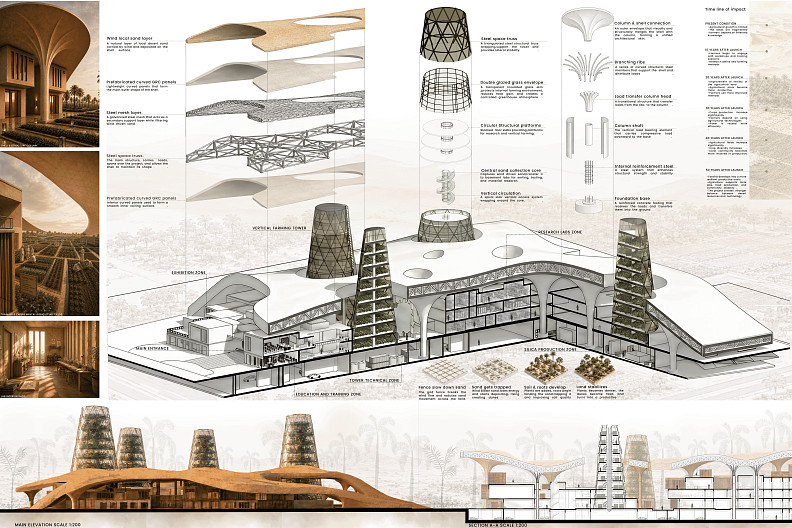
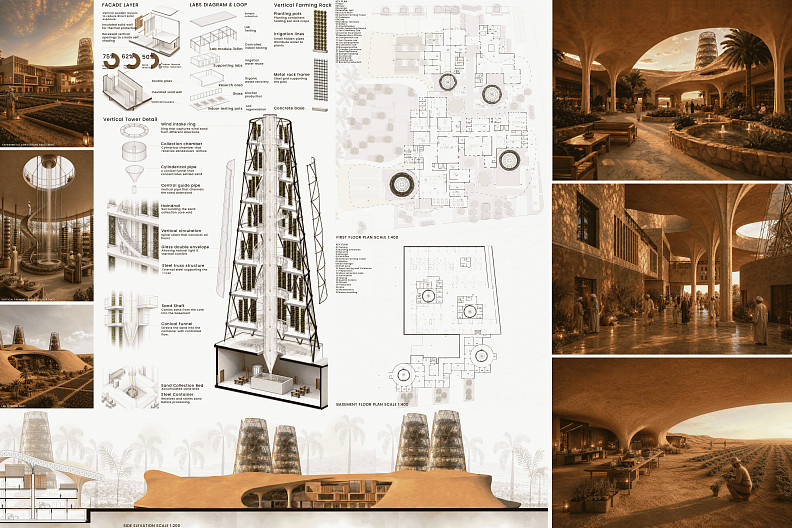
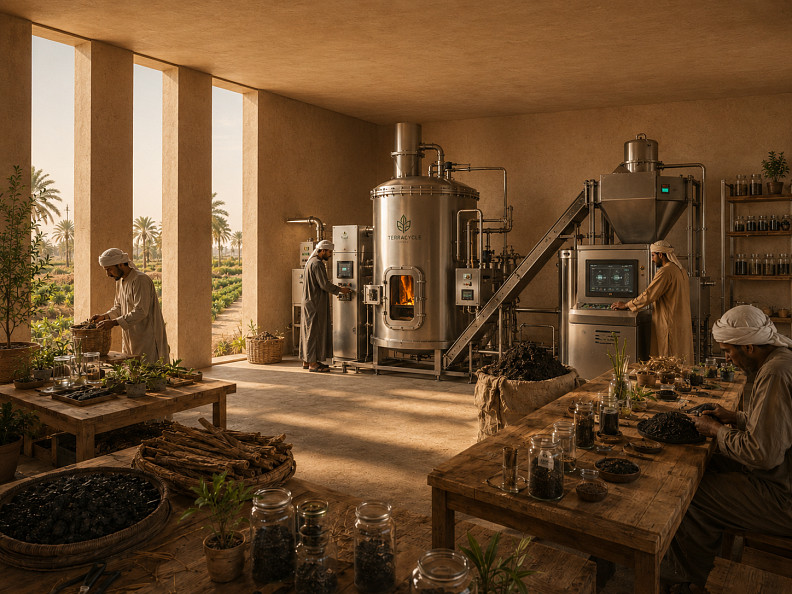
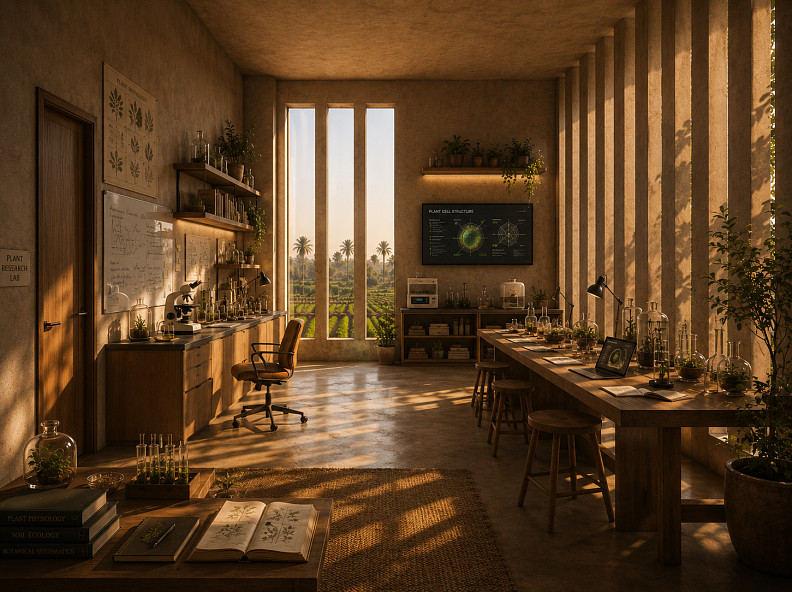
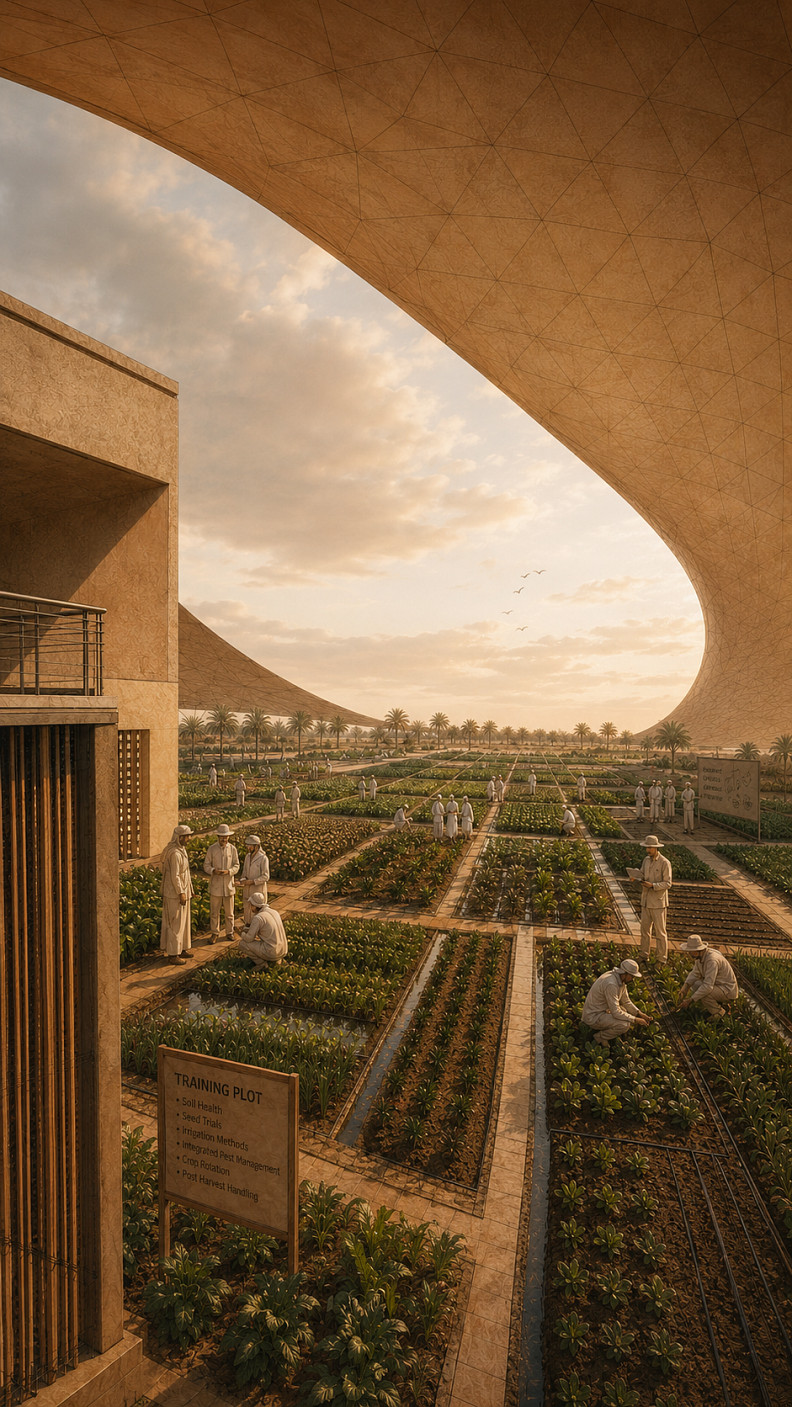
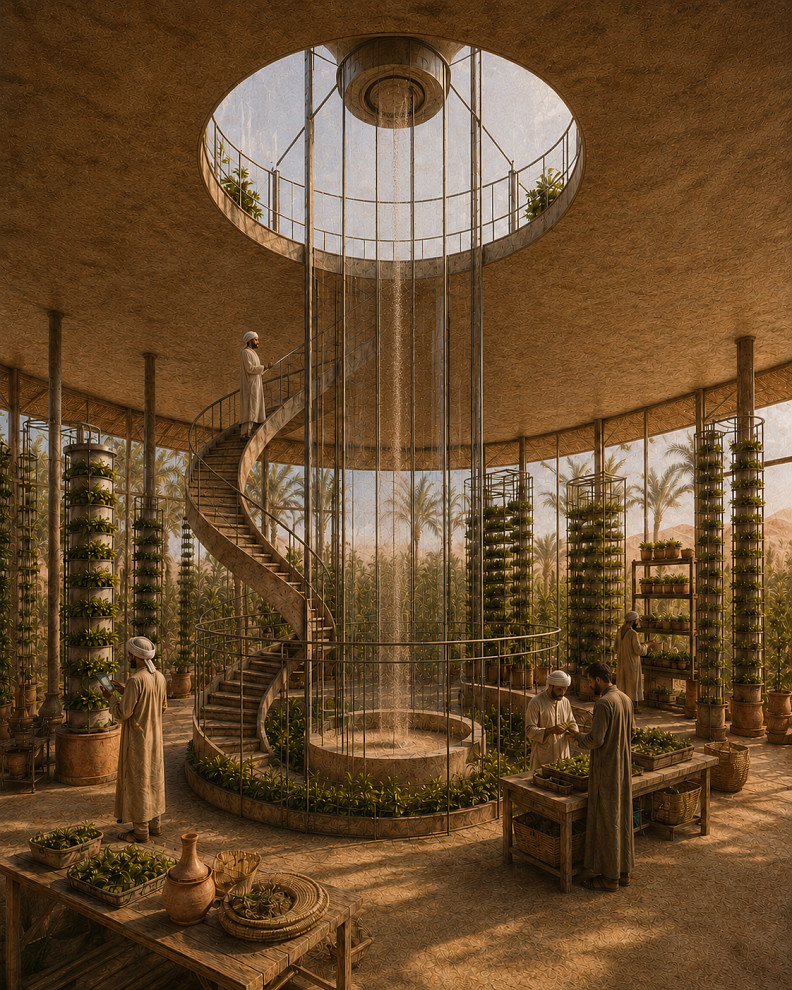
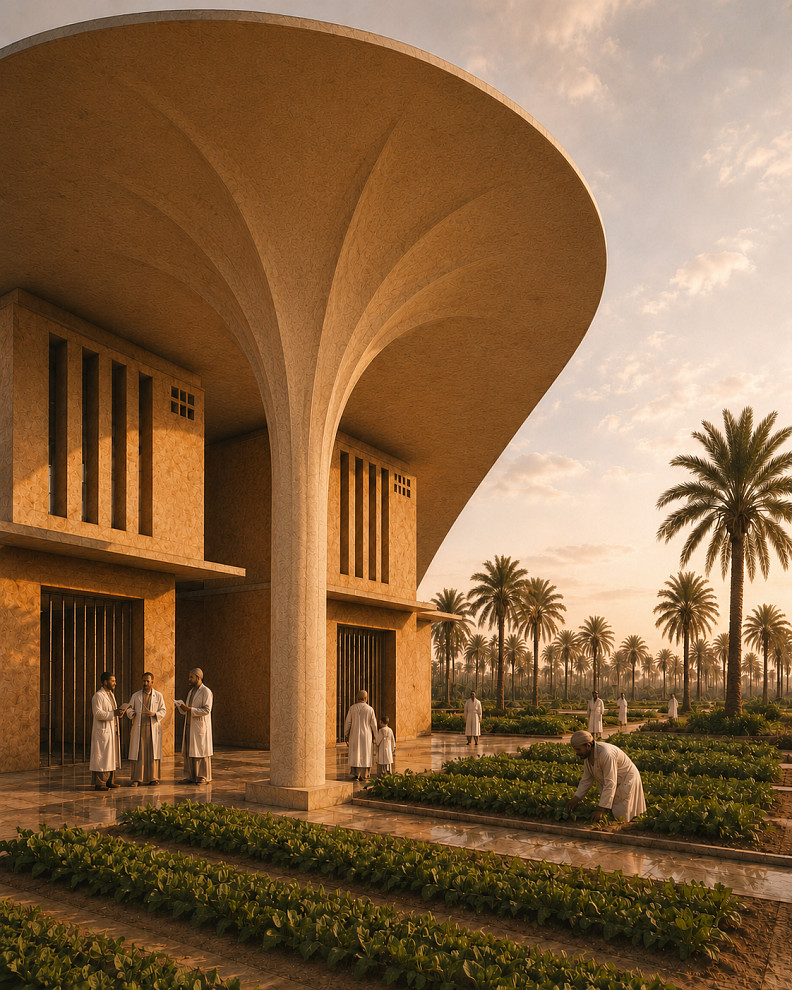
This project consists of an integrated agricultural research, production, education, and exhibition center located in Farafra Oasis. The project is designed as a complete system that combines architecture, agriculture, environmental technology, local knowledge, education, and community development. Its main purpose is to support farmers and restore the productivity of desert land through research, experimentation, soil improvement, sustainable cultivation methods, and practical training. The main architectural element of the project is a large dune inspired shell that covers and protects the internal spaces. This shell acts as both an environmental and symbolic layer. It provides shade, reduces direct solar radiation, softens the impact of the harsh desert climate, and visually connects the building to the surrounding sand landscape. Beneath this shell, the project is organized into several functional zones that work together as one productive cycle. The first zone is the agricultural testing area, which includes experimental plots used to test different crops, soil treatments, irrigation methods, and desert farming techniques. These plots allow farmers and researchers to evaluate which systems are most suitable for Farafra’s climate and soil conditions. The second zone is the research and laboratory area, where soil samples, crops, sand behavior, water efficiency, and biochar performance can be studied. The laboratories create a direct connection between scientific research and real agricultural application. The third main component is the biomass and biochar production area. In this zone, agricultural waste and organic material are processed and transformed into biochar, which can be used to improve soil structure, increase fertility, retain moisture, and support long-term land restoration. This creates a circular system where waste becomes a resource instead of being discarded. The project also includes vertical farming zones, which provide controlled and compact agricultural production inside the building. These areas use stacked planting trays and efficient cultivation systems to increase productivity while using less land. Alongside the farming and research spaces, the project introduces local educational areas and workshop spaces for farmers. These spaces are designed for practical learning, demonstrations, training sessions, and knowledge exchange between researchers, agricultural specialists, students, and local farmers. Farmers can learn how to use biochar, improve soil quality, reduce water consumption, manage crops in desert conditions, and apply new agricultural techniques directly in their own lands. An important part of the project is the exhibition zone, which presents the process of transforming sand, biomass, and agricultural waste into productive resources. This zone explains the project’s research, agricultural experiments, soil restoration methods, biochar production cycle, and the history of Farafra’s agricultural identity. It allows visitors, students, farmers, and the wider community to understand the project’s impact through displays, models, samples, visual material, and interactive learning. The exhibition space makes the project accessible to the public and turns the building into a center for awareness, education, and community participation. The towers within the project serve as vertical landmarks and functional elements. They support observation, circulation, environmental monitoring, and the movement of materials or people between different levels. They also give the project a strong visual identity within the flat desert landscape. Overall, the project solution is composed of the protective shell, research laboratories, experimental plots, vertical farming areas, biomass and biochar production spaces, local farmer workshops, educational facilities, exhibition zones, observation towers, shaded public areas, and supporting service spaces. Together, these parts form a complete agricultural regeneration center that transforms Farafra’s desert challenges into opportunities for production, education, research, awareness, and sustainable growth.
Technical information
The project is constructed through a layered technical system that includes the protective shell, the towers, the columns, and the internal wall systems. The main shell is designed as a lightweight environmental envelope inspired by desert dunes. Its layers start with a sand texture layer followed by a GRC outer cladding that gives the project its desert identity and protects it from wind, sun, and sand abrasion. Beneath this layer, a waterproof protective coating prevents moisture penetration. A steel mesh layer supports the cladding and helps filter wind carried sand, while secondary curved steel ribs define the organic dune like geometry of the shell. These ribs are connected to a main steel space truss structure, which carries the shell loads and allows large shaded spans with a lightweight structural system. The inner surface of the shell is finished with a clean architectural layer that reflects soft light and creates a calm shaded atmosphere. The towers are designed as environmental and structural devices that interact directly with the desert climate. Each tower is based on a strong steel truss system that gives the vertical structure stability while keeping it lightweight and visually transparent. Around this truss, a double glazed skin is used to protect the internal spaces from heat, dust, and strong wind, while still allowing controlled natural light to enter. Between the glazing and the structural frame, a filtering layer is added to capture wind carried sand and dust particles. This layer acts as an environmental screen that reduces the amount of sand entering the building and connects the tower to the main concept of transforming sand from a problem into a productive resource. At the center of the tower, a core system is placed as the main functional and environmental element. This core is used as a sand collection system. As the wind passes through the filtering layers of the tower, sand particles are guided and collected inside the core. The collected sand can then be transferred to the lower production and research areas, where it becomes part of the project’s experimental processes, material studies, and agricultural restoration cycle. The tower therefore becomes more than a landmark; it becomes an active machine that filters the air, collects sand, supports vertical circulation, and links the desert environment with the productive systems of the project. The columns are designed as structural and architectural elements that connect the protective shell to the ground. Each column is based on a reinforced concrete or steel structural core that carries the vertical loads from the shell and transfers them safely to the foundations. Around the core, a branching steel support system can be used to create a smoother transition between the column and the curved shell, making the structure appear as if it grows naturally from the ground into the roof. The column is covered with a protective finish or GRC cladding that matches the sandy material language of the shell. A thermal and weather resistant coating protects the column from heat, dust, and desert exposure. The base of the column is anchored into reinforced concrete foundations, while the top connects to the main steel truss and secondary ribs of the shell, creating a continuous structural system between ground, column, and roof. The internal walls are designed according to the function of each space. Their layers include an exterior sand colored finish that visually connects the building to the desert context, followed by a weather resistant protective coating that protects the wall from dust and harsh climatic conditions. It consists of a thick wall construction that helps reduce heat gain and creates deeper, more protected façades. The openings are designed as recessed openings, set deeply within the wall thickness to provide self shading, reduce direct solar exposure, and create a stronger sense of depth in the elevation. These openings are enclosed with double glazed glass, which improves thermal insulation, reduces heat transfer, and protects the interior spaces from dust and harsh outdoor conditions while still allowing natural light inside. In front of or around selected openings, vertical wooden louvers are added as an additional filtering layer. These louvers provide shade, control sunlight, improve privacy, and soften the façade visually by introducing a warmer natural material that contrasts with the heavier wall mass. Together, the thick wall, recessed openings, double glazed glass, vertical wooden louvers, and weather resistant coating create a climate responsive wall system that balances environmental performance with architectural identity. Together, these layers create a complete technical system that responds to Farafra’s desert climate. The shell provides shade and environmental protection, the towers support observation and environmental monitoring, the columns transfer loads while visually merging the roof with the ground, and the walls provide flexible, insulated, and service-ready spaces for research, production, education, workshops, exhibitions, and farming.

Copyright © 2026 INSPIRELI | All rights reserved. Use of this website signifies your agreement to the Terms of Use, Privacy Policy, and use of cookies.