Wanas
Project idea
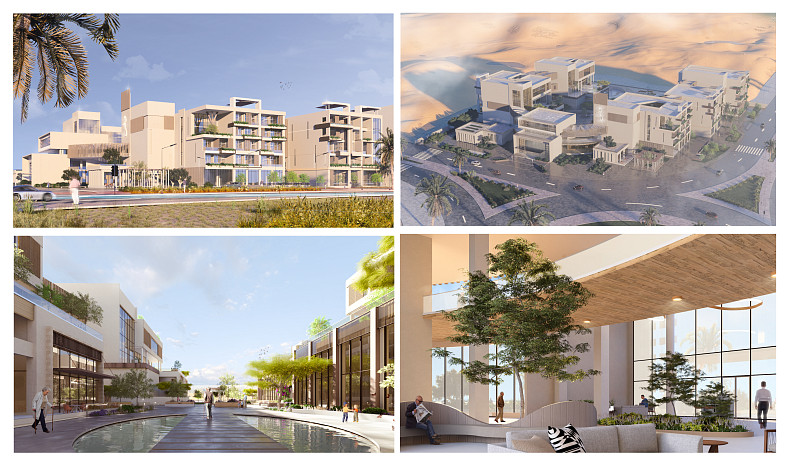
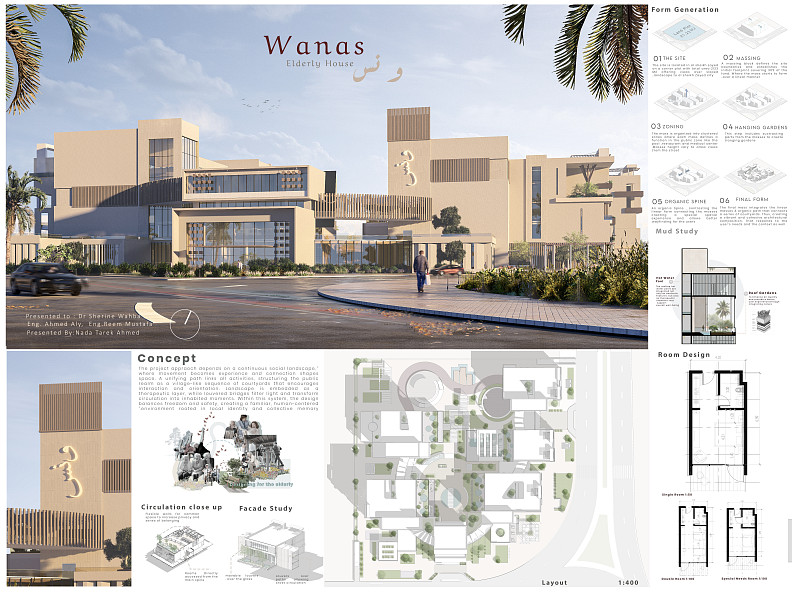
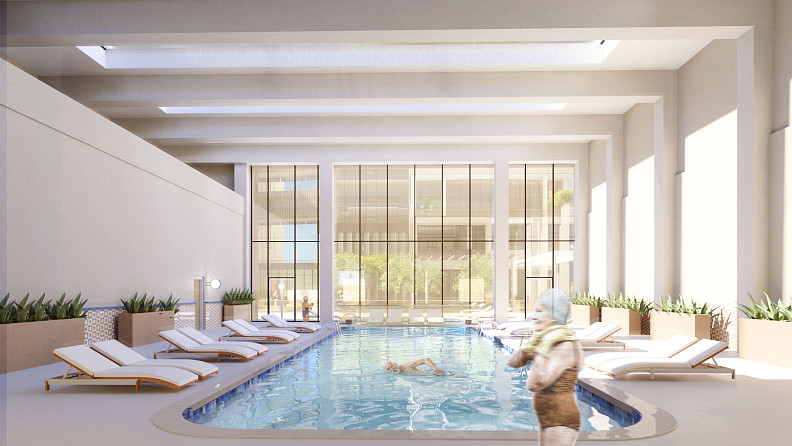
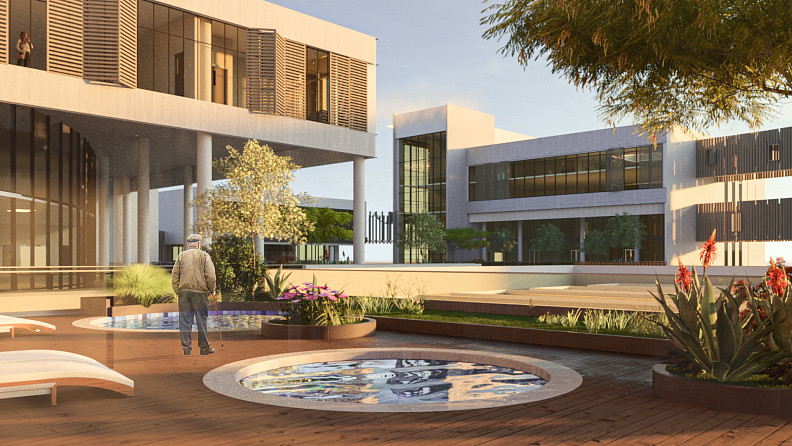
Wanas is conceived as a warm and human-centered elderly community that offers safety, comfort, and companionship for residents facing dementia, loneliness, or the emotional challenges of aging. The project moves away from the feeling of an institution and instead creates an environment where elderly people can feel cared for, familiar, and socially present. The idea is built around a continuous social path that connects the different activities of the project and turns movement into part of daily life. This path creates a sequence of courtyards, shared spaces, and landscape moments that encourage interaction, orientation, and a sense of belonging. It gives residents the freedom to move, explore, and engage with their surroundings while remaining within a safe and controlled environment. Landscape plays a therapeutic role throughout the project. Courtyards, hanging gardens, roof gardens, and hot water pools are integrated to support relaxation, memory, wellbeing, and environmental comfort. Through familiar materials, filtered light, shaded spaces, and locally rooted architectural language, the project aims to reconnect residents with memories of their past and create a place that feels close to home.
Project description
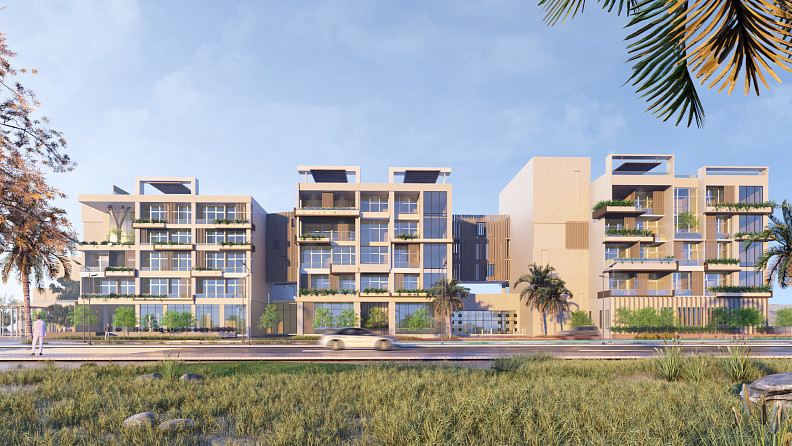
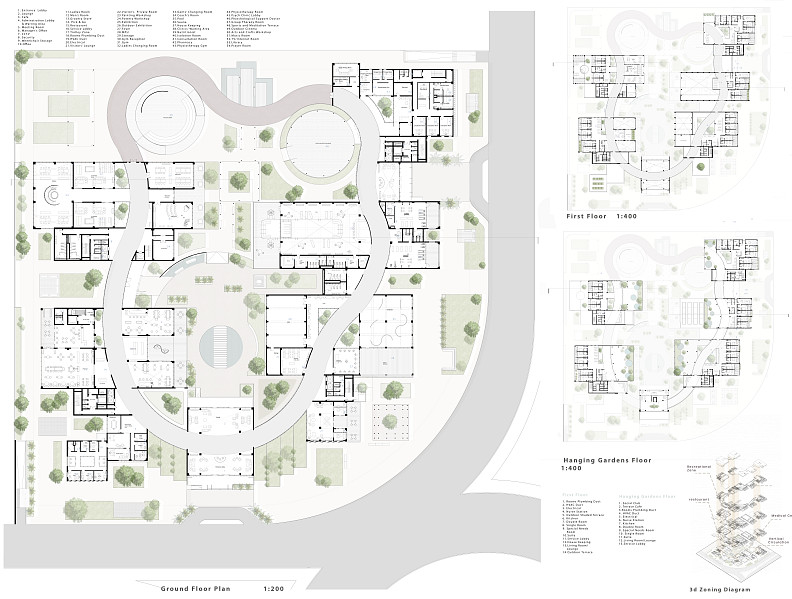
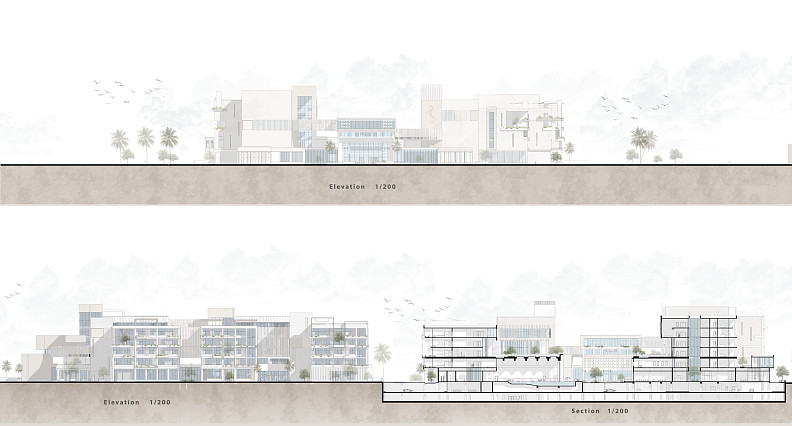
The project is organized as a group of clustered buildings connected by bridges and a continuous social path. The public part of the project is envisioned as a small village, where courtyards, shared functions, and landscape nodes create spaces for gathering, pause, and daily interaction. These spaces help residents understand and navigate the project through recognizable places and familiar spatial experiences. The ground level includes the main public and communal functions, such as reception, clinics, activity spaces, dining areas, lounges, and social facilities. These spaces are arranged around courtyards and landscaped paths to create an open and welcoming environment that supports movement, social connection, and intergenerational interaction. The upper levels include residential clusters, care spaces, and quieter therapeutic areas. Bridges connect the buildings and are designed as inhabited spaces rather than simple corridors. They offer seating, views, greenery, and moments of pause along the path. Covered with louvers, the bridges filter sunlight and create a soft play of light and shadow that enriches the daily experience of movement. Hanging gardens and roof landscapes soften the architecture and bring nature closer to every level. Together, the circulation, landscape, and clustered buildings create a cohesive elderly community that balances freedom and safety, supports social life, and offers residents a familiar environment rooted in local identity, memory, and care.
Technical information
site Area: 21,293 m² The project uses clustered buildings around open courtyards to improve daylight, ventilation, and spatial comfort. These courtyards act as environmental buffers, bringing natural light into the interior spaces while creating cooler shaded zones for daily movement and gathering. The structural system combines reinforced concrete frames with shear cores around stairs and elevators. These cores anchor the clustered buildings and bridges, while flat slabs allow flexible planning for residential, care, and communal spaces. Transfer beams or slabs are used where upper masses shift above open ground areas. Bridges are designed as inhabited structural connectors, supported by hidden steel trusses or Vierendeel frames integrated within their sides and louvered covers. The louvers filter sunlight, reduce glare, and create shaded, naturally ventilated circulation spaces between buildings. Green roofs, planted terraces, and hanging gardens improve the building’s thermal performance by reducing heat gain and softening exposed surfaces. They are supported by reinforced slabs or cantilevered elements, using lightweight soil, waterproofing, root barriers, drainage layers, and controlled irrigation. Natural and earthy materials help the project respond to its desert context by reducing visual harshness and creating a warmer, familiar atmosphere. Together, courtyards, cross ventilation, shaded bridges, green roofs, and planted terraces enhance comfort, reduce cooling loads, and support a healthier environment for elderly residents.

Copyright © 2026 INSPIRELI | All rights reserved. Use of this website signifies your agreement to the Terms of Use, Privacy Policy, and use of cookies.