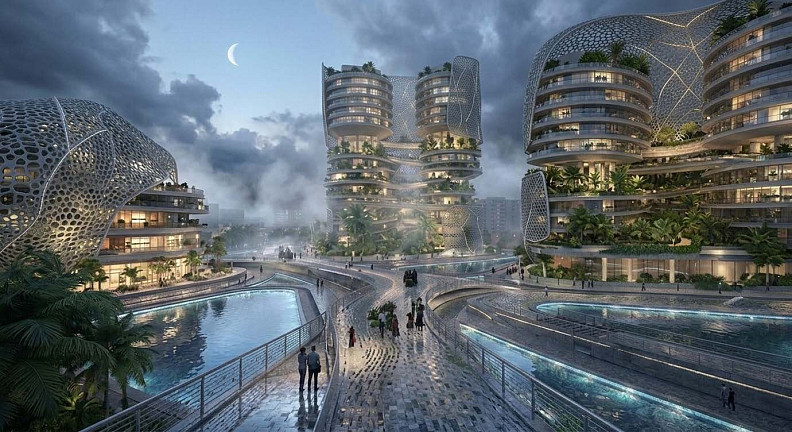
VERIDIAN NEXUS: The Neo-Metropolitan Paradigm
Project idea
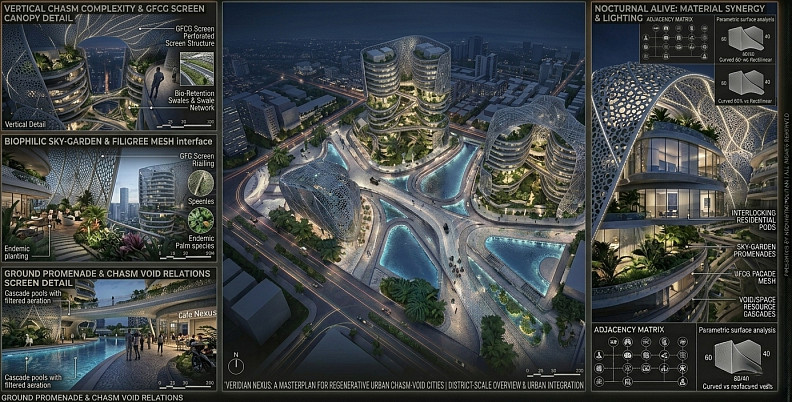
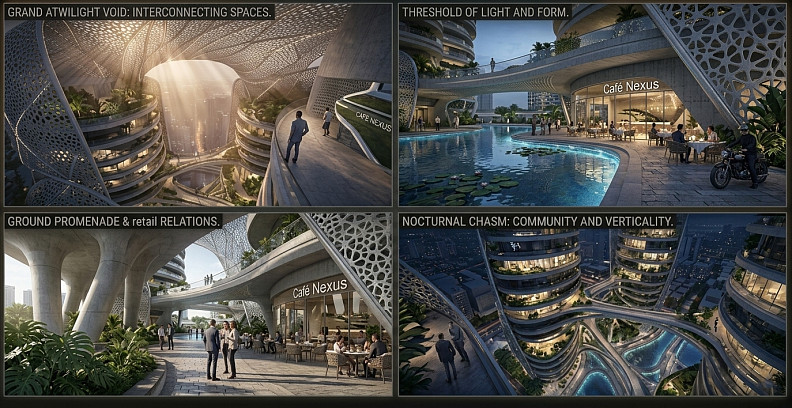
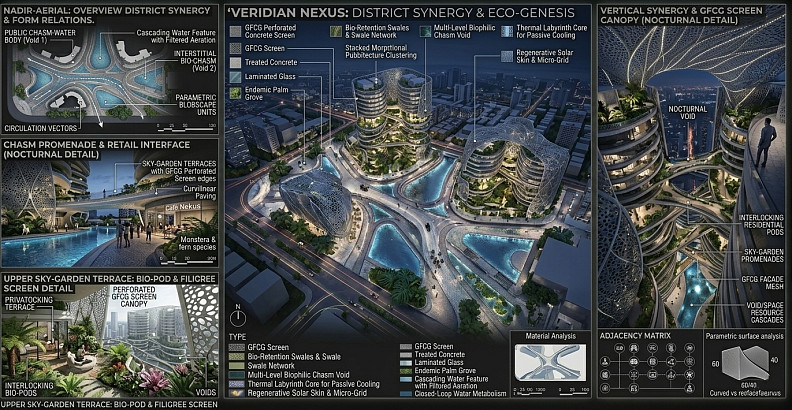
The modern metropolis suffers from a profound disconnection from the natural world. Veridian Nexus proposes a radical intervention: a district-scale urban integration that acts as a living, breathing ecosystem. By replacing rigid urban grids with a fluid "blobscape," this masterplan merges high-density interlocking residential pods with self-sustaining biophilic networks. It is a blueprint for regenerative urbanism, designed to heal the urban environment while providing an unparalleled quality of life.
Project description
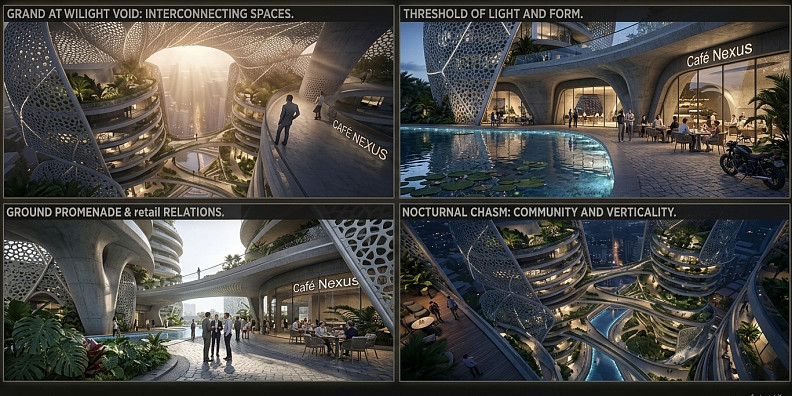
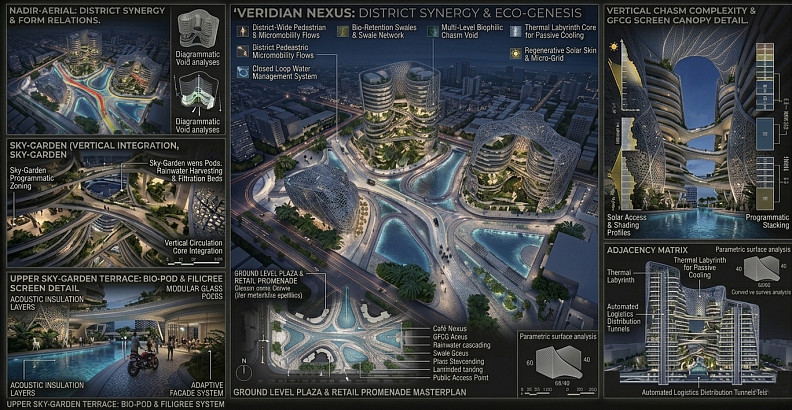
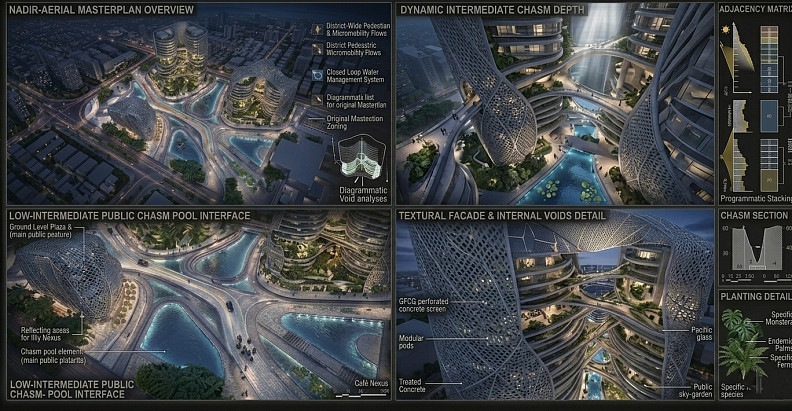
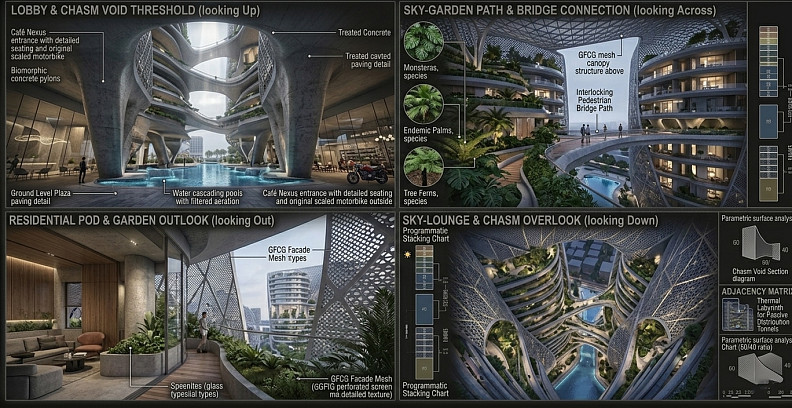
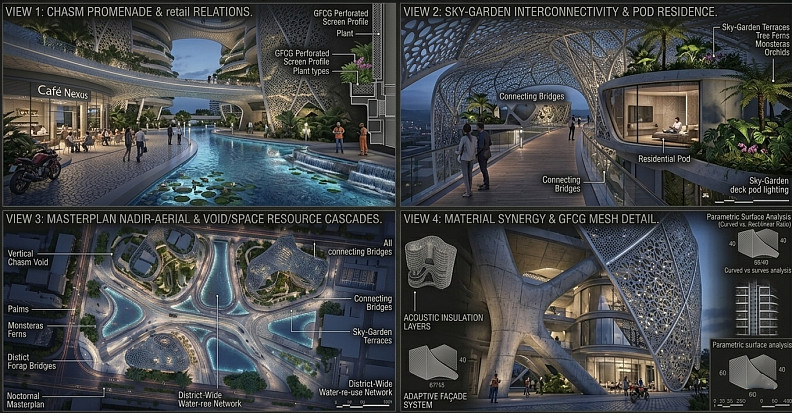
The Veridian Nexus solution transitions traditional high-density urban planning into a highly advanced, morphogenetic ecosystem. -The Morphogenetic Matrix (Form & Space)The 60:40 Rule: Explicit parametric surface distribution allocating 60% curved fluid surfaces (optimized for aerodynamic wind channeling and solar deflection) and 40% rectilinear internal configurations (for optimized structural modularity and spatial efficiency). -Thermodynamic Chasm-Void: A massive central canyon form that triggers a microclimatic stack effect, pulling cool air across ground-level water bodies and driving it vertically through the entire district. -Synergistic Circulation Networks -Multi-Tiered Public Realm: Ground plane completely emancipated from vehicular traffic. Active commercial promenades (Café Nexus concourse) flow naturally into segregated micro-mobility channels. -Interlock Sky-Bridges: High-altitude pedestrian avenues linking tower clusters directly, allowing fluid transit across the vertical eco-district without demanding descent to the ground plaza. Biophilic Integration & Resource Cascades : Nature is not an afterthought but the foundational infrastructure of this design. Sky-Garden Promenades: Multi-level terraces step down the building facades, heavily planted with endemic palm and flora species, creating continuous vertical green corridors. Void/Space Resource Cascades: The central chasms act as micro-climates. Cascade pools with filtered aeration systems run through the ground promenade, cooling the ambient air and creating a tranquil auditory backdrop for the "Cafe Nexus" and public plazas. Bio-Retention Swale Network: A sophisticated ground-level water management system naturally filters and recycles runoff, ensuring the lush landscapes remain self-sustaining. The project goes beyond regular city buildings, creating a modern urban space where people live alongside local nature in perfect harmony.
Technical information
-Structural Concept: Computational Biomimetic Exoskeleton with Hyper-Integrated Metabolism -Structural & Material Engineering Primary Substructure: High-performance, self-consolidating biomorphic concrete pylons (Grade C80/95). These elements utilize continuous topological optimization to morph fluidly from massive 4.5m ground columns into slender upper-level structural ribs. Floor Plate Assembly: Post-tensioned, lightweight voided slab system utilizing recycled polymer spheres, reducing structural dead weight by 22% and minimizing embedded carbon. Exoskeleton Network: Parametric GFCG (Glass Fiber Carbon Grille) composite structural frame. Mesh geometry is algorithmically varied via a continuous Voronoi tessellation logic to maximize structural depth at high-stress bridge junctions. -Glazing Specification: Triple-glazed structural units utilizing low-iron, ultra-clear glass with an active 0.22 Solar Heat Gain Coefficient (SHGC). Kinetic Micro-Shading: Electrochromic smart glass arrays integrated with dynamic parametric GFCG louvers. Louver rotation angles are automated via real-time sensory feedback loops tracking solar inclination. Building-Integrated Photovoltaics (BIPV): Solid-state Organic Photovoltaic (OPV) skins applied to all unshaded rectilinear south-facing orientations. Expected generation capacity: 4.8 W/m². -MEP, Sustainable Infrastructure, & Infrastructure Cycles Geothermal Thermal Labyrinth: Sub-grade air intake chambers passing through a 4.5-kilometer concrete labyrinth network at subterranean depths (-12 meters). Utilizes constant earth temperatures to pre-cool incoming fresh air to a stable 21°C prior to vertical distribution. Hydrological Metabolism: Closed-loop cascading water filtration network. High-volume bio-retention swales collect 100% of district stormwater. Greywater is routed through vertical subsurface wetland filters embedded in the sky-bridge podiums. Peak Filtration Throughput: 15,000 m³/day * District Self-Sufficiency Target: 100% Non-potable water independence District Micro-Grid: Decentralized grid infrastructure combining BIPV energy harvesting with solid-oxide hydrogen fuel cell storage layers anchored within the underground logistics tunnels.

Copyright © 2026 INSPIRELI | All rights reserved. Use of this website signifies your agreement to the Terms of Use, Privacy Policy, and use of cookies.