Takayyof - تَكَيُّف: Aqua-Agricultural Research & Development Center
Project idea
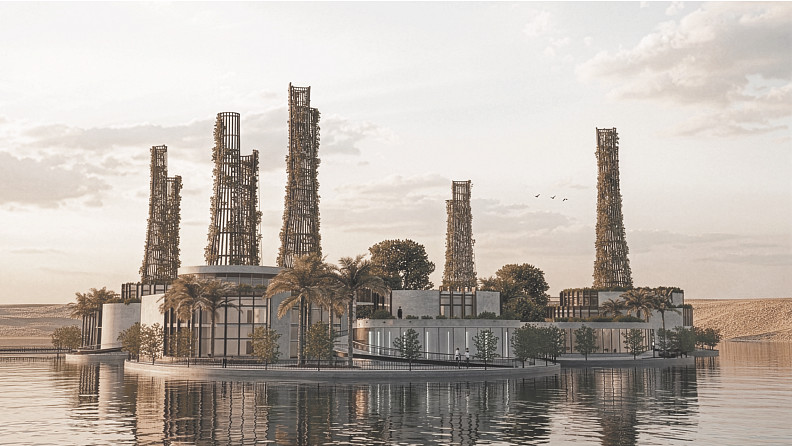
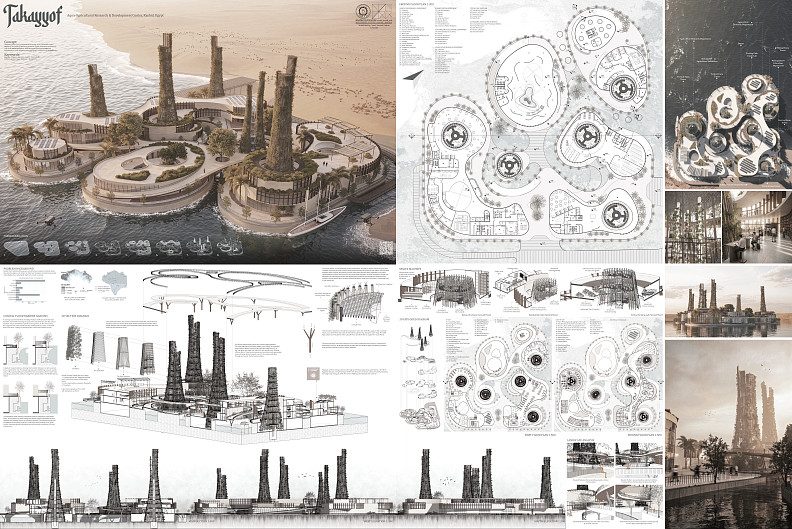
Takayyof is an Aqua-Agricultural Research and Development Center located in Rashid, El-Beheira, Egypt, and specializing in agriculture and aquaculture, fishing, marine ecosystems, and sustainable harvesting practices. This project is part of an inclusive city called the Blue Green Nexus, which aims to generate coastal economies for Rashid City through the integration of fishing and agriculture. The research aims to reach a design for the project that responds effectively to the context, functional requirements, and aesthetic values. The research seeks to overcome the local economic crisis in Rashid by introducing advanced technology and sustainable harvesting methods. These strategies ensure productivity without compromising the well-being of nature, harming the environment and ecosystem, and excessive usage of water. Furthermore, the research addresses environmental challenges intensified by climate change, such as salinity intrusion and ecosystem degradation. It also aims to provide the people of Rashid with educational and post-graduate studies opportunities, which ensure innovation and long-term development.
Project description
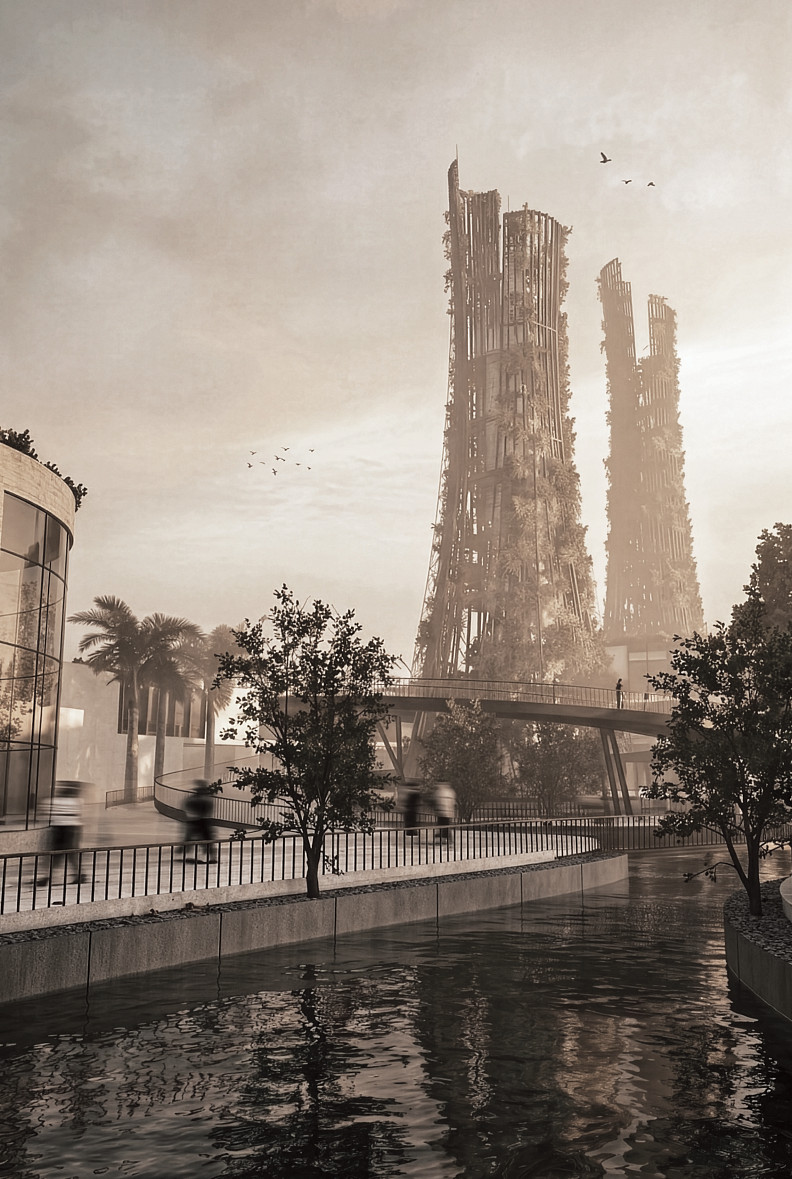
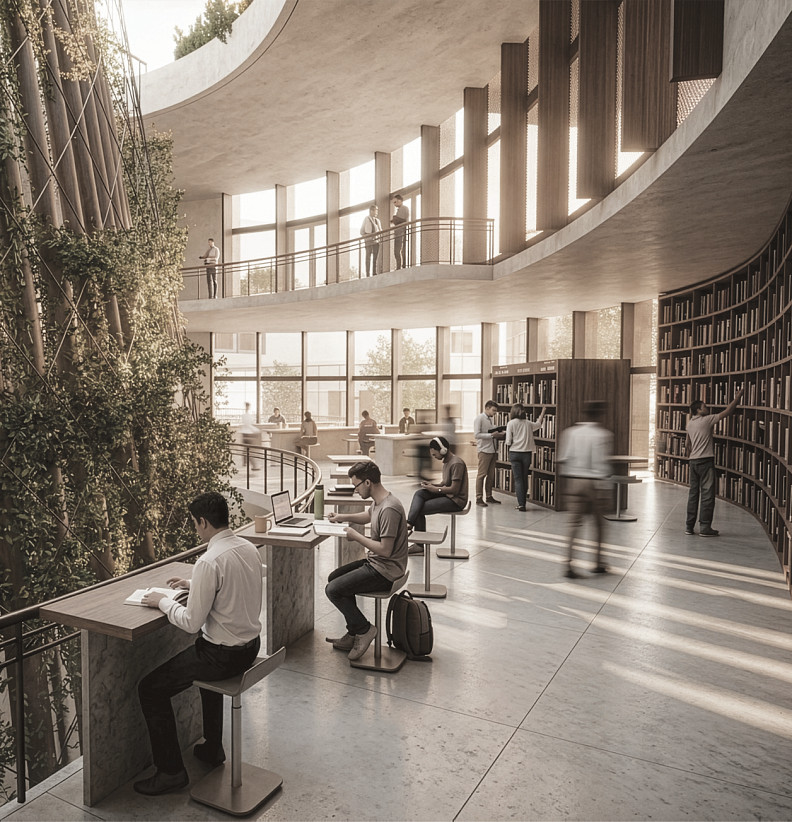
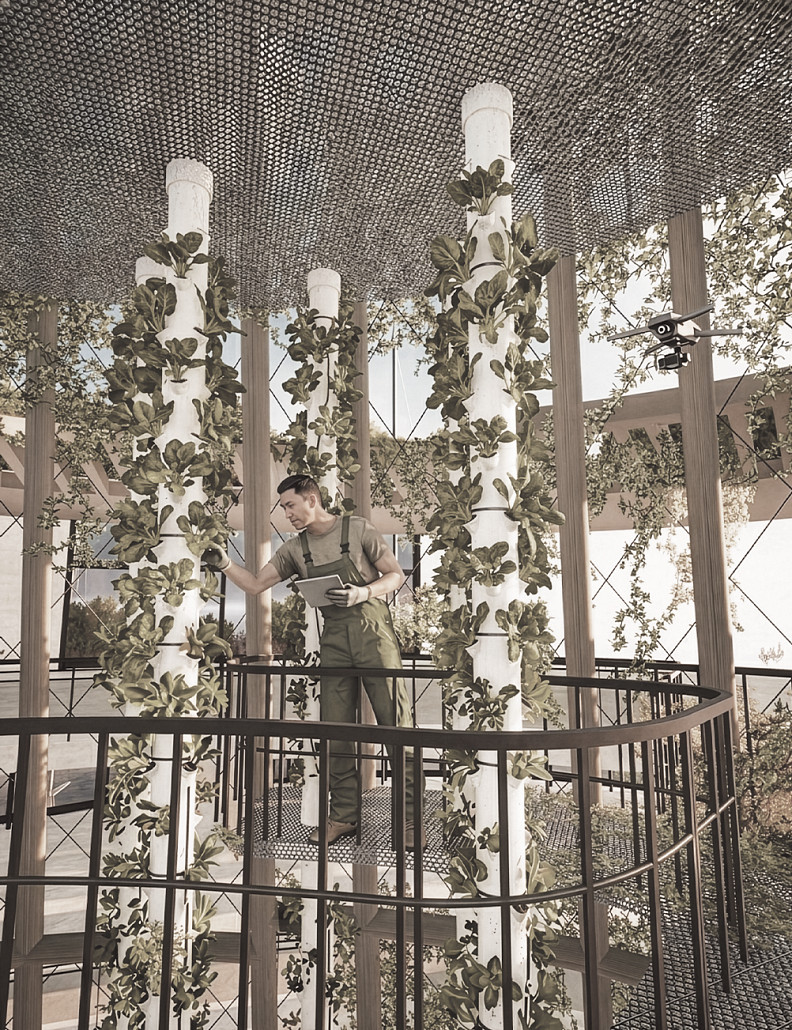
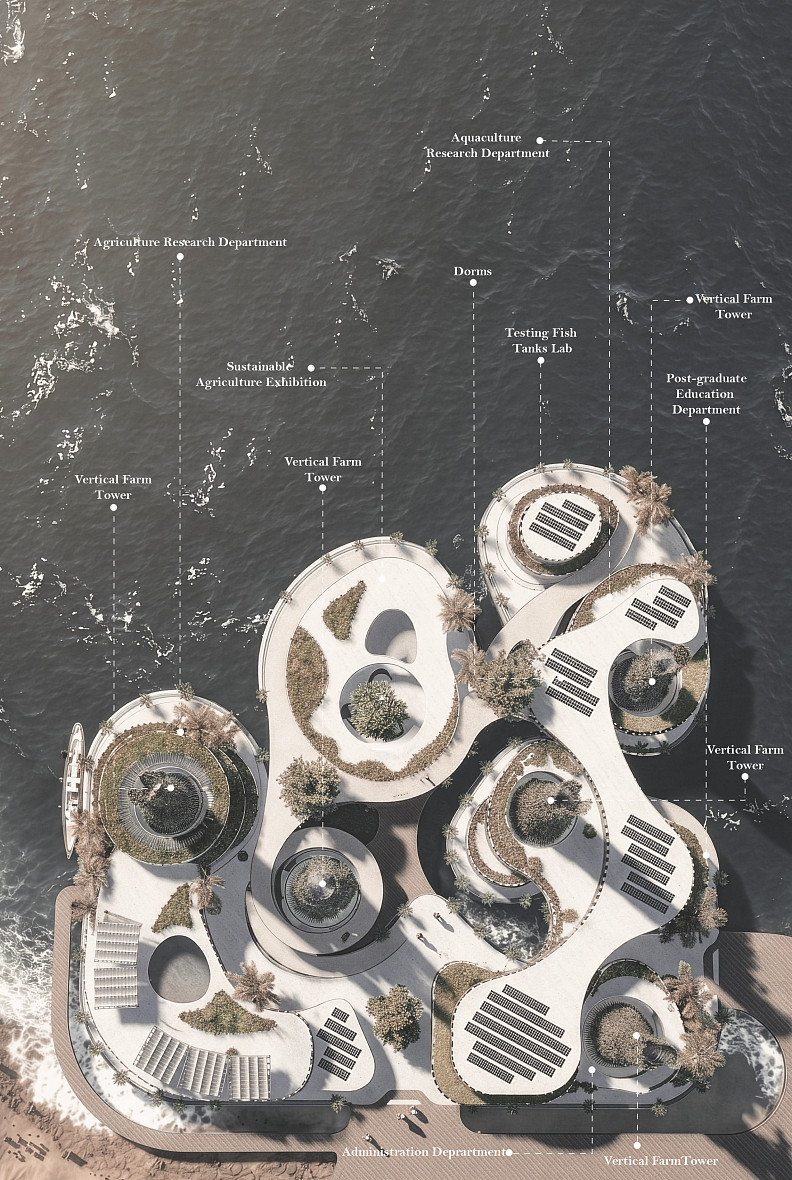
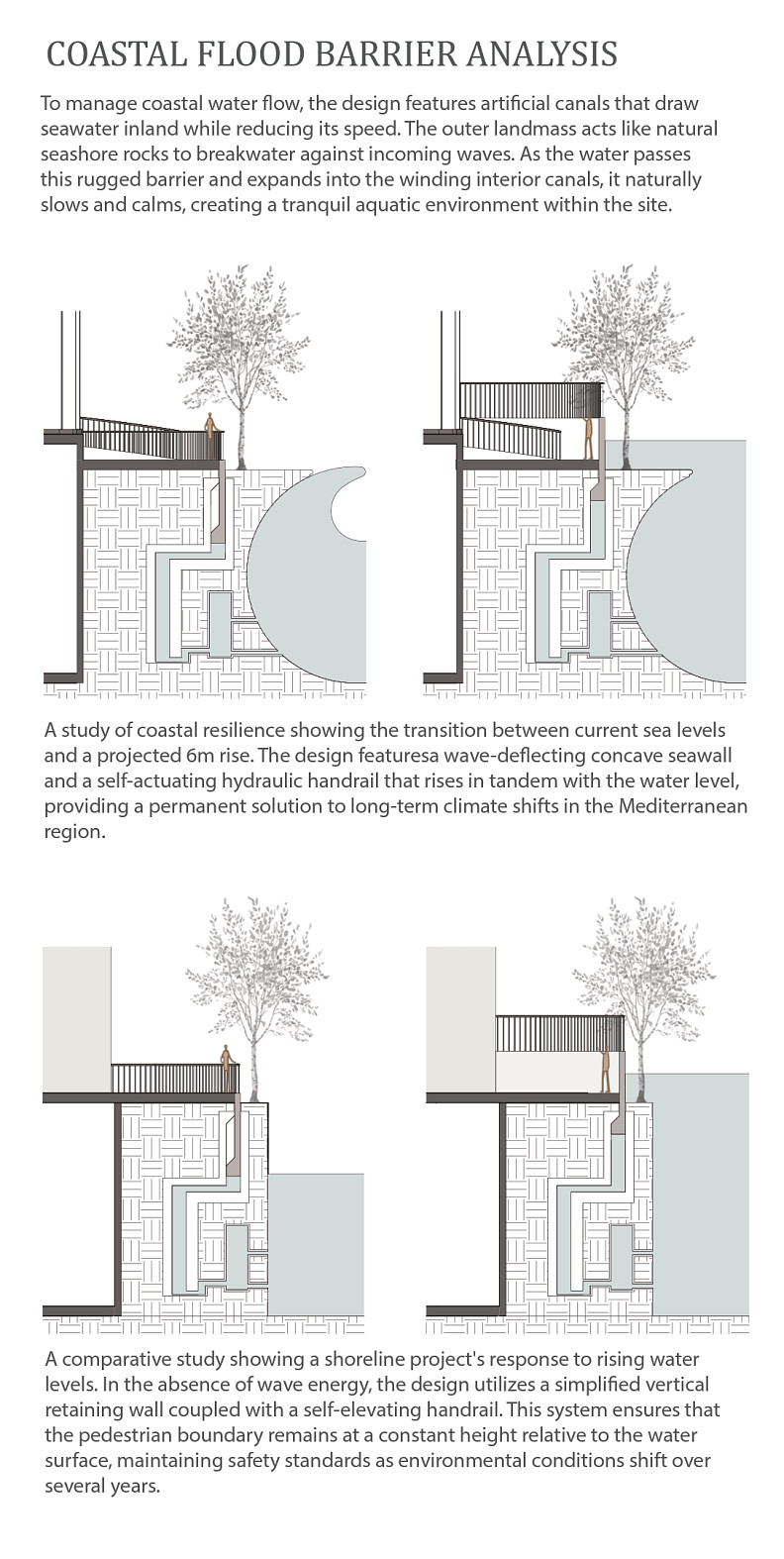
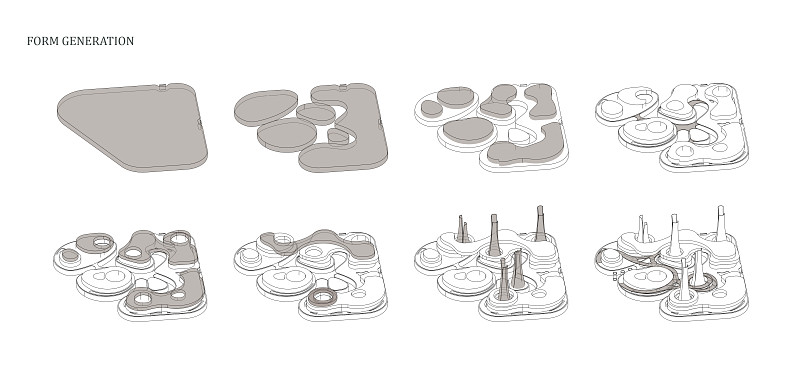
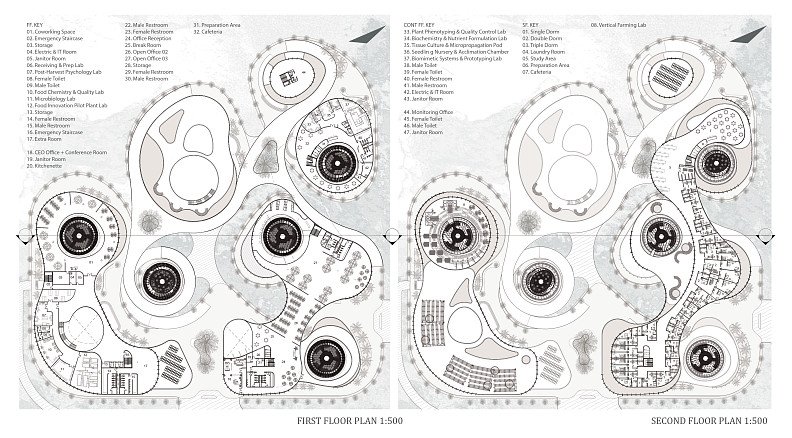
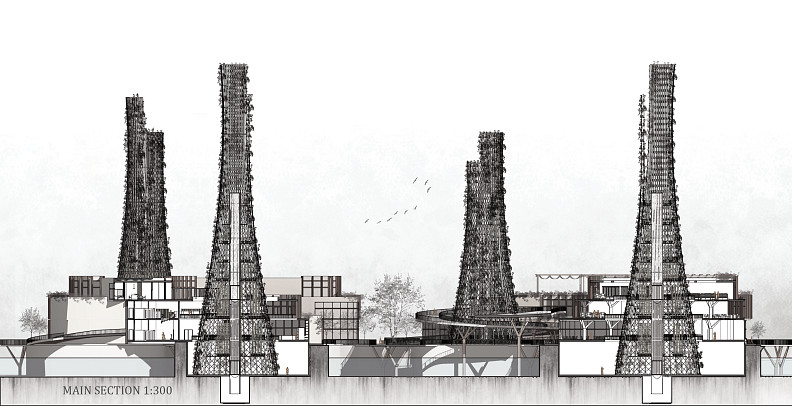
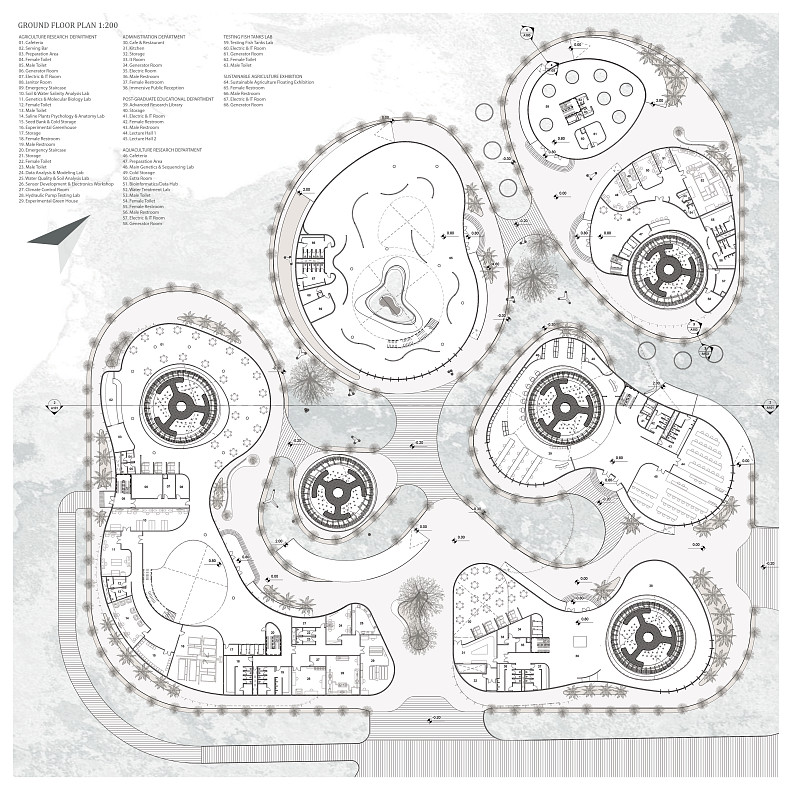
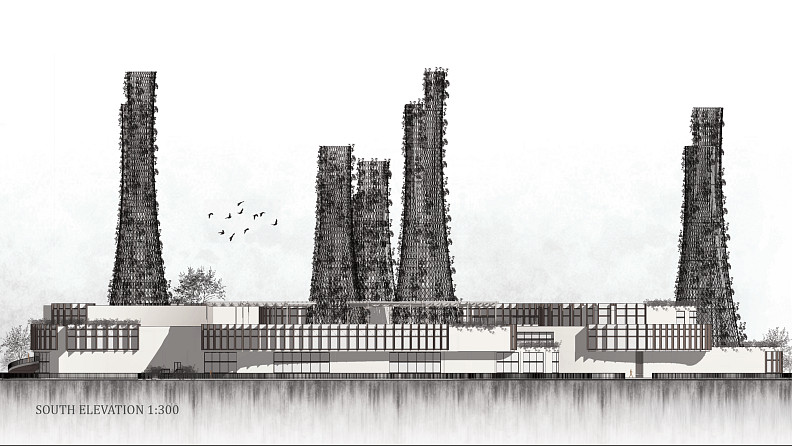
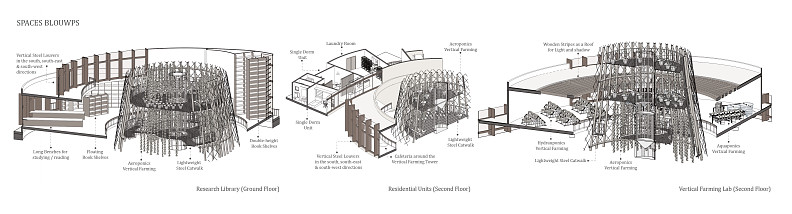
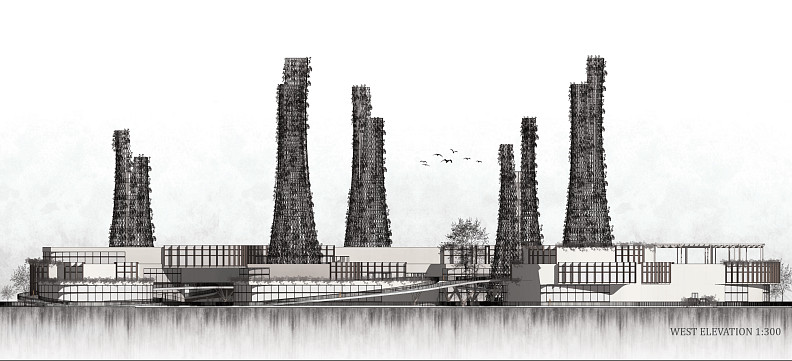
Takayyof is a framework for adapting aqua-agriculture systems to respond to the growing environmental threats and economic underdevelopment affecting Rashid City in northern Egypt. Operating within a highly vulnerable coastal ecosystem, the proposed project aims to create a regenerative blue-green research facility that will reestablish ecological sustainability and simultaneously upgrade traditional methods. To control the flow of the waters from the coast, the design incorporates manmade channels that pull water inland, but at the same time slow it down, forming 5 islands. The exterior landscape is made up of natural formations like seashore rocks, which function to break any incoming waves. After passing through this tough landscape, the water slows and becomes calm inside the channels. The Project consists of 5 departments: Agriculture Research Department, Aquaculture Department, Administration Department, Post-graduate Education Department, Students Residental Dorms, and Sustainable Agricultural Exhibition. There are also 5 Vertical Farming Towers with aeroponics inside and vertical facades farming outside, placed in the public spaces like: Research Library, Public Reception, Cafeterias, etc., to be a motivation for students and researchers to keep up the hard work, seeing their plants growing in front of their eyes all the time, even if not in labs. Coastal Flood Barriers are also applied, and they are of two types: one type contains a wave-deflecting concave seawall, positioned in areas with sea waves, while the other type includes a vertical cross-section. In addition, both types contain a self-raising handrail that adjusts its position according to the increase in water level. Thus, this mechanism maintains the pedestrian margin at a fixed level with respect to the sea level, adhering to the safety criteria under changing environmental conditions up to a particular limit.
Technical information
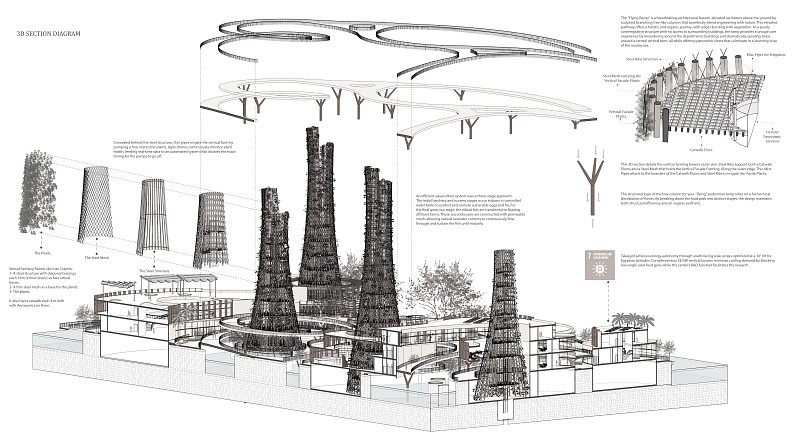
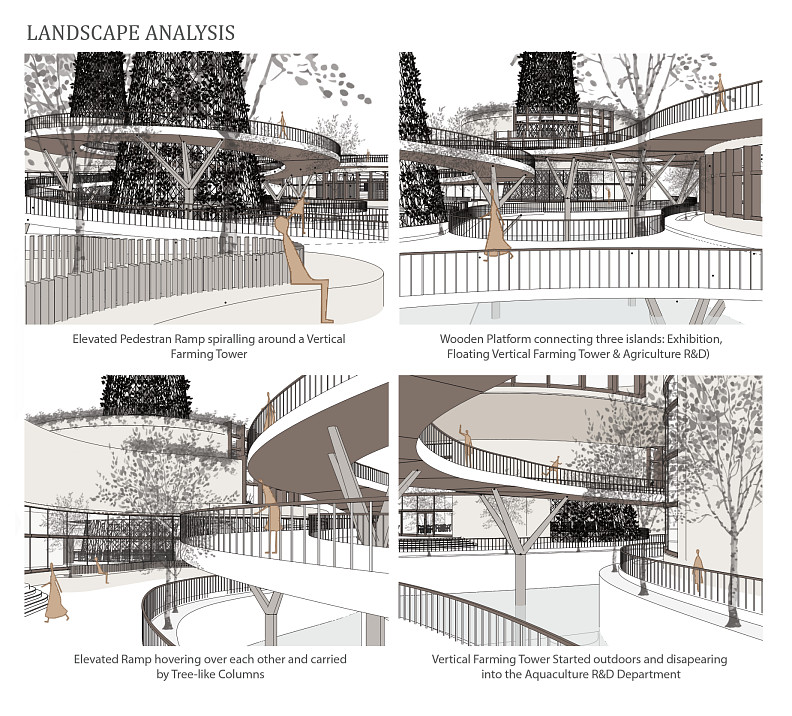
Structural concrete combined with off-white exterior-grade micro-cement finish and brown-coated galvanized steel, along with triple-glazed light-bronze reflective glass, form an aesthetically cohesive combination of state-of-the-art agro-ecological engineering and geometrical nature. Moreover, the design development of the upper layers of the structure demonstrates the attention paid to environmental adaptation and SDG-7, with the integration of photovoltaic solar panels, louvers in the south, south east, and south west directions, triple-glazed reflecting glass curtain walls, large green roof areas for thermal mass, and elevated pedestrian walkways connecting all aspects of the building into one coherent entity. The three-layer skin on the vertical farm tower comprises a brown galvanized steel skeleton with diagonal bracing every 16 meters (equivalent to four floors), which allows it to withstand lateral forces, and a light steel mesh that forms the base for the plant and the plant itself. The catwalk is present every four meters from the steel skeleton, and in the middle is the vertical hydraulic panoramic circular elevator. The thin pipes behind the steel skeleton provide irrigation to the vertical wall plants using mist sprays.
Sarah Casbar
Cairo University, Faculty of Engineering Architecture Department.
Egypt
Arquitetura
Projeto submetido
11. 06. 2026Etiqueta
Conselho a estudantes

Copyright © 2026 INSPIRELI | All rights reserved. Use of this website signifies your agreement to the Terms of Use, Privacy Policy, and use of cookies.