Orchard of Knowledge
Project idea
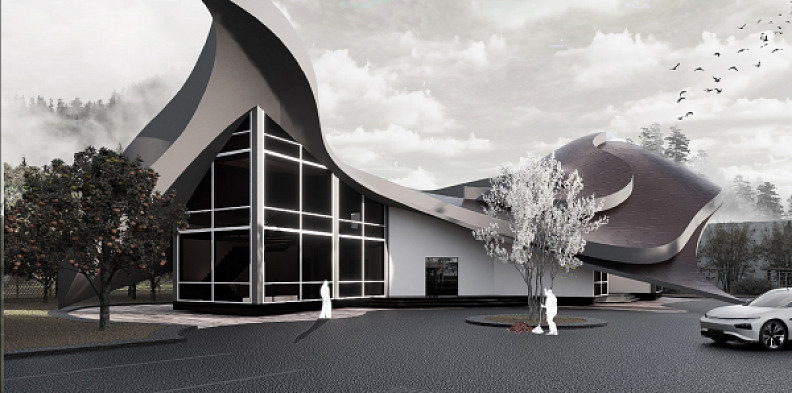
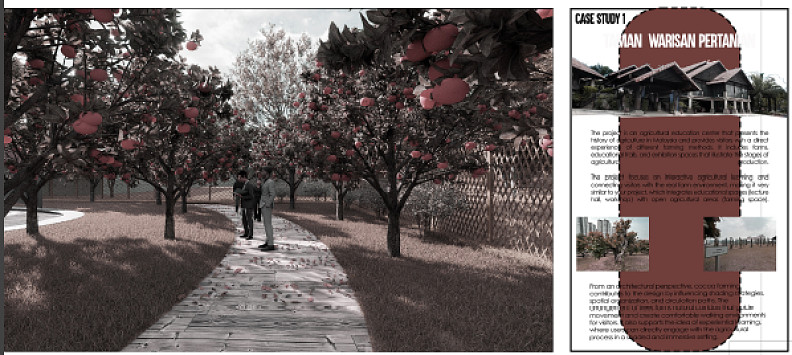
Orchard of Knowledge is an agro-educational farming centre that positions the act of growing as the most fundamental form of learning. Located within Putrajaya, Malaysia, the project brings together agricultural production and structured education under a single, cohesive architectural vision a place where the rhythms of farming become the curriculum, and the landscape itself becomes the classroom. The project is grounded in a simple but powerful conviction: that understanding where food comes from, how it grows, and what it demands of its cultivator builds a deeper form of intelligence than any textbook alone can offer. Orchard of Knowledge translates this conviction into space, creating an environment where children, students, community members, and urban residents engage directly with the full cycle of food production planting, tending, harvesting, and reflecting. The dual programme of farming and education is woven together rather than separated. Growing beds, nursery zones, and orchard plots occupy the same territory as learning pavilions, open-air classrooms, and interpretive trails. There is no hard boundary between where the farm ends and the school begins; the two are deliberately and productively entangled, so that every farming activity carries an educational dimension and every learning moment is grounded in direct agricultural experience. Within a 300 m² built-up footprint, the architecture operates with discipline and intention. Compact built forms open generously onto cultivated landscapes, ensuring that the productive ground always remains the dominant spatial experience. Covered walkways connect programme nodes, sheltering visitors from tropical rain while framing views across growing plots at every turn. Orchard of Knowledge aspires to become a civic anchor within Putrajaya a living institution that grows food, cultivates minds, and deepens the community's relationship with the land beneath the city.
Project description
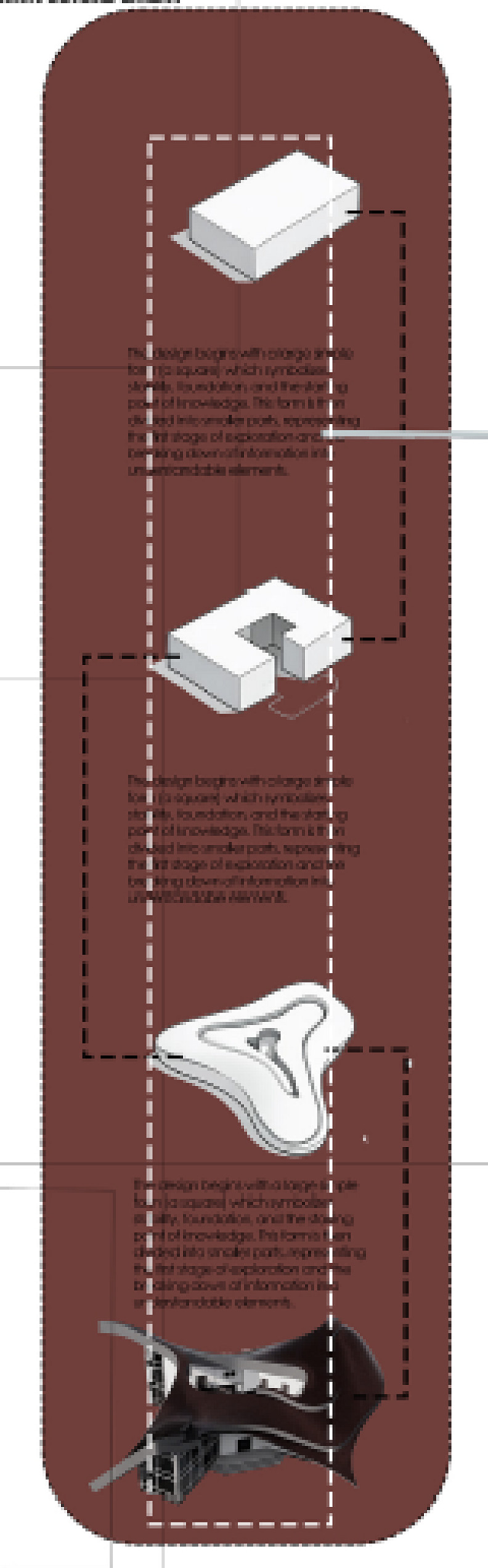
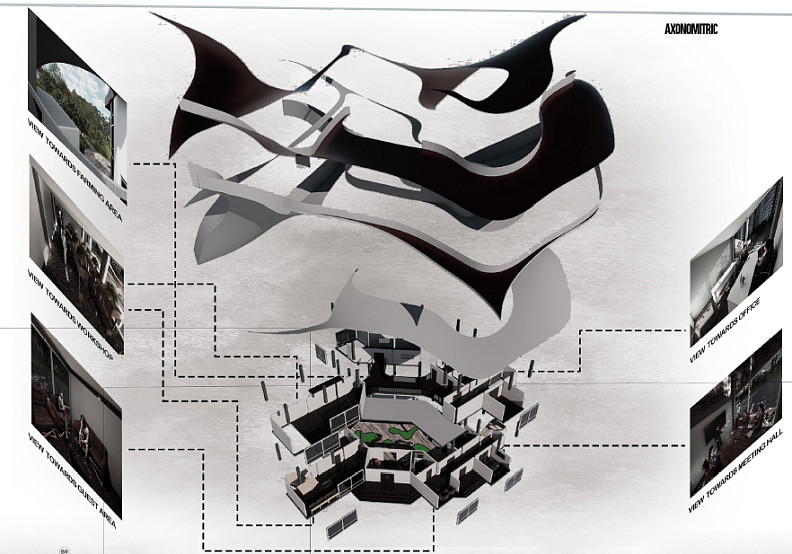
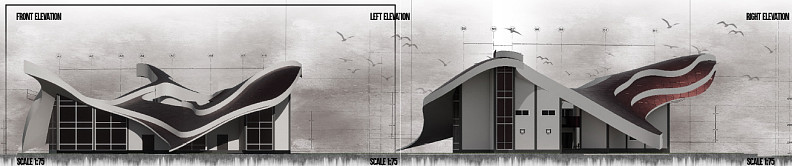
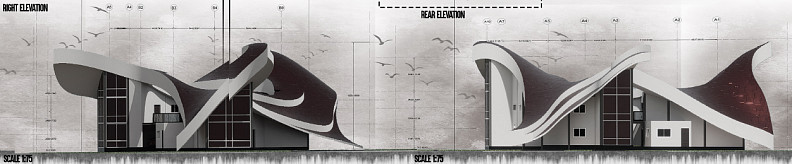
Orchard of Knowledge is planned as a continuous experiential loop a spatial sequence that guides visitors from arrival through cultivation, learning, harvest, and reflection, before returning them to the entry point enriched by the full journey. This looped circulation strategy is the organisational backbone of the project, ensuring that no space is experienced in isolation and that every architectural moment is understood as part of a larger, interconnected narrative of growing and knowing. The site is zoned into three distinct but overlapping planning layers. The first is the productive layer comprising open farming plots, raised growing beds, nursery propagation zones, and orchard planting areas that occupy the majority of the ground plane. The second is the educational layer — a series of covered learning pavilions, open-air classrooms, and interpretive display corridors distributed across the site at intervals that punctuate the agricultural landscape without dominating it. The third is the connective layer a network of shaded walkways, pergola-covered paths, and transition courtyards that stitch the productive and educational zones into a single, legible whole. Architecturally, the built elements are composed around a clear hierarchy of enclosure. Fully enclosed spaces the seed library, demonstration kitchen, and workshop studio are compact, thermally controlled volumes anchored at the heart of the plan. Semi-enclosed spaces the learning pavilions and harvest shelters extend outward from this core, their open sides dissolving the boundary between interior and agricultural landscape. Fully open structures pergolas, trellised walkways, and canopy frames form the outermost architectural layer, mediating between the built environment and the cultivated ground beyond. Facade treatments respond directly to orientation and programme. North and south elevations are open and permeable, maximising natural cross-ventilation across teaching and farming spaces. East and west elevations are screened with vertical timber louvres and climbing plant trellises, filtering the low morning and afternoon sun while integrating the building envelope into the broader horticultural character of the site. The planning of Orchard of Knowledge resists the institutional legibility of a conventional school or farm. Instead, it presents itself as a landscape first and a building second a place where architecture earns its presence by serving the ground it occupies and the community it cultivates.
Technical information
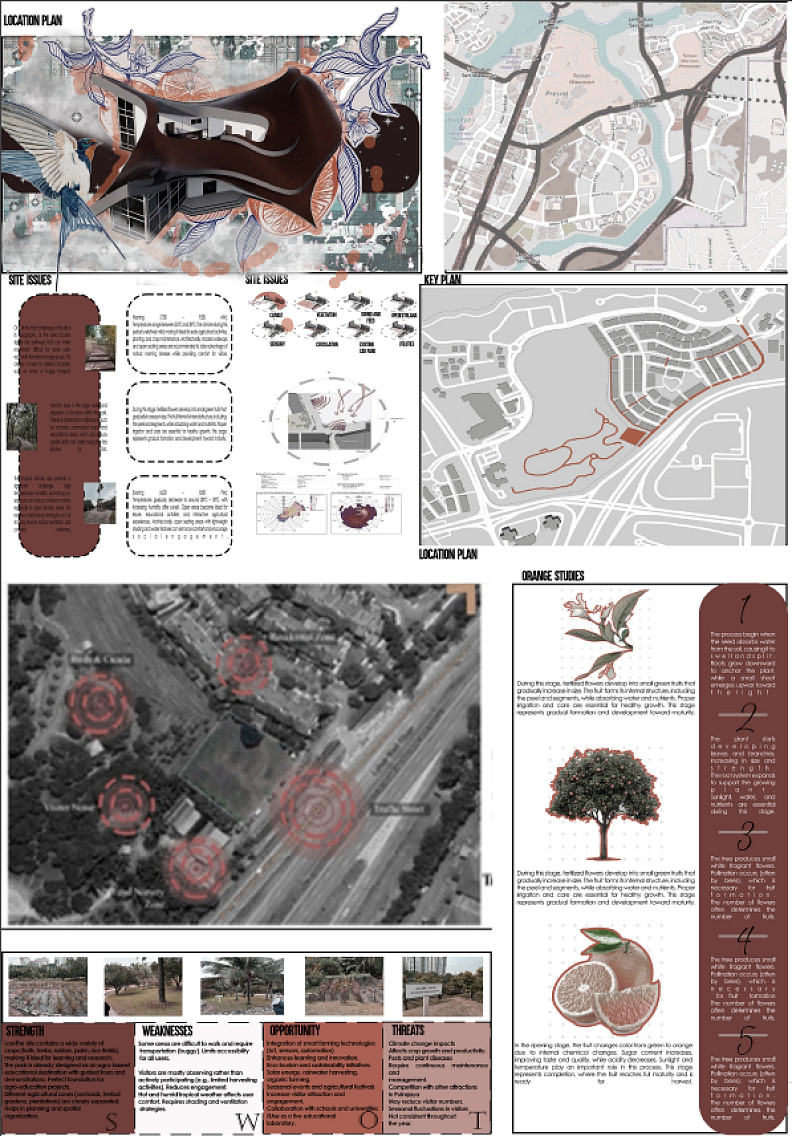
The technical documentation of Orchard of Knowledge is organised across a comprehensive set of architectural drawings that communicate the project at multiple scales from site strategy to construction detail. The drawing set is structured to convey not only the spatial and formal intentions of the project but also the precise structural logic that enables those intentions to be realised within a compact 300 m² built-up footprint on Putrajaya's civic terrain. The site plan establishes the overall planning geometry, documenting the arrangement of farming plots, built programme nodes, circulation networks, and landscape interventions relative to site boundaries and existing urban context. Key site data — orientation, prevailing wind direction, solar angles, and stormwater drainage gradients — are annotated directly onto the site plan, grounding every subsequent architectural decision in its environmental and locational reality. Floor plans are drawn at 1:50 scale, detailing the precise spatial organisation of each programme element. Room layouts, growing bed dimensions, circulation widths, and threshold conditions are all documented with sufficient resolution to communicate both the architectural experience and the technical requirements of the farming and educational operations within. Sections are the primary vehicle for communicating structural logic. The building section reveals a post-and-beam structural system constructed from a combination of reinforced concrete columns and glued laminated timber beams. Concrete columns of 200mm by 200mm cross-section rise from pad footing foundations, transitioning at eave level to glulam primary beams that carry the roof structure across spans of up to six metres. Secondary timber purlins span between primary beams at 600mm centres, supporting a corrugated metal deck roof with insulated sarking above. Wall construction details document the assembly of the building envelope across three distinct conditions: the fully enclosed masonry walls of the seed library and workshop core, constructed in 150mm autoclaved aerated concrete blockwork with cement render finish; the semi-open timber louvre screens of the learning pavilions, framed in treated hardwood at 100mm by 50mm sections with adjustable blade angles; and the open steel and polycarbonate canopy structures of the farming shelters, detailed with aluminium extrusion connections and twin-wall panel systems. Foundation details confirm shallow reinforced concrete pad footings beneath each column position, connected by a ground-bearing tie beam network that distributes lateral loads and controls differential settlement across the site. A 125mm reinforced concrete slab on grade serves all enclosed and semi-enclosed floor areas, finished with a non-slip ceramic tile in teaching zones and left as exposed burnished concrete across farming and transition spaces. All structural elements are designed in accordance with Malaysian standards MS EN 1990 to MS EN 1995, ensuring full compliance with local loading requirements, wind uplift conditions, and material performance criteria appropriate to Putrajaya's tropical climate and the moisture-intensive demands of an active agro-educational facility.
Projeto submetido
12. 06. 2026Etiqueta
- Schools
- Nursery
- University
- Library
- Other
- Playground
- Parks
- Public spaces
- Gardens
- Waterway
- Cemetery
Conselho a estudantes

Copyright © 2026 INSPIRELI | All rights reserved. Use of this website signifies your agreement to the Terms of Use, Privacy Policy, and use of cookies.