AGBAJO OWO
Project idea
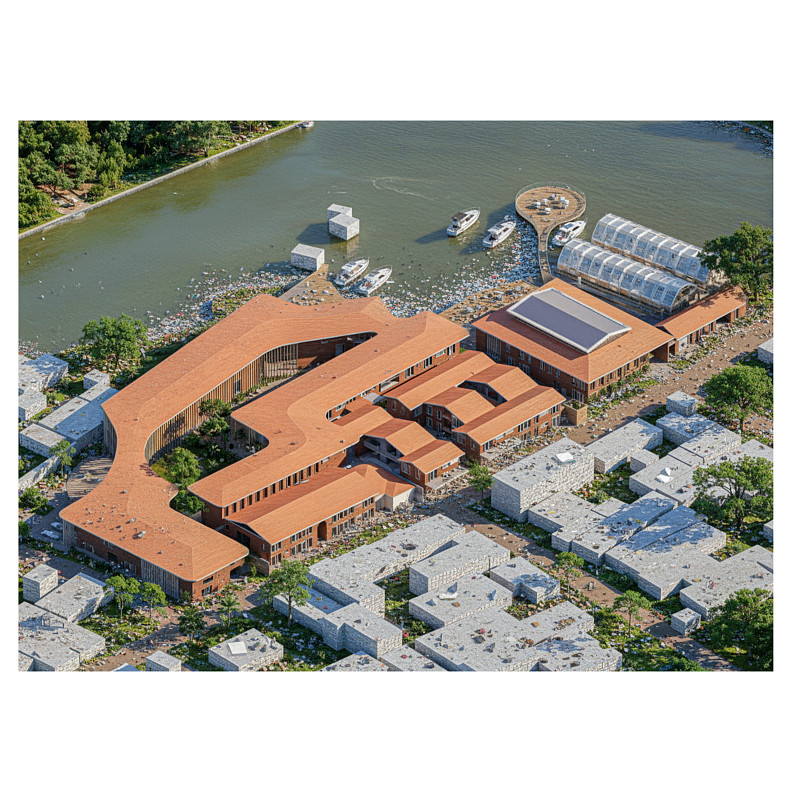
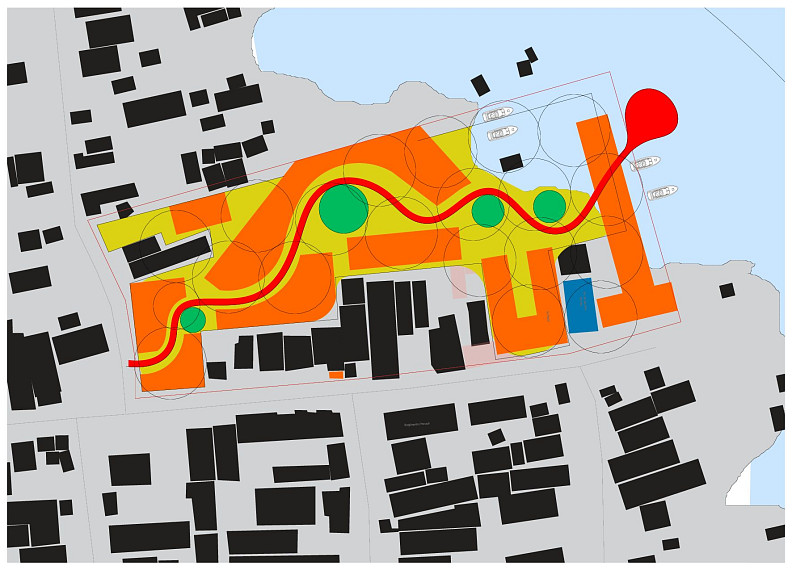
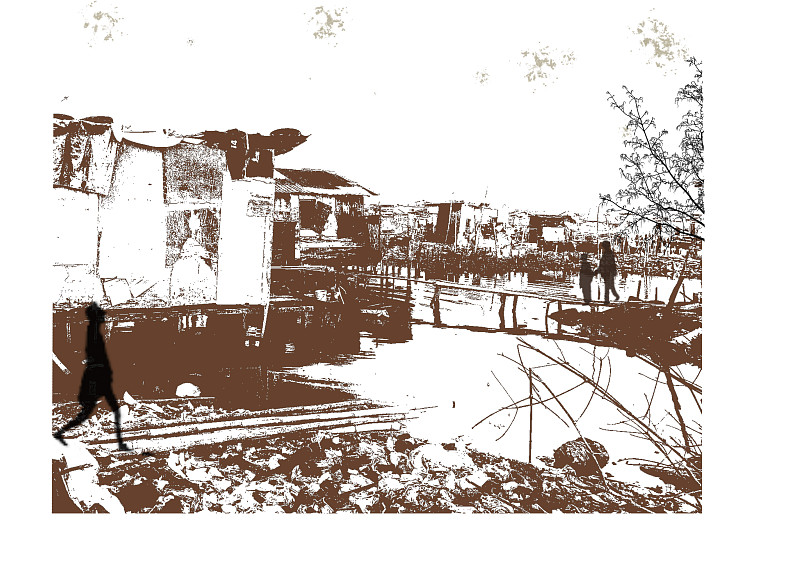
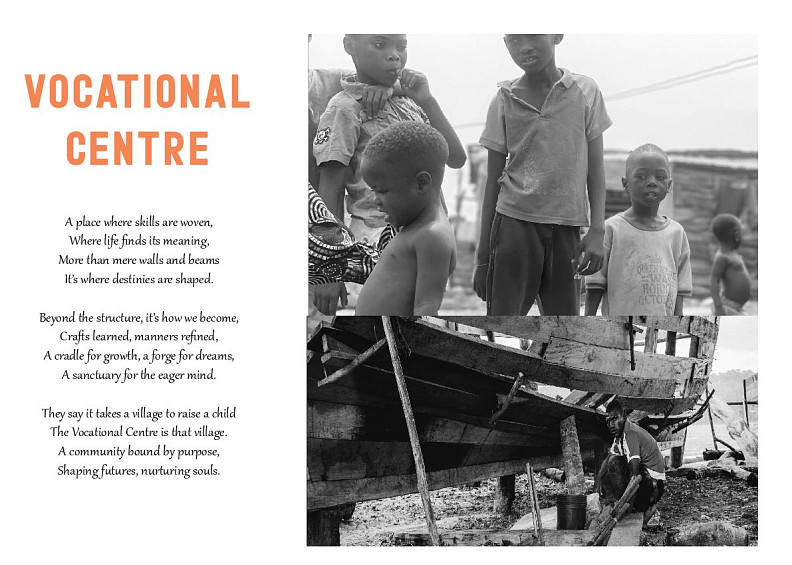
Agbajo Owo: A Vocational Innovation Centre for Community Renewal Agbajo Owo, meaning “Connected Hands for Growth,” is a vocational innovation center proposed for Oworonshoki, Lagos. The project emerged as a response to recurring demolitions and displacement within waterfront communities, advocating for upgrading and renewal rather than erasure. Inspired by the resilience, collaboration, and cultural identity of the local residents, the design seeks to create opportunities for learning, livelihood, and social interaction. The project combines vocational training, environmental sustainability, and community development within a single framework. It provides spaces for ICT education, domestic and craft-based skills training, recycling, aquaponics, fishing, and boat-making activities. Existing viable structures are retained and upgraded, while new interventions are connected through a central pedestrian spine that links the community from Lone Street to the lagoon. The primary goal of the project is to empower residents through skills acquisition and economic opportunities while strengthening social cohesion and environmental stewardship. By transforming waste into resources, promoting sustainable livelihoods, and preserving cultural activities, Agbajo Owo demonstrates how architecture can become a catalyst for inclusive urban regeneration and long-term community resilience.
Project description
The project consists of the design of a vocational innovation center within the Oworonshoki waterfront community, Lagos. The main part of the project is the vocational training hub, which provides spaces for ICT education, tailoring, hairdressing, carpentry, and other skill-development programs aimed at improving livelihoods and promoting economic empowerment. The project also includes a recycling and environmental learning facility, aquaponics and urban farming areas, fishing and boat-craft training spaces, administrative and support facilities, community gathering spaces, and landscaped outdoor areas connected by a central pedestrian spine. Existing residential structures that are structurally sound are retained and upgraded, while new interventions are carefully integrated into the site. Designed as a catalyst for community renewal, the project combines education, sustainability, cultural preservation, and economic development to create an inclusive environment where residents can learn, work, interact, and grow together.
Technical information
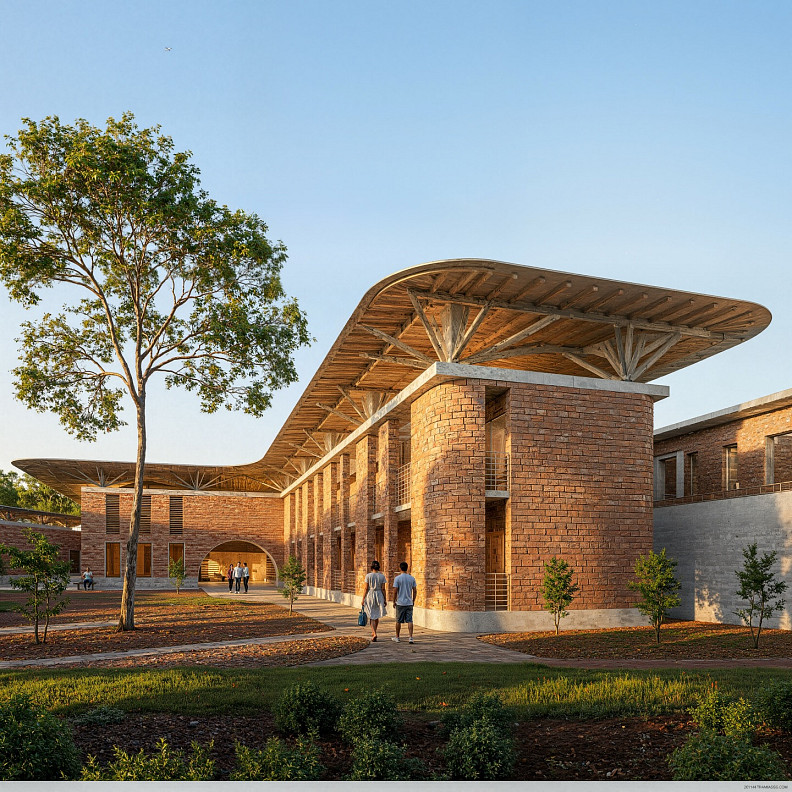
The proposed Vocational Innovation Centre is constructed using sustainable, locally sourced, and environmentally responsible materials suitable for the waterfront conditions of Oworonshoki, Lagos. The primary walling material consists of Compressed Stabilized Earth Bricks (CSEB), selected for their low embodied carbon, thermal efficiency, durability, and reduced environmental impact compared to conventional fired bricks. The exposed earth blocks contribute to indoor thermal comfort while reflecting the local character of the community. The building substructure comprises reinforced concrete foundations and elevated plinths designed to withstand the site's wetland conditions and seasonal flooding. Structural elements are reinforced where necessary to ensure stability and long-term performance. The roof structure is formed with bamboo and sustainably sourced timber members, creating a lightweight yet durable framing system. The large canopy roof incorporates bamboo latticework and timber trusses, providing shade, natural ventilation, and protection from heavy rainfall while minimizing material consumption. Perforated earth-block screen inserts are integrated into the façade to improve airflow, daylight penetration, and passive cooling. Openings are strategically positioned to maximize cross-ventilation and reduce dependence on mechanical systems. The project incorporates recycled plastic components within site furniture, educational installations, and recycling workshops, reinforcing the project's pedagogical approach to waste transformation. Recovered materials from the community are repurposed wherever feasible as part of the construction and learning process. External pathways are constructed using permeable paving and locally sourced materials to improve drainage and reduce surface runoff. Landscape interventions support biodiversity and environmental restoration. Sustainable systems integrated into the project include natural ventilation strategies, waste recycling facilities, aquaponics infrastructure, and low-energy construction methods. Together, these elements create a resilient and environmentally conscious development that promotes community learning, economic empowerment, and ecological stewardship.
Projeto submetido
15. 06. 2026Etiqueta
Conselho a estudantes

Copyright © 2026 INSPIRELI | All rights reserved. Use of this website signifies your agreement to the Terms of Use, Privacy Policy, and use of cookies.