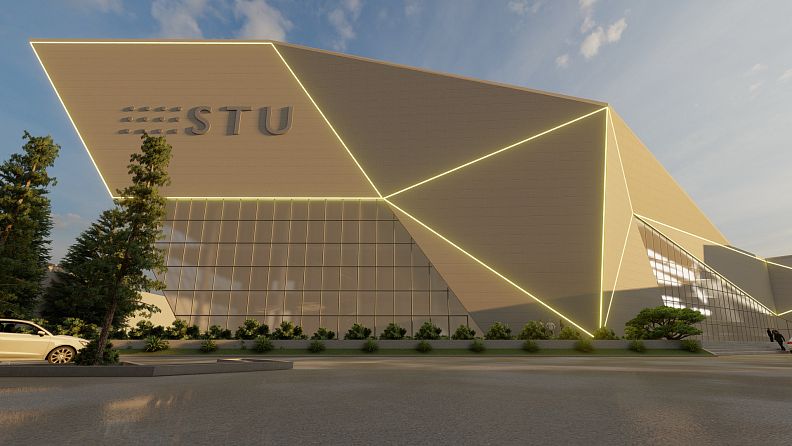
Net+ : The Hidden Gem for STU Research Center
Project idea
In the middle of mass architecture development and its context with the global crises, then how to create an Innovative Research Center in which its technology could also help the realization of sustainable building and be maintaned in a long period of time? By how the way it represents, Innovative Research Center is meant to be a platform to open new doors and opportunities for the future. With this idea, futuristic design is just suitable in capturing all of the prospects about the high-tech future world. But most importantly, this project is also a prove in which futuristic design can also be an alternative to create a sustainable building, breaking off the stigma where people see futuristic design as harmful and destructive.
Project description
The main solution for this building is summed up in a word 'Net+'. The Net+ Sustainable Concept is a developed concept where it has four parameters which are Passive House principles, Accessibility, Renewable Energy and Better Transformation. All four parameters are applied in the building in which offer solutions such as: Increase Mobility - With the presents of stairs in public and semi public areas, so it can minimize the use of elevator as well as minimize the use for electricity Comfortable Atmosphere - With passive house design strategies and adding more greens to the environment, the balance between the warm sunlight, the calm wind, and drop shadows from the plants Better Environmental Impact - By adding more greens which supply more oxygen and using renewable energy which could do less harm for the environment
Technical information
The value of sustainability is reached by using solar panel for the source of energy supply and water harvesting. The solar panels are installed on the roof, which then will go to inverters all the way to distribution box in the mechanical rooms that are located in the core area. Whereas in water harvesting, the rainwater are easily collected with the help of tilted roof. In addition, the collected water also comes from drainage water. All of the collected water then will be filtered in the basement and collected in a tank that is ready to be distributed
Projeto submetido
17. 06. 2021Etiqueta
Conselho a estudantes
Conselho a estudantes
Net+ : A joia escondida do Centro de Investigação STU

Copyright © 2026 INSPIRELI | All rights reserved. Use of this website signifies your agreement to the Terms of Use, Privacy Policy, and use of cookies.
