ASTRONOMICAL HUB OXÍMORON
Project idea
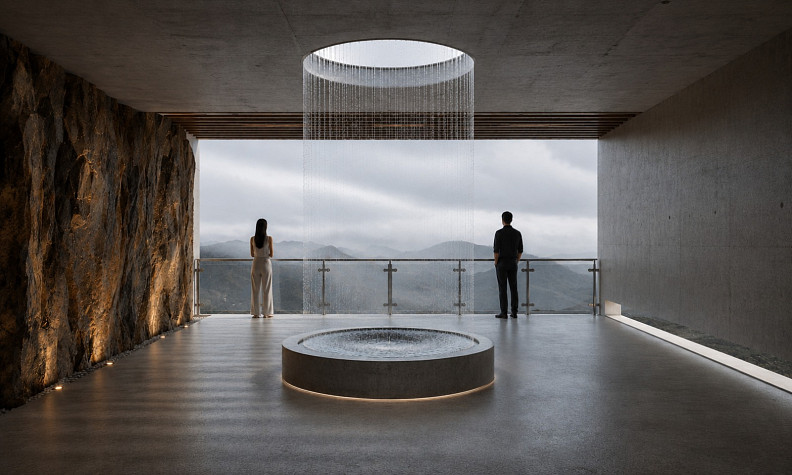
OXYMORON ASTRONOMICAL HUB An Ecosystem of Science, Culture, Tourism, and Astronomical Heritage The Oxymoron Astronomical Hub is conceived as a strategic national landmark that brings together science, tourism, education, and culture within the exceptional setting of the Sierra de Narváez in Catamarca, Argentina. The project emerges from the site's remarkable astronomical, landscape, and tourism potential, aiming to foster sustainable territorial development through the creation of specialized infrastructure and the enhancement of existing resources. The proposal is structured around two complementary realms. The first is a controlled-access scientific sector, comprising an advanced astronomical observatory and its associated technical facilities, dedicated to research and specialized observation. The second is a public sector consisting of an Astronomical Museum with a Gender Perspective, a residential biocluster with reception and dining facilities, and the revitalization of the existing observatory, focused on scientific outreach and astronomical education. By integrating these programs, the project seeks to establish a scientific-tourism network that connects landscape, knowledge, and community. Its objectives include strengthening astronomical and educational tourism, supporting the regional economy, and positioning the site as a national reference for sky observation and science communication. At the same time, the proposal promotes the recognition of women's contributions to astronomy, incorporating a cultural and social dimension that broadens the scope of the scientific experience. The project prioritizes a respectful relationship with the landscape and the preservation of the natural environment, integrating architecture into the site's topographical and environmental conditions through low-impact design strategies. In this way, the Oxymoron Astronomical Hub becomes a platform for territorial development capable of attracting public and private investment, generating new opportunities for the region, and transforming the observation of the universe into a catalyst for education, tourism, memory, and sustainable growth.
Project description
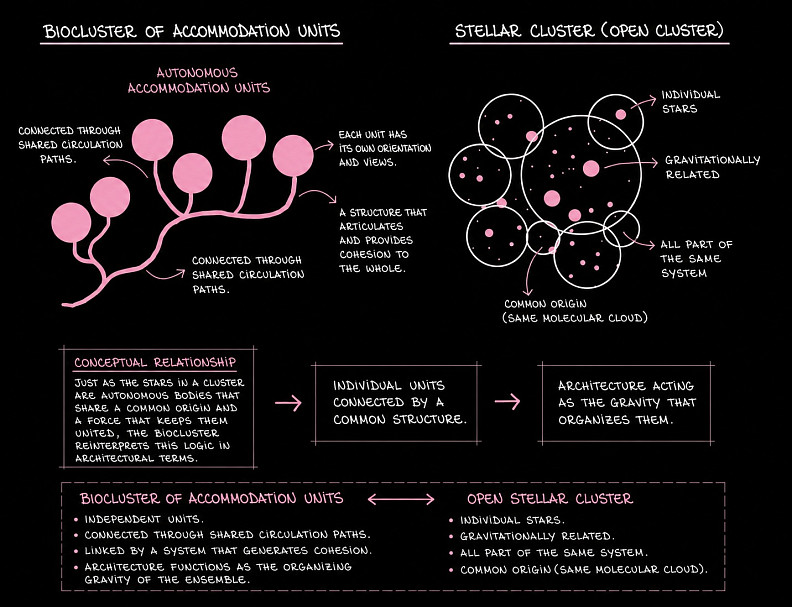
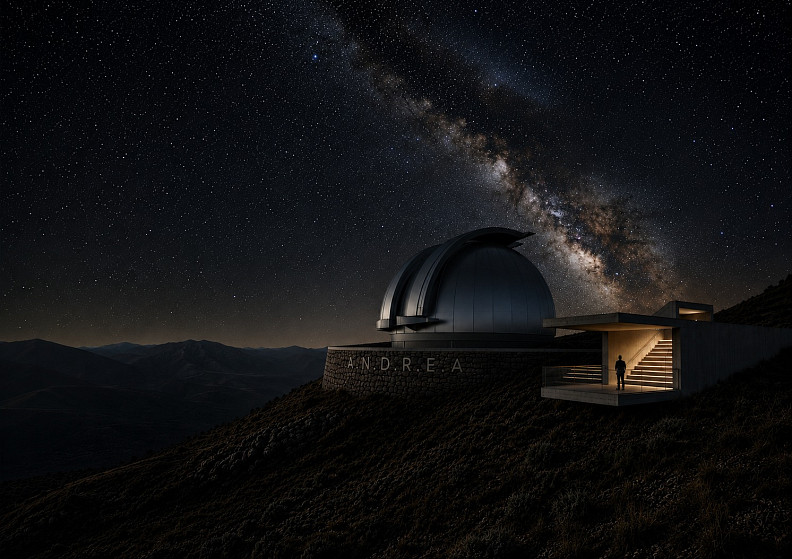
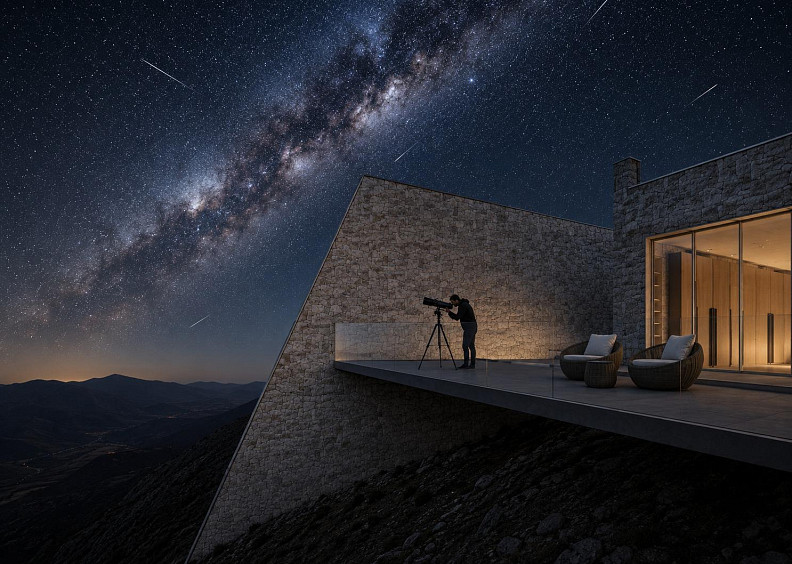
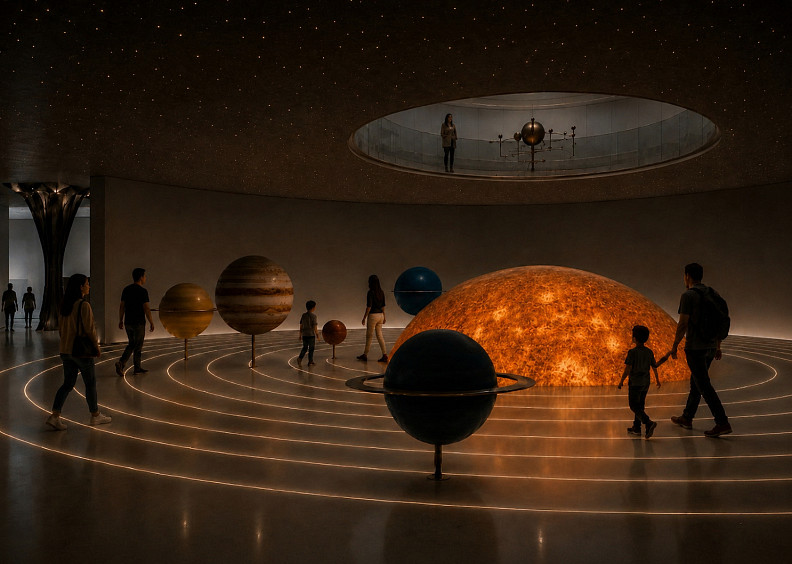
Oxymoron emerges from the coexistence of seemingly opposing concepts that, rather than excluding one another, complement each other to construct a new way of understanding territory, science, and memory. The project is rooted in a series of dualities present both in the architecture and in the experience it proposes: tourism and science, outreach and research, visible and invisible, past and future, mountain and sky, subterranean space and celestial observation, spiral and line, public and private realms, silenced women and recognized women. Far from representing conflicts, these contradictions become opportunities to generate a new narrative in which each element finds meaning through its relationship with its opposite. From this premise emerges the Oxymoron Astronomical Hub, conceived as an ecosystem of science, culture, tourism, and astronomical heritage capable of bringing together different scales, actors, and forms of knowledge within a single territory. Located in the Sierra de Narváez, Catamarca, the project takes advantage of the site’s exceptional astronomical and landscape conditions to establish a strategic hub of national significance that integrates scientific research, knowledge dissemination, sustainable tourism, and heritage enhancement. The proposal is structured around four main components, each representing a different dimension of the project. The first is A.N.D.R.E.A. (Archive of the Neglected, Discovered, and Revealed in Astronomical Exploration), an advanced astronomical observatory accompanied by a specialized technical facility. This controlled-access scientific sector constitutes the research core of the complex, incorporating spaces dedicated to astronomical observation, operational control, maintenance, instrument storage, and technological support. Its purpose is to position Northwestern Argentina as a national reference for scientific research and technological development. The name A.N.D.R.E.A. pays tribute to Andrea, the mother of one of the authors, and symbolizes the constant pursuit of knowledge, the recovery of what has been denied or forgotten, and the revelation of new ways of understanding the universe. The second component is the Astronomical Museum with a Gender Perspective, conceived as a cultural, educational, and reflective space that connects the exploration of the cosmos with the history of women in science and astronomy. The museum responds to the historical invisibility experienced by countless women scientists whose discoveries were omitted, minimized, or attributed to others. Through an immersive architectural experience and an exhibition journey that combines scientific outreach, memory, and social reflection, the project seeks to recover these silenced stories and transform them into visible knowledge. In this sense, the museum embodies one of the project’s central dualities: what remained hidden for centuries finally finds a space for recognition. The third component is the B.E.T.Y. Residential Biocluster (Yachay Stellar Tourism Biocluster), an accommodation system organized in clusters that promotes a respectful occupation of the territory and a direct relationship with the landscape. Designed to host tourists, researchers, students, and visitors, it includes residential units, reception facilities, dining spaces, and communal areas that encourage longer stays and deeper engagement with the site. B.E.T.Y. seeks to enhance the natural and cultural landscape through sustainable and experiential architecture, fostering territorial integration and appreciation through a scientific-tourism network. Its name pays tribute to Betty, the grandmother of one of the authors, introducing an emotional dimension associated with memory, the transmission of values, and a sense of belonging. The fourth component is the revitalization of the Janaxpacha Huasi Observatory, an existing astronomical facility that represents the starting point of the proposal. The project seeks to strengthen its educational, cultural, and tourism functions by integrating it into the new astronomical circuit and consolidating it as a gateway to knowledge for the community. Its enhancement also acknowledges the profound relationship that Indigenous peoples historically maintained with the sky, the landscape, and natural cycles. From this perspective, the territory is understood not only as the physical support for intervention but also as a space of memory, identity, and ancestral knowledge. The proposal therefore promotes a dialogue between contemporary science and Indigenous worldviews, reinforcing respect for the region’s natural and cultural heritage. Together, the Oxymoron Astronomical Hub aims to strengthen astronomical and educational tourism, stimulate the regional economy through a sustainable tourism model, develop strategic infrastructure within a territory of remarkable scientific and landscape potential, establish the site as a national point of reference, and integrate science, tourism, education, and culture into a single territorial platform. Through an architecture that is sensitive to the landscape and committed to environmental stewardship, the project proposes a new way of inhabiting and understanding the territory, demonstrating that contradictions do not necessarily oppose one another; instead, they can complement each other to build a broader, more inclusive, and enriching vision of the universe and our relationship with it.
Technical information
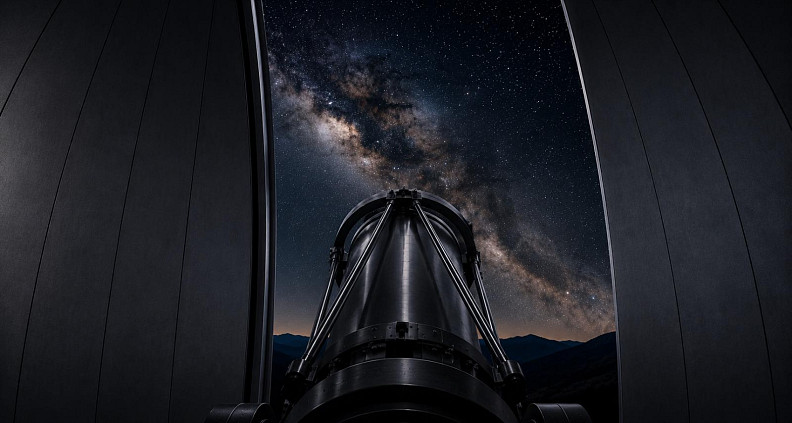
The Oxímoron Astronomical Pole is conceived as an architectural system that combines contemporary construction technologies with traditional building techniques rooted in the territory of Sierra de Narváez, Catamarca. The project seeks to establish a respectful dialogue between innovation and local heritage, integrating advanced structural solutions with vernacular materials and construction knowledge developed in the region over generations. All newly proposed buildings combine reinforced concrete structures with local stone walls, creating an architectural language that merges technological precision with the identity of the place. The use of native stone not only reinforces the visual and cultural connection with the landscape but also contributes to durability, thermal performance, and the integration of the buildings into the mountainous environment. The Astronomical Museum with a Gender Perspective is developed primarily underground, minimizing its visual impact on the landscape while taking advantage of the thermal stability provided by the terrain. Its main structure is formed by reinforced concrete slabs lightened with recycled plastic spheres, allowing larger spans to be achieved while reducing structural weight and material consumption. Controlled natural lighting is introduced through a system of skylights and a glazed dome supported by a metal structure, generating visual connections between the subterranean spaces and the sky above. The museum also incorporates a rainwater harvesting system and a green roof that contributes to thermal regulation and environmental integration. The B.E.T.Y. Biocluster, Reception Building, and Technical Area are constructed using solid reinforced concrete slabs, as their structural spans are significantly smaller than those required by the museum. This solution provides structural efficiency, durability, and construction simplicity while maintaining high thermal performance. These buildings are partially integrated into the terrain and incorporate green roofs and photovoltaic solar panels, reducing energy consumption and reinforcing the project's sustainability strategy. The A.N.D.R.E.A. Observatory (Archive of the Negated, Discovered and Revealed in Astronomical Exploration) is designed as a specialized scientific facility dedicated to advanced astronomical research. The structure is built in reinforced concrete and incorporates an independent foundation system for the telescope. A dedicated concrete pier extends from its own foundation to support the telescope, completely isolated from the rest of the building in order to eliminate structural vibrations generated by human activity or building operations. The observatory dome is conceived as a watertight hemispherical structure capable of withstanding the environmental conditions of the site while ensuring the precision required for astronomical observation. The dome includes a curved lateral opening system mounted on specialized rails, allowing full mobility of the telescope. Structurally, the dome is supported by a base ring and two principal slit-arch beams that provide rigidity, stability, and support for the opening mechanism. A fundamental aspect of the proposal is the preservation of the existing Janaxpacha Huasi Observatory. Rather than intervening in the structure, the project recognizes its historical, educational, and cultural value, integrating it into the overall masterplan while maintaining its original condition. This decision reflects the project's commitment to respecting the territory, valuing existing infrastructure, and strengthening the connection between contemporary scientific development and the cultural heritage of the region. Through green roofs, solar energy systems, rainwater harvesting strategies, local materials, and low-impact construction methods, the project promotes a sustainable model of development where architecture, science, landscape, and cultural memory coexist in balance with the natural environment.
Sofia Rojano, Daiana Perez Albert
Universidad Nacional de Tucumán, Facultad de Arquitectura y Urbanismo, Tucumán
Argentina
Arquitetura
Projeto submetido
15. 06. 2026Etiqueta
- Cultural Center
- Gallery
- Hall/Theatre
- Memorial
- Observation Tower
- Pavillion
- Religious
- Scuplture
- Schools
- Nursery
- University
- Library
- Other
Conselho a estudantes

Copyright © 2026 INSPIRELI | All rights reserved. Use of this website signifies your agreement to the Terms of Use, Privacy Policy, and use of cookies.