The mended southern cross
Project idea
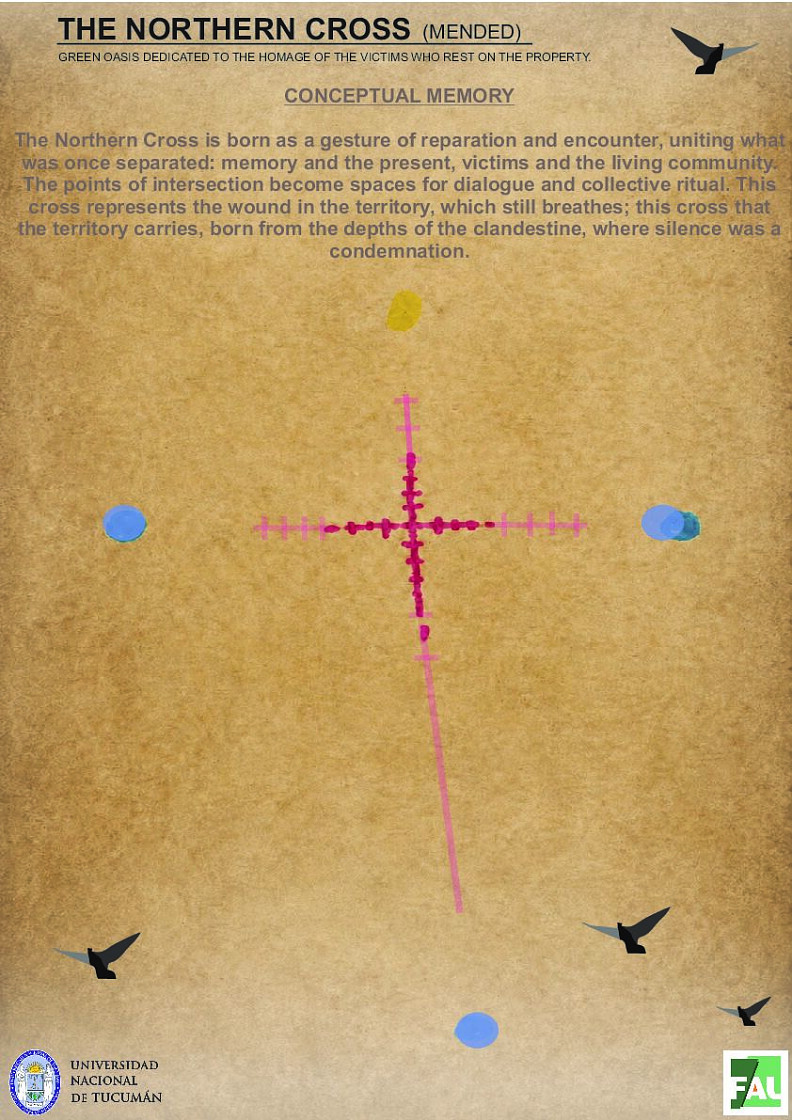
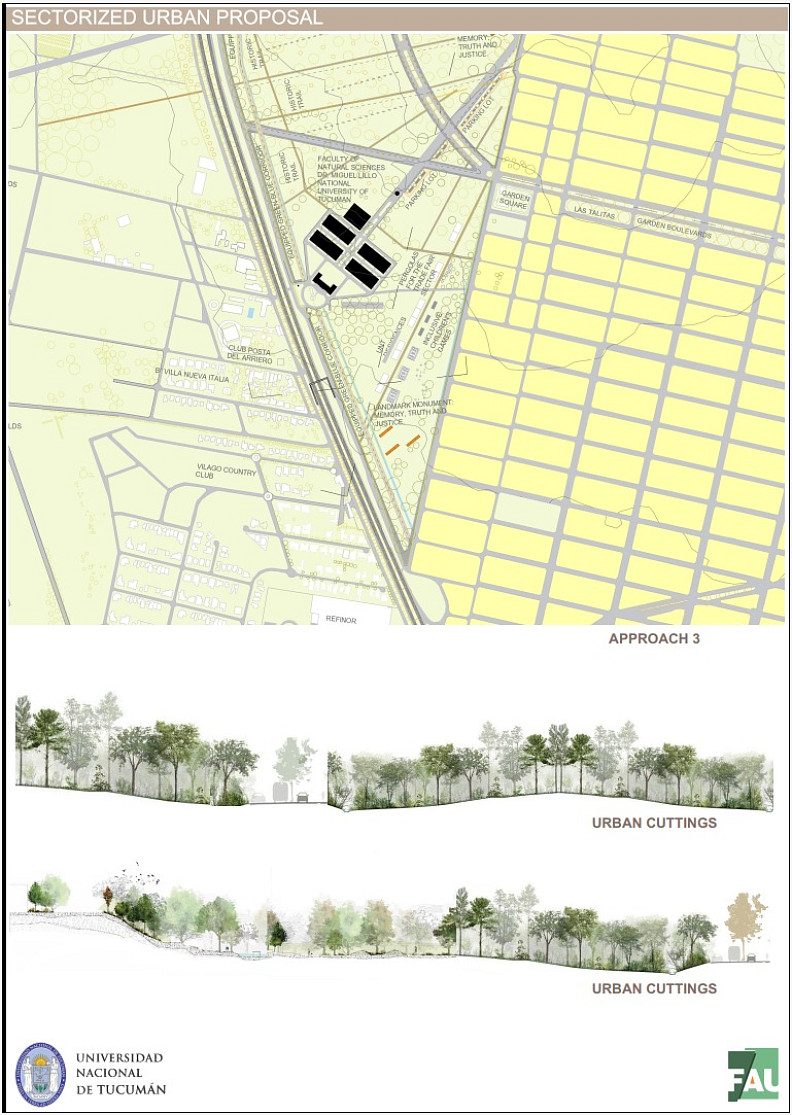
The Northern Cross is born as a gesture of reparation and encounter, uniting what was once separated: memory and the present, victims and the living community. The points of intersection become spaces for dialogue and collective ritual. This cross represents the wound in the territory, which still breathes; this cross that the territory carries, born from the depths of the clandestine, where silence was a condemnation. It is the hidden passage of what was meant to be erased, and today this history emerges before us, crying out its truth, its memory, and its justice, placing us in the here and now, “HERE YOU WILL FIND ME.” The patches of this cross, running north to south and vice versa, aim to keep alive the memory of all the men who once passed through this place, and from west to east and vice versa, to keep alive the memory of the women who once passed through it. These patches commemorate the 40 places occupied by men and 40 places occupied by women in shed number 9, where they were “DETAINED,” squatting, chained to the floor, in the darkness, deprived of their freedom. But these “PATCHES” today transform and represent 40 places of light, peace, tranquility, encounter, reflection, memory, truth, and justice, embodied in various gestures of urban planning. A few decades ago, the author, composer, and music producer sang in his song: “I am from the Southern Cross, here and everywhere,” our country looks to that constellation. But today we must clarify something within that cross: it is “here I am, I am from the Northern Cross,” although things have happened… a new cross is emerging in the north.
Project description
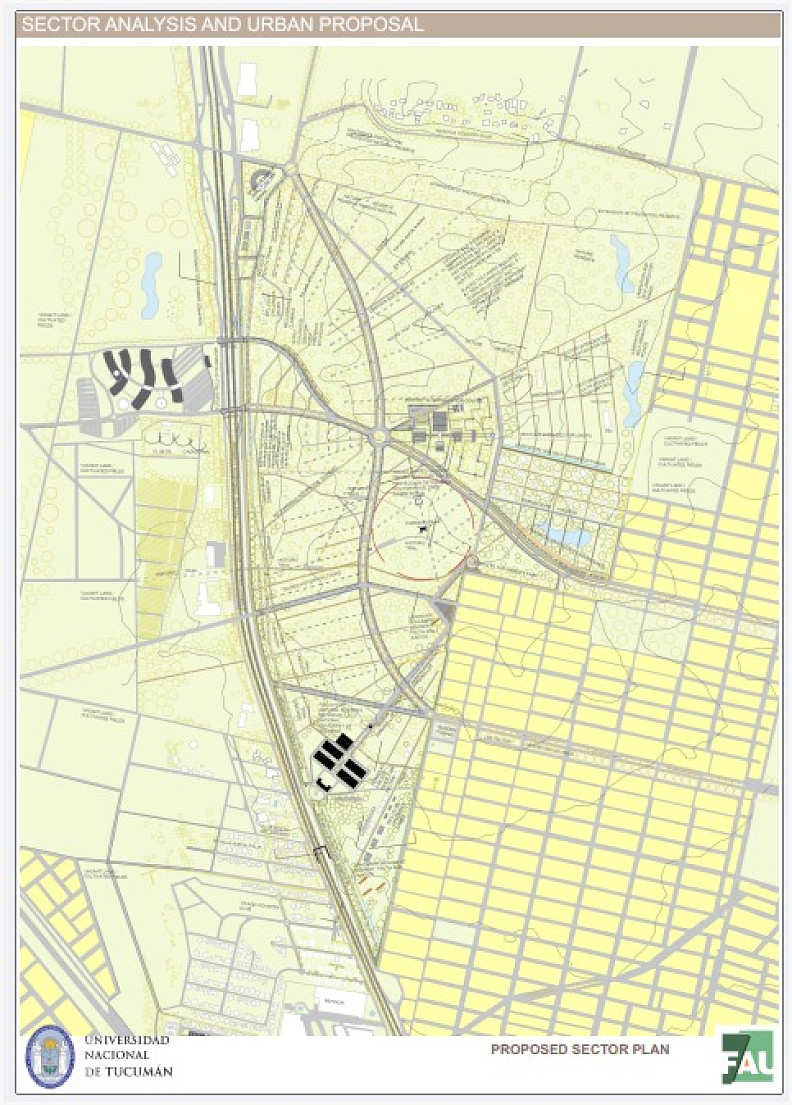
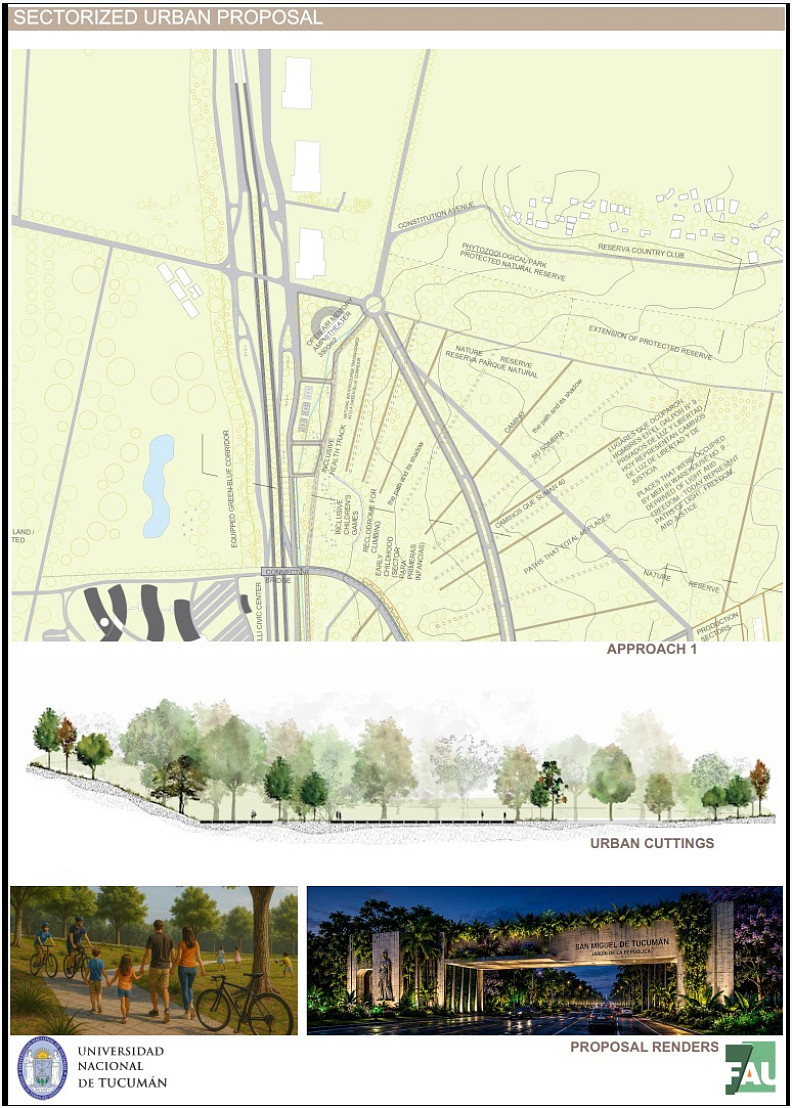
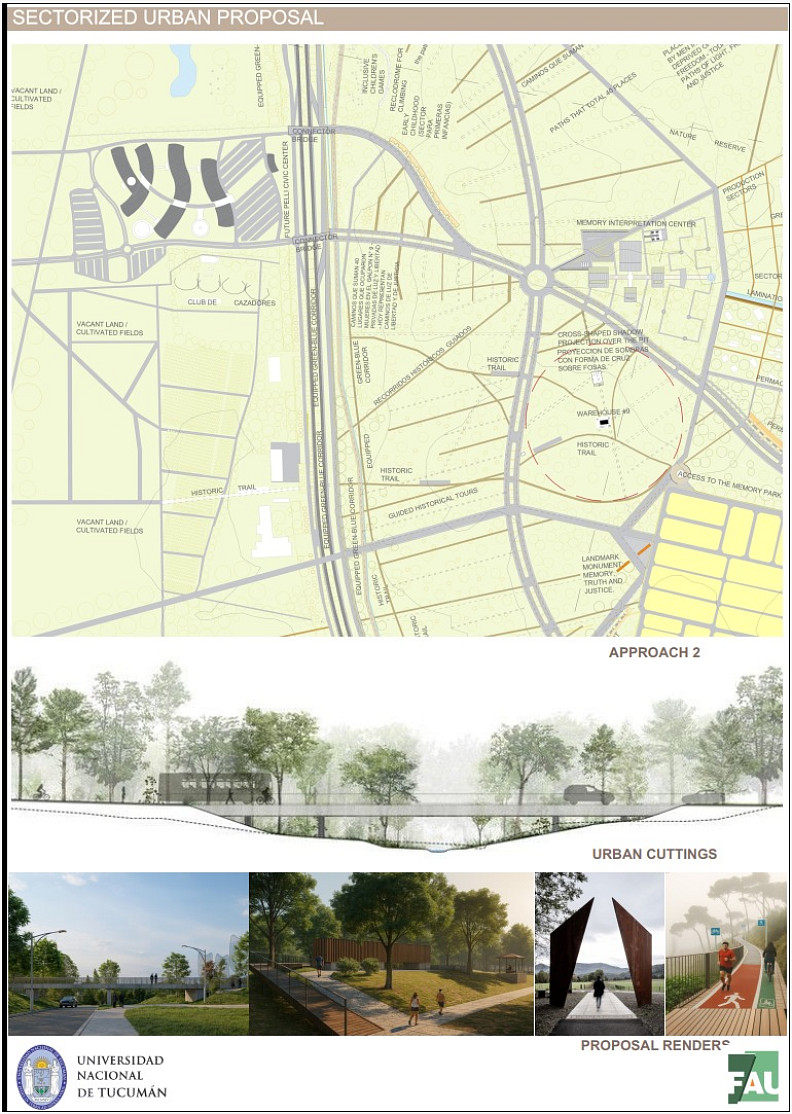
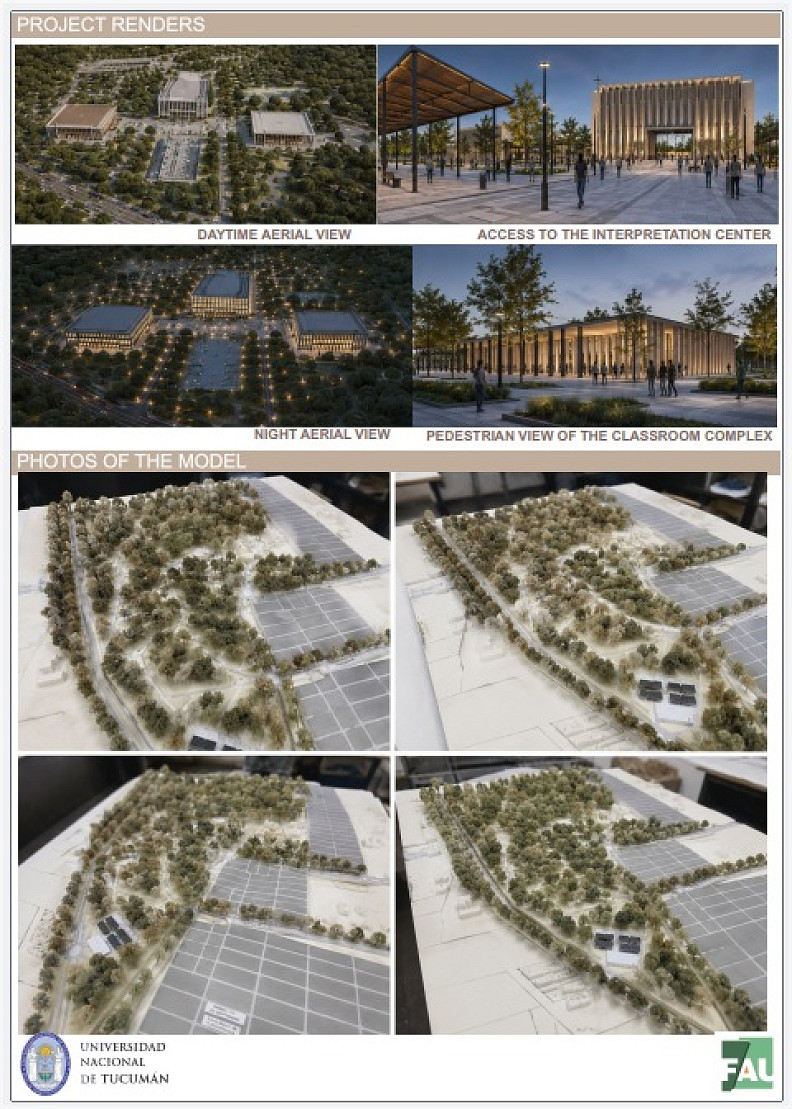
DESCRIPTIVE MEMORANDUM: URBANIZATION OF THE FORMER MIGUEL DE AZCUÉNAGA ARSENAL SITE Our Northern Cross alludes to the constellation of the Southern Hemisphere, but brought to northern Tucumán, as a gesture of reparation, encounter, and healing. The urban architecture project on the site of the former Tucumán Arsenal is based on the symbolic concept of the "Northern Cross," as a gesture of reparation, encounter, and union, which reinterprets the Southern Cross (Crux) and the Andean Chakana. As a symbol and purpose, the "Northern Cross" is an affirmation of southern cultural identity (alluding to the lyrics of a Charly García song, "Cruz del Sur") that seeks to establish a new ethical and spatial order in a historical site of repression. In its Urban Organization: The figure of the cross functions as the organizing matrix of the site. The Meeting Points: The four ends of the cross are transformed into plazas, acting as nodes of convergence and community life. They symbolize the points of the Chakana that unite the earthly and the cosmic, transforming the area into a public space for dialogue. The Connecting Pathways: The circulation routes that connect these plazas form the arms of the cross. These paths represent the "bridges" (Chakana) or paths toward truth and justice, facilitating the flow and overcoming the historical confinement of the Arsenal. In essence, the design uses a profound cosmic and cultural symbol to create an ethical and urban compass that guides the former Arsenal site from a past of darkness to a future of light, memory, and encounter.
Technical information
DESCRIPTIVE MEMORANDUM: URBANIZATION OF THE FORMER MIGUEL DE AZCUÉNAGA ARSENAL SITE Our Northern Cross alludes to the constellation of the Southern Hemisphere, but brought to northern Tucumán, as a gesture of reparation, encounter, and healing. The urban architecture project on the site of the former Tucumán Arsenal is based on the symbolic concept of the "Northern Cross," as a gesture of reparation, encounter, and union, which reinterprets the Southern Cross (Crux) and the Andean Chakana. As a symbol and purpose, the "Northern Cross" is an affirmation of southern cultural identity (alluding to the lyrics of a Charly García song, "Cruz del Sur") that seeks to establish a new ethical and spatial order in a historical site of repression. In its Urban Organization: The figure of the cross functions as the organizing matrix of the site. The Meeting Points: The four ends of the cross are transformed into plazas, acting as nodes of convergence and community life. They symbolize the points of the Chakana that unite the earthly and the cosmic, transforming the area into a public space for dialogue. The Connecting Pathways: The circulation routes that connect these plazas form the arms of the cross. These paths represent the "bridges" (Chakana) or paths toward truth and justice, facilitating the flow and overcoming the historical confinement of the Arsenal. In essence, the design uses a profound cosmic and cultural symbol to create an ethical and urban compass that guides the former Arsenal site from a past of darkness to a future of light, memory, and encounter.
Florencia Aline Bianchi, Ayelen Medina, Lucas Felipe Orieta , Franco Ledesma
Universidad Nacional de Tucumán, Facultad de Arquitectura y Urbanismo, Tucumán
Argentina
Design urbano
Projeto submetido
16. 06. 2026Etiqueta
Conselho a estudantes

Copyright © 2026 INSPIRELI | All rights reserved. Use of this website signifies your agreement to the Terms of Use, Privacy Policy, and use of cookies.